Balochistan Bans Iranian Oil on Passenger Buses
Balochistan orders a crackdown on Iranian oil carried by Makran-route buses—not a ban on passenger travel; formal enforcement details remain unclear.
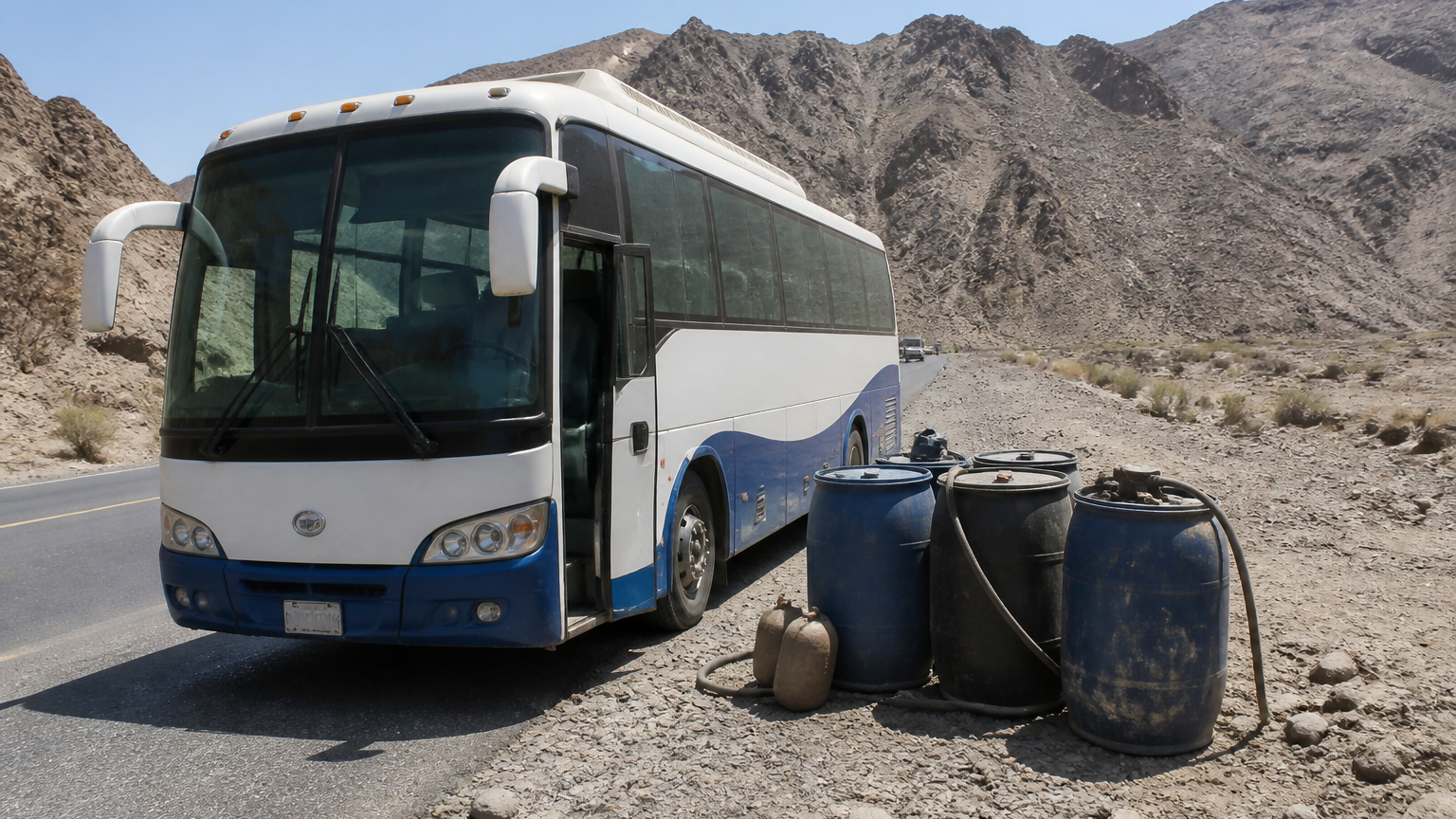
Business Recorder reported that Chief Minister Mir Sarfraz Bugti directed authorities to stop Iranian oil from being carried on passenger buses operating on the Makran route. The reported move targets fuel transport, not passenger travel itself, so it does not read like a suspension of bus services in Gwadar, Kech, or Panjgur. What’s still missing is a formal written notification, so the exact enforcement rules are still unclear.
What the reported restriction covers
The key point is simple: the reported order is about Iranian oil being carried inside passenger buses on the Makran route. It is not being reported as a blanket ban on all bus travel or all petroleum transport in Balochistan.
Business Recorder, as cited in the coverage, said the direction came during a high-level meeting in Gwadar on November 27, 2026, and that transport companies and individual vehicle owners could face legal action if they ignore it. A separate community report from Nazrban Balochistan News described the same alleged decision.
The wording matters here. “Iranian oil” is the phrase being used in the reporting, but the available material does not clearly define whether that means petrol, diesel, or some other petroleum product.
Why are officials focusing on this?
The logic behind the move is safety. Fuel carried in a passenger bus can leak, spill, or catch fire if it is stored in the wrong way. If a crash happens, that extra fuel can make the danger much worse for passengers, drivers, and other road users.
That is why this should be seen as a risk-control measure first, not as a broad statement about all travel in coastal Balochistan. For families who use the Makran route every day, that distinction is important. A passenger should not assume their bus has been stopped just because fuel transport on it is being challenged.
Who could be affected on the Makran route?
The reported focus is on buses and operators working across Gwadar, Kech, and Panjgur. If your service runs on that corridor, this is the part that matters most.
Operators who previously used passenger buses to move fuel may need to change how they work. But the reporting does not say how authorities will check compliance, which offices will enforce it, or whether roadside inspections have started. It also does not give a deadline, a grace period, or any exact fine amount.
For background on how Balochistan government action can affect transport decisions, see Balochistan Launches People's Train Service from Quetta to Kuchlak and Security Tightens in Pakistan: Section 144 Extensions in Balochistan and Punjab.
What passengers and operators should do now
Passengers should confirm their route with the bus operator before travelling, especially if they are boarding in Gwadar, Kech, or Panjgur. But they should not jump to the conclusion that passenger service has been suspended.
Operators need to be more careful. If the reported direction is enforced, carrying Iranian oil in a passenger bus could bring legal trouble. So anyone running Makran-route services should avoid mixing fuel transport with passenger travel until local authorities make the rule clearer.
What is still unclear
A lot still needs official confirmation. The public has not yet seen a readable government notification, so these details remain open:
- exact legal wording of the order
- whether the rule covers only buses or other passenger vehicles too
- what penalties will apply
- when enforcement starts
- whether inspections or checkpoints will be used
- whether authorities will define the term “Iranian oil” more clearly
Until that happens, the safest reading is this: passenger buses on the Makran route are still being reported as operating, but carrying Iranian oil on them is the part under restriction.
Conclusion
This report should be read as a developing restriction, not a full shutdown of Makran-route bus travel. The reported target is fuel transport inside passenger buses, while the status of a formal written order, penalties, and enforcement steps remains unconfirmed. Passengers should check with operators before travelling, and bus owners should stop carrying Iranian oil on passenger services until the local rule is made clear.
Explore DrivePK services
Buying or selling a vehicle? Explore DrivePK services, including car inspection, Sell It For Me and Featured Listings, and choose the option that fits your needs.
For more updates, visit DrivePK.com
Share this article
About the author

Dr Khan
Automotive expert and content strategist

Comments (0)
Sign in required
Sign in to comment on this article.
No comments yet. Be the first to share your thoughts!