CDA Starts 8.5km Six-Lane Road Faizabad to Gulberg Greens
CDA has started work on an 8.5-kilometre six-lane parallel road from Faizabad to Gulberg Greens. The Rs 6 billion project features a flyover and underpass. It aims to move local traffic off the Islamabad Expressway and ease daily jams for thousands of commuters in Islamabad and Rawalpindi. Temporary delays are expected near Khanna Bridge and Lehtrar Road.
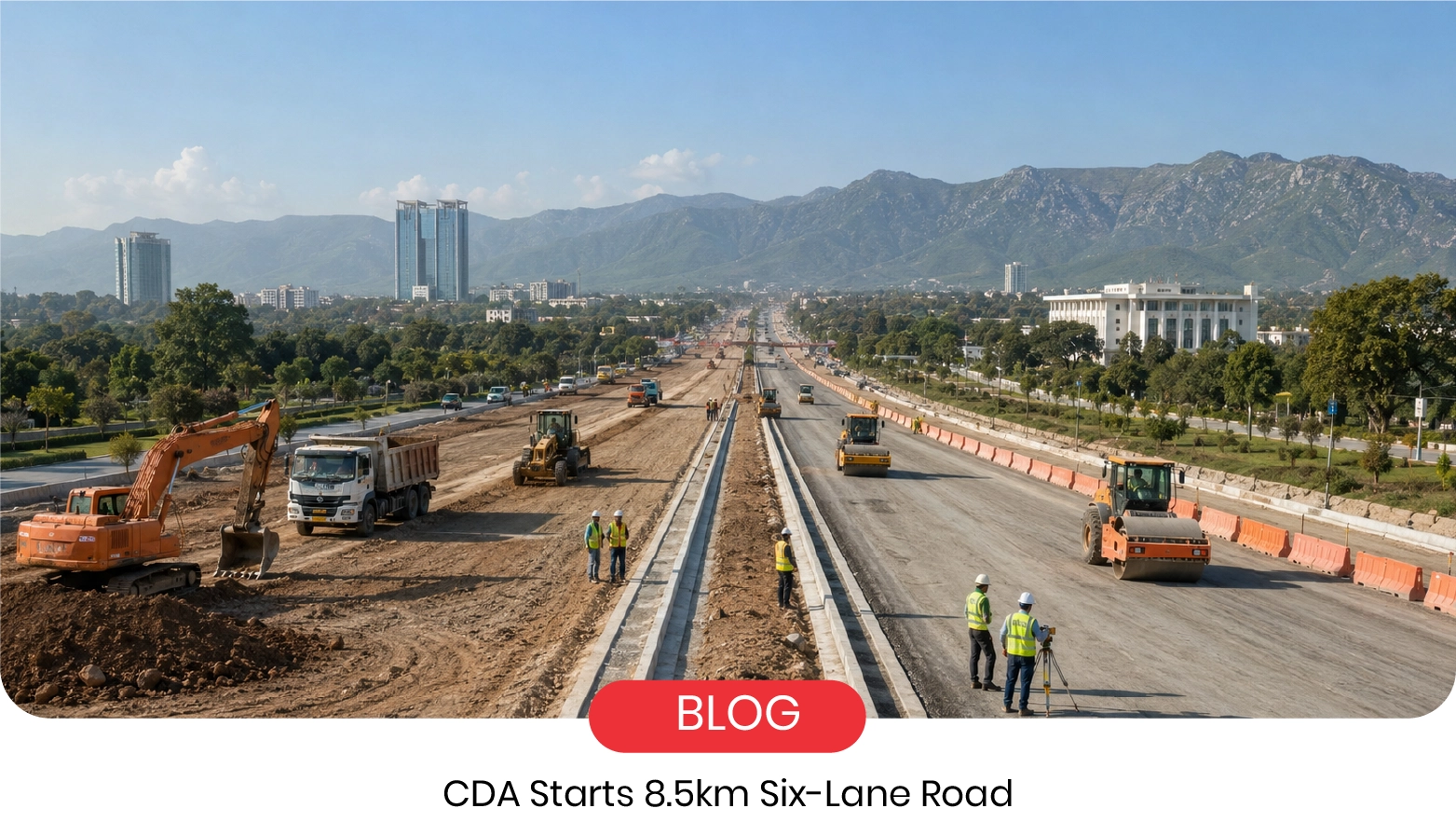
Table of Contents
- What the Project Actually Includes
- Who Will Feel the Difference
- Temporary Disruptions You Should Expect
- How This Fits into Wider Traffic Plans
- Why Separation of Traffic Works
- What Comes Next
Every morning and evening, the Islamabad Expressway turns into a slow-moving line of cars. Drivers from Faizabad, Khanna, Ghouri Town, and Gulberg Greens sit stuck. Local trips mix with long-distance traffic. Horns blare. Time slips away. Fuel burns. Tempers rise.
That daily grind is exactly why the Capital Development Authority has begun building a new parallel road. Work is now underway on an 8.5-kilometre, six-lane route that runs along the eastern side of the Expressway from Faizabad to Gulberg Greens. The project costs about Rs 6 billion. It includes a flyover at Faizabad and an underpass near Khanna Bridge and Lehtrar Road.
The goal is simple. Keep local traffic on its own path. Free the main Expressway for through traffic. Give residents of the twin cities a smoother ride.
What the Project Actually Includes
The new road replaces the old, worn service road on the eastern side of the Islamabad Expressway. It will be a proper dual carriageway with six lanes in total. A flyover at Faizabad will link the new road directly to the Expressway. An underpass at the junction of Lehtrar Road and Khanna Bridge will help traffic move without constant stops and merges.
CDA awarded the contract to M/S Leimar after the company bid 13 percent below the notice inviting tender cost of Rs 6 billion. Before construction began, crews shifted around 200 graves to clear the path. Site clearing and utility relocation are already in progress.
Interior Minister Mohsin Naqvi visited the site and told officials to finish the work in a few months instead of the original one-year plan. A CDA engineer noted that with full effort the project could be ready in about 150 working days. It is not a simple road upgrade. The flyover and underpass make it a major piece of work.
Who Will Feel the Difference
The route passes through areas that have grown fast in recent years. These include Soan, Pindorian, Shakrial, Garden Town, Khanna, Kangal, Ghouri Town, and Korral before reaching Gulberg Greens. Thousands of people who live in these neighbourhoods currently have little choice but to join the Expressway even for short trips. That adds pressure at every entry and exit point.
Once the parallel road opens, many of those local journeys can stay off the main highway. Residents heading to work, schools, markets, or nearby commercial spots will have a dedicated option. Travel times should drop. The constant stop-start at merges should ease. Safety can improve because fast through traffic and slower local traffic will no longer fight for the same space.
People who travel between Islamabad and Rawalpindi every day stand to gain the most. The Expressway is the main link for both cities. Reducing the load on it helps everyone who uses the corridor.
Temporary Disruptions You Should Expect
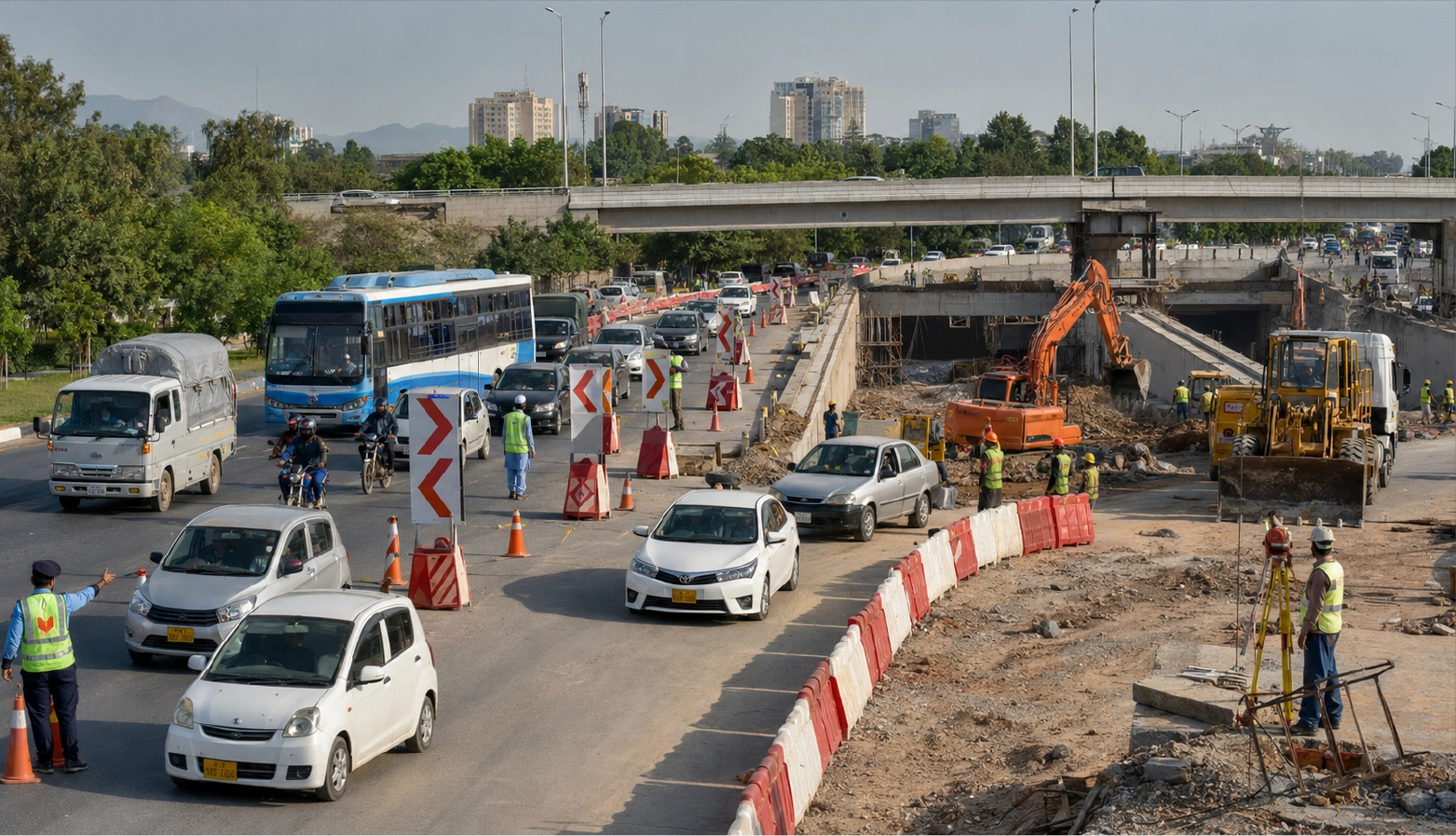
Construction never happens without some pain. Drivers near Khanna Bridge and Lehtrar Road will likely face temporary lane closures, diversions, and slower movement while the underpass and related works go ahead. Site clearing and utility shifts can also cause short-term hold-ups.
CDA and traffic police will need to manage these stretches carefully. Commuters should plan extra time during peak hours and watch for official updates on diversions. The short-term inconvenience is the price for longer-term relief.
How This Fits into Wider Traffic Plans
The Islamabad Expressway has seen several upgrades in recent years. Sections were widened. Flyovers and underpasses opened at other points. Yet congestion kept returning because local traffic still poured onto the main carriageway. A parallel service road that actually works has been talked about for months. Earlier plans mentioned a roughly 9-kilometre stretch and higher cost estimates. The project that is now on the ground is the 8.5-kilometre, Rs 6 billion version with clear engineering details.
Officials have also spoken of later phases that could extend the parallel route further toward Rawat. That would create a longer alternative corridor. For now the focus is the Faizabad-to-Gulberg Greens section.
CDA is also looking at the possibility of a commercial strip along the new road. If that moves forward it could bring extra revenue through future plot sales while supporting local shops and services.
Why Separation of Traffic Works
Traffic engineers have long pointed out the basic problem. When every short trip forces drivers onto a high-speed corridor, bottlenecks form at every ramp. Local vehicles slow the flow. Through vehicles add volume. Accidents and sudden stops become more common.
A dedicated parallel road gives local traffic its own space. The main Expressway can then function more like the high-capacity route it was meant to be. Similar approaches in other growing cities have cut travel times and reduced stress for daily drivers. The same logic applies here.
Residents of the housing societies and neighbourhoods along the corridor have waited for this kind of practical fix. Many already use side roads and narrow lanes to avoid the Expressway when they can. Those options are limited and often in poor condition. A proper six-lane parallel road changes the daily calculation.
What Comes Next
Work has started. Machinery is on site. The minister has set a faster target. The contractor is in place. The next months will show whether the accelerated timeline holds and whether quality stays high.
For drivers the real test will come when the road opens. Will local traffic actually shift onto the new route? Will the flyover and underpass function smoothly? Will the Expressway feel lighter during morning and evening peaks?
Until then, the best approach is practical. Expect delays near the construction zones. Follow traffic updates. Give yourself a few extra minutes on the journey. And keep an eye on progress reports from CDA.
This project will not solve every traffic problem in the twin cities. No single road can. But it directly targets one of the most stubborn sources of daily frustration on the Islamabad Expressway. For the thousands who live and work along the Faizabad-to-Gulberg Greens stretch, that is a change worth watching.
The new parallel road is under construction now. The months ahead will decide how quickly it delivers the relief so many people need.For more updates, visit DrivePK.com
Tags
Share this article
About the Author

Najeeb Khan
Automotive enthusiast and writer
Comments (0)
Login Required
You need to be logged in to comment on this article.
No comments yet. Be the first to share your thoughts!
Related Articles

Jinpeng U2 Electric Scooter Revealed at PAPS 2026
Jinpeng’s U2 e-scooter debuts in Pakistan with 1000W and 1500W motors, due in Dec 2026. Price, range, battery and features remain unknown.
M-4 Six-Lane Expansion Deadline Set for December 15
A December 15 deadline looms for the M-4’s six-lane expansion—but will it signal completion or simply mark another milestone in the long-awaited project?
Quetta to Get 17 More Electric Green Buses
Quetta plans 17 more electric buses, potentially lifting its fleet from 25 to 42 and reaching underserved areas—timing and routes remain unclear.