Chinese Cars in Pakistan: Will Prices Fall?
China’s car slump is driving exports, bringing Pakistani buyers more choice and better deals—but local limits may prevent a price war.
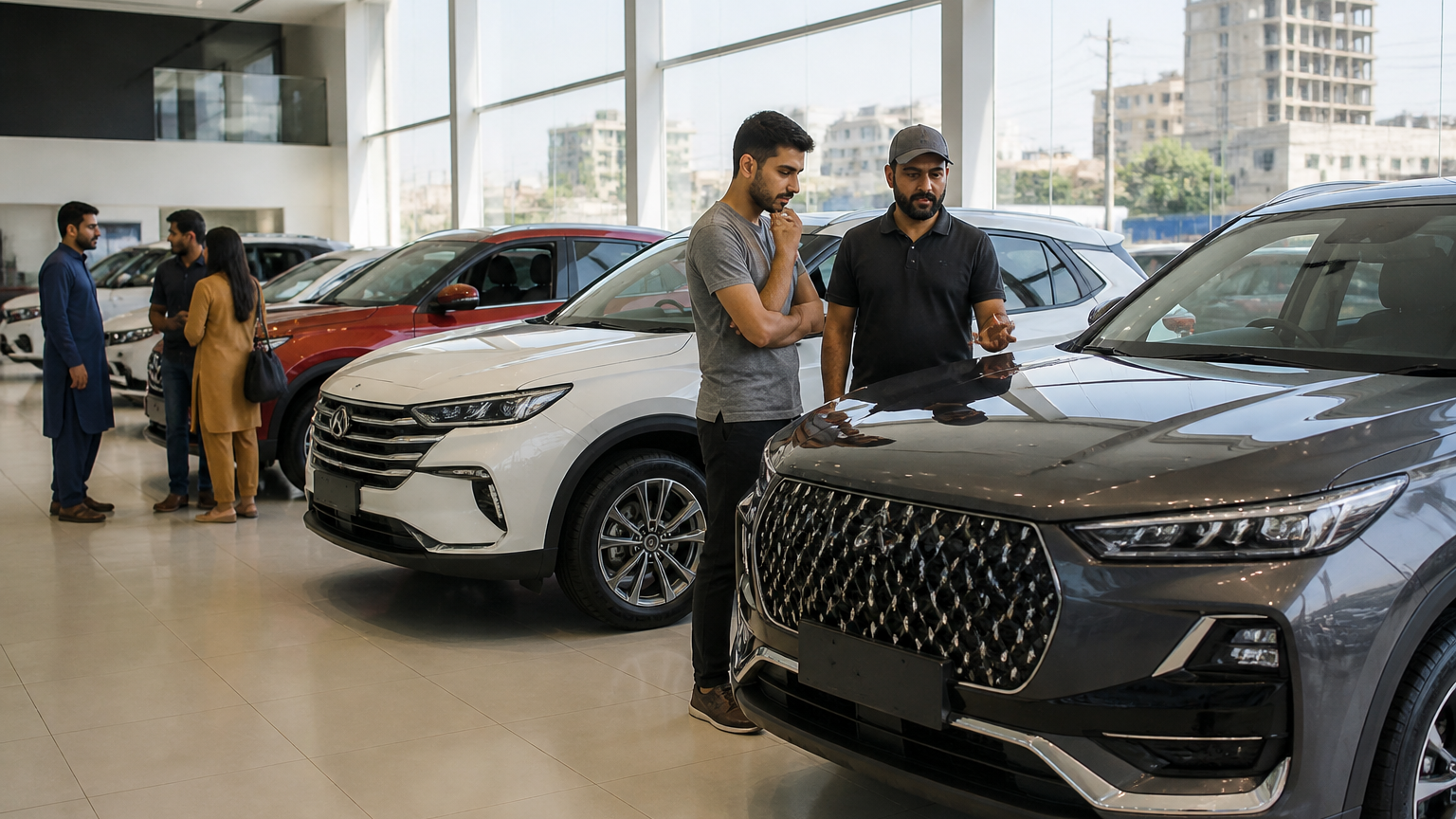
Chinese carmakers are under pressure at home, and that pressure could spill into Pakistan. Reports from China show domestic passenger-car sales fell by about 27% year on year in October 2026, while exports jumped by roughly 68% to more than 900,000 vehicles. For Pakistani buyers, that can mean more choice, sharper offers and better equipment. But it does not automatically mean a full price war.
China is trying to move more cars overseas because its home market is softer and competition is intense. That matters for Pakistan because Chinese brands are already pushing deeper into the local market through new launches, more dealerships and local assembly plans. Still, Pakistan is not a huge outlet compared with China’s scale. PAMA-linked data cited in the source shows Pakistan’s passenger-car market stood at 155,631 units in FY2025-26, while jeep and pickup sales reached 50,814 units. China cannot simply dump all extra supply here.
That is why the most likely result is stronger competition, not a collapse in prices. If more brands want Pakistani buyers, they may offer lower launch prices, more features, easier financing or short-term discounts to win bookings. A recent example was MG Pakistan’s reported January 2026 deal on the HS plug-in hybrid, which went up to Rs. 6 lakh in value. That kind of promotion shows how brands can respond when the market gets crowded, but it does not prove Chinese export pressure alone caused the offer.
Pakistan’s Chinese-brand field is already getting busy. Haval and Sazgar Engineering, Changan and Deepal under Master Changan, Omoda and Jaecoo with Nexgen Auto and Nishat Group, and BYD with Mega Motor Company are all part of the growing lineup. Some makers are also talking about local production plans. For buyers, those plans matter only when the cars actually reach the market in stable supply, with parts and service behind them.
There are also limits on how much prices can fall. The rupee remains a major factor, along with taxes, import duties, freight, local assembly costs and financing rates. Even if Chinese brands push harder on price, those costs can keep showroom prices from dropping sharply. For readers tracking everyday ownership costs, fuel prices also remain important; this DrivePK update on petrol prices is useful background when comparing running costs.
The bigger risk for buyers may not be sticker price. It is whether a brand can stay healthy enough to support its cars after the sale. China’s auto industry profit margin was reported at just 3.3% in January-September 2026, with profits down 23% year on year. A 2026 AlixPartners outlook also suggested only seven of 30 Chinese new-energy makers could reach break-even by 2030. That does not mean current Pakistani brands will leave, but it does show why buyers should look hard at dealer coverage, parts supply, trained technicians, warranty terms and the maker’s global strength.
Pakistan also has past cautionary examples. FAW V2 is a reminder that a low launch price means little if support fades later.
So should buyers book now or wait? The safer choice is to buy now if the brand has local assembly, a strong dealer network, available parts and a clear warranty. Wait if the model is brand new, fully imported, lightly supported or likely to be replaced quickly. For hybrids and EVs, buyers should also check charging access, battery warranty and service capability before paying a booking amount.
Chinese competition may improve value and give Pakistani buyers more options. But the evidence does not support a broad price crash. The smarter move is to compare total ownership, not just the first price tag.
Explore DrivePK services
Buying or selling a vehicle? Explore DrivePK services, including car inspection, Sell It For Me and Featured Listings, and choose the option that fits your needs.
For more updates, visit DrivePK.com
Share this article
About the author
Dr Khan
Automotive expert and content strategist
Comments (0)
Sign in required
Sign in to comment on this article.
No comments yet. Be the first to share your thoughts!