EV Expo & Green Mobility Conference 2026 Complete Platform Guide: Zones, Features & What to Expect
The EV Expo & Green Mobility Conference 2026 isn't a single event; it's six distinct engagement zones under one roof. From test drives and B2B meetings to a Kids Zone and ministerial dialogues, here's what each layer offers and why it matters.
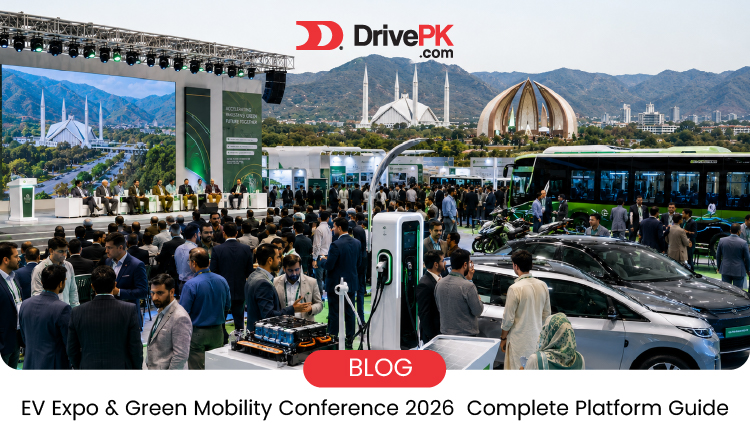
Table of Contents
- EV Expo The Exhibition Arena
- Electric Vehicles on Display (2W, 3W, 4W, Buses)
- Charging Infrastructure, Battery & Energy Solutions, Smart Mobility Technologies
- Thematic Zones, Live Demonstrations, and Product Launches
- Test Drive Arena The Experiential Zone
- Live EV Test Drives and Performance Showcasing
- Range, Acceleration, and Charging Efficiency Demonstrations
- Consumer Engagement and Real-Time Feedback Opportunities
- Safety and Handling Simulations
- B2B & B2G Engagement Zone
- Structured Business Meetings and Partnership Facilitation
- Investor Interactions Focused on Deals and MoUs
- Innovation & Youth Platform
- Startup Showcases and Innovation Challenges
- University Engagement
- Kids Zone Family Engagement and Future Mindset Shaping
- Interactive Learning on Sustainability and Green Mobility
- Mini EV Rides and Safe Driving Simulations
- Creative Workshops and Edutainment Sessions
- Green Mobility Conference
- Ministerial Dialogues, Policy Roundtables, and Industry Panels
- Focus Areas: EV Policy, Financing & ESG, Infrastructure, and Global Trends
- Why the Multi-Zone Structure Actually Matters
- Who Should Be Here
Organised by the Pakistan Green Mobility Mission (PGMM) on June 9 and 10 at the Pak China Friendship Center in Islamabad, the platform runs six distinct engagement zones, each designed for a different audience and a different purpose. There's an exhibition floor for product showcasing. A test drive arena for a live experience. A B2B and B2G zone for structured business meetings. An innovation platform for startups and universities. A Kids Zone for family engagement. And a full conference programme built around policy, finance, and global trends.
Understanding what each zone actually offers and for whom is the clearest way to see why this event is relevant to your business, your team, or your sector.
EV Expo The Exhibition Arena
The exhibition floor is the core of the platform. But what's displayed here, and how it's organised, are worth looking at closely.
Electric Vehicles on Display (2W, 3W, 4W, Buses)
Pakistan's EV market spans a wide range of vehicle types, and the exhibition reflects that. Two-wheelers dominate by volume. Pakistan has over 26.3 million motorbikes on its roads, and the electric two-wheeler segment has already surpassed 90,000 units annually. Three-wheelers, rickshaws and small commercial vehicles are central to urban logistics and livelihoods. Four-wheelers, from budget hatchbacks to premium sedans, are entering at pace, with brands like BYD, MG, and Deepal already present. And electric buses represent the commercial fleet opportunity that no major city in Pakistan has fully addressed yet.
Having all of these under one roof matters for a simple reason: buyers, procurement officers, fleet managers, and distributors rarely have a single-vehicle focus. A transport company evaluating electric fleets wants to compare the economics of an e-rickshaw against a small commercial van. A government agency looking at fleet electrification needs to understand bus options alongside four-wheelers. The exhibition makes those side-by-side comparisons possible.
Charging Infrastructure, Battery & Energy Solutions, Smart Mobility Technologies
The vehicles are only part of the picture. The infrastructure behind them, charging networks, battery systems, energy storage, smart grid integration, is where much of the investment and policy attention is currently focused.
Pakistan's NEV Policy 2025–2030 targets 3,000 charging stations nationwide by 2030, with the first 40 fast-chargers along motorways committed within six months of policy approval. NEECA is the regulatory anchor for charging infrastructure and battery swapping standards. The State Bank of Pakistan has been integrated into the financing framework. And the grid itself already 40% renewable, with a target of 60% by 2030 provides the energy base.
All of this creates a specific, active market for charging hardware, battery management systems, energy storage products, and smart mobility software. The expo gives companies in these segments direct access to the buyers, partners, and regulators who determine where and how this infrastructure gets deployed.
Thematic Zones, Live Demonstrations, and Product Launches
Beyond static displays, the exhibition floor is organised into thematic zones covering areas like localisation and domestic manufacturing, clean energy integration, smart transport systems, and financing solutions. This structure helps visitors navigate the floor with a clearer sense of what they're looking for, whether they're sourcing components, evaluating technology, or scouting partnerships.
Live demonstrations add direct engagement. And product launches, timed to the expo, create a moment of focused attention that's difficult to replicate through digital channels. For any company introducing a new vehicle model, a charging product, or an EV-related service to the Pakistani market in 2026, the expo offers concentrated, relevant, national-level visibility at exactly the right moment.
Test Drive Arena The Experiential Zone
Reading a spec sheet and sitting in a car are two completely different things. And in an EV market where a significant portion of potential buyers have never driven an electric vehicle, that difference is the gap between interest and a purchase decision.
Live EV Test Drives and Performance Showcasing
The Test Drive Arena gives visitors a controlled, supervised space to actually drive electric vehicles not just look at them. For consumers, this removes the uncertainty that still surrounds EVs for many Pakistani buyers. For fleet operators, it gives procurement decision-makers direct, firsthand data on how a vehicle handles in real conditions. For manufacturers, it creates an experience that advertising simply cannot replicate.
Pakistan's EV adoption curve is still in its early stages. The jump from 567 EVs in 2021 to over 80,000 by mid-2025 looks impressive on paper. But the 2030 target of 2.2 million vehicles means the market needs to convert millions of people who are still on the fence. Live test drives are one of the most effective ways to move people across that line.
Range, Acceleration, and Charging Efficiency Demonstrations
The most common objections among potential EV buyers in Pakistan are practical ones. Range anxiety the fear of running out of charge mid-journey, is real, particularly in cities where the charging network is still expanding. Acceleration and power concerns are relevant for anyone comparing an EV to a petrol vehicle they already know. And charging time is a common barrier for buyers used to a five-minute fuel stop.
The Test Drive Arena directly addresses these. Demonstration runs show real-world range performance under local road conditions. Acceleration and handling can be assessed by the person who will actually drive the vehicle. And charging speed demonstrations — both AC and DC fast-charging give buyers accurate information in context, rather than leaving them to rely on marketing claims.
Low-end to mid-range electric cars in Pakistan's current market can achieve a range of 300 to 500 kilometres from a single charge, which covers urban driving comfortably. Having that demonstrated in person rather than stated in a brochure changes buyer confidence in a way that matters.
Consumer Engagement and Real-Time Feedback Opportunities
For exhibitors, the Test Drive Arena is not just a showcase; it's a research tool. The feedback loop from a buyer who has just test-driven a vehicle is more valuable than any survey. What did they find comfortable? Where did the controls feel unfamiliar? What question did they ask at the end of the drive that the marketing material hadn't answered?
That real-time feedback directly informs product adjustments, localisation decisions, and sales strategy. In a market as specific as Pakistan's, with its road conditions, climate, fuel cost pressures, and buyer expectations, that kind of direct input is difficult to obtain through any other channel.
Safety and Handling Simulations
For first-time EV drivers, safety perception is a genuine concern. Questions about battery fires, electrical hazards, and unfamiliar handling in emergency braking situations come up regularly in consumer conversations. The Test Drive Arena includes safety and handling simulations that address these directly.
This isn't just about reassurance. It's about informed confidence, giving buyers real experience with how EVs respond in different situations so their decisions are based on facts, not assumptions.
B2B & B2G Engagement Zone
Most of the real business at an industry event doesn't happen on the exhibition floor. It happens in structured one-on-one meetings where both sides come prepared, have shared context, and are ready to move from conversation to commitment.
Structured Business Meetings and Partnership Facilitation
The B2B and B2G Engagement Zone at the EV Expo & Green Mobility Conference 2026 is built specifically for this kind of meeting. Companies can schedule structured sessions with potential buyers, distributors, technology partners, and collaborators — and those sessions are organised in advance, with both sides knowing who they're meeting and why.
Pakistan's EV value chain is complex. Vehicle manufacturers need component suppliers. Charging operators need grid connection agreements. Financing products need distribution partnerships. Localisation initiatives need manufacturing partners. None of these connections happens casually. They require structured engagement the kind the B2B zone is designed to enable.
PGMM's implementation framework coordinates roles across federal ministries, provincial governments, financial institutions, industry, and research institutions. The B2B zone effectively makes that coordination accessible to private sector participants who need to navigate it.
Investor Interactions Focused on Deals and MoUs
Pakistan's EV sector is receiving active international financial support. The IMF's Resilience and Sustainability Facility has integrated EV targets with USD 1.4 billion in commitments. The IFC has provided USD 1.8 million directly to the ecosystem. The ADB is providing credit lines and blended finance. And the PAVE programme is deploying Rs. 9 billion in FY 2025–26 to support Rs. 100 billion in EV financing.
That institutional investment creates a pipeline for private capital to follow. Investors who are already aligned with Pakistan's EV transition and there are more of them than before, want to meet companies that are operating in the space. The B2B and B2G zone creates a structured setting for those conversations.
MoUs signed at events like this have real outcomes. They establish relationships, create accountability, and signal market intent to the broader ecosystem. For companies looking to formalise partnerships or investment discussions, the conference timeline creates a natural deadline and a shared context that accelerates decision-making.
Innovation & Youth Platform
Pakistan has a large, young population with a technically capable graduate pool. What it has lacked, in the EV sector specifically, is a visible platform for young innovators to present their work to the people who can help them scale it.
The Innovation & Youth Platform at the EV Expo & Green Mobility Conference 2026 addresses that gap directly.
Startup Showcases and Innovation Challenges
Pakistan's EV startup ecosystem is growing. There are now 24 tracked electric vehicle startups operating across the country. Among them, companies like PakPlug building an "Airbnb for EV charging" that enables private charger owners to monetize unused infrastructure represent the kind of asset-light, platform-driven innovation that doesn't require manufacturing investment but can have significant network effects on adoption.
The startup showcase gives early-stage companies access to an audience that includes investors, potential customers, regulatory officials, and corporate partners, all in one place. For a startup that has been operating in relative isolation, that kind of concentrated exposure is rare and valuable.
Innovation challenges push teams to solve specific problems in the EV ecosystem charging access, battery lifecycle, fleet management, consumer financing, or data infrastructure. The competitive format creates public accountability and a clear output, which is useful both for the teams involved and for the industry observers looking for solutions to specific constraints.
University Engagement
Pakistan's universities are increasingly taking innovation seriously. From October 2025 to June 2026, universities and startups across the country participated in major expos and exhibitions, with students pitching AI tools and researchers showing working prototypes. The standout of that season was SEE Pakistan 2026, the first innovation expo offering USD 10,000 in prize money the highest cash prize at any such event in Pakistan.
But energy-focused innovation specifically requires a pipeline from university research to market application. The NEV Policy explicitly supports a training programme targeting 15,000 new jobs in the EV sector. Universities that engage with the EV Expo's innovation platform can connect their students and researchers directly to the industry that will absorb those graduates.
And importantly, the PGMM framework includes academia and research institutions as formal partners in coordinated EV development. The Innovation & Youth Platform is where that institutional intention becomes a practical connection.
Kids Zone Family Engagement and Future Mindset Shaping
It might seem like an odd inclusion in a policy and industry conference. But the Kids Zone at the EV Expo & Green Mobility Conference 2026 is not just filler. It reflects something deliberate about how PGMM is thinking about the EV transition.
Interactive Learning on Sustainability and Green Mobility
The shift to electric mobility isn't primarily a technology problem. It's a culture and behaviour problem. People stick with what they know: petrol engines, familiar fuelling routines, and conventional vehicles. Changing that pattern takes time, repeated exposure, and early formation of different expectations.
A child who experiences electric mobility as normal, clean, and interesting is far more likely to choose it as an adult than one who encounters it for the first time at 35. The Kids Zone is essentially a long-term market development investment creating a generation of buyers and advocates who already see EVs as the default, not the exception.
Mini EV Rides and Safe Driving Simulations
The practical experience at the Kids Zone mini EV rides and safe driving simulations gives children their first direct encounter with electric mobility. It's engaging enough to hold attention and concrete enough to form a genuine memory.
For parents attending the expo, bringing children into the Kids Zone also extends dwell time at the event, creates shared family experience around EV themes, and opens conversations at home that wouldn't happen otherwise. That ripple effect into households, schools, and peer groups is part of how public awareness actually builds.
Creative Workshops and Edutainment Sessions
The creative workshops and edutainment sessions at the Kids Zone connect sustainability concepts to age-appropriate storytelling and activity. Clean air, reduced noise, solar energy, and green cities are not abstract ideas to a child who has just built a model solar charger or watched a short film about what Karachi's streets might look like in 2040.
These sessions are also useful for schools looking to connect national curriculum topics — climate, energy, transport — to live, interactive experiences. A school trip to the EV Expo, anchored by the Kids Zone, serves an educational purpose that's difficult to replicate in a classroom.
Green Mobility Conference
The conference is where the exhibition becomes a dialogue. And for anyone operating at the policy, investment, or strategic planning level, the conference programme is the most substantive part of the event.
Ministerial Dialogues, Policy Roundtables, and Industry Panels
PGMM's platform brings together federal ministries, regulatory authorities, provincial governments, and the State Bank of Pakistan in a structured coordination framework. The conference sessions make that framework visible and accessible.
Ministerial dialogues are not standard conference fare. They signal political commitment and create accountability. When a federal minister speaks to an industry audience about EV policy timelines and infrastructure targets, that statement has a different weight than a written policy brief. It creates a shared understanding of what the government is actually planning to do and at what pace.
Policy roundtables, by contrast, create space for industry to push back to raise implementation gaps, regulatory inconsistencies, or infrastructure constraints that the policy document may not have fully addressed. These are the conversations where the gap between policy intent and market reality gets identified and, ideally, closed.
Industry panels bring together private sector voices from across the value chain, manufacturers, charging operators, financiers, fleet operators, technology providers to share what they're seeing on the ground. That cross-sector perspective is more useful than any individual company's view.
NEECA's representatives will participate directly, which is significant given the agency's central role in charging infrastructure standards and battery swapping regulations. Direct access to the regulatory officials who are setting those standards is something businesses cannot get through a government website.
Focus Areas: EV Policy, Financing & ESG, Infrastructure, and Global Trends
The conference programme runs across four specific focus areas, each addressing a distinct set of questions for a distinct audience.
EV Policy: Sessions examine where Pakistan's NEV Policy 2025–2030 stands in implementation, what the current regulatory environment requires from manufacturers and operators, and where the policy is likely to evolve. For any company making investment decisions in Pakistan's EV market, understanding the policy trajectory is fundamental. The current policy has targets through 2060 90% EV sales by 2040, 100% by 2050, 100% zero-emission fleet by 2060 and the decisions made now will be shaped by that long arc.
Financing & ESG: Sessions address one of the most persistent constraints in Pakistan's EV market. The State Bank of Pakistan currently imposes a maximum financing limit of PKR 3 million with a maximum tenor of three years on automobile loans above 1000cc. The NEV Policy explicitly identifies this as a barrier and commits to reform. Green banking targets are in place for all Pakistani banks, and the SBP has been directed to develop EV-specific financing products. The conference sessions on this topic give financial institutions, EV companies, and investors the shared context they need to develop products that actually reach buyers.
ESG is a growing consideration for international investors and multinational suppliers entering Pakistan. Pakistan could potentially tap Rs. 15 billion in carbon credits from its EV transition. The policy is integrated into the IMF's Resilience and Sustainability Facility. And Pakistani banks are already operating under mandatory green banking guidelines. ESG sessions at the conference connect these threads for businesses that need to report against them.
Infrastructure: Sessions examine the charging network rollout, battery swapping regulations, grid integration, and the localization of infrastructure supply chains. Pakistan's grid is 40% renewable today, on a path to 60% by 2030. A fixed charging tariff of Rs. 39.70 per kWh is in place. The motorway fast-charging rollout is underway. But gaps remain on highways beyond the motorway network, in smaller cities, and in the off-grid charging solutions needed for rural two-wheeler users. The infrastructure sessions give concrete shape to where the investment and policy attention is going.
Global Trends: sessions place Pakistan's EV transition in its international context. China's BYD, now building a plant near Karachi, is in the middle of an aggressive global expansion, pricing pressure, and technology acceleration that affects every market it enters. European and South Asian EV policies are shifting in ways that affect both the supply of vehicles and components available to Pakistan and the competitive landscape for local manufacturers. And the global clean energy financing environment, including the trajectory of blended finance vehicles, carbon markets, and green bond issuances, shapes what kinds of capital are available to Pakistan's EV sector at what terms.
Taken together, these six zones form a platform that functions at multiple levels simultaneously: market development, policy dialogue, investment facilitation, consumer education, and workforce formation. That's not accidental. PGMM's framework is explicitly designed to connect these layers: policy, infrastructure, finance, industry, and awareness.
Why the Multi-Zone Structure Actually Matters
It's worth pausing to ask: why does the structure of this event matter? Aren't all these zones just different ways to fill two days?
Not quite. The layered design reflects something specific about the challenge PGMM is trying to solve.
Pakistan's EV document identifies four core gaps: fragmented institutional coordination, limited charging infrastructure, financing constraints, and low adoption levels. Each of these gaps requires a different kind of intervention. Policy coordination requires dialogue between government and industry. Infrastructure gaps require investment and regulatory clarity. Financing constraints require banks, investors, and government bodies in the same room. And low adoption requires consumer experience, awareness, and trust-building.
No single zone addresses all of these. But across six zones, the platform addresses all of them at once for the same audience, in the same location, at the same moment.
That integration is the point. A charging infrastructure company that exhibits on the floor, meets a bank in the B2B zone, hears a NEECA official explain the regulatory framework in a conference session, and watches a consumer test-drive their product in the arena — that company leaves the event with a qualitatively different understanding of its market than any individual meeting or publication could provide.
And that's before accounting for the informal conversations that happen between sessions, at lunch, in the corridors. Some of the most consequential business relationships in any sector are formed at events, not through formal meetings. The six-zone structure maximises the opportunities for those conversations to happen between the right people.
Who Should Be Here
Different zones speak to different priorities. But across the platform, there are some specific groups for whom the EV Expo & Green Mobility Conference 2026 is directly relevant.
EV manufacturers local and international need the exhibition floor, the test drive arena, and the policy conference. They need visibility, buyer engagement, and regulatory intelligence in the same trip.
Charging infrastructure developers: Need the exhibition floor to demonstrate their products, the B2B zone to meet utility and government partners, and the conference to understand where NEECA's standards and the motorway rollout are heading.
Financial institutions: Banks, leasing companies, development finance institutions need the conference's financing and ESG sessions, but also the B2B zone where they can meet the EV companies they might finance and the government officials setting the green banking framework.
Startups: need the Innovation Platform. But they also need the B2B zone and the conference the exposure to investors and the understanding of where the market is going that they can only get from a cross-sector gathering.
Fleet operators: Ride-hailing companies, logistics firms, government departments — need the exhibition floor and the test drive arena. They're making bulk decisions, and they need direct product experience backed by financial analysis.
Policymakers and regulators: Need the conference sessions, but also the exhibition floor to see what the market is actually offering and where the gaps between policy intention and commercial reality still exist.
Educators and students: Need the Innovation Platform and the conference. Pakistan's EV sector needs 15,000 new skilled workers, and those workers are currently in universities and technical institutes that need to understand what the market will require.
And families, the general public need the Kids Zone and the test drive arena. Because ultimately, the 2.2 million EVs that Pakistan is targeting by 2030 will only happen if ordinary people decide to buy them. That decision starts with experience, familiarity, and trust. This is exactly what these zones are designed to build.
The EV Expo & Green Mobility Conference 2026 is the public expression of PGMM's framework. And for the two days it runs in Islamabad, every piece of Pakistan's EV ecosystem will be in one building.
For registration and participation inquiries: 0335 777 7466 | PGMM Contact Center
EV Expo & Green Mobility Conference 2026 | June 9–10 | Pak China Friendship Centre, Islamabad.For more updates, visit DrivePK.com
Tags
Share this article
About the Author

Najeeb Khan
Automotive enthusiast and writer
Comments (0)
Login Required
You need to be logged in to comment on this article.
No comments yet. Be the first to share your thoughts!
Related Articles

Jhang Desert Rally 2026 Set for October 16–18
Jhang may host its first desert rally and cultural festival Oct 16–18, 2026, featuring a 95km Thal Desert course and 100 racers.
New Electric Scooters at PAPS 2026: Prices, Range & Specs
PAPS 2026 brought 14 new electric scooters from OKLA and EcoDost, with prices from Rs 199,000 to Rs 699,000. This guide lists every model with motor, battery, speed and claimed range, then shows what real riders should expect, what running costs look like and what to check before you book.
PAPS 2026: New Vehicle Launches & Reveals at Pakistan Auto Show
PAPS 2026 in Lahore brought new car reveals from Chery, Suzuki, Haval, Kia, Hyundai, Jaecoo, BYD and GWM. Here's every model shown, with confirmed prices where available and full specs for the rest.