EV Expo & Green Mobility Conference 2026: Pakistan's National Platform for Electric Mobility Market and Policy Convergence
The EV Expo & Green Mobility Conference 2026, set for June 29–30 at Pak China Friendship Center in Islamabad, brings together policymakers, investors, and industry to shape Pakistan's electric mobility future under the NEV Policy 2025–2030.

Table of Contents
- Event Overview: Date, Venue, and Purpose
- What the Platform Is Designed to Do
- Showcasing Electric Mobility Technologies and Solutions
- Facilitating Engagement Among Policymakers, Industry, and Investors
- Supporting Policy Dialogue and Knowledge Exchange
- Enabling Partnerships and Investment Opportunities
- How the Platform Contributes to Pakistan's EV Ecosystem
- Strengthening Ecosystem Linkages
- Enhancing Market Awareness
- Supporting Sectoral Coordination
- The Green Mobility Conference Component
- Ministerial Dialogues and Policy Roundtables
- Industry Panels
- Key Conference Themes: Policy Alignment, Financing, Infrastructure, Global Trends
- Why This Moment Matters for Pakistan's EV Transition
Pakistan has a transport problem. Petrol prices keep climbing. Urban air quality keeps falling. And a 30% electric vehicle sales target by 2030 is sitting on paper while the infrastructure, the investors, and the policy conversations are still scattered in different rooms.
The EV Expo & Green Mobility Conference 2026 puts them all in the same room.
Scheduled for June 29–30, 2026, at the Pak China Friendship Center, Islamabad, this is not another product display. It is the country's most focused national platform where electric mobility technology, government policy, private investment, and industry coordination meet in one place at a time when Pakistan cannot afford to keep these conversations separate.
Event Overview: Date, Venue, and Purpose
The scenario is not so far, 29–30 June 2026, at Pak China Friendship Center, Islamabad
The Pak China Friendship Center is one of Pakistan's premier exhibition and conference venues. Its location in the capital makes it the right setting for an event that is as much about policy as it is about products.
Two days. Multiple tracks running in parallel. On one side, an expo floor where EV manufacturers, charging infrastructure providers, battery technology companies, and mobility solution providers have physical space to demonstrate what is actually available in the market right now. On the other hand, a structured conference program where ministers, regulators, investors, and sector specialists sit at the same table to sort through the harder questions.
The timing matters too. Pakistan's NEV Policy 2025–2030 was launched in June 2025. The country is now inside the window where implementation decisions will determine whether that policy produces real results or becomes another missed target. An event like this, coming a year into the policy cycle, gives the sector a chance to take stock of where things stand and where the gaps are.
What the Platform Is Designed to Do
Showcasing Electric Mobility Technologies and Solutions
Most people in Pakistan — buyers, fleet owners, small business operators have not had a proper look at what the electric mobility market actually offers today. The EV Expo component of the event addresses this directly.
The expo floor will cover the full range: electric two-wheelers and three-wheelers, which currently make up the bulk of Pakistan's EV registrations; passenger EVs from local assembly and import channels; charging equipment from DC fast chargers down to home charging units; battery systems; and energy storage solutions relevant to both commercial and residential use.
This matters because Pakistan's EV adoption so far has been concentrated in bikes and rickshaws. The market for passenger EVs is still in its early stages. Giving buyers, dealers, and fleet operators direct access to products, pricing information, and technical specifications in one location accelerates the kind of informed decision-making that drives actual purchases.
Facilitating Engagement Among Policymakers, Industry, and Investors
This is where the conference component earns its place.
Pakistan's NEV Policy envisions 3,000 charging stations by 2030 and requires oil marketing companies to convert 10% of their filling stations to EV charging points. It targets 2.2 million electric vehicles on the road by the end of the decade and projects savings of nearly $1 billion annually in oil import costs. These are serious commitments. But commitments and execution are two different things.
The gap between them usually comes down to coordination failures, investors waiting on policy clarity before committing capital, manufacturers waiting on infrastructure before scaling production, and regulators moving at a different pace than the market. A platform that puts all three groups in the same physical space on the same two days reduces that gap. Not perfectly, but meaningfully.
Supporting Policy Dialogue and Knowledge Exchange
Pakistan introduced its first EV policy in 2019. It fell short of targets, partly due to COVID-19 disruptions, partly due to weak implementation. The NEV Policy 2025–2030 was developed through consultations with over 60 experts, institutions, and industry stakeholders. That process generated a more credible document. But a policy document is the beginning of the work, not the end.
What the Green Mobility Conference component adds is a space for ongoing policy dialogue for the people who wrote the policy to hear from the people trying to implement it, and for international examples of what has worked in comparable markets to be examined critically rather than applied wholesale.
Enabling Partnerships and Investment Opportunities
EV infrastructure at the scale Pakistan needs requires private capital. Public sector funding will not close the gap alone. The World Bank has flagged that Pakistan needs roughly $566 billion by 2030 to meet its broader climate and decarbonization goals, a figure that makes clear how much private investment needs to be mobilized.
Events like this one create deal flow. A charging infrastructure company looking for local distribution partners, a battery manufacturer seeking assembly partnerships, an international EV brand assessing market entry these conversations happen at expos and conferences because the density of relevant people in one place lowers the cost of finding the right counterpart.
How the Platform Contributes to Pakistan's EV Ecosystem
Strengthening Ecosystem Linkages
Pakistan's EV ecosystem is fragmented. Over 90% of parts for two-wheelers and three-wheelers are already manufactured locally, according to the Ministry of Industries. That is a stronger foundation than most people realize. But the passenger EV segment, the charging network, and the grid integration piece are still thin.
Building a functional ecosystem means connecting manufacturers with parts suppliers, suppliers with grid operators, grid operators with regulators, and regulators with the financing institutions that can fund expansion. None of those connections happens automatically. They need platforms. The EV Expo & Green Mobility Conference 2026 is one such platform.
Enhancing Market Awareness
Pakistan's EV numbers have grown quickly at the two- and three-wheeler ends — from just 567 registered electric vehicles in 2021 to over 80,000 by mid-2025. But consumer awareness of passenger EVs, their total ownership costs versus petrol vehicles, charging logistics, and available models remains low.
An expo that puts vehicles, charging infrastructure, and informed brand representatives in front of ordinary buyers, not just industry insiders, does real work on this awareness gap. People who have never sat in an electric car, never seen a DC fast charger, and cannot visualize how their daily commute maps to available range will come away from two days at the Pak China Friendship Center with answers to questions they did not even know to ask.
Supporting Sectoral Coordination
The NEV Policy 2025 to 2030 involves multiple government bodies: the Ministry of Industries and Production, NEECA, the Automotive Industry Development and Export Policy mechanism, provincial governments, and power utilities. Getting these stakeholders aligned on implementation timelines and responsibilities is not a one-meeting task.
Regular sector events create the recurring touchpoints that keep coordination alive between formal meetings. They also give civil society, media, and the public a window into how the transition is progressing, which creates accountability that pure regulatory processes often lack.
The Green Mobility Conference Component
Ministerial Dialogues and Policy Roundtables
The conference sessions are where the event earns its relevance beyond product displays.
Ministerial dialogues bring senior government voices directly into conversation with industry. When a minister responsible for EV policy and a manufacturer planning a local assembly line are in the same roundtable, the conversation is more productive than written submissions and regulatory filings. Questions get answered. Commitments get tested. Timelines become real.
Policy roundtables, smaller, more technical sessions, allow the people actually working through implementation challenges to flag what is not working without the formality of a public hearing. This kind of feedback loop is essential if Pakistan's NEV targets are going to be reached rather than revised.
Industry Panels
The industry panels bring in the people operating in the market day to day: EV manufacturers, charging station operators, battery suppliers, fleet operators, and financial institutions with EV lending products.
These sessions work best when they are specific. Not "what is the future of EVs in Pakistan" but "what needs to change in the financing structure for fleet operators to switch to electric" or "where exactly is the charging gap on the Islamabad-Lahore motorway corridor and what would it cost to close it." Focused panels with the right panellists produce actionable conclusions.
Key Conference Themes: Policy Alignment, Financing, Infrastructure, Global Trends
Policy Alignment is the thread that runs through everything else. Pakistan's NEV Policy sets clear targets: 30% of new vehicle sales electric by 2030, rising to 50% by 2040, with a net-zero transport fleet goal for 2060. The federal fleet must shift to EVs from 2027. Islamabad is designated as a model electric mobility city. These are not vague aspirations — they are specific commitments with deadlines. The conference is a place to assess progress against them honestly.
Financing is where many EV transitions stall globally, and Pakistan is no exception. The NEV Policy includes a loan subsidy scheme — PKR 200,000 for bikes, PKR 880,000 for rickshaws and a PKR 100 billion budget over the policy period funded through a levy on internal combustion engine vehicles. But financing for passenger EVs, for charging infrastructure, and for local component manufacturing is a different and more complex challenge. The conference addresses this directly: which financial instruments are working, which are not, and what the international experience suggests.
Infrastructure is the most visible bottleneck. Pakistan has a stated target of 3,000 charging stations by 2030. The government has mandated that oil marketing companies convert 10% of filling stations to include EV charging points and has set a fixed charging tariff to make station economics predictable. But the build-out is uneven. Motorway fast-charging coverage is thin. Smaller cities are largely unserved. The conference is a space to be specific about where the gaps are and what a credible build plan looks like.
Global Trends bring useful context without the risk of blind imitation. EV markets in China, Europe, and Southeast Asia have each followed different trajectories shaped by different policy environments, consumer preferences, and industrial bases. What Pakistan can realistically borrow from these experiences, and what it cannot, is worth a serious conversation rather than a headline.
Why This Moment Matters for Pakistan's EV Transition
Pakistan is a year into its most ambitious EV policy. The targets are clear. The financing mechanisms are sketched out. The regulatory framework is in motion.
What happens next depends on whether the sector can coordinate well enough to move from policy to practice at the required pace. That means manufacturers making investment decisions, infrastructure providers expanding coverage, financiers structuring products that reach actual buyers, and government bodies staying aligned as implementation gets complicated.
None of that coordination is automatic. It requires consistent, focused engagement among the people who have to make it work.
That is what the EV Expo & Green Mobility Conference 2026 is built for. Two days in Islamabad. The right people in the right room. And a set of conversations that Pakistan's electric mobility transition genuinely needs.
For exhibitor registration and event information, contact the organizing team directly. For more updates, visit DrivePK.com
Tags
Share this article
About the Author

Najeeb Khan
Automotive enthusiast and writer
Comments (0)
Login Required
You need to be logged in to comment on this article.
No comments yet. Be the first to share your thoughts!
Related Articles
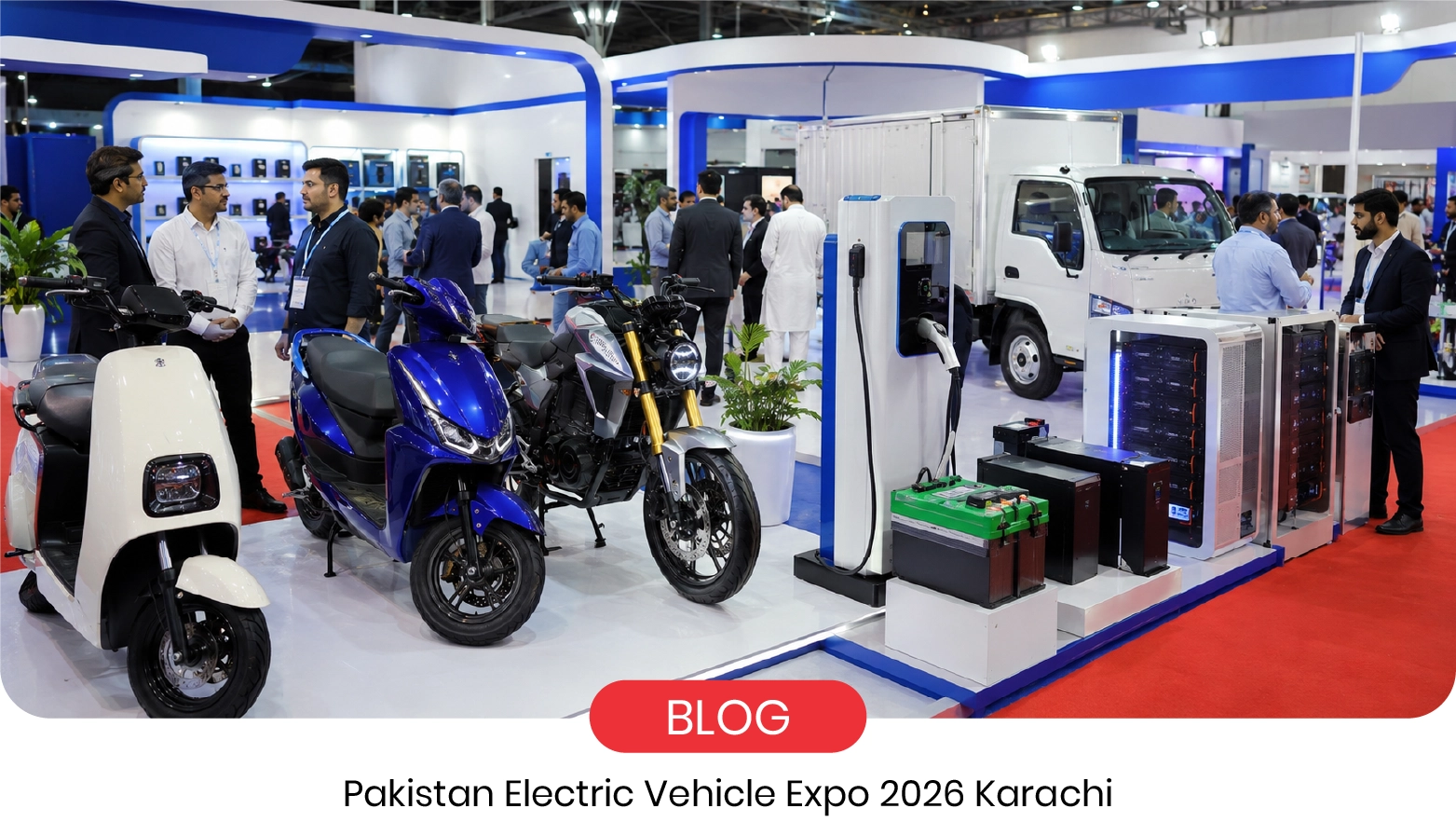
Pakistan Electric Vehicle Expo 2026 Karachi Ready for change
The Pakistan Electric Vehicle Expo 2026 takes place 3-5 September at Expo Centre Karachi, with a Lahore edition in May 2027. Organised by White Paper Summits, it covers cars, bikes, charging, batteries and commercial EVs. The event arrives as the NEV Policy targets 30 percent new-vehicle electrification by 2030.
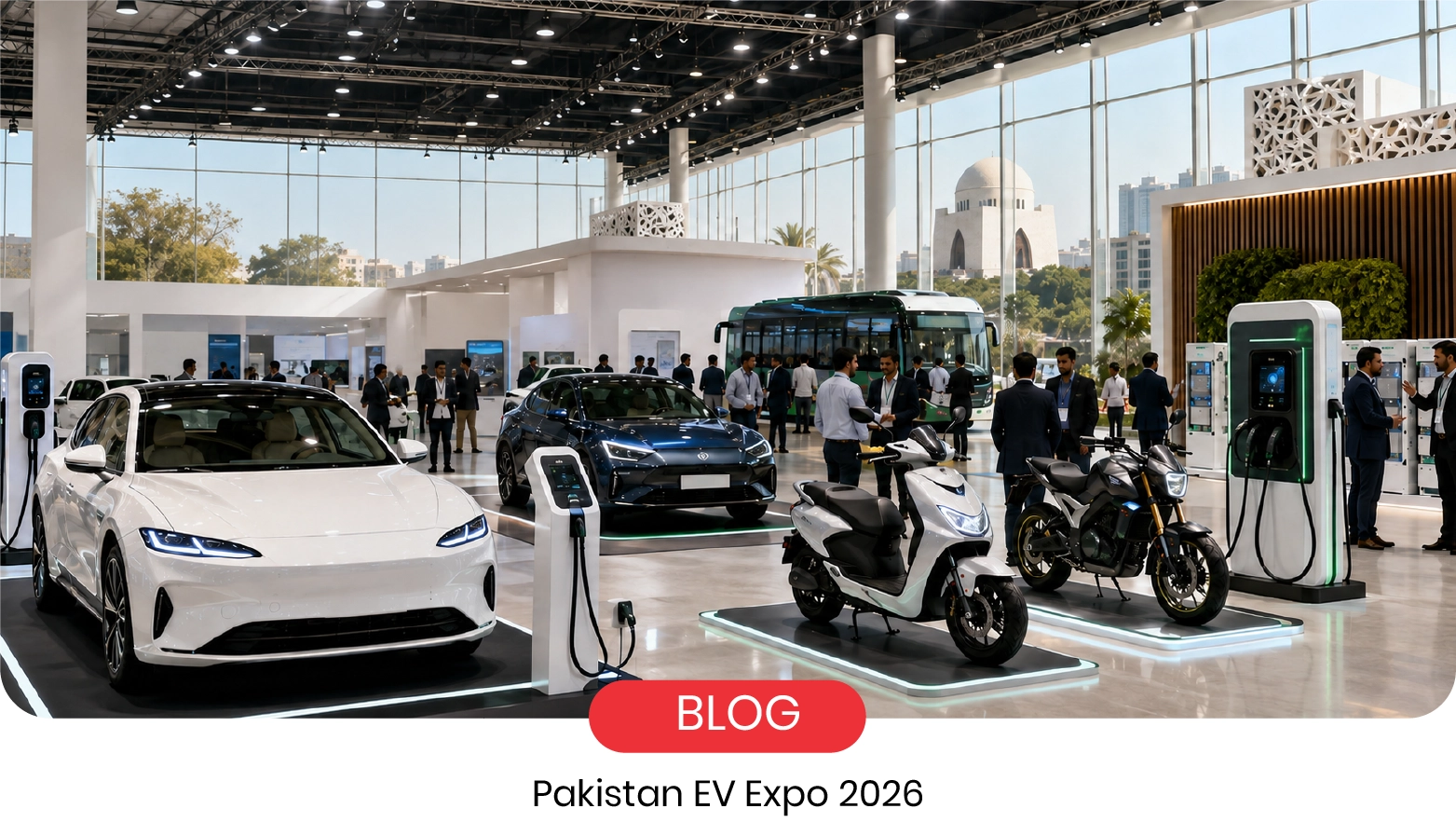
Pakistan EV Expo 2026: Future of Electric Mobility in Karachi
Pakistan Electric Vehicle Expo returns to Expo Centre Karachi from 3 to 5 September 2026. See the latest electric cars, e-bikes, chargers and batteries. Meet makers, policymakers and buyers in one place as the country pushes toward cleaner transport under the NEV Policy.
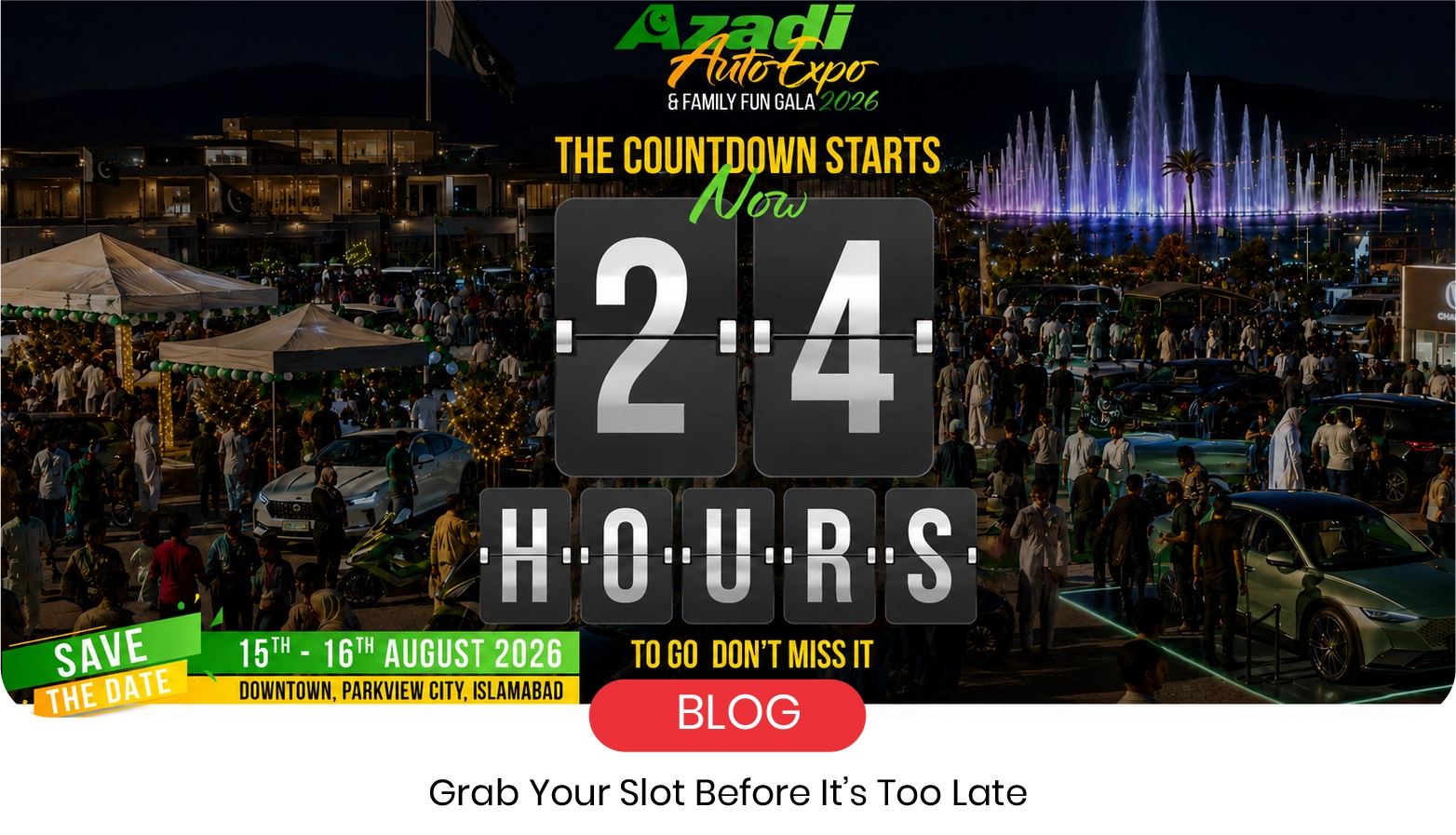
24h Left: Don’t Miss Azadi Auto Expo 2026 Islamabad
Only 24 hours left for Azadi Auto Expo & Family Fun Gala 2026 at Downtown ParkView City Islamabad. Experience 100+ brands, test drives, EV Zone, lifestyle bazaars and family fun this Independence Day weekend. Get your pass, brochure or exhibitor slot before it sells out.