Pakistani Driverless Car Crashes into Police Van in Islamabad
A young Pakistani innovator’s satellite-linked car crashed into a police van in Islamabad after losing internet connection. The viral video shows both promise and risk in homemade remote driving tech. Safety questions now follow the failed test near Parliament.
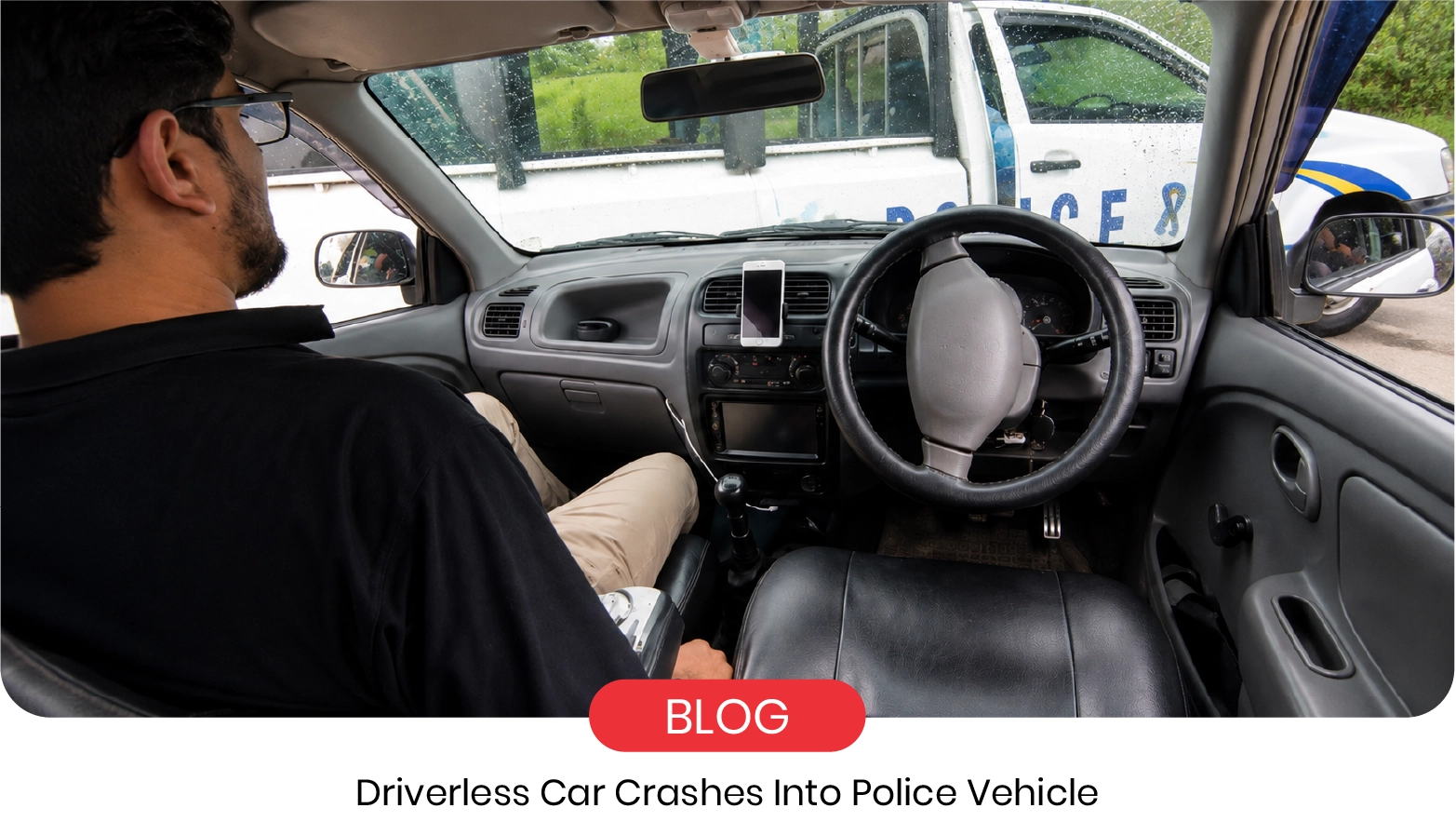
Table of Contents
- Who Is Ehsan Zafar?
- What Went Wrong
- Why This Matters Beyond the Video
- The Bigger Picture for Local Innovation
A video from Islamabad’s high-security zone has people talking. A car with no one behind the wheel moves forward. Then it suddenly veers and bumps a parked police van. The passenger reaches for the handbrake. Too late.
The car belongs to Ehsan Zafar, a young inventor from Abbottabad. He built a system that lets someone control a normal car from far away using a phone or computer. Internet and satellite links carry the commands. A 360-degree camera shows the road. Zafar said the car should stop on its own if the connection drops. On this day, that did not happen.
The test took place near D-Chowk and Parliament House. Journalist Muhammad Aalijah sat in the passenger seat. He filmed while explaining the system. The car rolled ahead under remote control. Then the link failed. The steering went wild. The car struck the police vehicle. No one was hurt. Damage looked minor. But the clip spread fast.
Who Is Ehsan Zafar?
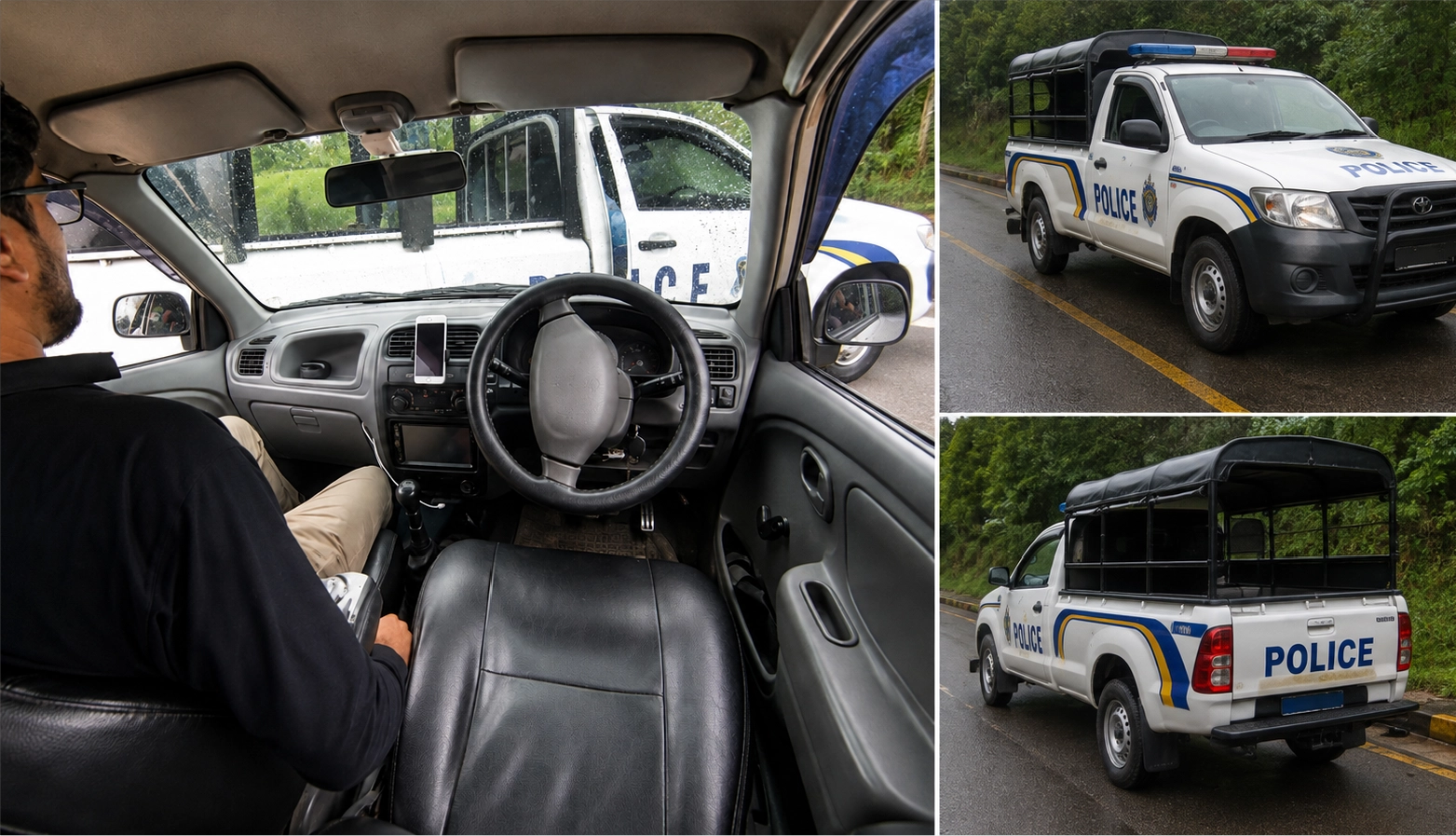
Ehsan Zafar Abbasi comes from a village in Abbottabad district. A few years ago, as a pre-engineering student, he turned a Suzuki Alto into a keyboard-controlled car. He sat in the back or passenger seat and drove using keys for steering, gas, brake, and more. Videos of that project drew millions of views. Mainstream channels covered him. He said games like GTA gave him the idea. He worked with scrap parts in a small home lab. Family helped by bringing old electronics.
Later he moved to remote control over the internet. He claims the system works from thousands of kilometers away. The car carries cameras so the operator sees everything. Previous demos looked smooth. This one in Islamabad did not.
What Went Wrong
Aalijah told reporters the car ran fine until the internet cut out. The remote operator lost control. The car kept moving and hit the police van. Aalijah pulled the handbrake but could not stop the impact in time.
Zafar had said the vehicle would stop automatically if the connection failed. That safety feature did not kick in during the test. The area had light traffic, which limited the danger. Aalijah later posted that the system is not fully safe yet. He said the video was meant as a warning, not an attack on the inventor. Experiment, he wrote, but put safety first.
Social media mixed praise with jokes. Some called it proof of Pakistani talent. Others said even a driverless car panics when it sees police. A few urged Zafar to keep going and fix the problems.
Why This Matters Beyond the Video
Homemade remote systems are not the same as full self-driving cars from big companies. Those use sensors, maps, and onboard computers that do not depend on a live internet link. Zafar’s setup needs a stable connection. In a city like Islamabad, signals can drop. In denser traffic the result could be worse.
Pakistan has other efforts in autonomous tech. Engineers at NED University in Karachi have tested an AI-based driverless car on campus roads. That project uses sensors and computer vision for lanes, lights, and obstacles. Speed stays low for safety. It is a different approach from pure remote control.
Zafar’s work shows what one determined person can build with limited resources. Turning a regular car into a remote vehicle takes real skill in electronics and mechanics. The keyboard version already proved he can solve hard problems. The latest crash shows the next hard problem: reliable fail-safes.
Road safety rules exist for a reason. Testing experimental vehicles in a high-security public area carries risk. Authorities may look closer at how and where such tests happen. Clear rules for remote or automated systems would help inventors and the public.
The Bigger Picture for Local Innovation
Young people across Pakistan build and tinker. Some fix phones. Some code apps. Some, like Zafar, rewire cars. Internet access, cheap parts, and social media let ideas travel far. Success videos bring attention and sometimes support. Failures bring lessons and public pressure.
Internet reliability remains a weak point. Mobile data can lag or cut out. Satellite links help in theory but still depend on the last connection to the car. A proper system needs local backup controls, speed limits during tests, and clear emergency stop methods that work without the network.
Zafar has shown persistence. He started with a keyboard car and kept improving. The viral crash will force him to strengthen the safety side. That is normal in engineering. Early versions break. Better versions learn from the breaks.
People watching the video feel two things at once. Pride that a young Pakistani built something new. Concern that it still needs work before it belongs on public roads. Both reactions are fair.
The car that hit the police van was not a finished product. It was a test. Tests sometimes fail in public. The real question is what comes next. Will the safety systems improve? Will future demos stay in controlled spaces until the tech is solid? Will other inventors take the same careful path?
Ehsan Zafar’s story is still being written. The keyboard car put him on the map. The remote system took the idea further. The crash in Islamabad added a sharp lesson. Talent is not the issue. Reliability is. Fix that, and the next video may show a car that stops when it should.For more updates, visit DrivePK.com
Tags
Share this article
About the Author

Najeeb Khan
Automotive enthusiast and writer
Comments (0)
Login Required
You need to be logged in to comment on this article.
No comments yet. Be the first to share your thoughts!
Related Articles
Toyota Corolla Discontinued Before Pakistan Facelift
Pakistan’s pre-facelift Toyota Corolla is reportedly discontinued, hinting at a facelift. Prices, bookings, specs and launch timing remain unconfirmed.
DrivePK Car Inspection Reports: Buy with Confidence
Buying a used car in Pakistan? A pre-purchase inspection can reveal hidden damage, engine issues and red flags before you pay—but it’s not enough alone.
2028 Kia Sportage: Major Design Changes Spotted
Kia’s next Sportage may get a bolder, boxier redesign, with an upright profile, sharper lines, wider grille and split headlights hinted by spy shots.