PGMM Awards 2026: Understanding Pakistan's EV Ecosystem
The PGMM Awards 2026 recognize organizations and individuals who are actively advancing electric mobility in Pakistan from EV manufacturers and charging providers to financial institutions and research bodies. Here's who should apply and what's at stake.
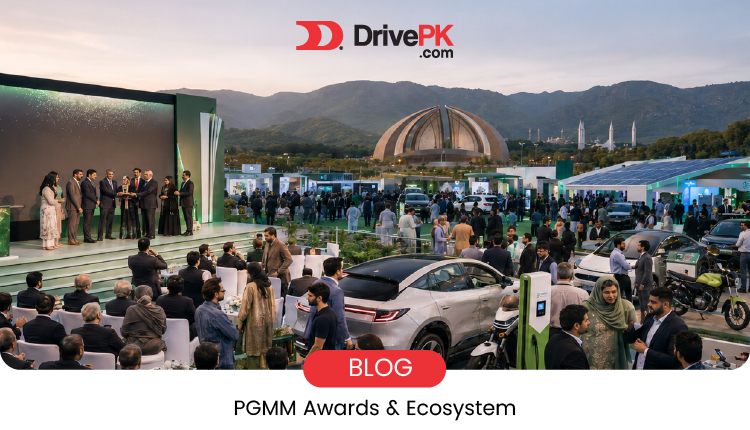
Table of Contents
- What the PGMM Awards 2026 Recognize
- Electric Mobility and Low-Carbon Transport Leadership
- Measurable Impact in EV Adoption and Charging Infrastructure
- Digital Innovation and Inclusive Workforce Development
- Who Should Apply for the PGMM Awards
- Electric Vehicle Manufacturers and Assemblers
- Energy Companies and Charging Infrastructure Providers
- Technology Firms and Mobility Startups
- Logistics, Fleet, and Transport Operators
- Financial Institutions and Investors
- Public Sector Entities and Policy Bodies
- Academic and Research Institutions
- Development Sector Organizations and Social Enterprises
- Why Organizations Should Participate in the PGMM Awards
- Positioning as a Leader in Pakistan's Green Transition
- Visibility at the Pakistan Green Mobility Conference & EV Expo 2026
- Connecting with High-Level Stakeholders, Partners, and Investors
- Demonstrating Commitment to Sustainability and Innovation
- The Broader Picture
Pakistan's transport sector has a problem that most urban residents know firsthand. Smog hangs over Lahore and Karachi for months. Fuel costs eat into household budgets. And the country spends billions every year importing petroleum that drains foreign exchange reserves.
The electric vehicle transition isn't just an environmental conversation anymore. It's an economic one.
That's where the Pakistan Green Mobility Mission comes in. Organized under PGMM a structured national platform designed to align policy, infrastructure, finance, and industry the PGMM Awards 2026 will recognize the organizations, companies, and institutions that are actually moving this transition forward.
Not the ones talking about it. The ones doing it.
The awards are tied to the EV Expo & Green Mobility Conference 2026, scheduled for 29 - 30 June 2026 at the Pak China Friendship Center in Islamabad. This is not just another industry event. It's a national convergence point for policymakers, manufacturers, investors, and technology firms all working or trying to work on the same problem from different angles.
If your organization is involved in any part of this ecosystem, read on. This might be the most useful thing you do this month.
What the PGMM Awards 2026 Recognize
The awards aren't about flashy branding or PR campaigns. They're about impact, documented, measurable, and relevant to Pakistan's specific challenges.
Pakistan's New Energy Vehicles Policy (2025–2030) sets a clear national direction: expand EV adoption across all vehicle categories and deploy 3,000 charging stations nationwide. But policy targets on paper don't automatically become charging stations on roads or affordable EVs in driveways. That gap between policy intent and actual execution is exactly what the awards are designed to close by spotlighting who's bridging it.
Here's what's being recognized.
Electric Mobility and Low-Carbon Transport Leadership
This category is for organizations that have demonstrated clear, sustained leadership in advancing electric and low-carbon transport in Pakistan.
That could mean a vehicle manufacturer that retooled its production line for two-wheelers or three-wheelers. It could be a logistics company that switched a meaningful portion of its fleet to electric. Or it could be a public transit agency that introduced EV buses on a specific city corridor.
What matters here is not intent or ambition. It's what changed on the ground because of what your organization did.
Pakistan's transport sector contributes a disproportionate share of urban air pollution. In cities like Lahore, Karachi, and Islamabad, vehicle emissions are among the leading drivers of particulate matter levels that breach WHO safety thresholds for months at a stretch. Organizations that reduced emissions through actual deployment of low-carbon transport options are the ones this category targets.
Measurable Impact in EV Adoption and Charging Infrastructure
This is arguably the most data-driven category in the entire awards program.
Pakistan currently has one of the thinnest charging networks in the region relative to its urban population density. The shortage of charging points is a real barrier to EV adoption not a theoretical one. Potential buyers regularly cite charging anxiety as a reason they haven't switched, even when the upfront cost of an EV has come within range.
Organisations that built charging stations, expanded their networks, introduced battery-swapping stations, or deployed EV fleets at scale qualify here. NEECA's EV Charging Infrastructure and Battery Swapping regulations now provide a formal framework for this infrastructure, which means there's a clearer standard to measure against.
Numbers matter. Units deployed, stations installed, fleet conversions completed, passengers carried on electric vehicles — these are the metrics that tell the real story.
Digital Innovation and Inclusive Workforce Development
The EV transition creates new industries. It also displaces old ones, and that's a real challenge in a country with Pakistan's employment structure.
Mechanics trained on combustion engines need reskilling. Electronics technicians and battery technicians are in short supply. Fleet management software built for diesel trucks doesn't work for electric ones. Energy management systems, smart charging networks, and data platforms for EV fleet operators are all relatively new categories in Pakistan.
This category recognizes two things. First, technology innovations that solve specific problems in the EV ecosystem, whether that's a software platform, a smart charging solution, or a data system that helps fleet operators manage energy costs. Second, training programs, workforce development initiatives, and inclusivity efforts that bring workers, women, and underrepresented groups into the green mobility workforce.
Both matter. Pakistan can't scale this transition without the technical talent to maintain and operate it.
Who Should Apply for the PGMM Awards
The honest answer is: more organizations than you'd expect.
The green mobility ecosystem is not just about vehicle manufacturers. It includes everyone from the battery importer to the training institute, from the microfinance bank to the municipal government. If your work connects to any part of the EV transition, there's a category for you.
Electric Vehicle Manufacturers and Assemblers
This is the most obvious category, but also one of the most competitive.
Pakistan's EV manufacturing base is growing, particularly in two-wheelers and three-wheelers. Several domestic assemblers and OEMs have started localizing components, which matters because the cost of EVs in Pakistan remains heavily influenced by import duties and foreign exchange rates.
If your company manufactures or assembles EVs in Pakistan or has made credible progress toward localization through partnerships with institutions like the Engineering Development Board or the Board of Investment, apply.
Document your production volumes, localization percentages, and what specific changes you made to supply chains or production processes. That's what reviewers will look at.
Energy Companies and Charging Infrastructure Providers
Pakistan's power sector has a specific opportunity that most people outside the industry don't fully appreciate: the country has significant installed power generation capacity that runs underutilized, particularly during off-peak hours. EVs, charged overnight or during low-demand periods, are one of the most practical ways to put that capacity to productive use.
Energy companies that built charging infrastructure — whether petrol station integrations, standalone charging hubs, or residential charging solutions belong in this category. So do businesses that introduced battery swapping for two- and three-wheelers, which is a model that works well in Pakistan's motorcycle-heavy urban transport mix.
The regulatory environment is now clearer than it was two years ago. NEECA's charging infrastructure regulations give energy companies a framework to operate within. Awards applicants in this space should show how their deployments align with or advance that regulatory framework.
Technology Firms and Mobility Startups
Technology plays a role in this transition that often gets overlooked.
Fleet management software, EV telematics, energy management systems, digital platforms that connect EV owners to charging points, mobile payment integrations for charging stations these are all real product categories where Pakistani startups and tech firms are building.
If you built a product that measurably improved how EVs are operated, managed, or accessed in Pakistan, apply. The awards aren't reserved for hardware manufacturers.
Startups especially, should consider this seriously. The PGMM conference brings together investors and financial institutions, so an award nomination or win can translate directly into conversations that matter for your next funding round.
Logistics, Fleet, and Transport Operators
Fleet operators face a specific version of the EV economics problem. The upfront cost is higher, the charging infrastructure at scale is patchy, and total cost of ownership calculations depend heavily on energy prices and maintenance costs that are harder to predict than for diesel fleets.
Despite that, some logistics companies and transport operators in Pakistan have made the switch or started. If your fleet includes electric vehicles, even a partial conversion, that's meaningful. More so if you can show the financial and operational data behind the decision.
This category also includes public transport operators. EV buses and electric rickshaws operating on city routes have a direct, visible impact on urban air quality. Organizations that deployed electric public transport qualify here.
Financial Institutions and Investors
EV financing is a genuine bottleneck in Pakistan.
The upfront cost of an electric two-wheeler is still higher than its petrol equivalent, even accounting for running cost savings. For most Pakistani consumers — and especially small commercial operators like delivery riders — the financing terms make or break the purchase decision.
The State Bank of Pakistan is integrated into PGMM's framework, which signals that financial sector participation isn't optional in this transition. Banks, microfinance institutions, development finance institutions, and private investors that created or funded EV financing products belong in this category.
Specific things to document: loan product design, disbursement volumes, default rates, borrower profiles, and any subsidy or concessional finance structures involved.
Public Sector Entities and Policy Bodies
The institutional fragmentation in Pakistan's EV ecosystem is real. Multiple federal ministries, provincial governments, and regulatory bodies each have a role to play. When they don't coordinate, things slow down. When they do, things move.
Regulatory bodies that simplified EV registration processes, provincial governments that introduced EV-friendly procurement policies, or federal ministries that advanced the implementation of the New Energy Vehicles Policy (2025–2030) all qualify.
This category is particularly important because it signals to the rest of the ecosystem that public sector actors are being held accountable for their role in the transition not just private sector ones.
Academic and Research Institutions
Pakistan needs better data on its own EV ecosystem. What are consumers actually willing to pay? Where do charging gaps most constrain adoption? What's the real total cost of ownership across vehicle categories? What battery technologies are best suited to Pakistan's temperature and road conditions?
Universities, research institutes, and think tanks that produced actionable research on any of these questions and especially those that collaborated with industry or government on applied research should apply.
This category also covers curriculum development and training programs for EV technicians, which is a workforce need the country has not yet fully addressed.
Development Sector Organizations and Social Enterprises
The green mobility transition has social dimensions that purely commercial actors often can't address on their own.
Women's access to electric mobility — whether as riders, operators, or workers in the EV supply chain is an underexplored area. Electric transport for low-income communities that currently rely on heavily polluting informal transport is another. And rural electrification projects that open up the possibility of EV adoption in smaller cities and towns matter too.
Development organizations, NGOs, and social enterprises working at these intersections qualify. So do organizations that specifically worked to bring marginalized groups into the EV workforce through training and placement programs.
Why Organizations Should Participate in the PGMM Awards
There's a version of this answer that sounds like marketing copy. We're not going to write that version.
Here's the honest case for participating.
Positioning as a Leader in Pakistan's Green Transition
Pakistan's EV market is early. That matters more than it sounds.
In a market this early, the organizations that establish credibility and recognition now will have a meaningful head start when the market scales. The organizations that are recognized at PGMM Awards 2026 will be on record as pioneers not as late adopters who joined when the economics became obvious to everyone.
This isn't about brand image. It's about being taken seriously by partners, customers, and investors who are evaluating who to work with in a market that's still forming.
Visibility at the Pakistan Green Mobility Conference & EV Expo 2026
The EV Expo & Green Mobility Conference 2026 is not a niche trade show. PGMM has structured it as a national convergence platform — bringing together federal ministries, provincial governments, financial institutions, industry players, and international partners under one roof.
That's a specific and valuable audience. Visibility at this event reaches the people who write policy, the people who fund projects, and the people who make procurement decisions. For companies trying to grow in this market, that kind of concentrated access is genuinely hard to replicate.
Connecting with High-Level Stakeholders, Partners, and Investors
PGMM's framework explicitly includes the State Bank of Pakistan, the Ministry of Industries and Production, the Engineering Development Board, the Board of Investment, and provincial governments.
An awards nomination opens conversations that might otherwise take months to arrange. For a startup looking for a government pilot partner, or a charging network operator looking for a development finance loan, or an EV manufacturer looking for a localization incentive — being in the room matters.
The conference also attracts international partners. Pakistan's EV transition is partly funded by and partly modeled on international best practices, which means there are foreign investors, technology providers, and development organizations attending who are looking for credible local partners.
Demonstrating Commitment to Sustainability and Innovation
This one is longer-term than it sounds.
Pakistan has made climate commitments through its Nationally Determined Contributions and the National Climate Change Policy. These commitments translate into policy direction, and that direction increasingly affects procurement criteria, financing terms, and regulatory approvals.
Organizations that demonstrate a track record of genuine sustainability action, not just stated commitments are better positioned when those policy directions harden into requirements. The awards process creates documented evidence of what your organization actually did, which matters more over time than what it said it would do.
And for organizations that export, partner with international companies, or seek foreign investment, ESG credentials are increasingly a prerequisite, not a nice-to-have. The PGMM Awards provide third-party recognition from a credible national platform.
The Broader Picture
Pakistan's transport sector won't change overnight. The infrastructure gaps are real. The financing constraints are real. The institutional coordination problems that PGMM was set up to address don't disappear because a policy document says they should.
But transitions don't happen because of policy documents. They happen because specific organizations make specific decisions to move in a new direction and then other organizations follow because the first ones demonstrated it was possible.
The PGMM Awards 2026 are a way of making those first movers visible. Of building a record of what worked, who did it, and how.
If your organization is doing that work — in vehicles, energy, technology, finance, policy, research, or workforce development — the conference runs 29 - 30 June 2026 at the Pak China Friendship Center in Islamabad.
For further information, contact the PGMM Contact Center at 0335 777 7466.
The work of building a cleaner, more energy-independent transport system in Pakistan is already underway. The question is whether your organization will be recognized as part of it.
Tags
Share this article
About the Author

Najeeb Khan
Automotive enthusiast and writer
Comments (0)
Login Required
You need to be logged in to comment on this article.
No comments yet. Be the first to share your thoughts!
Related Articles

Jhang Desert Rally 2026 Set for October 16–18
Jhang may host its first desert rally and cultural festival Oct 16–18, 2026, featuring a 95km Thal Desert course and 100 racers.
New Electric Scooters at PAPS 2026: Prices, Range & Specs
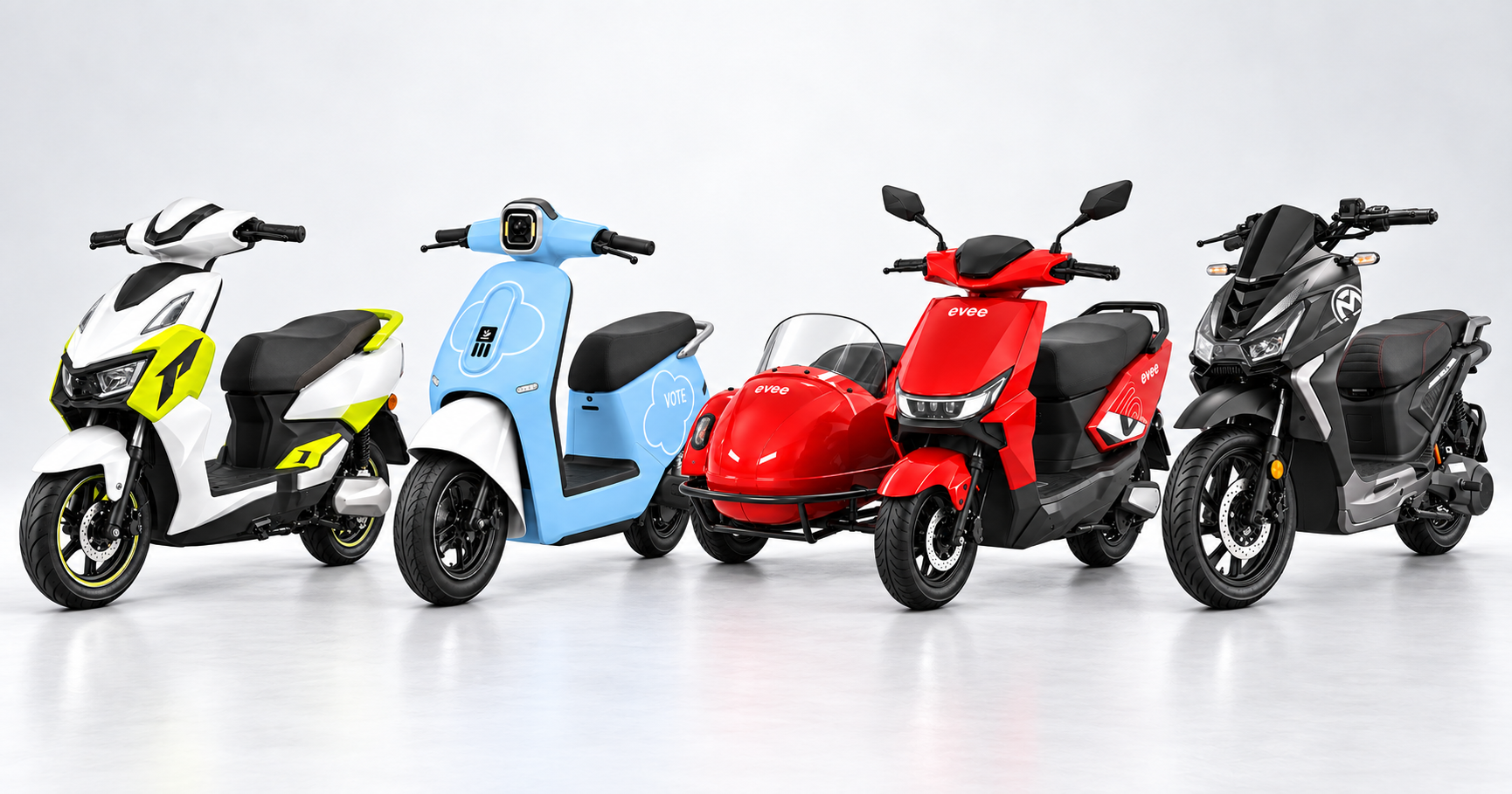
PAPS 2026 brought 14 new electric scooters from OKLA and EcoDost, with prices from Rs 199,000 to Rs 699,000. This guide lists every model with motor, battery, speed and claimed range, then shows what real riders should expect, what running costs look like and what to check before you book.
PAPS 2026: New Vehicle Launches & Reveals at Pakistan Auto Show
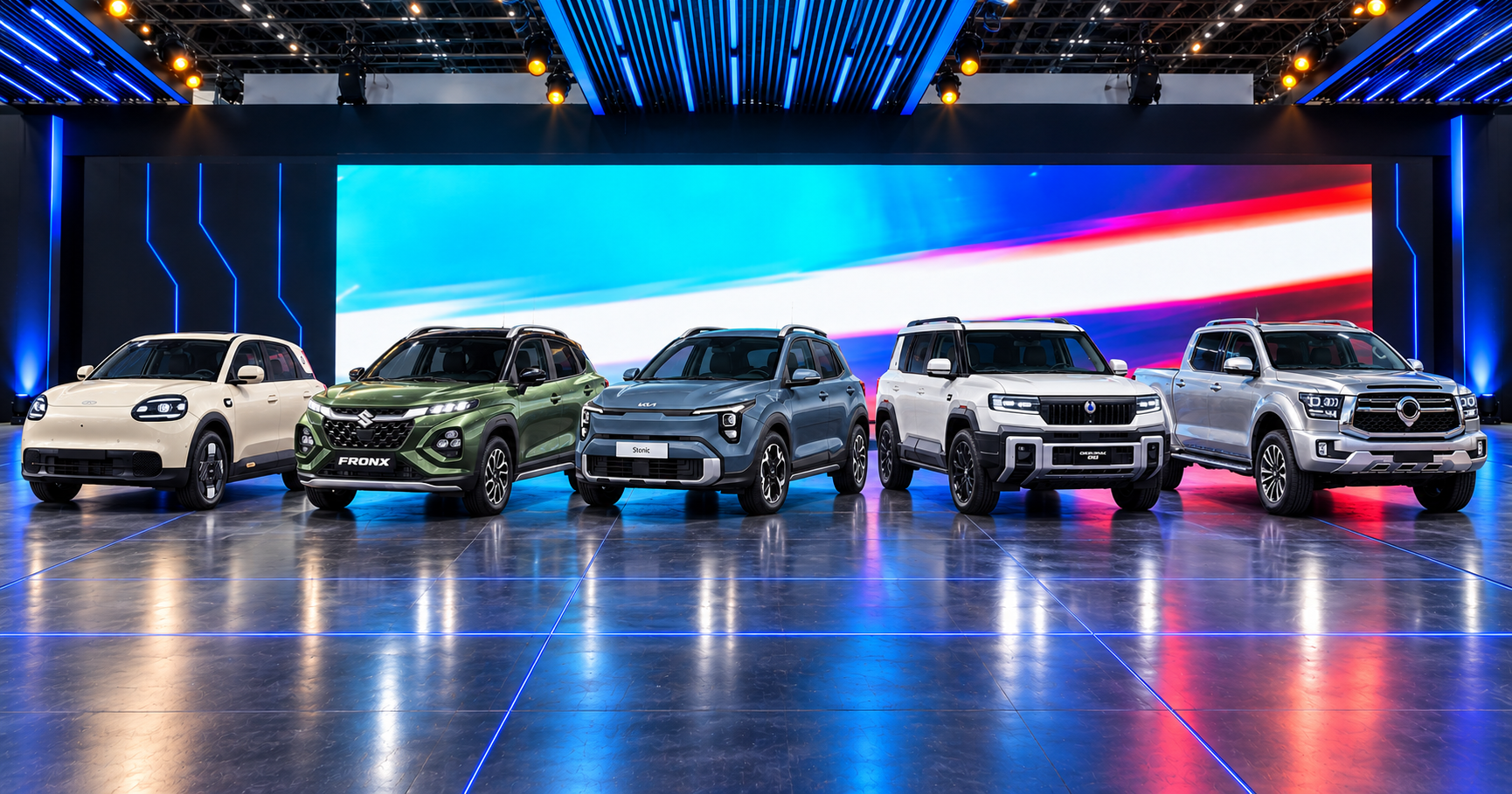
PAPS 2026 in Lahore brought new car reveals from Chery, Suzuki, Haval, Kia, Hyundai, Jaecoo, BYD and GWM. Here's every model shown, with confirmed prices where available and full specs for the rest.