PGMM's Integrated Framework: How Pakistan Plans to Actually Make EV Adoption Work
Pakistan has the policy, the surplus power, and the ambition. What it has lacked is coordination. PGMM's Integrated Implementation Framework is designed to fix that, connecting regulators, banks, industry, and provinces into a single system for scaling electric vehicle adoption from pilot projects to nationwide rollout.
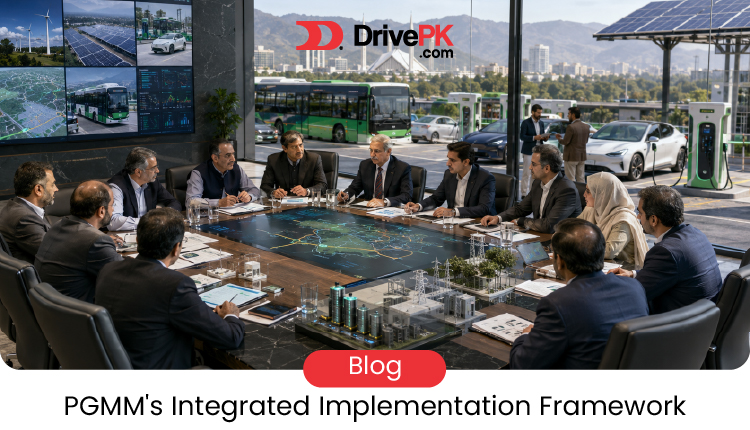
Table of Contents
- What PGMM Actually Is And Why It Matters Now
- The Problem PGMM Is Solving
- Five Pillars, One Direction
- Infrastructure and Energy
- Finance and Investment
- Industry and Localization
- Awareness and Capacity
- The State Bank's Role in Financing for the Masses
- This is the sequence PGMM is designed to set in motion.
- Localization: What EDB and BOI Are Actually Doing
- Three Phases: What the Roadmap Looks Like
- Phase I Institutional Alignment and Pilots
- Phase II Infrastructure Scale-Up and Market Activation
- Phase III System Integration and Nationwide Adoption
- Who Is Actually Sitting at the PGMM Table
- The EV Expo and Green Mobility Conference 2026
- The Honest Assessment
- Frequently Asked Questions
- Q1: Why were the dates for the EV Expo and Green Mobility Conference 2026 changed?
- Q2: How does the PGMM and Green Mobility Conference sync with the Prime Minister’s Youth Program?
- Q3: How will the PGMM and EV Expo boost the EV industry in Pakistan?
- Q4: What is the role of Drive PK in this regard?
- Q5: What offers or bonuses are available for the common man under PGMM/NEV Policy?
Pakistan generates electricity it cannot fully use. It spends billions importing fuel it cannot afford to keep buying. Its cities sit under smog so thick that Lahore regularly ranks among the most polluted urban areas on the planet. And it has over 30 million registered vehicles, nearly all running on petrol or diesel.
The pieces of a solution have been sitting on the table for years. Renewable capacity. Policy frameworks. Growing local manufacturing. A population that already uses two- and three-wheelers for most of its daily trips the easiest vehicles to electrify.
What Pakistan has lacked is not a plan. It is coordination.
That is exactly what the Pakistan Green Mobility Mission (PGMM) is trying to fix.
What PGMM Actually Is And Why It Matters Now
The PGMM is not a new ministry. It is not another policy paper. It is a national coordination mechanism a structured framework that takes everything Pakistan has already committed to and makes sure it actually moves together.
The NEV Policy 2025–2030.pdf), launched officially in June 2025, set the targets. Thirty percent of all new vehicle sales should be electric by 2030. The policy covers subsidies, manufacturing incentives, charging infrastructure, and financing. It was developed through consultations with over 60 experts, institutions, and industry stakeholders.
But Pakistan has had policy frameworks before. The question has always been execution.
PGMM exists to close that gap. It sits above the individual mandates of NEECA, EDB, SBP, and provincial governments, and creates the connective tissue between them. Think of it less like a new institution and more like a traffic control system, making sure the right vehicles are moving in the right direction at the same time.
And with the EV Expo and Green Mobility Conference 2026 scheduled for 29–30 June at the Pak-China Friendship Centre in Islamabad, that coordination is moving from paper into public view.
The Problem PGMM Is Solving
Here is the core issue with EV transitions everywhere, including Pakistan: infrastructure, financing, and consumer demand all need to grow together. But each one waits for the other to move first.
A consumer will not buy an electric vehicle if there are no charging stations. Private investors will not build charging stations if there are not enough EVs on the road. Banks will not lend aggressively for EV purchases if the market is unclear. And manufacturers will not scale local production if demand is uncertain.
This is the chicken-and-egg problem that has stalled EV adoption in dozens of markets. Pakistan's fragmented institutional setup where NEECA handles infrastructure standards, SBP handles financing guidelines, EDB manages manufacturing incentives, and provincial governments hold their own levers means that each of these players can act in isolation, and often does.
PGMM is designed to make them act together.
Five Pillars, One Direction
The PGMM framework rests on five strategic pillars. Each one targets a different part of the system. But the idea is that they move in sync.
Policy and Regulation
This pillar connects PGMM's work to the NEV Policy 2025–2030, the National Climate Change Policy, and Pakistan's Nationally Determined Contributions under the Paris Agreement. Pakistan has committed to meaningful emissions reductions. The transport sector contributed roughly 11% of domestic emissions in 2022 and by 2023, transport sector CO₂ emissions reached 43.3 million tonnes, about 22% of the country's total output.
Getting these numbers down requires regulatory clarity, not just ambition. PGMM works to make sure enforcement keeps pace with incentives.
Infrastructure and Energy
Pakistan has a genuine structural advantage here that most people overlook. Despite chronic load-shedding, the country has installed generation capacity of over 46,000 MW far more than its current average utilisation of around 10,290 MW. The grid has surplus power sitting idle.
The NEV Policy projects that EVs will need 126 terawatt-hours of energy over the next five years. That demand can be met from the existing grid. In other words, scaling EV adoption actually helps Pakistan make better use of electricity it is already paying for.
The infrastructure pillar targets 3,000 EV charging stations across urban and rural areas by 2030, with 240 stations planned in the current fiscal year. NEECA is responsible for the standards charging interoperability, battery swapping regulations, safety norms that make it possible for private investors to build into this space with confidence.
Finance and Investment
The NEV Policy allocated PKR 9 billion in EV subsidies for the first financial year, part of a broader commitment of over PKR 100 billion across the policy period. The PAVE Scheme Phase 2 offers a 60% subsidy on electric motorcycles and rickshaws the segment that matters most for ordinary Pakistanis.
But subsidies alone do not drive mass adoption. Most people buy vehicles on credit, not cash. This is where the financial sector pillar becomes critical.
Industry and Localization
Pakistan's two- and three-wheeler sector is already largely local. By March 2025, over 90% of parts for this segment were manufactured domestically. The country had issued 58 certificates for local assembly of two- and three-wheeler NEVs, and 2 licenses for four-wheelers. Local production capacity for electric two- and three-wheelers had risen to 2 million vehicles annually.
The localization pillar, managed through EDB and BOI, pushes this further attracting foreign direct investment, enabling technology transfer, and building the supply chains that reduce dependence on imported vehicles and components.
Awareness and Capacity
None of the above works if consumers do not understand EVs, technicians cannot service them, and policymakers lack the information to make good decisions. This pillar covers public education, skills training, demonstration projects, and the kind of stakeholder knowledge exchange that events like the Green Mobility Conference 2026 are built to accelerate.
The State Bank's Role in Financing for the Masses
The financial sector integration piece deserves more attention than it usually gets.
Pakistan's transport is dominated by two- and three-wheelers. Millions of families and small businesses depend on them. The people who most need affordable EVs are also the people who have the least access to formal credit.
The State Bank of Pakistan has introduced EV-specific financing guidelines — refinancing schemes that make it cheaper for banks to lend for EV purchases, and risk mitigation frameworks that lower the barrier for lenders. The goal is to build products that reach SMEs, women, and youth segments that have historically been priced out of formal vehicle financing.
When credit actually reaches these groups, demand expands. When demand expands, it justifies infrastructure investment. When infrastructure is built out, it creates more confidence for more credit.
This is the sequence PGMM is designed to set in motion.
NEECA's Infrastructure Mandate
The National Energy Efficiency and Conservation Authority is responsible for one of the most consequential parts of the EV transition: making sure charging infrastructure is standardised, safe, and investable.
Without common standards for connectors, charging speeds, and battery swapping protocols, Pakistan risks building a fragmented network where different vehicles cannot use different stations. NEECA's regulatory work on interoperability norms and safety standards is what allows private capital to enter this space without assuming enormous technical risk.
The 3,000-station target is ambitious. The current network remains heavily concentrated in major cities, with limited coverage in smaller urban centres and rural areas. Getting to nationwide coverage requires private investment at scale and that scale only comes when the rules of the road are clear.
Localization: What EDB and BOI Are Actually Doing
The Engineering Development Board and the Board of Investment are the two agencies most directly responsible for turning Pakistan from an importer of vehicles into a producer of them.
EDB coordinates with local manufacturers on quality standards and safety compliance the same work it has been doing under the PAVE Scheme. BOI focuses on attracting foreign investment and facilitating technology transfer from global EV manufacturers to local partners.
The NEV Policy's AIDEP tariff facility, which continues until 2026 and phases out gradually by 2030, is designed to give local manufacturers a protected period to build capability. The transition is intentional: support now, global competition later.
The economic case is straightforward. Fuel imports cost Pakistan enormous sums in foreign exchange every year. Every EV on the road reduces that number. Every locally assembled component keeps more of the supply chain value inside Pakistan. The NEV Policy projects savings of 2.07 billion litres of fuel annually by 2030 approximately USD 1 billion in foreign exchange per year. Carbon credits from the transition could generate around PKR 15 billion in additional revenue.
Three Phases: What the Roadmap Looks Like
PGMM's implementation does not ask Pakistan to solve everything at once. It works in three phases.
Phase I Institutional Alignment and Pilots
This phase focuses on getting the coordination mechanisms in place. Mapping mandates across agencies. Running small-scale demonstration projects to prove concepts. Refining policies based on what early pilots reveal. The point is not to scale; it is to build enough confidence and coherence to scale later.
Phase II Infrastructure Scale-Up and Market Activation
Once the institutional groundwork is laid, Phase II moves to deployment. Charging stations roll out. Financing products reach the market. Awareness campaigns bring consumers into the conversation. Early commercial transactions start to create the data and confidence that attract more private investment.
Phase III System Integration and Nationwide Adoption
The final phase is full ecosystem maturity. EV adoption becomes self-sustaining. The charging network integrates with renewable energy sources. The domestic manufacturing sector competes on quality, not just subsidy protection. And Pakistan's long-term zero-emission transport roadmap becomes executable, not aspirational.
The phased structure matters because it is honest. Pakistan is not starting from zero; local manufacturing is already significant, policy is already in place, and some financing products exist. But it is also not starting from a position of full readiness. Phased implementation acknowledges both.
Who Is Actually Sitting at the PGMM Table
The breadth of stakeholders involved is one of PGMM's defining features. This is not a single ministry exercise.
Federal ministries of Industries and Production, Energy, Climate Change, and Finance each have pieces of the mandate. Regulatory authorities like NEECA and the State Bank operate under their respective statutory frameworks, but are integrated into the coordination structure. Provincial governments, which control land, local permitting, and public transport in their jurisdictions, are part of the picture too.
Financial institutions, banks, leasing companies, and development finance institutions bring the capital. Industry players, OEMs, component manufacturers, charging infrastructure operators, oil marketing companies navigating the energy transition bring market knowledge and investment. Academic and research institutions contribute R&D, data, and skilled graduates.
The Auditor General of Pakistan is required to conduct a performance audit of the NEV Policy every six months. A steering committee under the Ministry of Industries and Production holds monthly and quarterly reviews.
This level of built-in accountability is not always present in Pakistani policy frameworks. Its inclusion here signals that PGMM is designed to be measured, not just announced.
The EV Expo and Green Mobility Conference 2026
The PGMM's work reaches a significant public moment on 29 to 30 June 2026 at the Pak-China Friendship Centre in Islamabad.
The EV Expo and Green Mobility Conference is not a trade show layered onto a policy conversation. It is the other way around. The policy conversation ministerial dialogues, industry panel discussions, investor roundtables, innovation and youth platforms, the startup showcase is the core of the event. The exhibition and test drive arena bring it to life in a form that consumers, fleet operators, and businesses can actually experience.
The Green Mobility Awards 2026 recognise organisations and individuals advancing the transition. The VIP Gala Dinner creates the kind of relationship-building between government, industry, and finance that makes deals happen.
For manufacturers, the event is an opportunity to connect B2B and B2G. For investors, it is a chance to see the policy commitments and market appetite in one place. For exhibitors ranging from mid-tier packages to premium 360 options with SMD screens and 3D illuminated branding, it is Pakistan's most concentrated EV audience.
Registrations and exhibitor information are available at pgmm.pk.
The Honest Assessment
Pakistan has tried to accelerate EV adoption before, with limited results. The gap between policy ambition and on-the-ground execution has been a persistent problem not just in transport but across sectors.
PGMM is a serious attempt to address that gap structurally, not just rhetorically. The five-pillar framework, the phased roadmap, the multi-stakeholder coordination, and the built-in auditing are the right design choices.
But the model only works if the coordination is real. If provincial governments act on their part of the mandate. If banks actually develop and market EV loan products. If NEECA's standards enable private charging investment rather than delaying it. If EDB's incentives result in genuine manufacturing growth, not just license issuance.
The NEV Policy's target 30% of new vehicle sales to be electric by 2030, which is four years away. Pakistan's installed EV capacity, its grid surplus, and its growing local manufacturing base mean the technical foundations are more solid than they appear from the outside.
The Green Mobility Conference 2026 is a chance to see whether the institutional foundations are catching up.
For registration, exhibitor packages, and further information on the EV Expo and Green Mobility Conference 2026 (29–30 June, Pak-China Friendship Centre, Islamabad), visit pgmm.pk and for more updates, visit DrivePK.com
Frequently Asked Questions
Q1: Why were the dates for the EV Expo and Green Mobility Conference 2026 changed?
A: The dates were adjusted primarily to align with the availability of key government representatives, especially Prime Minister Shahbaz Sharif. This ensures high-level participation and meaningful policy announcements during the event, making the coordination under PGMM more impactful.
Q2: How does the PGMM and Green Mobility Conference sync with the Prime Minister’s Youth Program?
A: The PGMM framework integrates with the Prime Minister’s Youth Program through its Awareness and Capacity pillar. This includes skills training for young technicians in EV servicing and maintenance, youth-focused demonstration projects, innovation platforms at the conference, and targeted financing schemes that prioritize youth and women for affordable EV loans and entrepreneurship in green mobility.
Q3: How will the PGMM and EV Expo boost the EV industry in Pakistan?
A: PGMM boosts the industry by driving localization through EDB and BOI incentives, attracting FDI and technology transfer, enforcing standards via NEECA for charging infrastructure, and creating demand through subsidies and financing. The EV Expo 2026 serves as a major B2B and B2G platform for networking, showcasing local manufacturing achievements, and accelerating deals that support the target of 30% new EV sales by 2030.
Q4: What is the role of Drive PK in this regard?
A: Drive PK plays a supportive role in advancing PGMM objectives through industry engagement, promoting local EV assembly and components, participating in stakeholder consultations, and contributing to awareness and demonstration initiatives. It helps bridge manufacturers, policymakers, and consumers to strengthen the domestic EV ecosystem.
Q5: What offers or bonuses are available for the common man under PGMM/NEV Policy?
A: Common citizens, especially for two- and three-wheelers (the most relevant segment), benefit from the PAVE Scheme Phase 2 offering up to 60% subsidy on electric motorcycles and rickshaws, State Bank of Pakistan’s EV-specific financing with lower interest rates and risk mitigation, plus broader incentives like reduced import duties during the localization phase. Additional perks include potential carbon credit-linked benefits and easier access to charging infrastructure as it expands.
Tags
Share this article
About the Author

Najeeb Khan
Automotive enthusiast and writer
Comments (0)
Login Required
You need to be logged in to comment on this article.
No comments yet. Be the first to share your thoughts!
Related Articles

Jhang Desert Rally 2026 Set for October 16–18
Jhang may host its first desert rally and cultural festival Oct 16–18, 2026, featuring a 95km Thal Desert course and 100 racers.
New Electric Scooters at PAPS 2026: Prices, Range & Specs
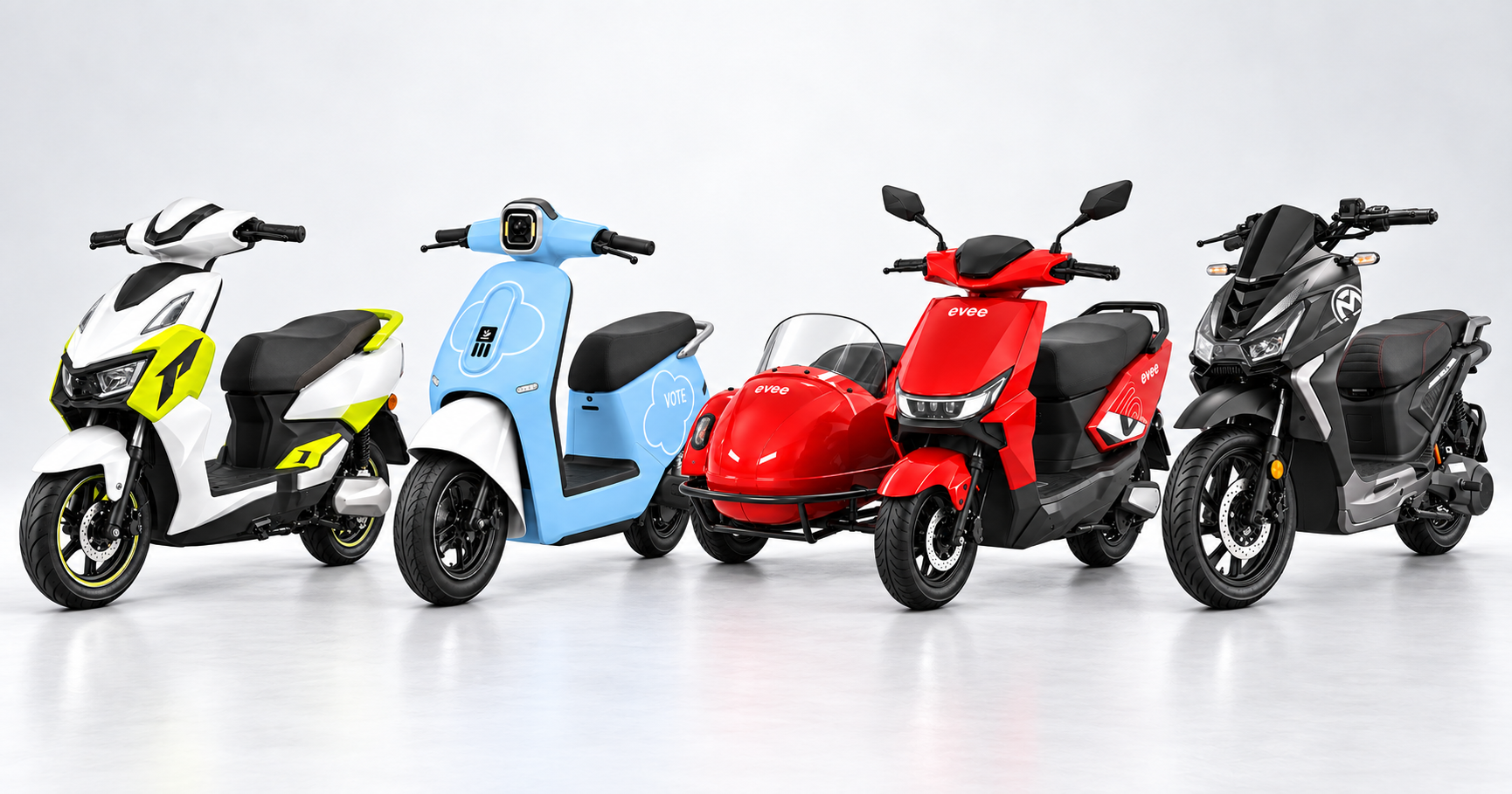
PAPS 2026 brought 14 new electric scooters from OKLA and EcoDost, with prices from Rs 199,000 to Rs 699,000. This guide lists every model with motor, battery, speed and claimed range, then shows what real riders should expect, what running costs look like and what to check before you book.
PAPS 2026: New Vehicle Launches & Reveals at Pakistan Auto Show
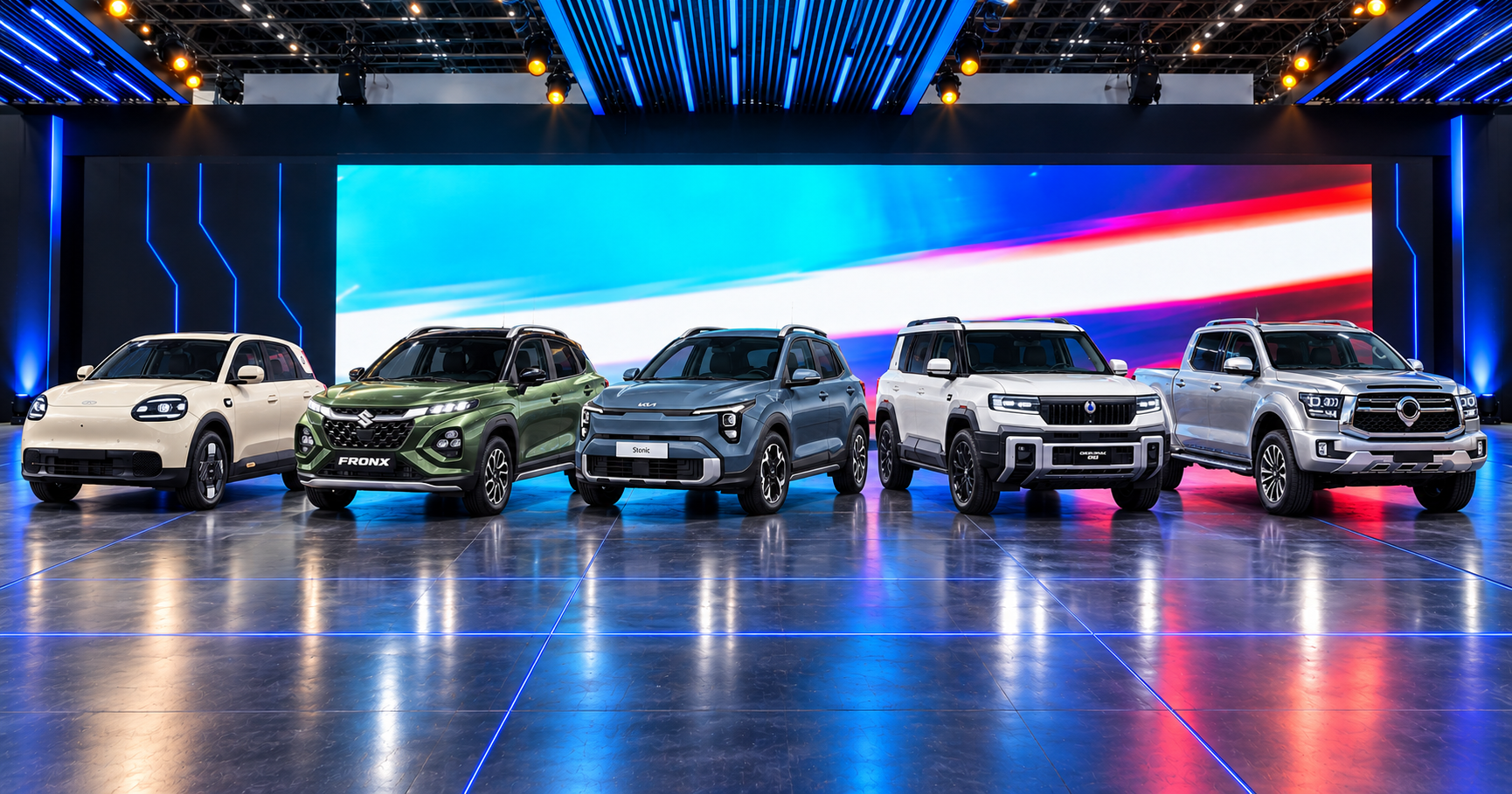
PAPS 2026 in Lahore brought new car reveals from Chery, Suzuki, Haval, Kia, Hyundai, Jaecoo, BYD and GWM. Here's every model shown, with confirmed prices where available and full specs for the rest.