Prime Minister’s Youth Program Meets PGMM: Pakistan’s New B2G Model for Youth-Led Green Mobility Revolution
Pakistan integrates Prime Minister’s Youth Program with Pakistan Green Mobility Mission via a B2G model, turning youth into drivers of electric mobility. This partnership accelerates EV adoption, creates green jobs, builds local industry, and supports NEV Policy targets at the EV Expo & Green Mobility Conference 2026.
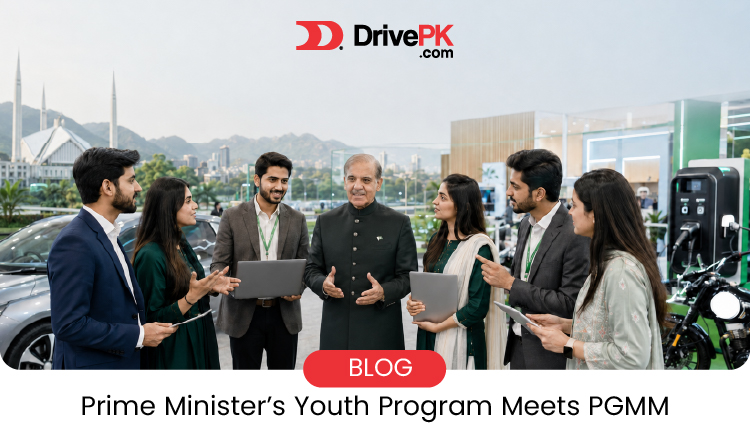
Table of Contents
- Understanding the Foundations PMYP and PGMM
- The EV Expo & Green Mobility Conference 2026: A National Launchpad
- Building the B2G Model Merging Youth Empowerment with Green Mobility
- Advantages include:
- Strategic Pillars of the Integrated B2G Framework
- How New Innovative Projects Are Being Merged into the Platform
- Implementation Roadmap: From Pilot to Nationwide Impact
- Youth at the Center Skills, Jobs, Entrepreneurship & Inclusion
- Economic, Environmental & Social Benefits for Pakistan
- Challenges, Risks, and Mitigation Strategies
- Call to Action: What Stakeholders Should Do Next
Pakistan stands at a pivotal crossroads. With a population where over 60% are under 30, the country possesses one of the world’s largest youth bulks a demographic dividend that could either fuel unprecedented growth or strain resources if not harnessed effectively. At the same time, the transport sector contributes significantly to emissions, air pollution chokes major cities, and fuel imports drain foreign exchange reserves.
The integration of the Prime Minister’s Youth Program (PMYP) with the Pakistan Green Mobility Mission (PGMM) through a Business-to-Government (B2G) framework represents a visionary response. This merger transforms youth from passive beneficiaries into active architects of Pakistan’s green transition. It leverages private sector innovation, government scale, and youth energy to accelerate electric vehicle (EV) adoption, build sustainable industries, and create millions of green jobs.
This is not just another government initiative. It is a national platform where entrepreneurship meets climate action, skills development powers industrial localization, and youth-led startups drive market transformation. As Pakistan aims for 30% new vehicle sales to be electric by 2030 under the New Energy Vehicles (NEV) Policy 2025–2030, this B2G model ensures execution matches ambition.
Why now?
Global shifts toward net-zero, surplus electricity capacity in Pakistan, and surging demand for affordable mobility solutions create a perfect storm. The EV Expo & Green Mobility Conference 2026 (originally slated for 9th t0 10th June, now 29th–30th June at Pak-China Friendship Center, Islamabad) serves as the launchpad. This event will showcase technologies, foster partnerships, and ignite youth participation.
Understanding the Foundations PMYP and PGMM
The Prime Minister’s Youth Program (PMYP), launched in 2013 and revitalized with a focus on engagement, employment, education, and environment (the 4Es), has empowered millions through skills training, entrepreneurship loans, scholarships, sports, and leadership opportunities. Initiatives like the Digital Youth Hub, Perfect Pitch for startups, and skills programs under NAVTTC equip young Pakistanis with market-relevant abilities.
PMYP recognizes youth as Pakistan’s most precious asset. Its components, from girls’ empowerment (“Girls Learn Girls Earn”) to future jobs and blue-collar dignity, provide the human capital foundation.
The Pakistan Green Mobility Mission (PGMM) addresses the mobility crisis. It is a structured national framework aligning policy, infrastructure, finance, industry, and awareness to drive the shift to electric and sustainable transport. Transport emissions stand at around 22% of total CO₂, with cities like Lahore facing severe air quality issues. PGMM responds to gaps in coordination despite existing policies like the National Climate Change Policy, NDCs, Alternative & Renewable Energy Policy, and NEV Policy.
PGMM’s objectives include showcasing technologies, stakeholder engagement, policy dialogue, and forging partnerships. It builds ecosystem linkages, raises market awareness, and coordinates sectors for emissions reduction, better air quality, energy optimization, and a robust industrial base.
Merging these creates synergy: PMYP’s youth machinery powers PGMM’s technical and market goals through B2G collaboration.
The EV Expo & Green Mobility Conference 2026: A National Launchpad
Scheduled for 29th–30th June 2026 at the Pak-China Friendship Center in Islamabad, the EV Expo & Green Mobility Conference is Pakistan’s first comprehensive national EV platform. It unites policymakers, industry leaders, investors, startups, universities, and youth.
Expect live demonstrations of EVs, battery tech, charging infrastructure, smart mobility solutions, B2B meetings, policy panels, innovation arenas, and youth showcases. With 3000+ attendees, 150+ exhibitors, 75+ partners, and 30+ universities, it will drive visibility, investment, and collaboration.
This event marks the public unveiling of the integrated PMYP-PGMM platform, where youth innovators pitch green mobility solutions, students explore careers, and entrepreneurs connect with financiers. Registration is open at pgmm.pk, a must-attend for anyone invested in Pakistan’s future.
Building the B2G Model Merging Youth Empowerment with Green Mobility
B2G models excel by combining private sector agility with governmental reach. In this integration, private firms innovate in EV tech, charging, and services; government provides policy, incentives, and scale; and youth execute through startups, skills, and grassroots adoption.
Advantages include:
- Innovation at speed: Private players develop solutions; government de-risks via subsidies and standards.
- Transparency and accountability: Audits, steering committees, and performance reviews.
- Reduced fiscal burden: Private investment funds, infrastructure, and manufacturing.
- Faster execution: Direct youth participation bypasses bureaucracy.
- Inclusive growth: Focus on women, underserved areas, and SMEs.
PMYP’s entrepreneurship ecosystem (loans, mentorship, Perfect Pitch) channels into PGMM’s pillars, turning youth ideas into scalable green businesses.
Strategic Pillars of the Integrated B2G Framework
The framework rests on five pillars, infused with PMYP elements:
- Policy & Regulation: Aligns with NEV Policy, NDCs, etc. Youth input via PMYP forums ensures policies address real needs.
- Infrastructure & Energy: Targets 3,000 charging stations by 2030. Youth in PMYP skills programs train as installers and technicians, leveraging surplus grid capacity (over 46,000 MW installed vs. lower utilization).
- Finance & Investment: SBP’s EV financing guidelines, subsidies (e.g., PAVE Scheme), and PKR 100+ billion commitments. PMYP links youth to credit for startups and vehicle purchases, targeting women and rural entrepreneurs.
- Industry & Localization: 90%+ local content in two/three-wheelers; capacity for 2 million units/year. B2G attracts FDI and tech transfer; PMYP nurtures youth-led component manufacturing and assembly startups.
- Awareness & Capacity: Public campaigns, training, and events. PMYP’s Digital Youth Hub and university partnerships amplify outreach.
This integrated approach ensures pillars reinforce each other under B2G coordination.
How New Innovative Projects Are Being Merged into the Platform
PMYP’s existing projects evolve:
- Skills Development: Expand curricula to include EV maintenance, battery tech, solar integration, and smart charging. Target 100,000+ youth annually.
- Entrepreneurship: Dedicated green mobility tracks in loans and incubation. Youth startups in charging networks, battery recycling, and last-mile EV logistics.
- Innovation Challenges: Perfect Pitch editions focused on green tech; hackathons at the 2026 Expo.
- Inclusion: Women-focused EV entrepreneurship; programs for Balochistan, KP, and rural Sindh/Punjab youth.
- Leadership & Engagement: Youth ambassadors for PGMM awareness drives and community EV adoption pilots.
New projects include youth-managed demo fleets, university innovation hubs for localized EV designs, and digital platforms for carbon credit tracking by young entrepreneurs.
Implementation Roadmap: From Pilot to Nationwide Impact
Phase I: Institutional Alignment & Pilots (Short-term)
Coordinate agencies, launch PMYP-PGMM pilots in major cities, train initial cohorts, and run Expo-linked demos.
Phase II: Infrastructure Scale-Up & Market Activation (Medium-term)
Roll out charging networks, activate financing, scale youth enterprises, and achieve early adoption targets. B2G partnerships fund expansions.
Phase III: System Integration & Nationwide Adoption (Long-term)
Self-sustaining ecosystem with integrated renewables, competitive local industry, and youth-driven innovation ecosystem. Full alignment with zero-emission goals.
Monthly/quarterly reviews and Auditor General audits ensure accountability.
Youth at the Center Skills, Jobs, Entrepreneurship & Inclusion
Youth are not beneficiaries; they are drivers. PMYP equips them with skills for 500,000+ green jobs projected in manufacturing, services, and maintenance. Women entrepreneurs lead charging hubs or ride-sharing fleets. Students from underserved areas prototype affordable EVs or software for fleet management.
Real-world examples: A Lahore youth startup (inspired by similar global models) scaling solar-powered charging; young women in Khyber Pakhtunkhwa running EV repair micro-enterprises. International cases like India’s FAME scheme or Rwanda’s youth green tech programs show how targeted inclusion multiplies impact. Pakistan can leapfrog by centering its massive youth cohort.
Economic, Environmental & Social Benefits for Pakistan
Economic: Import substitution saves ~USD 1 billion annually in fuel by 2030. Localized production boosts GDP, creates supply chains, and generates revenue from carbon credits (~PKR 15 billion potential). Millions of jobs in high-value sectors.
Environmental: Significant cuts in transport emissions (11-22% share), improved air quality, and better energy utilization.
Social: Empowered youth reduce unemployment and brain drain. Greater inclusion for women and marginalized groups fosters cohesion. Healthier cities, safer mobility for families.
This positions Pakistan as a model for developing nations — youth-led green growth via B2G.
Challenges, Risks, and Mitigation Strategies
Challenges include infrastructure gaps, financing access, awareness, supply chain dependencies, and coordination hurdles.
Mitigations:
- Phased rollout with pilots to de-risk.
- Strong B2G governance and audits.
- Targeted PMYP training and incentives for inclusion.
- International partnerships for tech/finance.
- Data-driven monitoring via digital tools.
Proactive risk management turns obstacles into opportunities for innovation.
Call to Action: What Stakeholders Should Do Next
The time for action is now.
Government: Accelerate integration, allocate dedicated PMYP-PGMM funding, and institutionalize B2G mechanisms.
Private Sector: Invest in pilots, mentor youth startups, and exhibit at the 2026 Expo.
Academia & Institutions: Partner for R&D, curricula, and incubators.
Youth: Register for the Expo, upskill via PMYP, launch green ventures, and become ambassadors. Visit pgmm.pk and pmyp.gov.pk today.
International Partners: Support with knowledge, finance, and technology transfer.
Pakistan’s green mobility revolution is youth-powered. By embracing this B2G evolution, we secure a prosperous, sustainable, and equitable future. Join the movement at the EV Expo & Green Mobility Conference 2026. Together, let’s drive Pakistan forward electrically, innovatively, and inclusively. For more updates, visit DrivePK.com
Tags
Share this article
About the Author

Najeeb Khan
Automotive enthusiast and writer
Comments (0)
Login Required
You need to be logged in to comment on this article.
No comments yet. Be the first to share your thoughts!
Related Articles

Jhang Desert Rally 2026 Set for October 16–18
Jhang may host its first desert rally and cultural festival Oct 16–18, 2026, featuring a 95km Thal Desert course and 100 racers.
New Electric Scooters at PAPS 2026: Prices, Range & Specs
PAPS 2026 brought 14 new electric scooters from OKLA and EcoDost, with prices from Rs 199,000 to Rs 699,000. This guide lists every model with motor, battery, speed and claimed range, then shows what real riders should expect, what running costs look like and what to check before you book.
PAPS 2026: New Vehicle Launches & Reveals at Pakistan Auto Show
PAPS 2026 in Lahore brought new car reveals from Chery, Suzuki, Haval, Kia, Hyundai, Jaecoo, BYD and GWM. Here's every model shown, with confirmed prices where available and full specs for the rest.