How to Remove Car Scratches Safely at Home
Before polishing a car scratch, clean the panel and identify the damage—surface marks may polish away, but missing paint needs a deeper repair first.
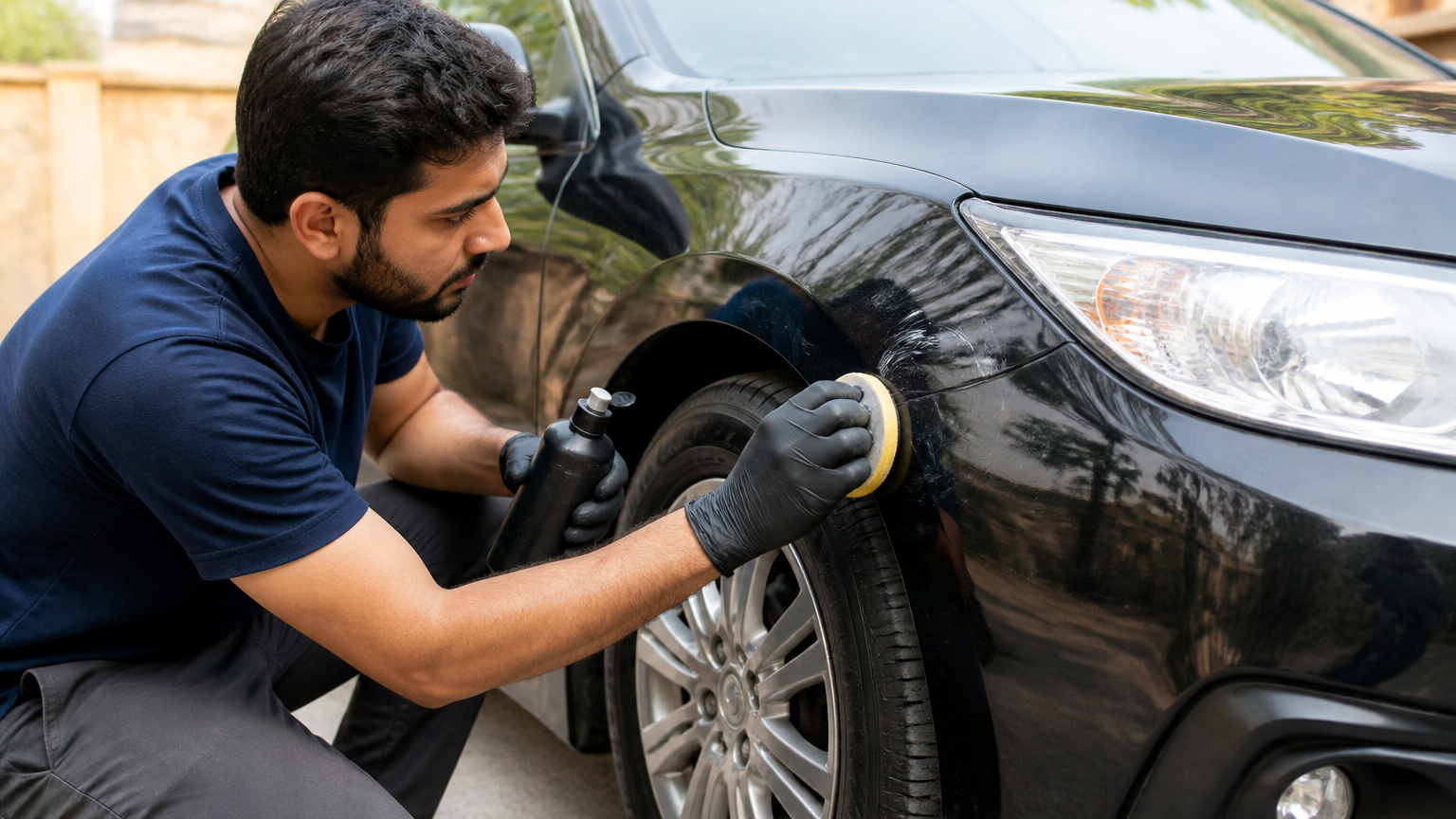
A scratch on your car can feel worse than it looks. It may happen after a tight traffic squeeze, a motorcycle brush, or even a rough wash at a local service station. The first step is not to polish it right away. Clean the panel first and check what kind of mark you are dealing with, because heavy rubbing can remove more clear coat than the scratch itself.
First, clean the panel before judging the damage
Wash the area with car shampoo and clean water, then dry it with a soft microfiber towel. A dirty surface can hide the real problem. What looks like a deep scratch may only be paint transfer, rubber marks, or a swirl mark left by dusty cloths.
If the mark is on the surface only, a light scratch remover or polish may be enough. If the colored paint is missing, the repair becomes more serious. If primer, bare metal, rust, or peeling paint is visible, DIY polishing is no longer the right fix.
The fingernail test can help, but it is only a rough check
Look at the scratch in daylight and run your fingernail lightly across it. If the nail slides over it, the damage may be only in the clear coat. If it catches, the scratch may be deeper.
That test is useful, but it does not tell the full story. Some scratches feel shallow but still cut through the protective layer. Others may look ugly but only sit on top of the paint.
Pick the mildest product that can do the job
For light marks, start with the least aggressive option:
- Scratch remover for small surface defects
- Finishing polish for haze and light swirl marks
- Rubbing compound for stronger clear-coat correction
- Wax or sealant to protect the repaired area after cleaning
- Touch-up paint when the color coat is missing
A strong compound is not the right answer for every scratch. If used too often, it can remove extra clear coat and make the finish thinner.
Safe home method for light scratches
If the damage is minor, follow a careful process:
- Wash the panel with automotive shampoo and clean water.
- Dry it with a clean microfiber towel.
- Work in shade on a cool panel.
- Test the product on a small hidden area first.
- Apply a small amount with a clean applicator.
- Use light pressure and short, controlled motions.
- Do not keep rubbing one spot for too long.
- Wipe away residue with a fresh microfiber towel.
- Check the result under good light.
- Stop if the mark is not improving.
- Finish with wax or a paint sealant if the product instructions allow it.
What can make the paint worse
Some common home fixes can do more harm than good. Toothpaste may leave the paint dull. Baking soda can scratch in an uncontrolled way. Sandpaper can cut through the clear coat very quickly. Dirty cloths can add new swirl marks. WD-40 may hide the mark for a short time, but it does not repair the paint.
Hot body panels are also a problem. Product can dry too fast and leave uneven results.
When to skip DIY and go to a body shop
Get professional help if the scratch has exposed primer, bare metal, rust, dents, peeling paint, or cracking. The same advice applies to matte or satin finishes, sharp body edges, and panels that were repainted before.
A professional may use touch-up paint, local repair, or full panel refinishing depending on the damage. That is usually the safer route when the paint condition is uncertain.
Aftercare matters too
Once the scratch is fixed, protect the paint so the problem does not return soon. Wash dusty cars with water and automotive shampoo instead of wiping them dry. Use separate microfiber towels for washing and drying. Park away from tight traffic when possible. Reapply wax or sealant as directed.
Keeping the finish in good shape also helps preserve resale value, which is why many car owners try to correct light damage early. For more on keeping a car in strong condition, see our guide to car buying in Pakistan.
The safest rule is simple: clean first, inspect carefully, and use a mild automotive product only when the damage is light. If the scratch does not improve, stop before you make the repair worse.
For background, read our earlier coverage: How Pakistan Global Auto Expo Is Different From a Conventional Car Mela.
Explore DrivePK services
Buying or selling a vehicle? Explore DrivePK services, including car inspection, Sell It For Me and Featured Listings, and choose the option that fits your needs.
For more updates, visit DrivePK.com
Share this article
About the author

Dr Khan
Automotive expert and content strategist
Comments (0)
Sign in required
Sign in to comment on this article.
No comments yet. Be the first to share your thoughts!