Self-Driving Cars in Pakistan: When Will It Happen?
Self-driving cars exist globally, but Pakistan faces real barriers, such as chaotic traffic, no legal framework, poor road markings, and limited 5G. Here's an honest, stage-by-stage look at when autonomous vehicles could realistically reach Pakistani roads and what needs to change first.
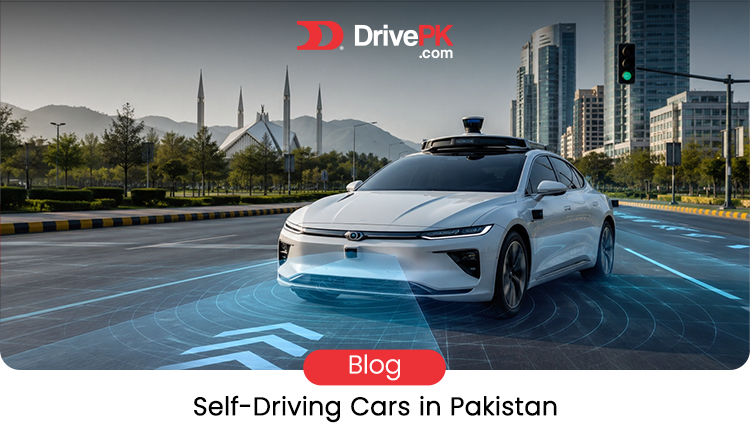
Table of Contents
- What Self-Driving Cars Actually Are?
- The Six Levels, Explained Simply
- Where the World Stands Right Now
- Where Pakistan Actually Stands
- But some things are moving.
- That's nothing. That's actually a big deal.
- The Real Barriers Pakistan's Roads Are a Different Problem
- Pakistani roads offer almost none of that predictability.
- Traffic That No Algorithm Has Trained On
- Infrastructure Gaps
- No Legal Framework
- Affordability
- What's Actually Possible And When
- Stage 1: ADAS Features Are Already Here (Right Now)
- Stage 2: Motorway Autonomy Could Come in 5 to 7 Years
- Stage 3: Urban Autonomy Not This Decade
- What Needs to Change
- The NED Project: A Small But Real Signal
- The Honest Answer: When Will It Happen?
You're stuck in Karachi's evening rush. Rickshaws cut in from every side. A motorbike squeezes between your car and a bus. A donkey cart rolls through the intersection. And somewhere in the background, a Tesla in San Francisco is navigating a four-way stop with zero human input.
That gap between what's happening there and what's happening here is the real story of self-driving cars in Pakistan.
The technology exists. That's not the question anymore. The question is whether Pakistan's roads, rules, and systems can ever support it. And honestly? The answer is complicated.
What Self-Driving Cars Actually Are?
Before anything else, let's clear up what "self-driving" actually means. Because the term gets thrown around loosely, it covers a wide range of things.
The global standard is set by SAE International, which breaks down vehicle automation into six levels: Level 0 to Level 5.
The Six Levels, Explained Simply
Level 0 is your regular car. You do everything.
Level 1 gives you one assistance feature, like cruise control or automatic emergency braking. Most newer cars in Pakistan that include a basic safety package sit here.
Level 2 means the car can steer and control speed at the same time, but you still need to stay alert and keep your hands ready. Think Tesla's Autopilot or Honda Sensing. This is what most people mean when they say "semi-autonomous."
Level 3 is where it gets interesting. The car drives itself in certain conditions, like on a highway, and you don't need to monitor it constantly. But you must be ready to take over when asked. In 2024, the Level 3 segment dominated the global market with a 46% share, and it's expected to grow steadily through 2035.
Level 4 means the car handles everything on its own in specific environments, like a mapped city zone or a fixed route. Waymo's robotaxis in the US operate at this level. Public road testing of Level 4 vehicles in the United States surpassed 15 million miles in 2024.
Level 5 is full autonomy anywhere, anytime, any condition. No steering wheel needed. Level 5 vehicles are still in their infancy globally. Nobody has cracked this yet.
So when someone says "self-driving cars are coming to Pakistan," it matters a lot which level they mean.
Where the World Stands Right Now
Self-driving vehicles are no longer science fiction in 2025. They exist. They move but only in designated locations.
Waymo operates fully driverless robotaxis in Phoenix, San Francisco, and Los Angeles. China's Baidu and Pony.ai run autonomous fleets in Beijing and Shenzhen. Dubai has tested driverless pods on set routes. Germany approved Level 3 vehicles for public roads.
In 2024, advanced driver assistance systems, the building blocks of autonomy, were installed in more than 55% of new cars sold worldwide. About 30 countries issued rules or guidelines for testing or deploying autonomous vehicles that same year.
And globally, roughly 3.2 million vehicles with Level 3 autonomy or higher existed in 2026, triple what we had in 2024.
The world is moving. Fast.
Pakistan is watching from a distance.
Where Pakistan Actually Stands
Here's the honest picture.
Pakistan doesn't have a single commercially operating autonomous vehicle on public roads. There's no legal framework for testing self-driving cars. No government policy for autonomous vehicles specifically. And the idea of a driverless Corolla navigating Lahore's liberty roundabout still sounds like a joke to most people.
But some things are moving.
Students from NED University of Engineering and Technology in Karachi are working on Pakistan's first self-driving car an AI-powered driverless vehicle, developed under the National Centre for Artificial Intelligence (NCAI). The team imported a special electric vehicle from China and is modifying it with AI tools to make it fully autonomous. A virtual driving system has already been built, and the team plans public road testing within six months of their February 2025 announcement.
That's nothing. That's actually a big deal.
But one university project and commercial deployment on Pakistan's roads are two very different things. Let's talk about why.
The Real Barriers Pakistan's Roads Are a Different Problem
Every self-driving car relies on the same set of ingredients: sensors (cameras, radar, LiDAR), high-definition maps, AI processing, reliable connectivity, and, most importantly, a predictable environment.
Pakistani roads offer almost none of that predictability.
Traffic That No Algorithm Has Trained On
Self-driving systems learn from data. They train on millions of hours of driving footage from structured environments, lane markings, traffic signals, numbered roads, and regulated intersections. The algorithms get good at what they practice.
Pakistani traffic is a different universe. Motorbikes ride against traffic. Pedestrians cross anywhere. Animals wander onto roads. Lanes are suggestions, not rules. A signal red means stop for some and slow down for others. And a roundabout in Faisalabad or Peshawar operates on a logic that no manual can fully describe; it's all about reading the room, honking at the right moment, and moving when the gap feels right.
No current AI system is trained for this. And training one would take years and enormous resources.
Infrastructure Gaps
Self-driving cars need roads that they can read. Clear lane markings. Consistent signage. Accurate GPS mapping. Reliable 4G or 5G connectivity for real-time updates.
Pakistan's motorways M1, M2, M3, and others are well-maintained and have consistent markings. But they represent a small fraction of the roads people actually use every day. Urban roads in Karachi, Rawalpindi, or Multan are inconsistently marked, poorly lit at night, and frequently changed due to construction without any digital update.
Google Maps still shows incorrect data on many Pakistani streets. And HD mapping the kind needed for autonomous navigation, doesn't exist for most of the country.
Self-driving cars need clear lane markings, consistent traffic rules, and predictable behavior from other road users. Pakistani roads offer none of these consistently.
That's not pessimism. That's just accurate.
No Legal Framework
In countries where self-driving vehicles operate, there's a legal foundation supporting them. Liability laws. Testing permits. Insurance policies that cover autonomous accidents. Regulatory bodies that approve software updates.
Pakistan has none of this. No law says who's responsible if a self-driving car causes an accident. There's no licensing process for autonomous vehicle testing. The closest thing is the EV Policy 2020, which gave incentives for electric vehicles, but EVs and autonomous vehicles are two different technologies.
Without a legal framework, no serious company will deploy self-driving cars here. Full stop.
Affordability
Even in countries where this technology is legal and the roads are ready, autonomous vehicles are expensive. A Waymo ride is affordable because the company is subsidising costs with venture funding. The actual technology, LiDAR sensors, AI chips, and HD cameras, adds tens of thousands of dollars to a vehicle's price.
In a market where the best-selling cars cost between PKR 2 and 5 million, and buyers look for the most basic, reliable transport, paying for Level 3+ autonomy isn't a priority. It won't be for a long time.
What's Actually Possible And When
Here's where it gets practical. Let's stop thinking about full autonomy and start thinking in stages.
Stage 1: ADAS Features Are Already Here (Right Now)
Advanced Driver Assistance Systems, such as automatic emergency braking, lane departure warnings, and adaptive cruise control, are already available in some cars in Pakistan. Premium variants of Toyota vehicles, some Honda models, and imported European and Korean cars carry these features.
Car manufacturers are already offering vehicles in the Pakistan market with autonomous features such as basic forward-collision warning systems and automatic braking systems, which contribute to reducing accident risk by up to 15%.
These are Level 1 and Level 2 features. They're not self-driving. But they're the foundation, and they're already on Pakistani roads in small numbers.
As the local car market evolves and more affordable models with ADAS features arrive, this becomes the first real step.
Stage 2: Motorway Autonomy Could Come in 5 to 7 Years
This is the realistic near-term possibility. Partial autonomy, like highway driving assistance that handles steering and speed on the motorway, could arrive within 5 to 7 years. This would be genuinely useful for Pakistanis who regularly drive long distances between cities.
Pakistan's motorways are already its best roads. They're straight, well-marked, speed-controlled, and patrolled. If any road in Pakistan could support Level 2 or early Level 3 autonomous driving, it's the M2 between Lahore and Islamabad.
Imagine an Islamabad-bound drive where you set your car to motorway assist mode, and it holds the lane, adjusts speed, and maintains a safe distance while you stay ready to take over. That's not fantasy. That's closer than most people think, and the vehicles to do it exist globally today.
Stage 3: Urban Autonomy Not This Decade
Fully self-driving vehicles navigating Pakistani traffic? Not in this decade. Full autonomy is a distant prospect, probably 15 to 20 years away at minimum.
The urban autonomy problem in Karachi, Lahore, and Peshawar requires solving the infrastructure, legal, mapping, and social behaviour problems simultaneously. That's a multi-decade project.
It doesn't mean it won't happen. It means it needs real work before it can.
What Needs to Change
If Pakistan wants to see genuine autonomous vehicle adoption in the next 15 years, five things have to move:
- Road infrastructure: Lane markings, clear signage, and HD digital maps. The National Highway Authority needs a digitisation strategy that goes beyond motorways.
- Legal framework The government needs a policy specifically for autonomous vehicle testing. Who can test, where, and who's responsible when something goes wrong. Without this, nothing happens commercially.
- 5G rollout Autonomous vehicles, especially at Level 4 and above, communicate in real time with infrastructure and other vehicles. Pakistan's 5G rollout is ongoing but slow. Coverage needs to be dense and reliable in urban areas before this becomes viable.
- Local research and talent The NED University project is proof that local talent can work on this. It needs more support from the government, the private sector, and universities. A national autonomous vehicle lab would send a signal that Pakistan is serious.
- Public understanding People need to trust the technology before they'll sit in it. That requires education, demonstrations, and time. The cultural shift from "I control my car" to "my car controls itself" doesn't happen overnight in any country.
The NED Project: A Small But Real Signal
It's worth coming back to the NED University effort, because it matters more than it might seem.
The project is being developed under the National Centre for Artificial Intelligence (NCAI) and focuses on creating a fully automated vehicle using AI. The team has successfully introduced a virtual driving system, moving the project closer to real-world use.
This is Pakistan's first serious institutional attempt at autonomous vehicle development. It won't produce a commercial product. But it's building the skills, the experience, and the proof of concept that Pakistan needs before anything larger can happen.
Every major autonomous vehicle program in the world started the same way: a small team, a modified vehicle, and a big idea. Pakistan now has that. What it does with it depends on funding, policy support, and whether universities and the private sector treat this as a serious long-term bet.
The Honest Answer: When Will It Happen?
Let's be direct.
Self-driving cars doing basic highway assist in Pakistan within 5 to 7 years, as imported vehicles with ADAS features become more common and more affordable.
Semi-autonomous driving on motorways within 10 years, if the legal framework and infrastructure investment start now.
Fully autonomous vehicles in Pakistani cities not before 2040, and even that depends on a lot of things going right over the next 15 years.
That might sound slow. But consider: the US, China, and Germany have been working on this for over a decade, spending billions, with world-class infrastructure, and they still don't have Level 5 autonomy. Expecting Pakistan to jump to the front of that queue isn't realistic.
What is realistic is that Pakistan starts building the foundation now. The roads. The laws. The talent. The research. And when the technology is mature enough to work in complex, unpredictable environments, which it eventually will be, Pakistan should be ready to adopt it, not scrambling to catch up. For more updates, visit DrivePK.com
Tags
Share this article
About the Author

Najeeb Khan
Automotive enthusiast and writer
Comments (0)
Login Required
You need to be logged in to comment on this article.
No comments yet. Be the first to share your thoughts!
Related Articles
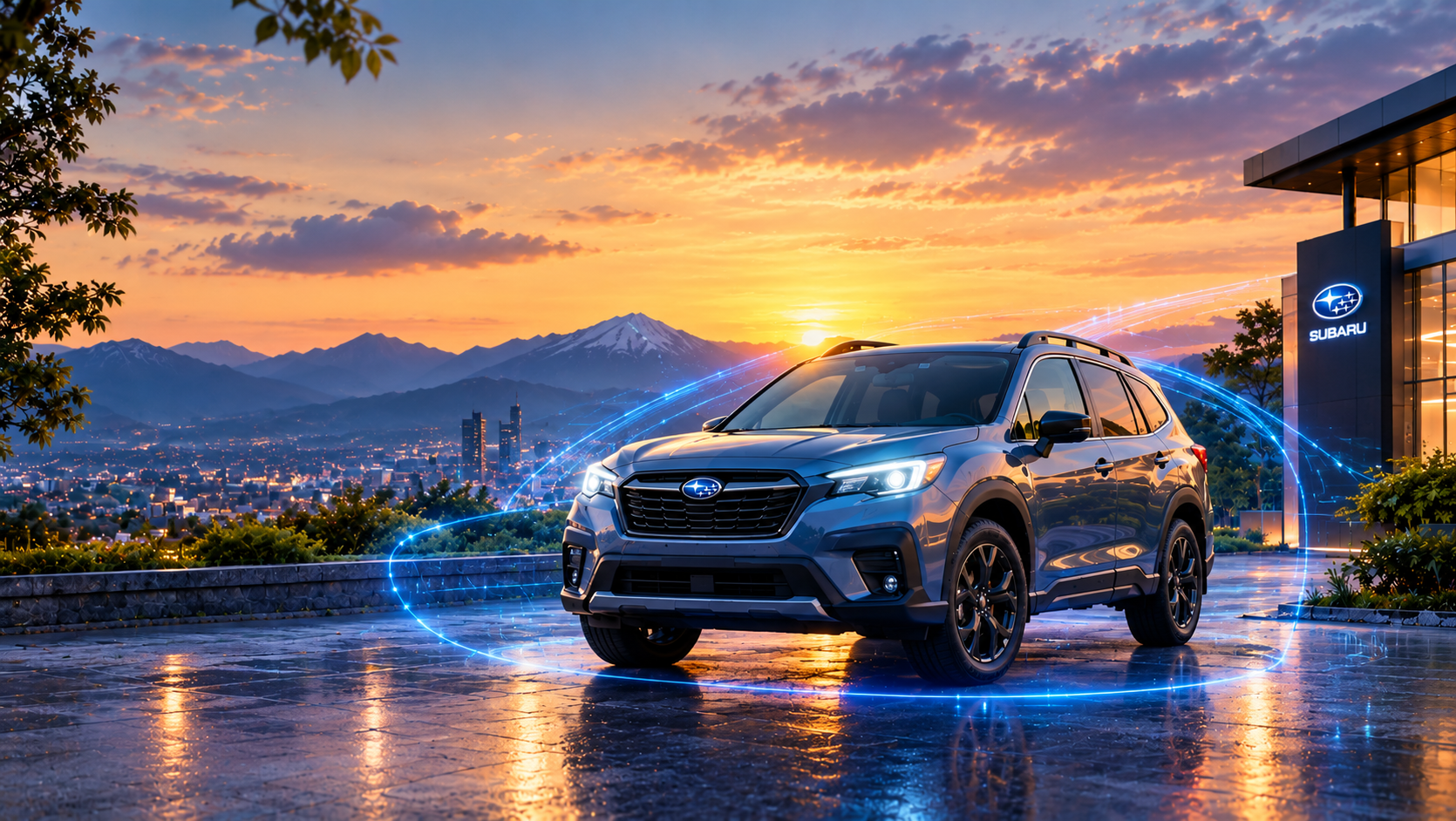
Subaru Software-Defined Cars: 40% Faster Development
Subaru targets software-defined cars by 2030, promising faster development and post-purchase updates—though Pakistan’s launch remains unclear.
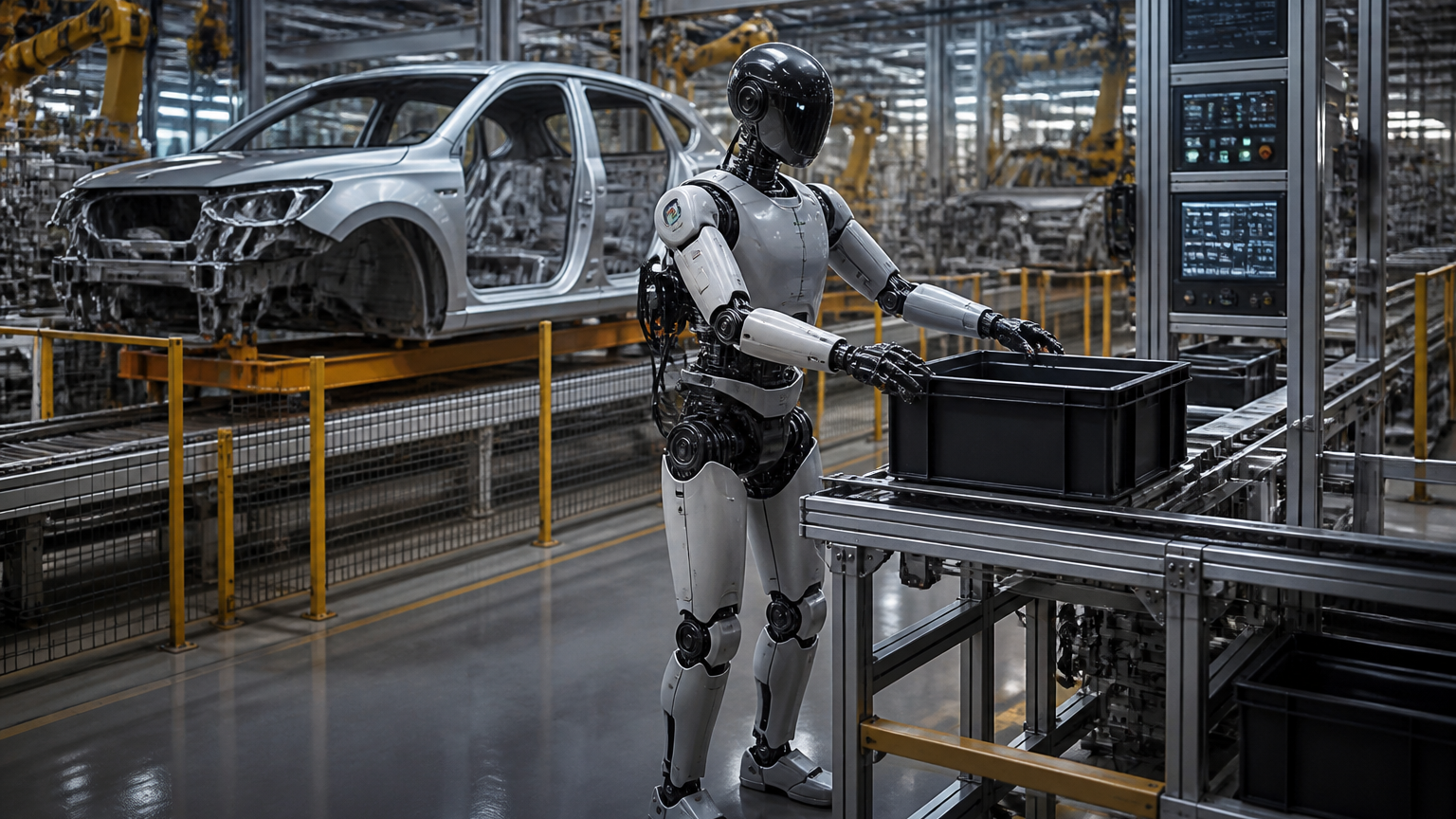
China's Humanoid Robots Enter Car Factories
China’s car factories are testing humanoid robots for tricky, flexible tasks—not replacing robotic arms—offering clues to automation’s next frontier.
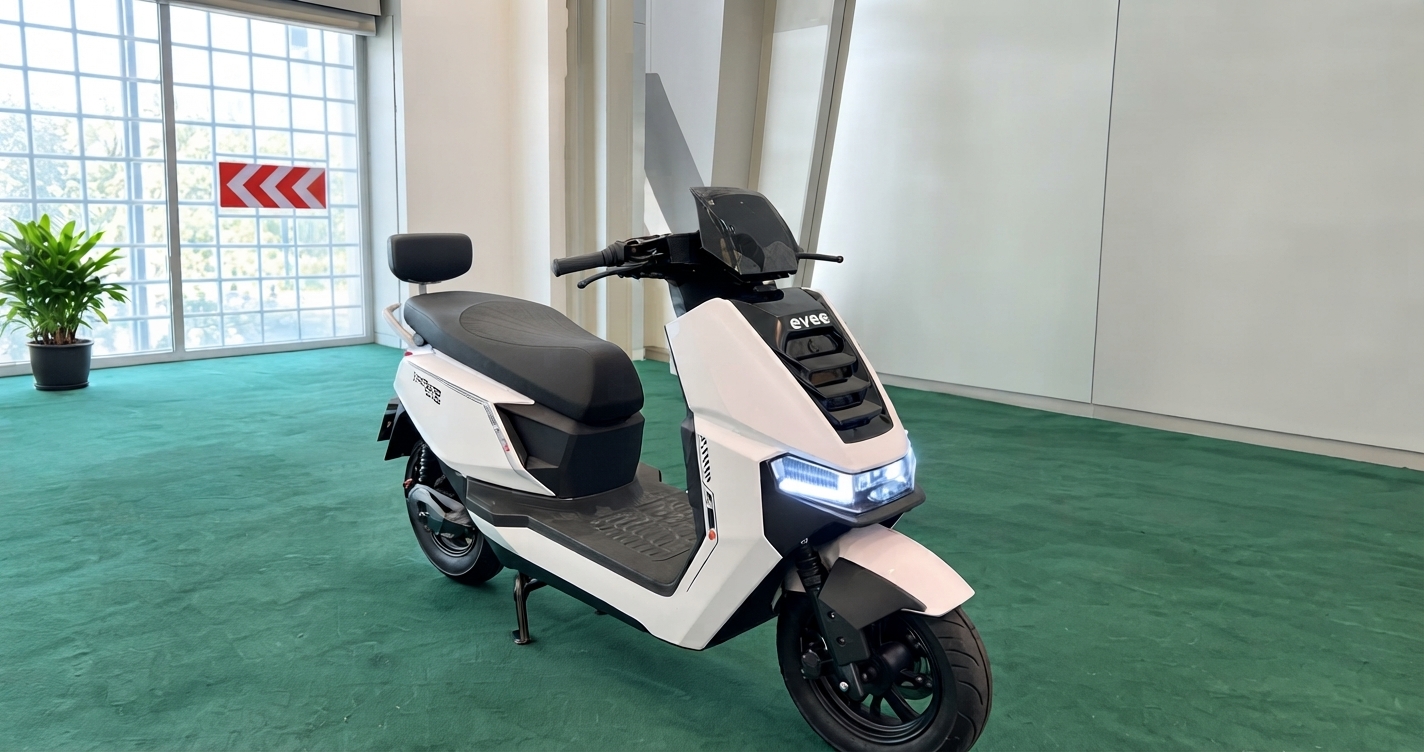
EVEE S1 Air Self Drive, Pakistan Auto Show Lahore
Many expected flying cars at PAPS 2026. None appeared. The show stayed on the ground with cars, bikes and one experimental self-driving scooter from EVEE. Here is the clear, verified picture from official coverage.