Sindh Police Expands Faceless E-Challan System to Six More Districts
Sindh Police is taking Karachi’s faceless e-challan system to six more districts, where TRACS cameras will record violations and issue fines without roadside stops. The expansion aims to improve safety, ensure fair enforcement, and reduce daily traffic disputes.
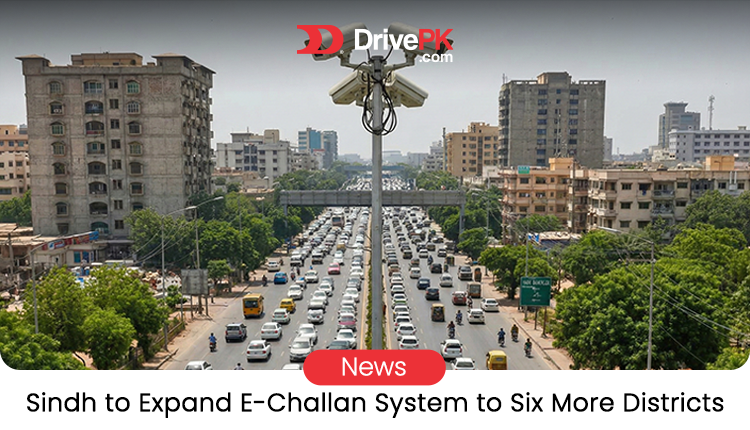
Table of Contents
- What the New Expansion Means
- TRACS Cameras Are Already in Place
- No More Roadside Stops
- IG Sindh Calls for Public Awareness
- Why These Six Districts?
- How the Public Will Benefit
- What Drivers Should Do Now
- Check Your Number Plate
- Wear Helmets
- Wear Seatbelts
- Keep Vehicle Registration Updated
- The Road Ahead
- Final Thoughts
Karachi’s faceless e-challan system is about to move beyond the city. Sindh Police has decided to roll it out in six more districts: Thatta, Khairpur, Shaheed Benazirabad, Mirpurkhas, Tando Muhammad Khan, and Larkana.
This change will reshape how traffic rules are enforced across these areas. And it’s coming sooner than most people expect.
What the New Expansion Means
For years, most traffic enforcement in Sindh has happened on the roads. Officers stopped vehicles, issued challans by hand, and dealt with long arguments in the heat and noise. The faceless e-challan system removes all that.
Now, cameras catch the violation, and the challan reaches the vehicle owner without any roadside interaction.
The system already runs in Karachi through TRACS (Traffic Accident and Crime Surveillance) cameras. These cameras track traffic movement, number plates, and violations in real time. The same setup is now ready for the six new districts.
TRACS Cameras Are Already in Place
Sindh Police says cameras and service centers in these districts are prepared for testing.
This means the technical work is mostly complete. Only the public awareness and final checks remain.
The cameras monitor:
- Helmet use
- Seatbelt use
- Wrong-way driving
- Mobile phone use while driving
- Missing or improper number plates
- Red light violations
And the most important part: the system works without stopping anyone on the road. The goal is simple—improve safety and reduce unnecessary confrontations.
No More Roadside Stops
Under this model, officers do not flag down cars. They do not argue with drivers. They do not stand at signals in the sun waiting for violators.
Every violation is recorded. The challan is generated electronically. And the details are sent directly to the registered address or the linked mobile number.
People often worry about wrong challans. But the TRACS system captures video proof and high-quality images. Anyone can verify their challan and see the evidence.
IG Sindh Calls for Public Awareness
Inspector General Ghulam Nabi Memon has directed all district police officers to launch awareness campaigns before the rollout goes live.
He wants people to understand two things:
- The law is changing.
- The system is automated and does not forgive basic mistakes.
The campaigns will focus on simple, everyday rules that many drivers in Pakistan ignore:
- Wear a helmet while riding a motorcycle.
- Use a seatbelt in the front seat.
- Install a legal number plate, not a decorated or fancy one.
- Follow lane discipline.
- Avoid mobile phone use while driving.
These rules are not new, but the difference now is the certainty of enforcement. If the camera sees you breaking a rule, a challan will come—whether you talk your way out of it or not.
Why These Six Districts?
The selected districts cover major highways, busy urban zones, and growing road networks.
For example:
- Larkana has heavy inter-city traffic and growing commercial activity.
- Mirpurkhas connects multiple rural and urban routes.
- Thatta handles the flow of tourism traffic to coastal areas.
- Khairpur links to national highways where speeding and wrong-way driving are common.
- Shaheed Benazirabad is a central hub for inter-district transport.
- Tando Muhammad Khan has busy inner-city roads and motorcycle traffic.
By choosing districts with different traffic patterns, Sindh Police can test the system under varied conditions and then expand further.
How the Public Will Benefit
The idea is not to punish people but to improve road behavior.
When drivers know there is no escape from a violation, they naturally adjust their habits.
Some benefits include:
- Fewer arguments between drivers and officers
- More consistent enforcement
- Lower corruption risk
- Better traffic flow
- Safer roads for families and daily commuters
In Karachi, the system has already shown improvements. Helmet usage increased in areas with active TRACS monitoring. Red-light violations declined at key intersections. These outcomes are small but meaningful.
What Drivers Should Do Now
People living in the six districts should prepare before the official rollout.
A few steps can save time, money, and stress later.
Check Your Number Plate
If the number plate is fancy, broken, bent, or not readable, cameras will not recognize it. That leads to automatic violations.
Wear Helmets
Many riders still place a helmet on the tank or hook instead of wearing it. Cameras detect this clearly.
Wear Seatbelts
Police say seatbelt challans will be strictly monitored in cars.
Keep Vehicle Registration Updated
The challan goes to the registered address or mobile number. If the details are old, people may miss their payments.
The Road Ahead
The move to expand faceless e-challans is not just a technical shift. It’s a change in how traffic laws are understood and obeyed.
For decades, rules were seen as flexible. Officers could let someone go with a warning. Drivers could negotiate. Cameras remove that culture.
And while some people may resist at first, the long-term impact is safer roads and fewer tragedies. Families deserve that.
Final Thoughts
Sindh Police is preparing for a major upgrade in traffic enforcement. The TRACS system is ready in six new districts. Campaigns will begin soon.
Once the system goes live, enforcement will be strict, automatic, and consistent.
This is a chance for drivers to adjust early and avoid unnecessary challans.
And if the rollout succeeds, more areas of Sindh are expected to join the system in the next phases.
If you want, I can also create:
- A short social media caption
- A headline options list
- A 150-word summary
- A keyword-optimised version
Just tell me what you need. For more updates, visit DrivePK.com
Tags
Share this article
About the Author

Najeeb Khan
Automotive enthusiast and writer
Comments (0)
Login Required
You need to be logged in to comment on this article.
No comments yet. Be the first to share your thoughts!
Related Articles
Toyota Corolla Discontinued Before Pakistan Facelift
Pakistan’s pre-facelift Toyota Corolla is reportedly discontinued, hinting at a facelift. Prices, bookings, specs and launch timing remain unconfirmed.
DrivePK Car Inspection Reports: Buy with Confidence
Buying a used car in Pakistan? A pre-purchase inspection can reveal hidden damage, engine issues and red flags before you pay—but it’s not enough alone.
2028 Kia Sportage: Major Design Changes Spotted
Kia’s next Sportage may get a bolder, boxier redesign, with an upright profile, sharper lines, wider grille and split headlights hinted by spy shots.