DRB Rules Karachi BRT Red Line Lot-2 Cancellation Invalid
The Dispute Resolution Board has ruled the Sindh government’s cancellation of the Karachi BRT Red Line Lot-2 contract unlawful and void. It found TransKarachi lacked the capacity to manage the project and said termination came too soon. Delays stemmed from unfinished designs, site problems, and unpaid bills. The decision raises hard questions about accountability on a key city corridor.
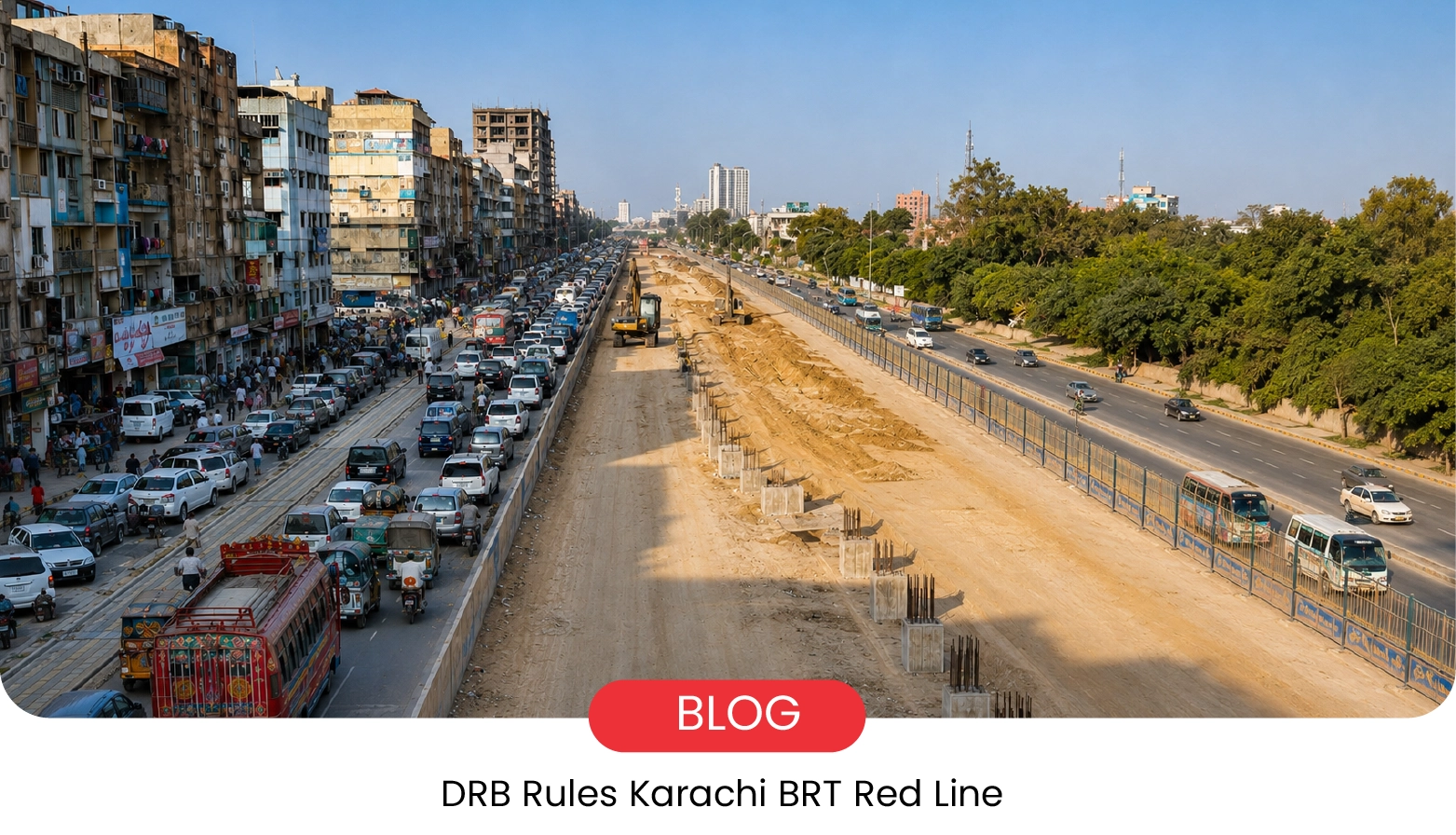
Table of Contents
- What Exactly Happened
- The Board’s Main Findings
- How Delays Built Up Over Time
- What This Means for Karachi Residents
- Accountability and Next Steps
- Lessons from a Stalled Corridor
- Looking Ahead
Karachi’s University Road has been a mess for years. Digging, barriers, and stalled work turned daily travel into a long struggle. The BRT Red Line was meant to fix part of that problem. Instead, it became another source of frustration.
Now a clear ruling has landed. The Dispute Resolution Board has declared the Sindh government’s decision to cancel the Lot-2 construction contract unlawful, invalid, and null and void. The board sided with contractor AM Associates. It also pointed to serious shortcomings at TransKarachi, the agency in charge.
This is not just a legal win for one company. It shows how weak planning and management can delay a project that millions of people need.
What Exactly Happened
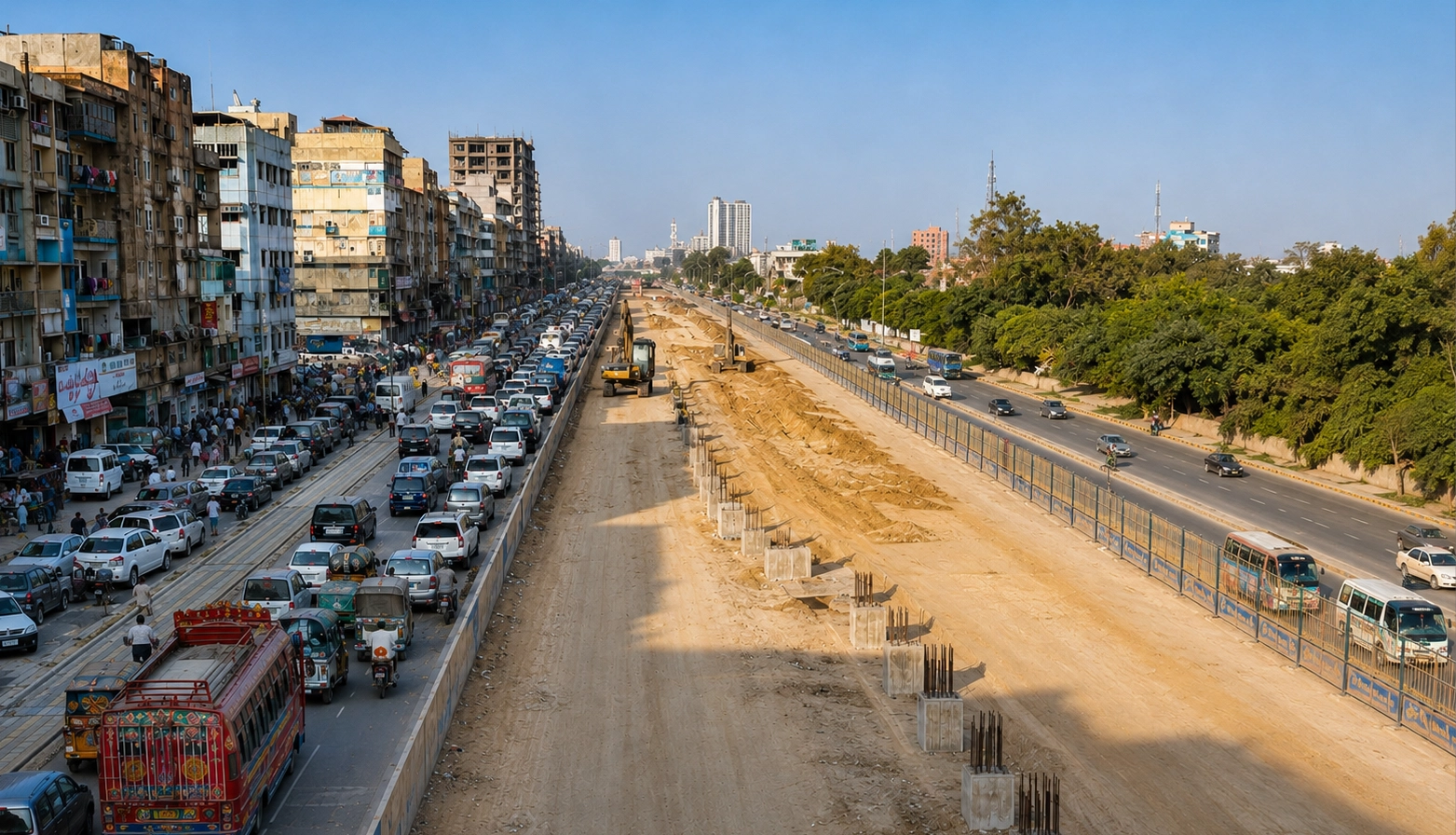
The Lot-2 section runs from Mosamiyat to Numaish. It forms a key part of the Red Line corridor. The contract went to a joint venture that included AM Associates. Work started around early 2022 under a deal worth roughly Rs 15 to 16 billion.
In April 2026 the Sindh government and TransKarachi terminated the contract. They cited lack of progress, slow performance, and safety concerns. Authorities sealed the site. The contractor went to the Sindh High Court. The court told both sides to use the Dispute Resolution Board as the contract required.
After hearings lasting more than two months, the board issued its decision. It found the termination premature. The government had not treated cancellation as a last step. Alternative steps to fix problems were not properly examined.
The Board’s Main Findings
The board was blunt about TransKarachi. It said the agency lacked the institutional capacity and experienced project management needed for a project of this size and complexity. That single statement cuts deep. TransKarachi is the government-owned body created to run the Karachi Breeze system. If it cannot handle a major corridor, the whole programme faces questions.
The board listed specific failures on the employer’s side:
- Designs were not finished when work was supposed to begin.
- The full site was not handed over free of obstacles.
- Physical barriers remained on the ground.
- Substantial payments to the contractor stayed outstanding.
- Design changes kept coming.
- Coordination between parties stayed weak.
These issues, the board said, materially affected the contractor’s ability to work and contributed heavily to the delays. The termination notice ignored that shared responsibility.
How Delays Built Up Over Time
Large infrastructure projects rarely stay on the original timeline. Still, the Red Line problems went beyond normal hiccups. Contractors reported that only about half the design was provided at key stages. They claimed they completed a large share of the work that was actually given to them.
Earlier Dispute Resolution Board decisions had already awarded the contractor additional amounts running into billions of rupees for claims linked to variations and delays. Some payments were made. Others remained due. Money problems slowed machinery, labour, and material flow.
Site access issues added more time. Obstructions on University Road and nearby areas made continuous work hard. Repeated design revisions meant crews had to stop, wait for new drawings, and sometimes redo sections. Weak day-to-day coordination between TransKarachi, the engineer, and the contractor made every problem worse.
An Asian Development Bank team had raised concerns about pace and safety standards before the termination. Those concerns were real. But the board’s later review showed the root causes sat on both sides, with heavy weight on the employer’s preparation and management.
What This Means for Karachi Residents
Commuters feel the cost every day. University Road remains disrupted. Traffic crawls. Businesses along the corridor lose customers. Students, office workers, and patients waste hours. Dust and incomplete works create safety risks.
The Red Line was sold as a modern bus system that would move people faster and cut private car use. Years of delay have eroded public trust. Cost estimates have risen. Completion dates have slipped more than once. At one point the project was expected much earlier. Later targets pointed toward 2027 or beyond.
When an independent board says the implementing agency lacks capacity, it signals a deeper problem. Hiring new contractors or rushing emergency arrangements will not fix weak systems. Better project management, clear designs before work starts, timely payments, and real coordination are basic requirements. Without them, the next contractor will face the same hurdles.
Accountability and Next Steps
The ruling does not end the story. The contract is declared still valid in the eyes of the board. That creates practical questions. Does work restart with the same team? Will the parties negotiate a revised schedule and payment plan? Or will further legal steps follow?
TransKarachi and the Sindh government now face pressure to show they can improve. Filling key management posts, finalising outstanding designs, clearing payments, and removing site obstacles would be concrete steps. Independent oversight and transparent progress reports could rebuild some confidence.
For the public, the bigger need is results on the ground. Restoring mixed traffic lanes, completing drainage, and moving the BRT infrastructure forward matter more than legal scores. The Sindh High Court had already ordered University Road to be made functional within a set period. That order still stands as a reminder of daily hardship.
Lessons from a Stalled Corridor
This case is not unique. Many public projects in Pakistan suffer from incomplete designs at tender stage, slow land and site clearance, delayed payments, and weak supervision. When those gaps appear, contractors slow down or claim extra costs. Governments then terminate contracts and start again. Each restart adds months and money.
The Dispute Resolution Board process itself worked as intended. The contract required the parties to use the board before full court battles. The court enforced that clause. An independent review produced a reasoned decision based on evidence. That mechanism is useful if both sides respect the outcome and act on it.
Clear contracts, realistic timelines, and agencies with real capacity remain the foundation. Without them, even well-funded projects with international partners struggle. The Red Line has Asian Development Bank involvement. That brings standards and scrutiny. It also means repeated delays damage credibility with lenders.
Looking Ahead
Karachi needs reliable public transport. The Red Line corridor along University Road is one of the city’s busiest routes. Completing it properly would ease pressure on roads and give people a better option.
The board’s decision removes one legal barrier but does not build a single kilometre of bus lane. Implementation still depends on political will, technical competence, and honest accounting of past mistakes. TransKarachi must prove it can manage complexity. The provincial government must ensure designs, sites, and funds move together.
Commuters will judge the outcome by results, not statements. When the diggers leave, the lanes open, and buses run on schedule, the years of disruption will start to make sense. Until then, the ruling stands as a clear record of what went wrong and who carried responsibility.
The path forward requires less blame and more basic competence. Finish the designs. Clear the sites. Pay what is due. Coordinate daily. Manage the project with people who know how large works actually get done. That is the practical test the city now faces.For more updates, visit DrivePK.com
Tags
Share this article
About the Author

Najeeb Khan
Automotive enthusiast and writer
Comments (0)
Login Required
You need to be logged in to comment on this article.
No comments yet. Be the first to share your thoughts!
Related Articles
Pak Suzuki Adds NADRA Biometric Verification for Vehicle Deals
Buying a Suzuki? ICT confirms biometrics for vehicle transfers—but not a Pak Suzuki–NADRA dealership partnership. Know what’s actually verified.
Lahore Canal Road Qingqi Rickshaw Ban Explained
Lahore traffic police clarify: no new citywide rickshaw ban—Qingqis and loaders are already barred from Canal Road to ease congestion.
Super Star EV Scooters Price in Pakistan: 8 Models
Super Star now offers 8 EV scooters in Pakistan, priced Rs110,000–270,000—from affordable city rides to longer-range lithium models.