How China Is Dominating the EV Race Through a Global Charging Web
China now runs the world's biggest EV charging network 9.92 million stations and growing fast. While the US struggles to open seven, China added millions. Here's the full picture behind China's electric vehicle dominance and what it means globally.
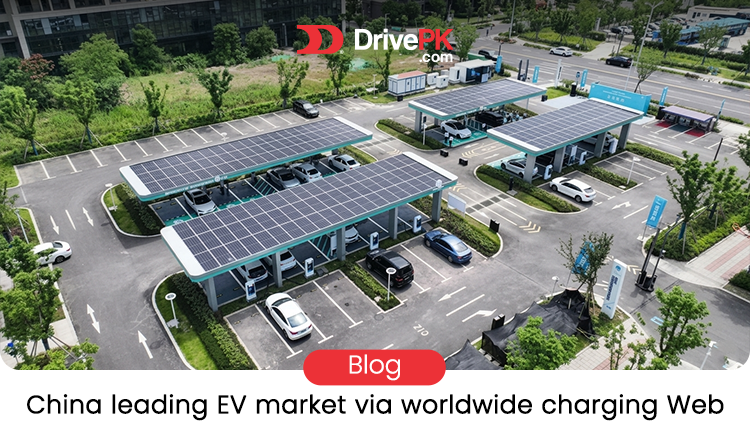
Table of Contents
- The Numbers Behind China's Charging Dominance
- How Did China Get Here So Fast?
- The Highway Problem China Is Working to Fix
- City Coverage: Urban Cores Are Already World-Class
- DC Fast Chargers: China Leads Here Too
- The US Charging Story: A Stark Contrast
- Western Tariffs and Trade Pressure
- Concentration Problem: Not All of China Is Covered Equally
- Utilization: More Chargers Don't Mean More Usage
- What China Plans to Do Next
- What the Rest of the World Can Learn
- The Bigger Picture
- Conclusion
China's dominance in the auto industry, especially in electric vehicles, is becoming such a brutal truth. But it's not magic happening overnight; it's the result of years and years of planning, hard work, and execution that has made it the EV marathon champion. Its further consequence is that China has beaten mega luxury brands. One of the features and quality compromises is affordability, but the major mind block is EV charging capacity; China's charging web makes it unique and unbeaten.
Nobody builds infrastructure quite like China.
By the end of May 2024, China had 9.92 million EV charging stations nationwide. That's a 56% jump compared to the previous year. Not a small uptick. Not a modest gain. A full 56 percent year-on-year.
And while the rest of the world debates timelines, funding gaps, and policy conflicts, China keeps laying cable, installing chargers, and expanding coverage into cities, suburbs, highways, and rural zones alike.
This isn't just about raw numbers. It's about strategy, speed, and the kind of infrastructure planning that turns an industry lead into something nearly impossible to close.
The Numbers Behind China's Charging Dominance
Let's put this into a clear context.
As of the end of May 2024, China's total number of charging stations reached 9.92 million. Of those, 3.05 million were public charging stations up 46% year-on-year. Another 6.87 million were privately installed, growing even faster at 61% year-on-year.
But go back just two years to the end of 2022, and the International Council on Clean Transportation (ICCT) had already documented China holding 51% of the global public charger stock, roughly 1 million public chargers at the time. That was already almost double Europe's total and eight times the United States.
Now, in 2024, that gap has only grown wider.
Li Chao, spokesperson for China's National Development and Reform Commission (NDRC), put it plainly at a press briefing: China has built the world's largest charging infrastructure system, the biggest number, widest services, and most complete types.
That's not marketing language. That's just a fact, backed by data.
How Did China Get Here So Fast?
The short answer is planning combined with policy.
China's government didn't just encourage EV adoption. It built the infrastructure first, or at least alongside the vehicles. Public chargers expanded as EV sales grew. Private home chargers were subsidized and promoted. Highway charging stations became a national priority.
In 2022 alone, 6.3 million EVs were sold in China. That was 26% of all vehicle sales in the country and 59% of global EV sales that year. By the end of 2022, cumulative Chinese EV sales since 2013 reached 15.6 million, 54% of the global total.
You don't sell that many EVs without building the infrastructure to support them. China understood this connection early.
The NDRC, alongside other government departments, continues to expand the network. In 2024 alone, China plans to add 3,000 charging installations and 5,000 charging parking spaces in highway service areas.
That's targeted. That's planned. And it addresses one of the weakest links in the current network highway coverage.
The Highway Problem China Is Working to Fix
Even with millions of chargers, there's one area where China still lags: highways.
As of 2022, China's highway public charger density was just 105 chargers per thousand kilometers. Norway, the country with the highest EV penetration globally, had 654 per thousand kilometers. That's more than six times denser.
As of June 2023, China had installed about 18,590 public chargers along highways less than 2% of the national total. For EV drivers making long-distance trips, this remains a real concern.
But China is actively fixing this. The 2024 highway expansion plan is part of a broader national push to close this specific gap. It's a problem they've identified, measured, and are now funding solutions for.
Compare this to Hainan province, China's most EV-dense region, where highway charger density reaches 115 per thousand kilometers. California, the US state with the highest EV penetration, sits at 135 per thousand kilometers. The gap at the sub-national level is actually quite small. Nationally, there's still work to do, but the direction is clear.
City Coverage: Urban Cores Are Already World-Class
Inside China's major cities, the story is different from the highways.
In Shanghai, 42% of the city's total area sits within a five-minute drive of a public charger. Expand that to 20 minutes, and you're at 82%. In the urban core alone, areas within the Outer Ring Road nearly 93% of the area is within five minutes of a charger. The 20-minute coverage rate hits almost 100%.
Beijing and Chengdu tell similar stories in their dense urban centers. Five-minute coverage of 70% and 81%, respectively. Twenty-minute coverage near 100% for all three cities' cores.
That means for the majority of urban EV drivers in China's leading cities, charging access is genuinely convenient. Not just convenient.
This is a metric that matters more than raw charger counts. Drive time to the nearest charger is what determines whether EV ownership feels easy or frustrating. And in China's cities, that experience is already strong.
DC Fast Chargers: China Leads Here Too
Not all chargers are equal. DC fast chargers deliver power much quicker than standard AC units, and China has prioritized them.
As of 2022, 47% of China's public chargers were DC. In Europe, that share was 13%. In the United States, 21%. Of all DC public chargers installed globally by the end of 2022, 76% were located in China.
China's DC chargers average 129 kW of rated power. Europe's DC chargers average slightly less at 121 kW. But Europe's AC chargers average 16 kW, compared to China's 9 kW for AC, meaning European public AC chargers tend to be higher-powered, even if fewer in total number.
Still, when you're looking at sheer fast-charging capacity and volume, China is far ahead.
The top five cities globally by public charger stock were all Chinese as of 2022. Shenzhen led with 146,000 public chargers, followed by Shanghai with 73,000, Guangzhou with 57,000, Wuhan with 41,000, and Beijing with 35,000.
Amsterdam, Europe's top city, had 29,000. Los Angeles, the US leader, had 12,000.
The US Charging Story: A Stark Contrast
While China was building millions of chargers, the United States made promises.
The US government pledged 500,000 EV charging stations. Congress allocated $7.5 billion in funding to make it happen. More than two years after that allocation, a Washington Post report from March 2024 found just seven EV charging stations operational across four states.
Seven.
That's not a small shortfall. That's a near-total failure of execution.
This contrast is significant for multiple reasons. It shows that money alone doesn't build infrastructure. Coordination, planning, permitting, contractor capacity, and political will all matter. The US allocated funding but didn't get the outcomes. China aligned its national policy machine behind the goal and got results.
The contrast also shapes the broader geopolitical story around EVs. China's charging network isn't just domestic infrastructure. It's a signal of industrial capacity and state competence that influences how other countries view China's EV industry overall.
Western Tariffs and Trade Pressure
China's EV dominance has triggered a political response from the West.
In May 2024, the US announced it would quadruple tariffs on Chinese EVs from 25% to 100%. The stated goal was to protect the domestic auto industry. The practical effect is that American consumers will pay significantly more for Chinese EVs, if they can access them at all.
The European Commission followed, announcing additional provisional duties of between 17.4% and 38.1% on Chinese EVs starting in July 2024.
Chinese officials have called these moves protectionist. Experts have pointed out that such tariffs may slow the global adoption of affordable clean vehicles at a time when climate targets require accelerating that adoption.
But here's the thing: these tariffs don't stop China's domestic market or its progress in non-Western markets. They limit access to specific markets. They don't reduce China's industrial capacity or its charger rollout speed.
In fact, Chinese EV sales continue to grow. Other markets across Southeast Asia, the Middle East, Latin America, and Africa are increasingly open to Chinese EVs precisely because of their cost-effectiveness. The cost advantage that makes Chinese EVs attractive globally is partly built on the same domestic scale that produced 9.92 million charging stations.
Concentration Problem: Not All of China Is Covered Equally
It's worth being honest about a real weakness in China's network.
As of 2022, just 15 Chinese cities accounted for 57% of the entire country's public charger stock. That's 15 cities out of 338 designated at prefecture-level or higher. The concentration is significant.
Eastern and southern China have far more chargers than western and northern regions. This mirrors EV adoption trends where EVs are popular, and chargers follow. But for less-developed regions, the coverage remains thin.
The ICCT report highlighted this clearly: suburban and rural coverage is still relatively low, even in China's most advanced cities. The 20-minute drive-time coverage that works well in urban cores drops dramatically once you move into outer districts.
Compare this to Europe, where the top 15 cities hold 23% of public chargers a much more distributed spread. The United States sits at 47% concentrated in its top 15 cities.
China's network is large but uneven. Fixing that unevenness is the next major challenge.
Utilization: More Chargers Don't Mean More Usage
Here's a data point that surprises many people.
Across 32 major Chinese cities studied in a 2023 China Academy of Urban Planning and Design report, the average public charger utilization rate how often chargers are actually in use, ranged from just 4.1% in Shenzhen to 17.4% in Xiamen. The average across all 32 cities was 11%.
Amsterdam, one of Europe's best performers on this metric, clocked 34%.
So China has far more chargers, but many of them sit idle for most of the day. This matters because low utilization affects profitability for charging operators, which in turn affects long-term investment in network quality.
The good news: in the densely populated urban cores of Chinese cities, utilization numbers look much better. Chengdu's urban core hit 35%, matching Amsterdam. Shenzhen's urban core reached 30%, Shanghai 29%, Guangzhou 28%, and Beijing 21%.
The pattern is clear: the chargers in the right places get used heavily. The chargers placed in lower-demand areas sit idle. Better planning, using real usage data to guide where chargers go, would improve this significantly.
This is one of the ICCT's core recommendations: shift from counting chargers to measuring drive-time coverage, power output per EV, and actual utilization rates. Quantity is easy to measure. Quality and accessibility matter more.
What China Plans to Do Next
China isn't slowing down. The policy signals for continued expansion are strong.
The NDRC has committed to the ongoing expansion of both public and private charging networks. The 2024 highway service area plan addresses the specific gap that EV drivers cite most often when worried about long-distance travel.
China also allocated 6.44 billion yuan ($889 million) to support automobile trade-in programs in 2024, explicitly targeting EV sales growth. Restrictions on new-energy vehicle purchases in various regions are being gradually lifted, adding another layer of demand-side push.
A decarbonization action plan released in late May 2024 signals that China's EV and charging ambitions are part of a long-term climate commitment, not just an industrial strategy. The goal of peaking carbon emissions by 2030 and reaching carbon neutrality by 2060 requires EV adoption to accelerate, and charging infrastructure is the backbone of that acceleration.
What the Rest of the World Can Learn
China's success with EV charging infrastructure isn't magic. It's the result of coordinated policy, consistent investment, and a willingness to build ahead of demand rather than wait for demand to justify building.
Europe is moving, but more slowly and unevenly. The Alternative Fuel Infrastructure Regulation (AFIR) adopted in 2023 represents a serious push, particularly the shift to measuring public power installed per EV rather than just charger-per-EV ratios. That's the right direction. But execution across 27 different member states is complex.
The United States is, right now, the clearest cautionary tale. Funding without execution produces nothing. The $7.5 billion EV charging commitment has produced minimal real-world results so far. Without fixing permitting timelines, contractor pipelines, and utility coordination, money alone won't close the gap.
Meanwhile, China's charging rollout just hit 9.92 million stations. The next milestone is likely 10 million and beyond.
The Bigger Picture
The EV charging race is really a proxy war for industrial competitiveness.
The country that builds the best charging network gets more EV adoption. More adoption drives more manufacturing scale. More scale drives lower costs. Lower costs drive more global market share. And more global market share drives more revenue that funds the next round of R&D and infrastructure investment.
China is currently winning this cycle. Not because of any single policy or breakthrough. But because it has been consistently executing for over a decade, while other countries were still debating whether EVs were the future.
They are. China built accordingly.
The tariffs will slow Chinese EV access to the US and European markets. They won't stop the cycle. And they won't build a single charger on a US highway.
Conclusion
China's EV charging network is the largest in the world by every measurable dimension: number of stations, total power capacity, DC fast charger share, and urban coverage. At 9.92 million stations and growing, it reflects what happens when a government aligns industrial policy with infrastructure investment over a sustained period.
There are real gaps: highway density still lags, rural coverage is thin, and charger utilization outside major urban cores remains low. China knows this. The plans to address it are already moving.
For everyone else watching, whether in government, in the auto industry, or just trying to understand where the global economy is heading, China's charging story is one of the most important infrastructure stories of this decade.
And it's only getting bigger.
Drivepk.com is Pakistan’s first AI-powered platform dedicated to EVs, going beyond green mobility by organizing different expos and events like PGMM. With this, it aims to bring a revolutionary change in the auto industry across multiple sectors.
Tags
Share this article
About the Author

Najeeb Khan
Automotive enthusiast and writer
Comments (0)
Login Required
You need to be logged in to comment on this article.
No comments yet. Be the first to share your thoughts!
Related Articles
BYD Seal 07 کا اندرونی حصہ 20 اسپیکر آڈیو کے ساتھ منظرِ عام پر
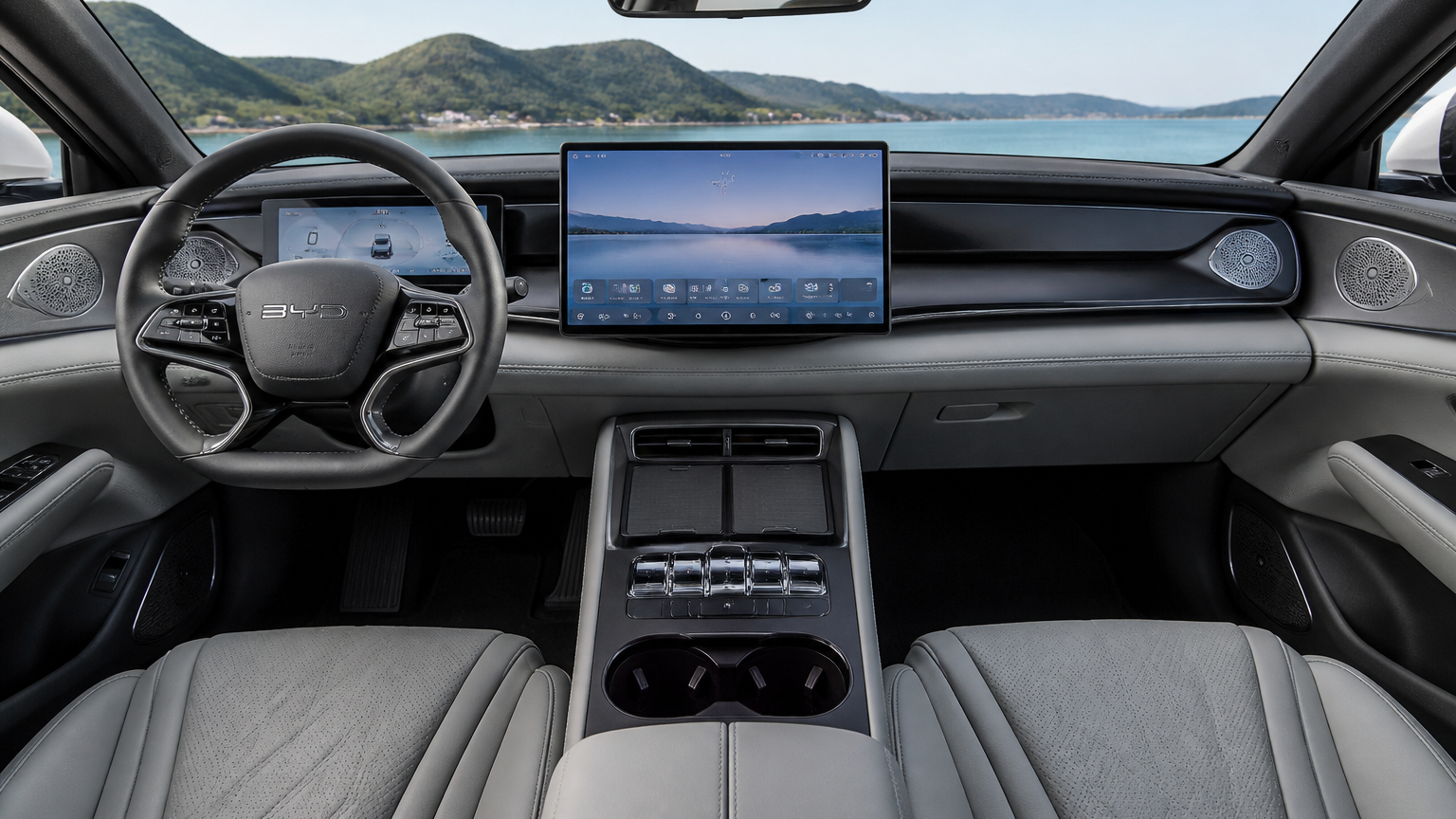
BYD نے China-market Seal 07 کی دوسری جنریشن کے کیبن کی جھلک دکھا دی ہے، جس میں زیادہ صاف ستھرا، زیادہ کشادہ Ocean Rhythm انٹیریئر، بہتر اسٹوریج اور 20-اسپیکر آڈیو سسٹم شامل ہے۔
BYD Seal 07 Interior Revealed With 20-Speaker Audio
BYD unveils the second-gen China-market Seal 07 cabin: a cleaner, roomier Ocean Rhythm interior with more storage and 20-speaker audio.
Nishat Luxeed MoU: What It Offers Pakistan
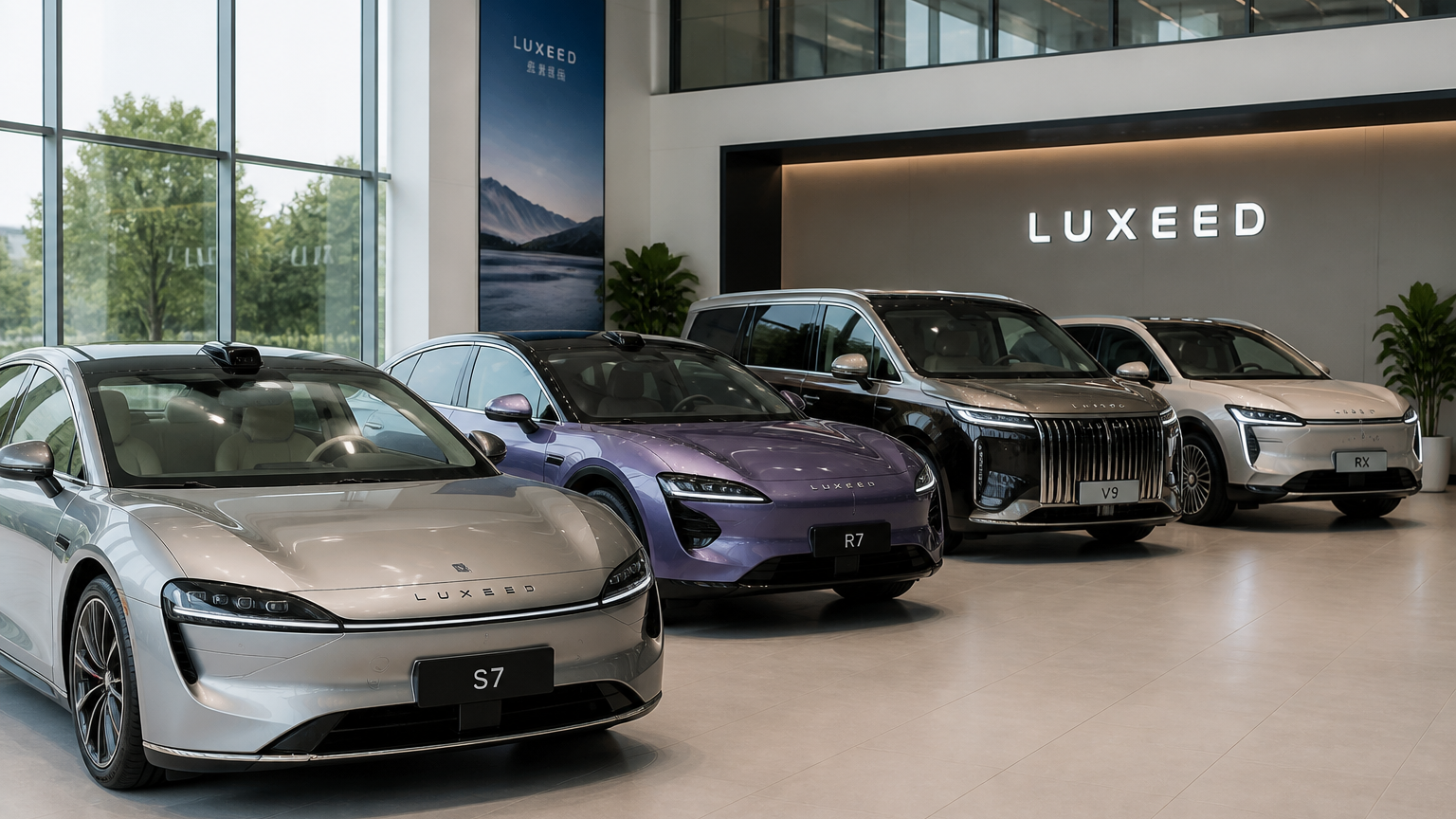
Nishat’s Luxeed MoU hints at premium EVs for Pakistan—but no launch, model, price, assembly or support details are confirmed yet.