How China Won the EV Race And Why the Rest of the World Is Playing Catch- Up...A Case Study
China’s dominance in electric vehicles goes far beyond sales, rooted in battery innovation and supply chain control. While Europe struggles to catch up, the EV revolution continues accelerating. As fuel prices rise, countries like Pakistan begin shifting toward electric mobility, with platforms like Drivepk driving awareness, innovation, and green transportation forward.
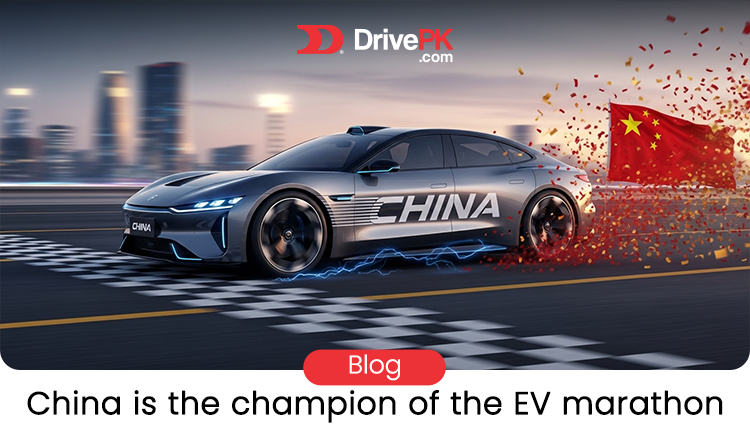
Table of Contents
- The Battery Question Is More Complicated Than People Realize
- CATL Is Probably the Most Important Company Most People Haven't Heard Of
- What Europe Got Wrong, and When They Got It Wrong
- The Ones Who Figured It Out (Partially) and the Ones Still Struggling
- The Chinese Competition Is Now Coming to Europe Directly
- What Happens Next
If you follow the auto industry at all, you already know China leads in electric vehicles. What's harder to wrap your head around is how muchit leads and how that gap keeps widening even as other countries throw serious money at catching up.
In 2022, China sold roughly 6 million EVs. The US sold 750,000. Germany managed about 500,000. China has over 1.2 million public charging stations. The US has around 150,000. These aren't competitive numbers. They're not even in the same conversation.
But the sales figures and the infrastructure stats, as impressive as they are, don't tell you the most important part of the story. The real story is about batteries that make them, who controls the supply chain, and who figured out the chemistry first. And then there's the European angle, which is less a story of innovation and more a story of a century-old industry realizing, slightly too late, that the ground had shifted underneath it.
Let's start with the batteries. Because everything else follows from there.
The Battery Question Is More Complicated Than People Realize
Most EV coverage treats batteries like a simple spec range per charge, charging speed, and years of degradation. Those things matter, obviously. But the more important questions are about what's inside the battery, how much it costs to make, and who controls the raw materials to produce it.
For most of the last decade, the dominant chemistry in EV batteries has been NMC nickel manganese cobalt. Tesla used it, most European and Korean manufacturers used it, and for a while, it seemed like the settled answer. Better energy density than alternatives, decent performance in cold weather, and good enough longevity.
The problem is cobalt. It's expensive. It's geopolitically concentrated. The Democratic Republic of Congo supplies more than 70% of the world's cobalt, and mining conditions there are bad enough to have become a genuine reputational liability for automakers. And it's finite in ways that become uncomfortable when you start projecting how many EV batteries the world will need by 2040.
Chinese manufacturers, particularly BYD and CATL, bet heavily on a different chemistry: lithium iron phosphate, usually called LFP. It's older technology, actually, the chemistry dates to the 1990s. Western manufacturers largely moved away from it because its energy density is lower than NMC, which meant heavier battery packs and shorter range for equivalent vehicle size.
What changed is that Chinese engineers spent years optimizing LFP cells and the way they're packaged into battery packs. BYD's Blade Battery, released in 2020, rearranged the cells inside the pack in a way that dramatically improved space efficiency, getting more usable capacity out of the same volume without changing the underlying chemistry. The result was a battery that passed the nail penetration test (which NMC batteries often fail dramatically, since they can ignite when punctured) and offered a competitive range at a meaningfully lower cost.
The cost part is what really matters at scale. LFP batteries don't need cobalt. They use iron and phosphate, which are cheap and widely available. That cost advantage compounds across millions of vehicles. It's a large part of why BYD can sell a small EV in China for under $15,000 and still make money.
Tesla noticed. In 2021, they quietly switched their Standard Range Model 3 and Model Y to LFP batteries supplied by CATL. They didn't make a big announcement about it. But the move acknowledged something the Western auto industry had been reluctant to admit: that the Chinese approach to battery chemistry was producing better outcomes at lower cost.
CATL Is Probably the Most Important Company Most People Haven't Heard Of
Contemporary Amperex Technology Co. Limited (CATL) is the world's largest EV battery manufacturer. It supplies batteries to Tesla, BMW, Volkswagen, Hyundai, Mercedes, Stellantis, and a long list of others. In 2023, it held roughly 37% of the global EV battery market.
To put that in perspective: a significant portion of every major European EV contains a battery made in China by a Chinese company. The European auto industry spent decades building a narrative about engineering supremacy. That narrative runs into some friction when the battery — the most expensive single component in an EV, typically 30-40% of the vehicle's total cost — comes from Ningde, Fujian.
CATL has also been developing next-generation chemistries. Its sodium-ion battery, announced in 2021 and moving toward commercial production, replaces lithium with sodium. Sodium is spectacularly abundant; it's basically salt. Energy density is lower than that of lithium-based batteries, so sodium-ion batteries won't work for long-range applications anytime soon. But for urban commuter vehicles and energy storage, the economics are potentially transformative. If sodium-ion scales, it removes the single biggest materials bottleneck from the EV supply chain.
Then there's solid-state. This is where things get genuinely exciting, though also where the timelines get fuzzy. Conventional lithium-ion batteries use a liquid electrolyte to move ions between electrodes. Liquid electrolytes are flammable, which is why EV fires, though rare, burn hot and hard. Solid-state batteries replace the liquid with a solid material — ceramic, glass, or sulfide-based compounds, depending on the approach.
The theoretical advantages are significant. Solid-state batteries could offer energy densities two to three times higher than current lithium-ion, faster charging, longer lifespan, and far better safety. Toyota has been saying solid-state is "almost ready" for longer than anyone can remember at this point. China's manufacturers BYD, CATL, NIO, and SAIC are all investing heavily in solid-state research, and several have announced partnerships with universities specifically to accelerate materials science work in this area.
Nobody has cracked it at a commercial scale yet. Manufacturing solid electrolytes consistently enough to produce millions of cells without defects is an unsolved engineering problem. But the race is on, and China is running it with more investment and more urgency than anyone else.
What Europe Got Wrong, and When They Got It Wrong
Here's the uncomfortable truth about European automakers: they had enough warning. This wasn't a surprise attack.
Elon Musk delivered the first Tesla Roadster in 2008. The Model S launched in 2012 and immediately won every major automotive award in sight. By 2015, it was obvious to anyone paying attention that electric vehicles were coming, that batteries were improving on a predictable curve, and that the transition away from internal combustion was a matter of when, not if.
What did the major European automakers do between 2012 and 2018? They lobbied for continued support of diesel. They doubled down on hybrid technology as a hedge. They announced ambitious EV plans with launch dates far enough in the future that nobody had to make uncomfortable decisions right now. Volkswagen launched the e-Golf in 2014. It had 83 miles of range and sold in small numbers mostly to people who already wanted to believe in EVs.
Then the Dieselgate scandal broke in 2015. Volkswagen had been cheating emissions tests on a massive scale, not just a corner-cutting decision but a deliberate, coordinated deception spanning years and affecting millions of vehicles. The legal and financial fallout cost VW over $30 billion globally. But the more lasting damage was reputational. Europe's clean diesel narrative, which the industry had spent years building as an alternative to full electrification, was exposed as fiction.
After Dieselgate, VW's transformation was genuinely dramatic by corporate standards. Herbert Diess, who became CEO in 2018, pushed through an EV strategy that committed €33 billion to electrification through 2024. The ID.3 and ID.4 launched as proper mass-market EVs, not compliance vehicles. VW also developed its own battery platform the Unified Cell and broke ground on six battery gigafactories across Europe as part of the PowerCo subsidiary.
That all sounds impressive. The execution, though, has been rougher than the announcements suggested.
The ID.3 launched in 2020 with serious software problems, features missing, updates pushed repeatedly, and customers waiting months for functionality that was supposed to come with the car. Software has become the auto industry's most painful new challenge. Writing code for a connected vehicle is nothing like engineering a transmission, and companies that spent a century mastering mechanical precision are discovering that software development runs on entirely different rhythms. VW has been trying to build out its CARIAD software division since 2020. Progress has been slow, expensive, and publicly frustrating enough that Diess eventually lost his job partly over it.
The Ones Who Figured It Out (Partially) and the Ones Still Struggling
Stellantis the conglomerate that includes Fiat, Peugeot, Citroën, Opel, Chrysler, Jeep, and a dozen other brands, has taken an interesting approach. Rather than trying to build every component in-house, they've leaned into partnerships. A joint venture with Samsung SDI for battery production. Supply agreements that hedge between multiple chemistries. CEO Carlos Tavares has also been notably blunt about the challenges, publicly questioning whether the European timeline for banning new combustion engine sales (currently set for 2035) is realistic given where manufacturing capacity actually sits.
That 2035 date is worth examining because it's creating both urgency and chaos at the same time. It means every major European automaker needs its entire new vehicle lineup to be electric within roughly a decade. For companies that still generate most of their profit from combustion engines, that's an existential transition — not an incremental product refresh.
BMW has handled the transition better than most. The i3 was ahead of its time when it launched in 2013, with innovative carbon fiber construction, unconventional design, and genuine engineering ambition. It didn't sell particularly well, but it proved the company could build a serious EV. BMW's current i4 and iX models are genuinely competitive vehicles, and the company hasn't bet everything on one platform the way VW did with its MEB architecture.
Mercedes has gone upmarket, positioning its EQ line as a premium alternative where margin can absorb the higher cost of battery technology. The EQS sedan is technically impressive but expensive enough that it's not moving the needle on mass adoption. It sometimes feels like Mercedes is selling the idea of an electric future to people who can afford not to worry about the transition costs.
Renault did something surprising in 2023 it spun off its EV division into a separate company called Ampere and listed it for investment. The logic was to give the EV business its own identity, its own capital structure, and the ability to move faster than a century-old automaker's bureaucracy allows. Whether it works is still an open question.
The Chinese Competition Is Now Coming to Europe Directly
For the past few years, European automakers have competed with Chinese companies primarily in the Chinese domestic market. Now that competition is moving to Europe's home turf.
BYD opened sales in Norway in 2022. The Atto 3 and Seal have been selling in Germany, France, the Netherlands, and the UK. MG technically a British brand but owned by SAIC since 2007, has become the best-selling EV brand in some European markets by volume. Nio has opened showrooms in Germany, the Netherlands, Denmark, Sweden, and Norway.
The pricing is the thing that's making European manufacturers nervous. BYD's Seal, a mid-size sedan with competitive range and solid build quality, was selling at prices that undercut comparable European EVs by 20-30%. That kind of gap is hard to compete with when your cost base is built around German labor rates and legacy manufacturing infrastructure.
The European Commission responded in 2024 with additional tariffs on Chinese EVs on top of the existing 10% tariff, extra duties of up to 35% depending on the manufacturer. The stated justification was that Chinese EV companies benefit from government subsidies that distort competition. That's true. It's also true that European automakers have received substantial state support for decades, and that tariffs generally protect incumbent industries more than they protect consumers.
Whether the tariffs slow Chinese EV adoption in Europe significantly is genuinely unclear. Even with a 35% tariff added, some Chinese models remain cost-competitive with European alternatives. And for consumers in countries without strong domestic EV industries which is most of Europe outside Germany the appeal of an affordable, functional electric vehicle doesn't disappear because it was assembled in Shenzhen instead of Stuttgart.
What Happens Next
Predicting automotive industry timelines is a reliable way to be wrong. But a few things seem reasonably likely.
Battery costs will keep falling. The learning curve for lithium-ion has been consistent for over a decade, roughly 15-20% cost reduction for every doubling of cumulative production volume. As global EV sales compound, that curve continues. The question isn't whether batteries get cheaper; it's how quickly.
Solid-state will arrive eventually, probably first in premium vehicles where cost matters less, then spreading as manufacturing scales. Chinese manufacturers are better positioned than most to commercialize it first, though Toyota and Samsung SDI are serious competitors.
European automakers will consolidate. The transition costs are genuinely brutal for companies that need to maintain combustion engine production while simultaneously building EV capacity. Some brands will be absorbed. Some will exit markets. The European auto industry of 2035 will have fewer independent players than it does today.
And China will keep exporting. Tariffs complicate the economics, but don't eliminate the fundamental cost advantage that comes from a decade of scale investment that Europe is only now beginning. The vehicles will get more competitive, the brands will become more familiar, and the conversation about whether Chinese EVs belong in Western markets will gradually seem as odd as asking whether Japanese cars belonged in the 1980s.
The battery is where it started. It's still where the race is being run. And right now, the people who understand that best are mostly working in Chinese factories and Chinese labs, which is an uncomfortable thing to say, and also just accurate. When we look at underdeveloped countries like Pakistan, it is passing through a transition phase, an unexpected rise in the fuel graph has taken a huge turn, leading to pondering the adoption of EVs.
Drivepk.com is the first AI-powered auto platform dedicated to electric vehicles in Pakistan; it is not only for EVs but also for green mobility, organizing events like PGMM for effectively evoking public preparation and bringing them into the awareness stage.
Tags
Share this article
About the Author

Najeeb Khan
Automotive enthusiast and writer
Comments (0)
Login Required
You need to be logged in to comment on this article.
No comments yet. Be the first to share your thoughts!
Related Articles
BYD Seal 07 کا اندرونی حصہ 20 اسپیکر آڈیو کے ساتھ منظرِ عام پر
BYD نے China-market Seal 07 کی دوسری جنریشن کے کیبن کی جھلک دکھا دی ہے، جس میں زیادہ صاف ستھرا، زیادہ کشادہ Ocean Rhythm انٹیریئر، بہتر اسٹوریج اور 20-اسپیکر آڈیو سسٹم شامل ہے۔
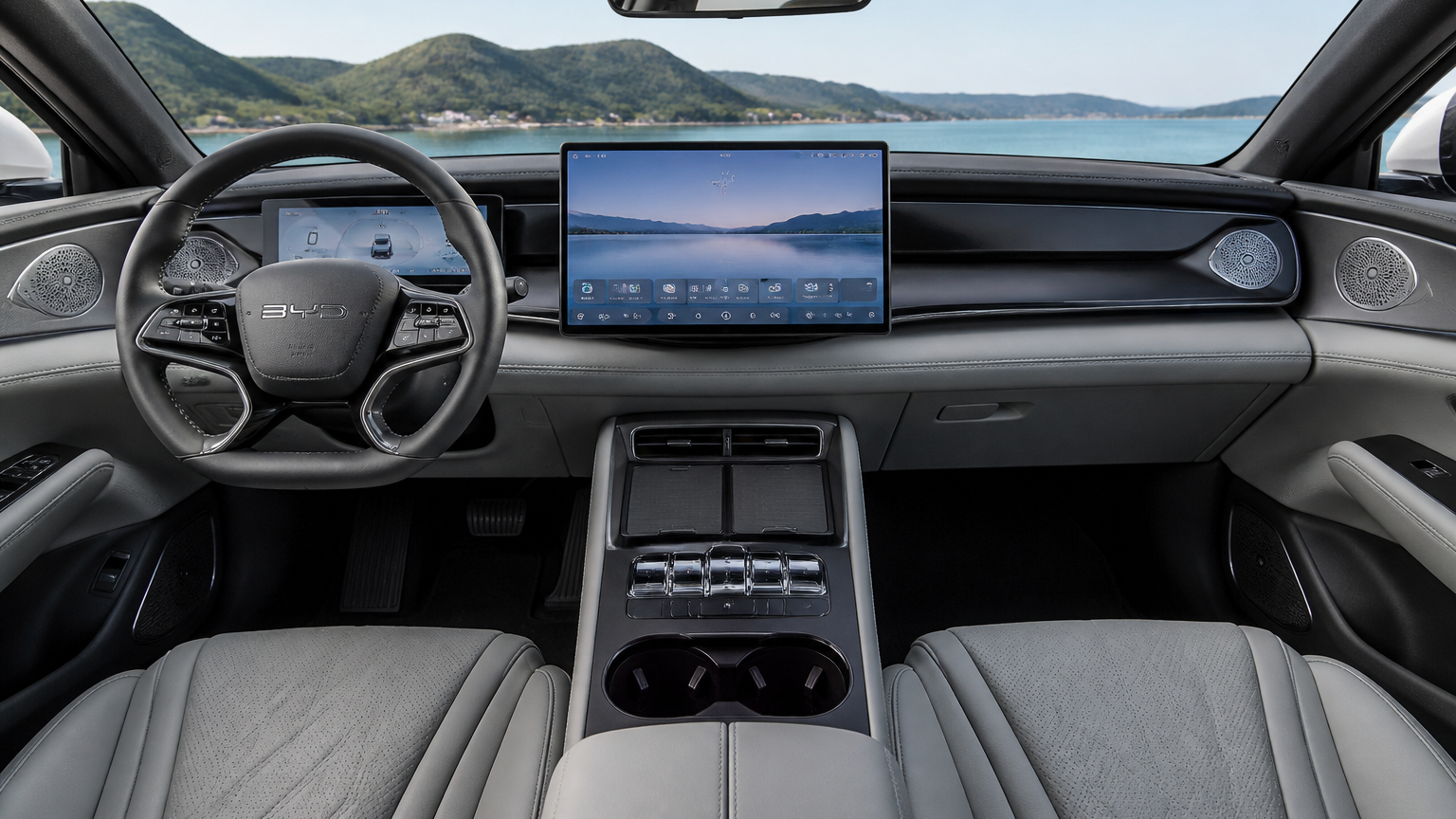
BYD Seal 07 Interior Revealed With 20-Speaker Audio
BYD unveils the second-gen China-market Seal 07 cabin: a cleaner, roomier Ocean Rhythm interior with more storage and 20-speaker audio.
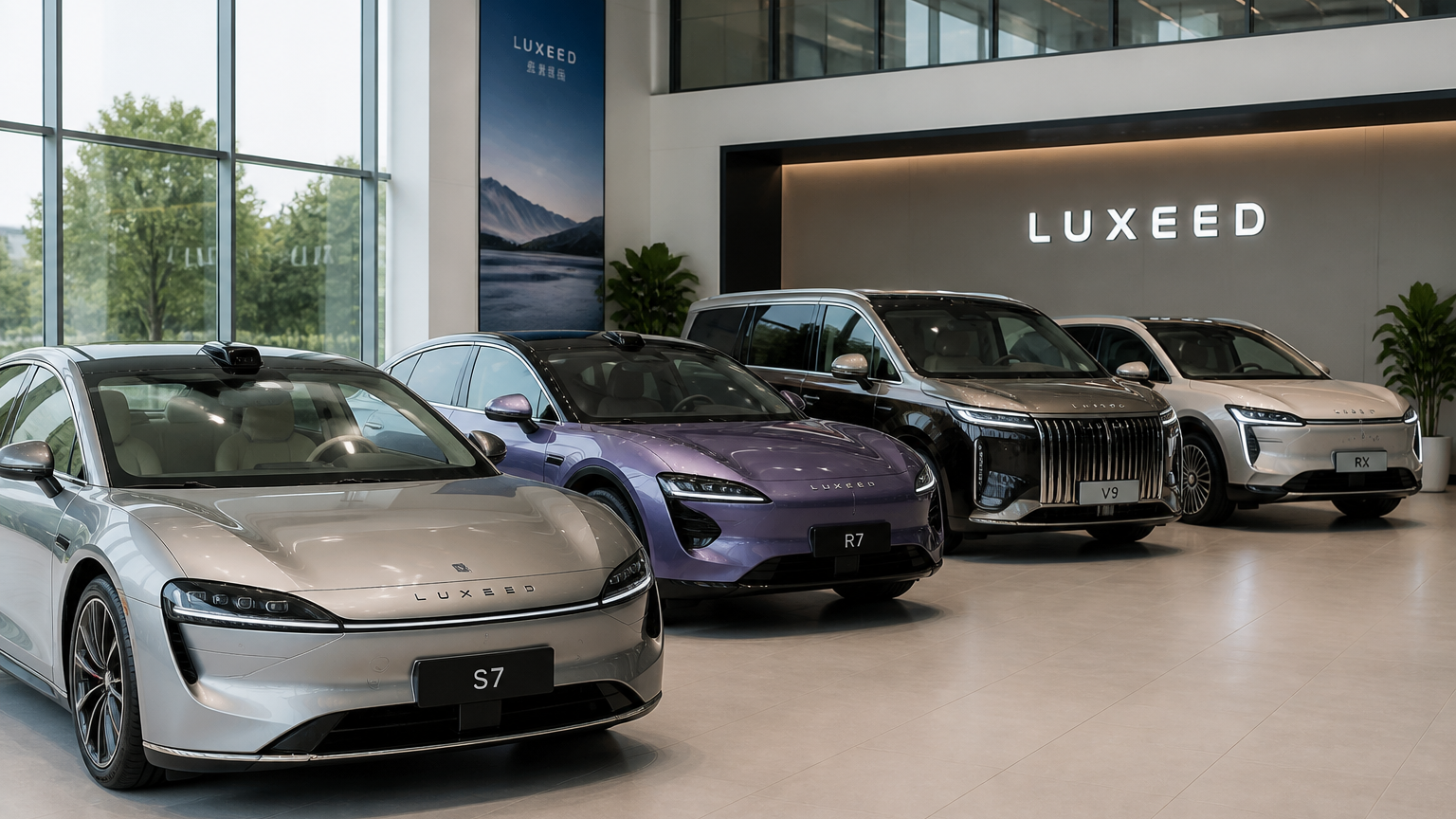
Nishat Luxeed MoU: What It Offers Pakistan
Nishat’s Luxeed MoU hints at premium EVs for Pakistan—but no launch, model, price, assembly or support details are confirmed yet.