Hyundai Unveils 8th-Gen Elantra at Busan 2026: Bigger, Smarter Sedan
Hyundai just pulled the wraps off the eighth-generation Elantra at the 2026 Busan show. It's bigger, looks sharper, and packs serious tech like a 14.6-inch screen with AI help. Here's why this compact sedan feels like a step up.
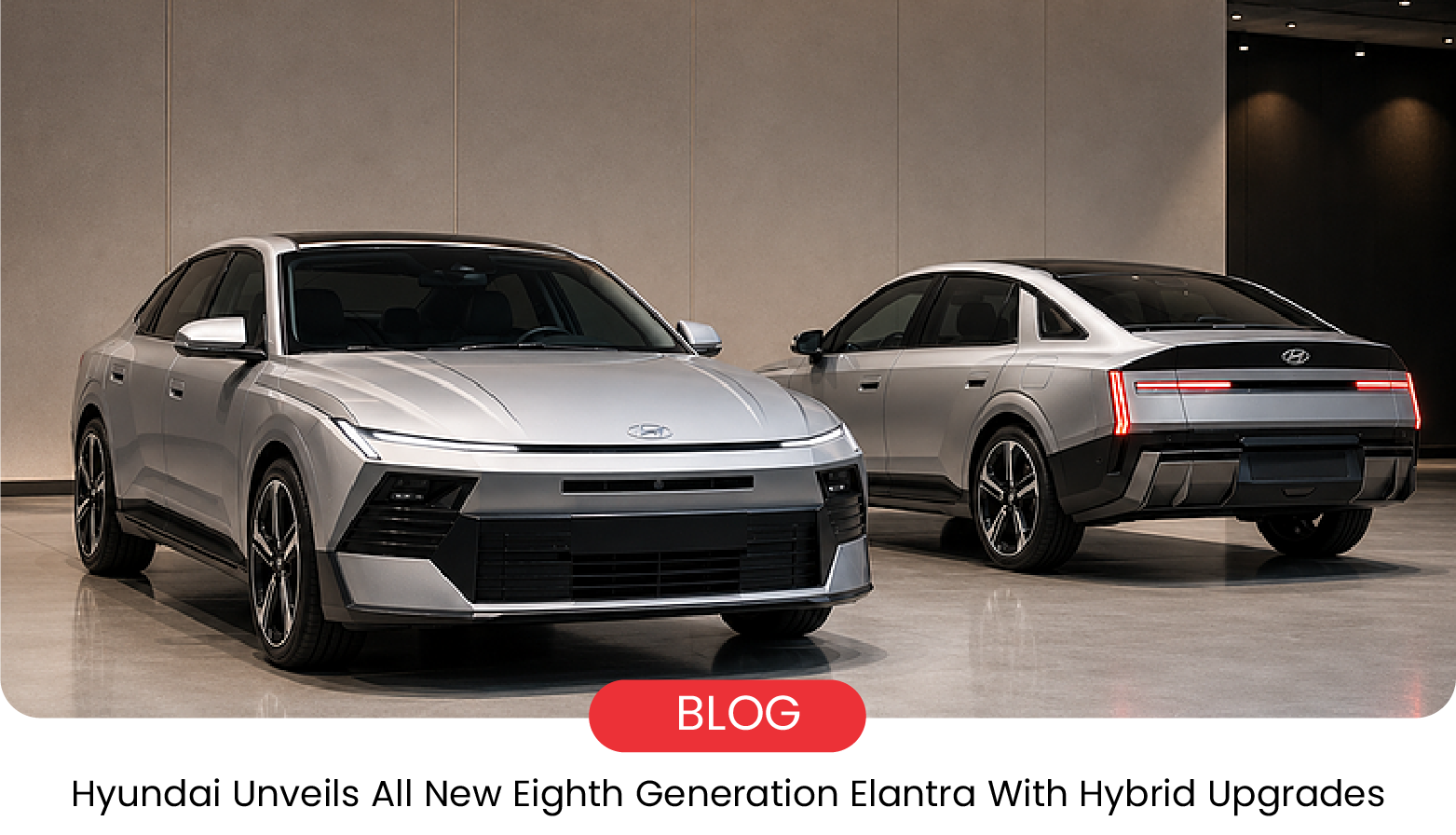
Table of Contents
- What Stands Out in the Design
- Inside the Cabin: Tech That Actually Helps
- Powertrains: Familiar but Improved
- Safety and Driver Assistance
- How It Fits Your Life
- What Comes Next
- Why This Matters Now
Hyundai just showed the world its eighth-generation Elantra at the 2026 Busan International Mobility Show. This isn't a simple refresh. The car grew in size, got a fresh design direction, and added tech that makes daily driving feel easier and more connected.
If you drive a compact sedan or think about upgrading soon, this one deserves a closer look. It addresses common frustrations like cramped back seats, outdated interfaces, and the constant trade-off between power and fuel use.
What Stands Out in the Design
Hyundai calls the new look "Art of Steel." It moves away from the sharp creases of the last model toward smoother surfaces that catch light nicely. The result feels solid and modern without trying too hard.
Up front, you see a bold grille and slim H-edge LED daytime running lights. The side profile stretches longer with muscular fenders and flush door handles that pop out when needed. At the back, H-shaped taillights and a spoiler-like trunk lid tie it together.
Dimensions tell the real story:The new Elantra measures 4,765 mm long, 1,855 mm wide, and sits on a 2,750 mm wheelbase. That's about 55 mm longer and 30 mm wider than before, with extra wheelbase for better interior room. It now sits closer to midsize territory while staying in the compact class.
This extra space helps with rear legroom and overall comfort. For families or anyone who carries passengers often, it reduces that "I'm squished back here" feeling.
Inside the Cabin: Tech That Actually Helps
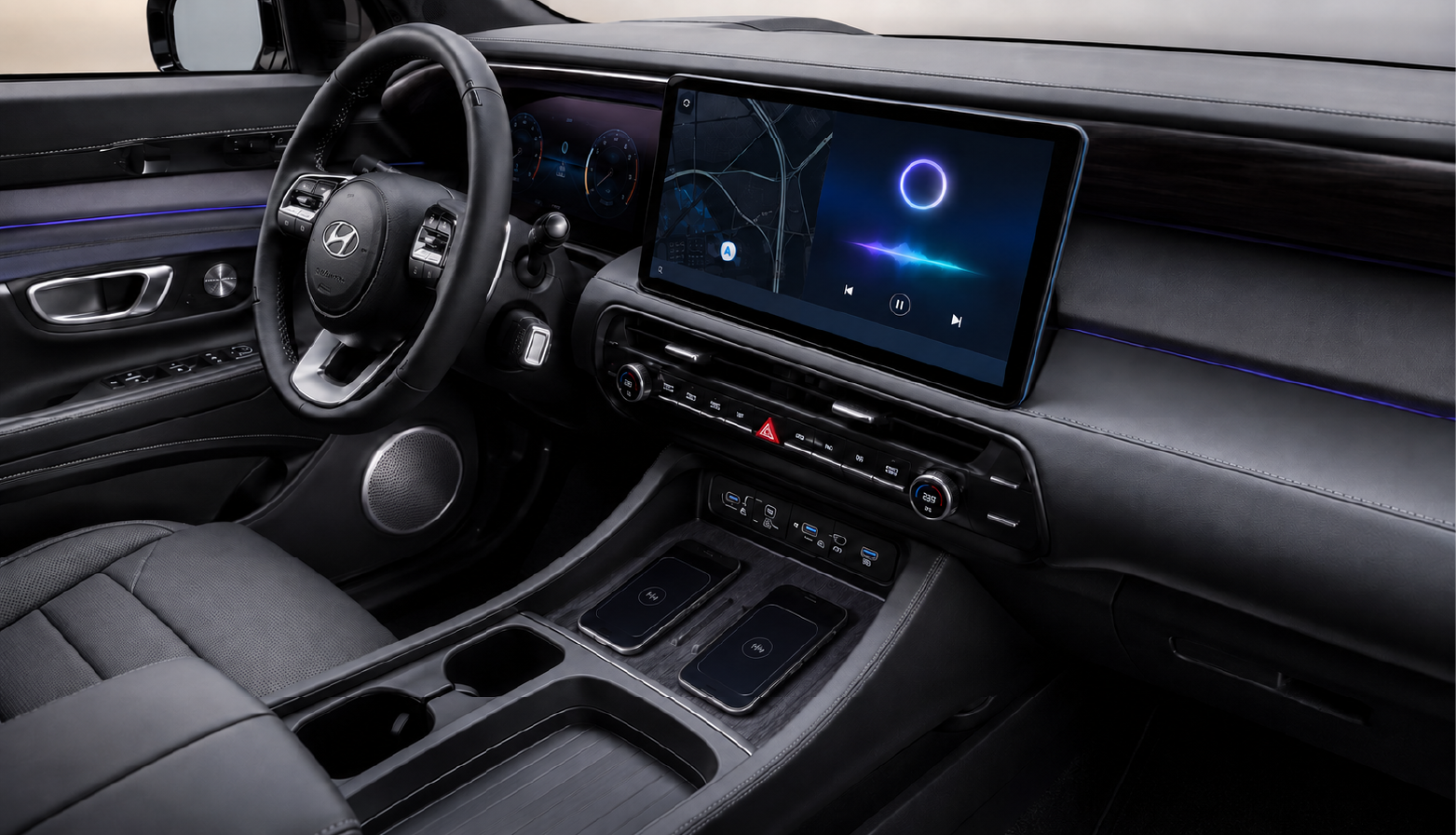
Step inside and the cabin feels more premium. A large 14.6-inch touchscreen (or 12.9-inch on lower trims) runs Hyundai's new Pleos Connect system. It uses an Android-based platform that's intuitive and supports splitting the screen for maps and music at the same time.
The real addition is Gleo AI, a generative assistant that handles natural conversations. Ask it to adjust the route or find a playlist, and it works without much hassle. Physical buttons below the screen keep important controls easy to reach while driving.
Other nice touches include dual wireless charging pads, 100W USB-C ports, ambient lighting, and an available Bang & Olufsen audio system. There's even a built-in dashcam in some versions. The layout wraps around the driver for a focused feel.
Hyundai kept real buttons for climate control, which many people prefer over hunting through menus. Storage spaces and cupholders look practical too.
Powertrains: Familiar but Improved
The base engine stays a 2.0-liter petrol producing around 147-149 hp. It's reliable and pairs with a smooth transmission for everyday use.
The hybrid version gets meaningful upgrades. The 1.6-liter system now delivers about 157 hp combined (figures around 155 hp in some reports). Hyundai improved the transmission, battery, and drive motor for better response and efficiency. New features like predictive energy management and Stay Mode let you run climate and infotainment on battery power while parked.
Real-world efficiency should impress commuters. Previous hybrids already did well; these changes push it further. Expect strong numbers without sacrificing usable power.
Safety and Driver Assistance
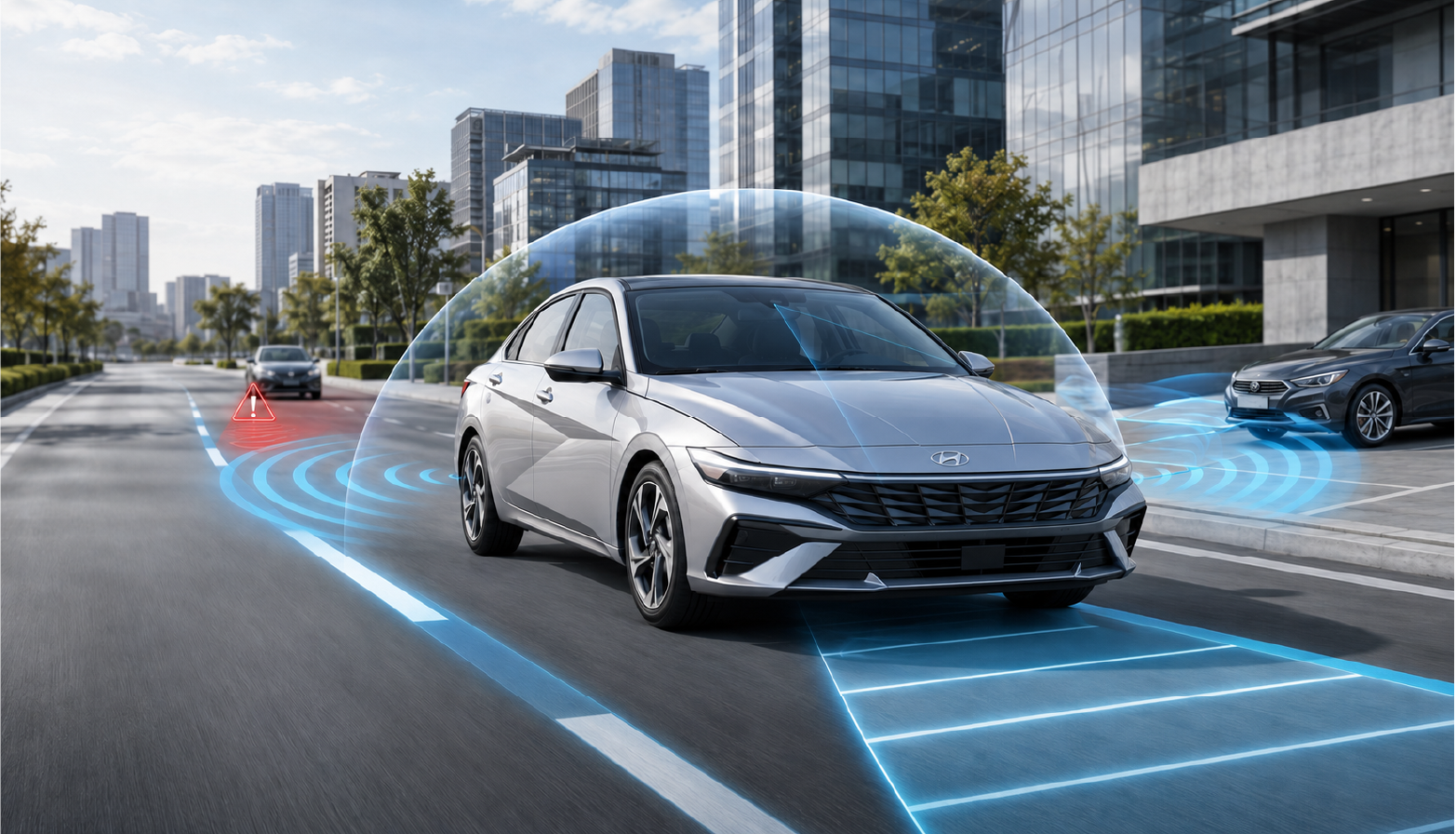
Safety gets serious attention. The new Elantra comes with 10 airbags. The structure uses more ultra-high-strength steel for better protection.
Advanced driver assistance includes Navigation-based Smart Cruise Control, Lane Keeping Assist, Blind Spot Collision Avoidance, and more. Features like Remote Smart Parking Assist and Pedal Misuse Prevention add convenience and peace of mind.
These systems build on what worked before but feel more refined. They help in traffic or tight parking without feeling intrusive.
How It Fits Your Life
Picture your daily drive. Maybe you commute in stop-and-go traffic. The hybrid's efficiency and smooth power delivery save money at the pump and reduce stress. Or perhaps you need space for kids or gear on weekends. The bigger cabin delivers that without making the car feel bulky.
Tech-wise, Pleos Connect and Gleo AI reduce distractions. Voice commands work naturally, so you keep eyes on the road. For tech enthusiasts, over-the-air updates mean the car can improve over time.
Compared to rivals, the Elantra now offers more interior room and modern features at what should remain a competitive price. US estimates for the 2027 model hover in the mid-$20k to low-$30k range, depending on trim and options.
What Comes Next
Korean sales start in the third quarter of 2026, with global markets, including the US as a 2027 model, following soon after. Early access registrations are already open in some places.
Hyundai positioned this Elantra as a bridge to software-defined vehicles. The Pleos system and AI focus show where the brand is heading.
Why This Matters Now
Compact sedans face pressure from crossovers, but many drivers still want efficient, comfortable cars that are easy to park and fun enough to drive. The new Elantra checks those boxes while adding tech that feels useful rather than gimmicky.
It solves real pain points: tight rear seats, fiddly controls, average efficiency. And it does so with a design that stands out without being weird.
If you're in the market for a new sedan, keep this one on your shortlist. The extra size, upgraded hybrid, and smart cabin could make daily life noticeably better. Watch for full test drives and pricing as it rolls out. This generation looks ready to compete hard.For more updates, visit DrivePK.com
Tags
Share this article
About the Author

Najeeb Khan
Automotive enthusiast and writer
Comments (0)
Login Required
You need to be logged in to comment on this article.
No comments yet. Be the first to share your thoughts!
Related Articles
MG ZS HYBRID+ Revealed With 465 Nm Torque
MG Pakistan lists the new ZS Vibe and Hybrid+ models, but headline torque, acceleration and 3-speed transmission claims remain unverified.
New Kia Stonic Price Starts at Rs 54.99 Lakh
Kia Stonic bookings reportedly open in Pakistan: Turbo X at Rs5.499m, Turbo S at Rs5.899m. Verify taxes, fees and on-road costs.
New BMW 3 Series: Petrol and EV Power
BMW’s new G50 3 Series brings petrol mild-hybrid and electric i3 choices, bold Neue Klasse styling, and 2027 deliveries. Pakistan timing is unknown.