Pakistan Petroleum Import Bill Rises 9.34% to $5.63B
Pakistan’s petroleum bill reportedly hit $5.63bn despite lower crude imports—but evidence doesn’t verify the figure or any fuel price hike.
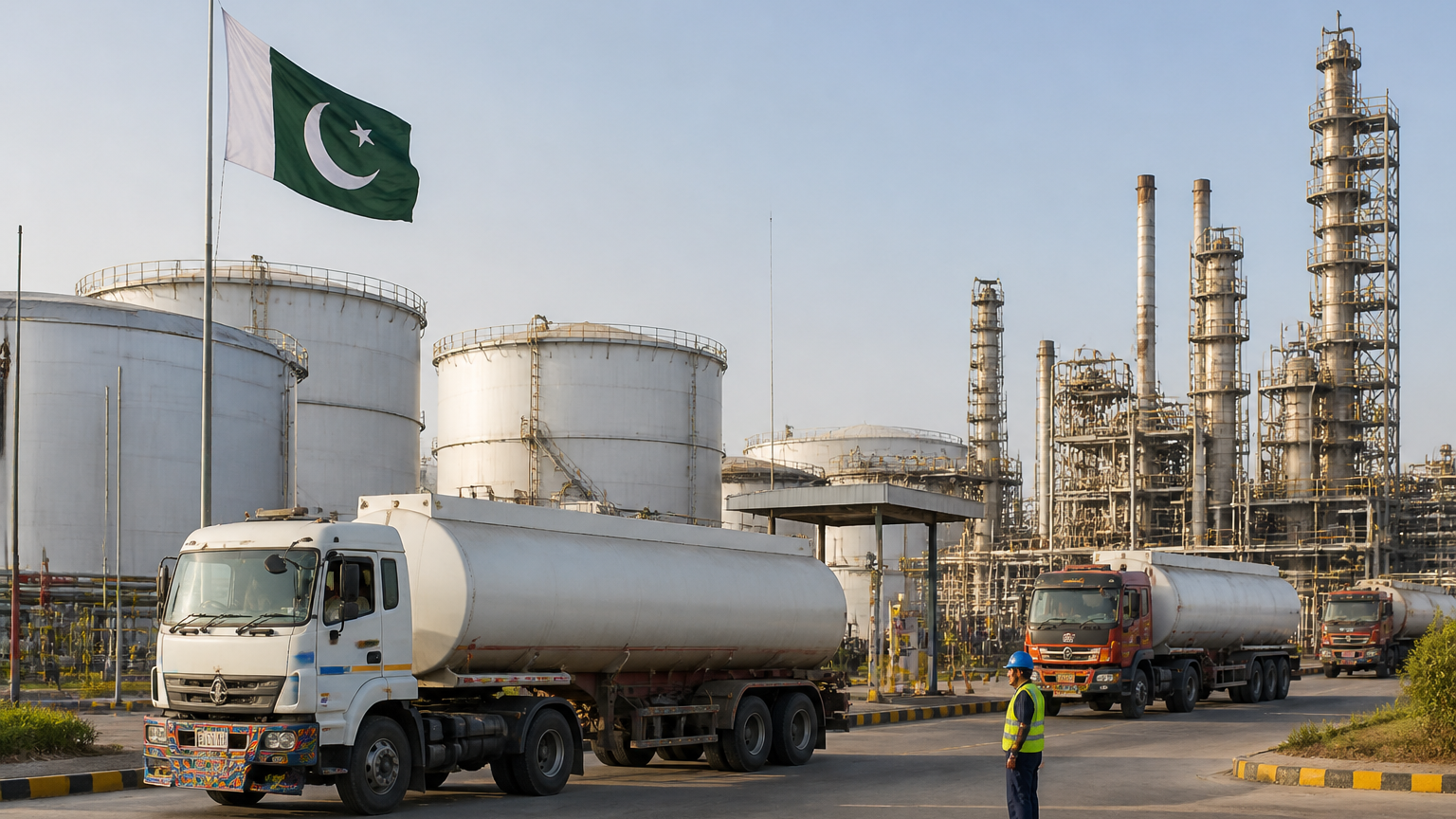
A report has claimed that Pakistan’s petroleum import bill climbed to $5.63 billion during July–October FY27, even though crude oil import volumes fell 8.37%. But the figures in the supplied evidence do not verify that claim, and they do not confirm any petrol or diesel price hike for Pakistani drivers.
What’s actually verified here?
The only usable evidence says Pakistan imports petroleum-related items such as crude petroleum, refined petroleum and petroleum gas as part of its import basket, and that import value and import quantity are different things. That matters because a higher dollar bill does not always mean Pakistan brought in more fuel by volume.
A broad trade-data article on Pakistan’s imports from Eximpedia mentions those categories, but it does not confirm the reported $5.63 billion figure, the 9.34% rise, or the 8.37% drop in crude oil volume. It also does not provide an official PBS table or the exact July–October comparison period needed to lock down the story. You can see the general background on fuel pricing in Pakistan from our previous coverage of Pakistan Fuel Prices February 2026: Petrol Drops Slightly, Diesel Rises Sharply and Fuel Prices in Pakistan Oct 2025 | Petrol Rs. 268.68, Diesel Rs. 276.81, but those are background articles, not proof of this new claim.
Why import value and import volume are not the same
This is the part many readers mix up.
- Import value means how many dollars Pakistan spent.
- Import volume means how much crude oil or petroleum product was bought.
So yes, a country can import less crude oil and still pay more overall if prices rise, if the mix shifts toward pricier refined products, or if other costs move up. But without official data, we can’t say which of those factors applied here.
And that’s the key point: the evidence we have does not show the full picture. It only suggests that petroleum imports are important enough to matter for Pakistan’s external bill.
Does this mean petrol or diesel will become more expensive?
Not necessarily. A higher import bill is a warning sign, not a price notification.
For Pakistani motorists, the pump price depends on several things at once:
- international oil or product prices
- the rupee-dollar exchange rate
- freight and insurance costs
- refining and distribution costs
- taxes and levies
- the government’s official pricing decision
So even if the import bill really did rise, that alone does not prove the next petrol or diesel review will move up. No official domestic price notification has been supplied here, so there is no confirmed hike to pass on to consumers.
What should drivers do now?
Don’t panic-buy fuel or change your car plans based on an unverified import headline. That would be a guess, not a smart budget move.
If your monthly commute already stretches your budget, keep a small cushion ready for fuel costs and watch the next official notification before you adjust spending. Ride-hailing drivers, delivery riders and families with long daily routes should pay close attention, because even a small change in per-litre pricing can add up fast over a month.
A few simple habits can still help in the meantime:
- combine trips where you can
- avoid long idling
- keep tyres properly inflated
- track your actual fuel use instead of guessing
What needs to be checked next?
Before this story can be treated as fact, Pakistan Bureau of Statistics data or another official Pakistani release must confirm:
- the $5.63 billion figure
- the 9.34% year-on-year change
- the exact July–October FY27 period
- the category used for the petroleum bill
- the 8.37% crude oil volume figure, including units
Until then, the safest reading is simple: the reported import story is still unconfirmed, and it does not justify assuming a fuel-price increase at the pump.
Conclusion
For now, Pakistani drivers should treat this as an unverified report, not a confirmed fuel-price warning. The evidence does show why import value and import volume need to be read separately, but it does not prove that petrol or diesel prices are about to rise. Watch for the next official trade release and the latest domestic petrol and diesel price notification before changing your monthly fuel budget.
Explore DrivePK services
Buying or selling a vehicle? Explore DrivePK services, including car inspection, Sell It For Me and Featured Listings, and choose the option that fits your needs.
For more updates, visit DrivePK.com
Share this article
About the author

Dr Khan
Automotive expert and content strategist



Comments (0)
Sign in required
Sign in to comment on this article.
No comments yet. Be the first to share your thoughts!