Used Car Import Guide Pakistan: Age Limit & Duty 2026
Pakistan's used car import rules are changing fast. The age limit, the extra regulatory duty and the import scheme you choose can change your final bill by lakhs. This guide explains the policy basics, age limits and duty structure in plain words, so you can plan before you ship.
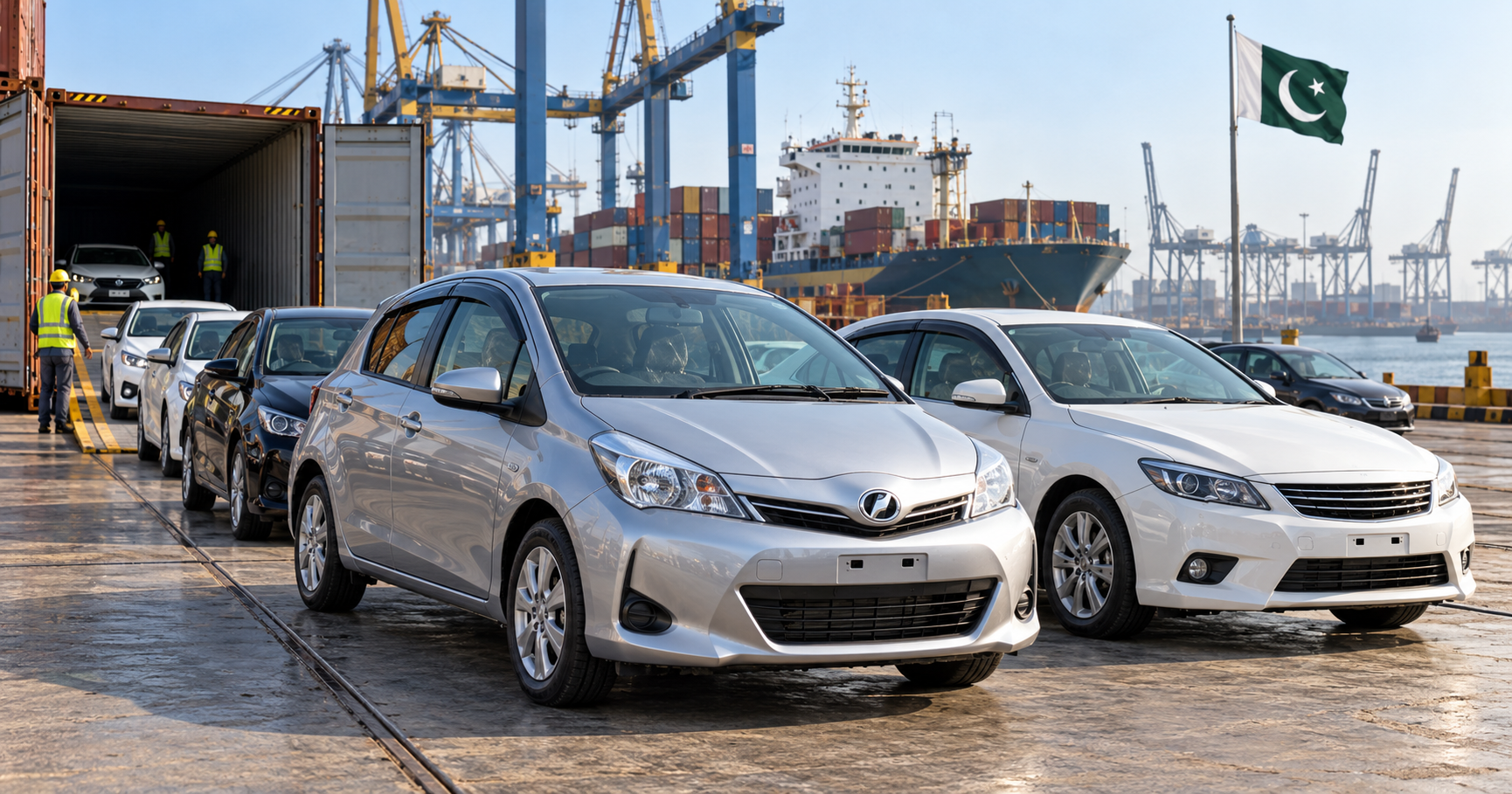
Table of Contents
- Why Everyone Is Searching for This Right Now
- The Three Ways to Bring a Used Car to Pakistan
- Age Restrictions: What Applies to You
- The Duty Structure, Explained Simply
- The Regulatory Duty Roadmap
- What Is Confirmed and What Is Not
- The Rules That Rarely Change
- A Simple Plan Before You Buy
- Common Mistakes to Avoid
- What This Means for Buyers
- Final Word
You find a clean car abroad. The price looks great. Then you ask one question: "What will it cost once it lands in Karachi?"
That is where most buyers get stuck. The age limit changes. The duty changes. And every news headline seems to say something different.
This guide clears it up. You will learn which schemes exist, which age rules apply to you, and how the duty adds up. We also flag what is still not confirmed, so you don't plan around a rumour.
Why Everyone Is Searching for This Right Now
Policy news drives the search spikes. Every time the government talks about budgets, tariffs or IMF reforms, car buyers rush to Google.
There is a good reason. Pakistan has kept car imports tight for years. Now it is slowly opening up. For buyers, that could mean more choice and fairer prices. For local car makers, it means real competition.
The Three Ways to Bring a Used Car to Pakistan
Before age or duty, you need to know your route. Each route has different rules.
-1. Transfer of Residence (TR): This is for Pakistanis who lived abroad and are moving home. One guide says you need to have stayed abroad for at least 700 days in the last three years. That guide was published in 2025, so confirm the number with customs before you rely on it.
-2. Gift scheme: Overseas Pakistanis can send a car to a close family member in Pakistan. The person receiving the car usually deals with the duty and the clearing.
-3. Commercial import:This is the big change. The ECC approved the commercial import of used vehicles under five years old, with a 40 per cent regulatory duty on top of existing customs duties. Dealers and importers can now bring in used cars as a business, through banking channels.
One more point. One recent guide reports that the personal baggage route for used cars closed in January 2026. Check this with a clearing agent, because it affects casual, one-off imports.
Age Restrictions: What Applies to You
Age is where people make the most mistakes. The limit depends on your scheme.
-Gift and TR schemes: three years. Reports on the January 2026 changes say the age limit for these schemes went from two years to three. Count from the year of manufacture, not the year you bought the car. A car built in January 2023 and cleared in December 2026 is over the limit.
-Commercial imports: five years, then possibly no limit.The first phase allowed only vehicles up to five years old. The plan was that the age limit would be removed after 30 June 2026.
Here is what happened next. In June 2026, officials told the National Assembly Standing Committee on Finance that the five-year cap would be lifted under the upcoming National Tariff Policy 2026-27. They also said the relaxation applies only to commercial imports, not to Gift or TR schemes.
So if you plan to use Gift or TR, assume the three-year rule still holds. Don't expect the commercial relaxation to help you.
-A fair warning on quality: Removing the age limit does not mean any old car gets in. Quality and environmental standards stay mandatory. The government also plans to use pre-shipment inspection by selected Japanese firms for commercial imports. That means a car with a poor record may not clear, even if the age rule allows it.
The Duty Structure, Explained Simply

Import duty in Pakistan is not one tax. It is a stack. Each layer adds to the one below it. The total depends on engine size, value, age and fuel type.
Here are the main layers.
Customs duty (CD): This is the base tax. Under the current tariff plan, the government will keep the maximum customs duty rate at 50 percent. Smaller engines usually pay a lower slab.
Additional customs duty (ACD): This sits on top of CD. It is being cut over time under the tariff reform.
Regulatory duty (RD) -This is the extra charge on used commercial imports. It is the layer that gets the most headlines.
Sales tax One 2025 guide puts it at 18 percent. Further taxes, such as federal excise duty and withholding tax, can apply depending on the car.
Why does this matter? Because each tax is charged on a value that already includes the earlier ones. A small change at the bottom grows as it moves up. That is why two similar cars can have very different final bills.
I am not giving fixed slab percentages by engine size here. Older guides list numbers that have since changed, and a wrong figure could cost you real money. Ask your clearing agent for a duty estimate on the exact car, using the current customs value.
The Regulatory Duty Roadmap
This is the most useful part for anyone planning ahead.
The 40 percent RD on commercial used cars is meant to come down in steps. The plan is 30 percent in 2026, 20 percent in 2027, 10 percent in 2028, and zero from 1 July 2029. The June 2026 briefing repeated this. The RD would fall from 40 to 30 percent for 2026-27, then drop 10 percent each year until it hits zero.
Think about what this means. If you wait a year, the extra tax on a commercial import could be lower. But waiting has costs too. Exchange rates move. Good cars sell. And policy can change again.
What Is Confirmed and What Is Not
This is the part most blogs skip. Be careful here.
Confirmed: Commercial import of used cars under five years old is allowed, with a 40 percent additional duty. This came from the ECC decision.
Reported, not fully confirmed: The removal of the age limit and the cut to 30 percent RD for 2026-27. These come from officials' statements to a parliamentary committee and from news reports. One recent guide also notes that the June 2026 plan rests on news reports.
There was also political friction. Reports described inter-ministerial disagreement and IMF objections that made it hard to pass the new tariffs before the old policy expired on 30 June. I could not find a final notification confirming every detail after that date.
So before you pay for anything, check the latest Statutory Regulatory Order (SRO) or notice on the FBR website and the Ministry of Commerce. A short call to a trusted clearing agent can also save you weeks.
The Rules That Rarely Change
Policy shifts, but some basics stay the same. One 2025 guide lists these vehicle conditions: the car must be right-hand drive, accident-free and unmodified. Customs officers also check for tampering with chassis and engine numbers.
You also need clean paperwork. That usually means the export certificate, the bill of lading, the invoice and the auction sheet or inspection report. Missing or mismatched documents are a common reason for delays at the port.
A Simple Plan Before You Buy
Follow these steps in order.
- Pick your scheme first. TR, Gift or Commercial. Your age limit depends on it.
- Check the year of manufacture. Do the maths against the limit on the day the car will be cleared, not the day you buy it.
- Get a duty estimate in writing. Ask for the customs value, each tax layer and the total.
- Check the current notification. Look at the FBR and Ministry of Commerce pages for any change.
- Budget for extras. Shipping, insurance, port charges, clearing fees and registration all add up.
- Keep a buffer. Rules and rates can shift between booking and arrival.
Common Mistakes to Avoid
-Counting the age wrongly: Buyers use the purchase date. Customs uses the manufacture year.
-Trusting old duty tables: A chart from 2023 or 2024 can be badly out of date.
-Assuming the commercial rules apply to personal schemes: The age relaxation was described as commercial only.
-Ignoring the inspection step: If pre-shipment inspection becomes mandatory, skipping it can block your car.
-Paying a dealer before checking the scheme: Make sure the route they use is legal for your case.
What This Means for Buyers
If you are an overseas Pakistani, the Gift and TR schemes remain your main path, with a three-year age limit. Plan around that and don't count on a wider rule.
If you are a buyer in Pakistan looking at a dealer-imported car, the picture is improving. More used cars should arrive as the age limit lifts and the extra duty falls. That could mean better choice and more competitive prices over the next few years.
If you are a dealer or importer, the next three years matter most. The duty drops each year, but so does your margin for error. Inspection, documents and timing will decide who does well.
Final Word
Pakistan's used car import rules are moving toward a more open market. The direction is clear. A falling regulatory duty, a looser age limit for commercial imports and stricter quality checks are all part of the plan.
But the details are still shifting, and the final bill depends on your scheme, your car and the day it clears. So treat every number here as a starting point. Verify it with customs, ask for a written estimate, and only then ship the car.
Good planning costs a few phone calls. A bad import can cost lakhs. For more updates, visit DrivePK.com
Tags
Share this article
About the Author

Najeeb Khan
Automotive enthusiast and writer
Comments (0)
Login Required
You need to be logged in to comment on this article.
No comments yet. Be the first to share your thoughts!
Related Articles
Vehicle Verification Pakistan: Stolen Check & Excise Portals
Buying a used car in Pakistan can go wrong fast. A stolen or tampered vehicle can land you in trouble. This simple guide shows how to check theft status, match engine and chassis numbers, and use each province's excise portal. Do these checks first, before you pay a single rupee.
Token Tax by Province in Pakistan 2026-27: Complete Guide
Token tax in Pakistan is not one rule. Punjab and Islamabad now charge a share of your car's invoice price, while Sindh, KP and Balochistan still use fixed engine slabs. This guide compares every province for 2026-27, explains renewal dates, and shows simple ways to avoid overpaying. Read this first.