Token Tax by Province in Pakistan 2026-27: Complete Guide
Token tax in Pakistan is not one rule. Punjab and Islamabad now charge a share of your car's invoice price, while Sindh, KP and Balochistan still use fixed engine slabs. This guide compares every province for 2026-27, explains renewal dates, and shows simple ways to avoid overpaying. Read this first.
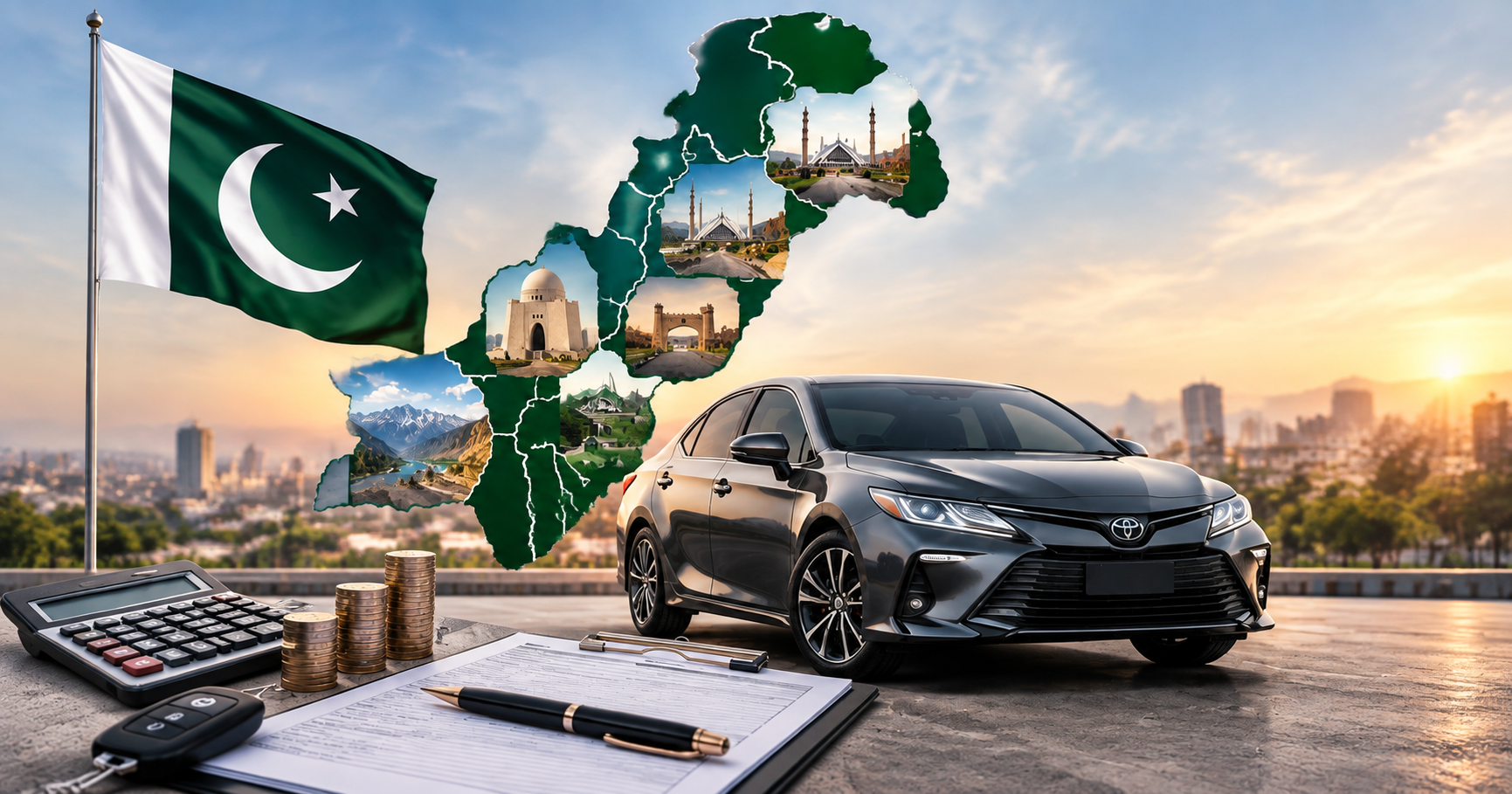
Table of Contents
- What token tax actually is
- The big change: price now matters
- Quick comparison table
- Punjab: higher rates, one big discount
- Islamabad: the biggest jump
- Sindh: fixed, simple, and cheaper
- Khyber Pakhtunkhwa: steady rates
- Balochistan: lowest yearly amounts
- AJK and Gilgit-Baltistan: the honest answer
- Renewal rules that trip people up
- Which province is cheapest?
- A simple checklist before you buy
You found a car you like, and the price fits your budget. Then someone says, "Check the token tax first."
You look it up, and every website shows a different number. That is not your fault. Pakistan has no single token tax. Each province sets its own rules, and 2026 changed them again.
Here is what is true right now, province by province.
What token tax actually is
Token tax is a yearly charge to keep your car legally registered. Your provincial excise department collects it. It is not income tax, and you cannot claim it back.
Most people pay two things at the same counter:
- 1. The provincial token. This changes by province.
- 2. A federal tax under Section 234. This is an FBR charge based on engine size. Tax calculator sites report that non-filers pay double, and cars older than ten years are exempt from this part. You can adjust it against your income tax, so keep the receipt.
The federal part is the same everywhere. The provincial part is where the confusion starts.
The big change: price now matters
Older rules looked only at engine size. Two 1300cc cars paid the same tax, even if one cost Rs 3 million and the other Rs 6 million.
That is ending in Punjab and Islamabad. Both now charge a percentage of the car's invoice price for cars above 1000cc. Sindh, KP and Balochistan still use fixed amounts by engine size.
So the same car can cost very different amounts depending on where it is registered.
Quick comparison table
These are private car rates for 2026-27. I checked each against the sources noted below.
| Province | Up to 1000cc | 1001–2000cc | Above 2000cc | Method |
|---|---|---|---|---|
| Punjab | Rs 20,000 (lifetime) | 0.3% of invoice value/year | 0.4% of invoice value/year | Price-based |
| Islamabad (ICT) | Rs 20,000 | 0.25% of invoice value/year | 0.35% of invoice value/year | Price-based |
| Sindh | Rs 1,500/year | Rs 2,000 to Rs 4,500/year | Rs 5,000 to Rs 7,000/year | Fixed slabs |
| KP | Rs 2,000/year | Rs 3,000 to Rs 5,000/year | Rs 5,000 (to 2500cc), Rs 8,000 above | Fixed slabs |
| Balochistan | Rs 10,500–12,000 once, or Rs 1,000–1,100/year | Rs 1,400 to Rs 1,700/year | Rs 2,000/year | Fixed slabs |
| AJK / GB | No reliable public slab found | No reliable public slab found | No reliable public slab found | Check locally |
Punjab: higher rates, one big discount
Punjab's Finance Bill 2026 raised the rate for cars above 1,000cc up to 2,000cc to 0.3 percent of invoice value, up from 0.2 percent, while vehicles above 2,000cc will be taxed at 0.4 percent, against the current 0.3 percent.
Here is a simple example. Your car has a 1300cc engine and an invoice price of Rs 4,000,000.
- Token tax: 0.3% × Rs 4,000,000 = Rs 12,000
- With the early discount (10% off): Rs 10,800
That discount is real. Punjab's excise department says a rebate equal to 10% of the annual token tax is allowed if the tax for the whole year is paid on or before 31st of August of the financial year.
There is a catch for this year. Today is September 29, so the 2026-27 window has already closed. Mark August for next year and pay early. On a Rs 12,000 token, that saves Rs 1,200 for a few minutes online.
Cars up to 1000cc pay Rs 20,000 once for the life of the vehicle. Punjab also cuts electric vehicle token tax by 95%. The Finance Bill proposed raising that to 99%, so confirm the current figure before you pay.
One warning: some websites list Punjab's mid-range cars as fixed rupee slabs. I could not match those to the bill, so I have not used them here. Check your exact amount on e-Pay Punjab.
Islamabad: the biggest jump
Islamabad changed the most. Under the Finance Act 2026, the new token tax structure is now law and will take effect from July 1, 2026.
The rates are:
- Up to 1000cc: Rs 20,000
- 1001cc to 2000cc: 0.25% of invoice value
- Above 2000cc: 0.35% of invoice value
The impact is easy to see with real cars. PakWheels estimated that a Honda City 1.2L CVT now pays about Rs 11,917, compared with roughly Rs 1,500 before. A Toyota Corolla Altis Grande 1.8 moves from about Rs 5,000 to about Rs 19,530.
If you plan to buy a car in Islamabad, do this math before you sign. You can pay through the PAK App, which lets you check dues and generate a challan online.
Sindh: fixed, simple, and cheaper
Sindh still charges by engine size. Tax calculator sites list the yearly amounts like this:
| Engine size | Yearly token tax |
|---|---|
| Up to 1000cc | Rs 1,500 |
| 1001–1300cc | Rs 2,000 |
| 1301–1600cc | Rs 4,000 |
| 1601–2000cc | Rs 4,500 |
| 2001–2500cc | Rs 5,000 |
| Above 2500cc | Rs 7,000 |
Cars up to 1000cc can also pay once. The published option is Rs 20,000 for a new, unregistered car, or Rs 15,000 for a car aged three to five years.
Sindh has no early-payment discount. You can pay through ePay Sindh. Expect other Sindh costs at registration, such as a fee based on vehicle value, so do not judge the total by token tax alone.
Khyber Pakhtunkhwa: steady rates
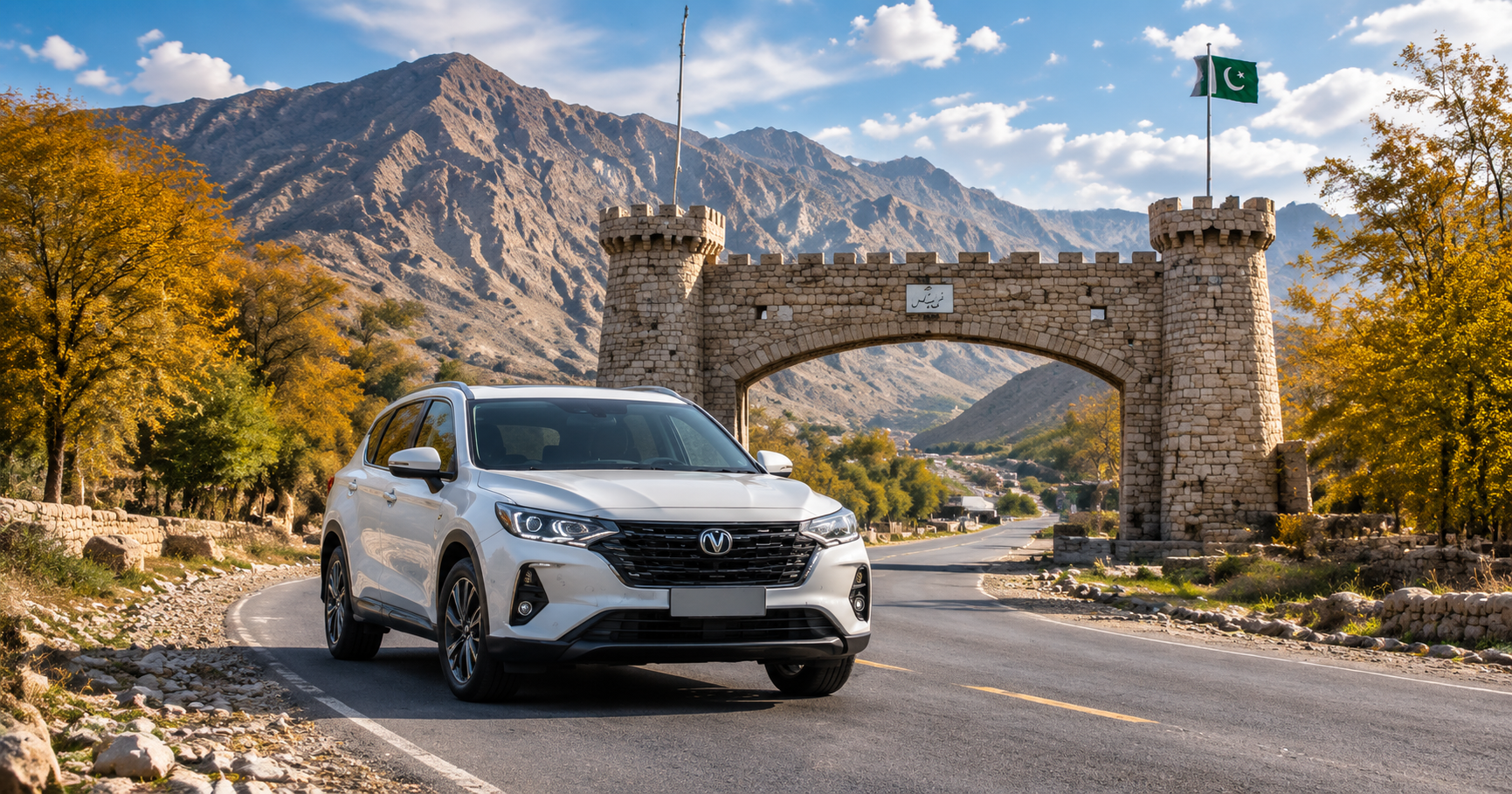
KP did not raise private car rates this year. The 2026 Finance Act changed only the rates for taxis, vans and buses that carry passengers for hire.
| Engine size | Yearly token tax | Per quarter |
|---|---|---|
| Up to 1000cc | Rs 2,000 | Rs 500 |
| 1001–1300cc | Rs 3,000 | Rs 750 |
| 1301–1500cc | Rs 4,000 | Rs 1,000 |
| 1501–2500cc | Rs 5,000 | Rs 1,250 |
| Above 2500cc | Rs 8,000 | Rs 2,000 |
KP publishes quarterly amounts, which helps if you prefer smaller payments. A motorcycle pays Rs 2,500 once. Electric four-wheelers are exempt until 30 June 2028.
One practical tip. When one guide checked on 27 September 2026, the department's site had no working online payment link. Plan to visit your district excise office.
Balochistan: lowest yearly amounts
Balochistan has the lowest annual figures, with one twist. Newer small cars can pay once, and older ones pay yearly. Calculator sites report these amounts:
| Vehicle | Token tax |
|---|---|
| Up to 660cc, under 5 years | Rs 10,500 once |
| Up to 660cc, 5+ years | Rs 1,000/year |
| 661–1000cc, under 5 years | Rs 12,000 once |
| 661–1000cc, 5+ years | Rs 1,100/year |
| 1001–1500cc | Rs 1,400/year |
| 1501–2000cc | Rs 1,700/year |
| Above 2000cc | Rs 2,000/year |
Electric vehicles are reported to be fully exempt until 30 June 2030. I found these figures on calculator sites and could not confirm them against the official schedule, so verify with the Balochistan excise office before paying.
AJK and Gilgit-Baltistan: the honest answer
I searched for current token tax slabs for Azad Jammu and Kashmir and Gilgit-Baltistan. I found no reliable, recent, published schedule for either.
I would rather say that than print a made-up table. Both regions run their own excise offices, and their rules can differ from the provinces. Ask the local excise office for the current slab in writing, and keep the receipt.
Renewal rules that trip people up
- Tax year: Provincial token tax follows the financial year, which starts July 1.
- Discount: Only Punjab is confirmed to offer the 10% early-payment rebate, with an August 31 deadline.
- Unpaid tax: Arrears can block ownership transfer and cause trouble at resale.
- Federal part: It is adjustable, so keep your receipt when you file your return.
- Old cars: Cars over ten years old skip the federal part but still pay the provincial token.
Which province is cheapest?
For a mid-size car, Sindh, KP and Balochistan cost far less each year than Punjab or Islamabad. A Rs 4 million car pays Rs 10,000 to Rs 12,000 in Punjab or Islamabad. The same engine size pays Rs 2,000 to Rs 4,500 in Sindh or Balochistan, or Rs 3,000 to Rs 4,000 in KP.
But token tax is only one cost. Registration fees, transfer tax and local rules add up too. Also, the province where a car is registered stays with it, so check the registration book before you buy a used car.
A simple checklist before you buy
- Find the province on the registration book.
- Note the engine size and the original invoice price.
- Look up that province's current schedule on its excise site.
- Ask the seller for proof that all token tax is paid.
- Confirm your filer status, since it affects the federal part.
Token tax is small next to the price of a car. But it comes every year, and the new percentage-based systems make it grow with the car's value. Spend ten minutes checking your province's rule now, and you avoid a surprise at the excise counter.
For more updates, visit DrivePK.com
Tags
Share this article
About the Author
Najeeb Khan
Automotive enthusiast and writer
Comments (0)
Login Required
You need to be logged in to comment on this article.
No comments yet. Be the first to share your thoughts!
Related Articles
Vehicle Transfer & Biometric Verification Guide Pakistan
Vehicle file transfer in Pakistan involves the registration book, excise office procedures, and mandatory biometric verification. This guide breaks down the required documents, the step-by-step transfer process, provincial differences, and the common mistakes that delay ownership changes or leave buyers legally exposed.
Car Modification Laws in Pakistan: A complete Guide
Many Pakistani car owners modify vehicles without knowing the law. This guide explains which changes are allowed, which invite challans, and how Section 33 of the Motor Vehicles Ordinance requires reporting major alterations. Learn the practical rules for tints, lights, exhausts and more.