Vehicle Transfer & Biometric Verification Guide Pakistan
Vehicle file transfer in Pakistan involves the registration book, excise office procedures, and mandatory biometric verification. This guide breaks down the required documents, the step-by-step transfer process, provincial differences, and the common mistakes that delay ownership changes or leave buyers legally exposed.
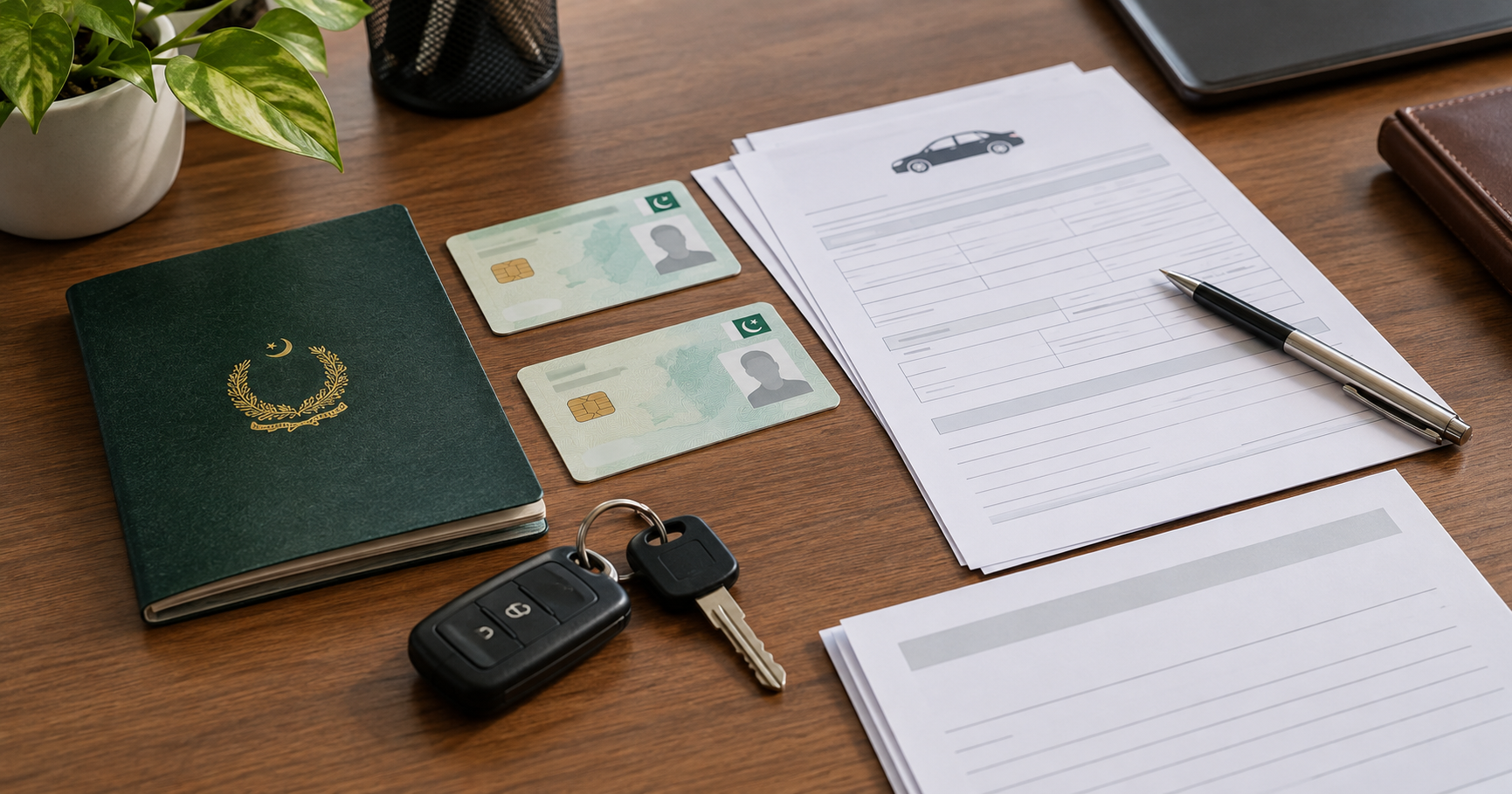
Table of Contents
- What the registration book actually is
- Why the process is provincial, not national
- The documents you actually need
- How biometric verification actually works
- Step by step: how the transfer process works
- Step 1: Clear all outstanding dues first
- Step 2: Gather your documents
- Step 3: Complete biometric verification
- Step 4: Submit the application at the excise office
- Step 5: Get your documents verified
- Step 6: Collect your receipt and updated registration.
- The mistakes that cause the most delays
- Why this matters more than it seems
Buying a used car in Pakistan feels exciting right up until you hit the paperwork stage. That's the part most people dread. You've found the car, agreed on a price, shaken hands, and now someone mentions "file transfer" or "biometric verification," and suddenly you're not sure what you actually need to do next.
This confusion is exactly why so many buyers end up driving on an open letter, meaning the car is still legally registered in someone else's name. It feels harmless until it isn't. A traffic challan, an accident, or a legal dispute can land back on the original owner's CNIC, not yours, even though you're the one driving the car every day. This guide walks through what the registration book actually is, how the file transfer process works, what happens at the excise office, and how biometric verification fits into all of it.
What the registration book actually is
Every registered vehicle in Pakistan comes with a registration book, sometimes called a smart card in newer formats. This document is proof that the car is legally recorded with the Excise and Taxation Department of the province it's registered in. It lists the car's make, model, engine number, chassis number, and the current owner's details.
When you buy a used car, this book needs to carry your name, not the previous owner's. If it doesn't, you don't legally own the car, no matter what receipt or handshake deal you have. This is the single most important document in the entire process, and it's worth checking twice before you hand over any money.
Why the process is provincial, not national
Pakistan doesn't have one national system for vehicle registration. Excise and Taxation is a provincial subject, which means Punjab, Sindh, Khyber Pakhtunkhwa, and Islamabad Capital Territory each run their own procedures, fee structures, and biometric rollout timelines. A process that works in Lahore might look slightly different in Karachi or Islamabad.
That said, the core idea stays the same everywhere: the seller and buyer both need to be verified, the transfer needs to be recorded officially, and outstanding taxes need to be cleared before ownership changes hands.
The documents you actually need
Requirements shift a little depending on the province and whether the car is locally assembled or imported, but here's what most transfers ask for:
- The original registration book or smart card, up to date and matching the seller's name
- Photocopies of the seller's and buyer's CNIC, with the original CNIC available for verification
- Form F, filled and signed, which is the standard application for registration or transfer
- The transfer of ownership form, sometimes called a sale deed or transfer letter
- Token tax receipts showing the yearly tax is paid with no dues pending
- A biometric verification slip or receipt, now mandatory in most provinces
- An NOC or transfer letter from the bank or leasing company, if the car was purchased on lease
- An affidavit confirming the vehicle isn't stolen or involved in any pending case
If the car is registered in a different city from where you're transferring it, you may also need proof of residence and the previous transfer letter, if the car has changed hands before.
How biometric verification actually works
This part trips up a lot of first-time buyers, so it's worth explaining plainly. Biometric verification means the excise department confirms your identity using your fingerprint, matched against NADRA's database, before letting a transfer go through. It exists mainly to stop fake registration documents and fraudulent sales, which used to be a real problem before this system rolled out.
Islamabad introduced mandatory biometric verification for registration and transfers back in 2018 and 2019, requiring both buyer and seller to appear at the excise office or a NADRA e-Sahulat centre. Punjab followed a similar path, and more recently made things faster by allowing sellers to complete biometric verification online through the Pak-ID mobile app, instead of visiting an agent in person and paying a fee for a printed slip. Sindh rolled out its own version in phases starting in 2024, first for new vehicle registrations, then extending to buyers, and finally requiring both parties to complete verification during transfer.
What this means for you in practice: expect to either visit an excise office or NADRA facilitation centre in person for a fingerprint scan, or in provinces with digital options, complete it through an approved app. You'll get a receipt or transaction ID, which the excise office then matches against your application before the transfer is approved.
Step by step: how the transfer process works
Following are the key steps involve in this process:
Step 1: Clear all outstanding dues first
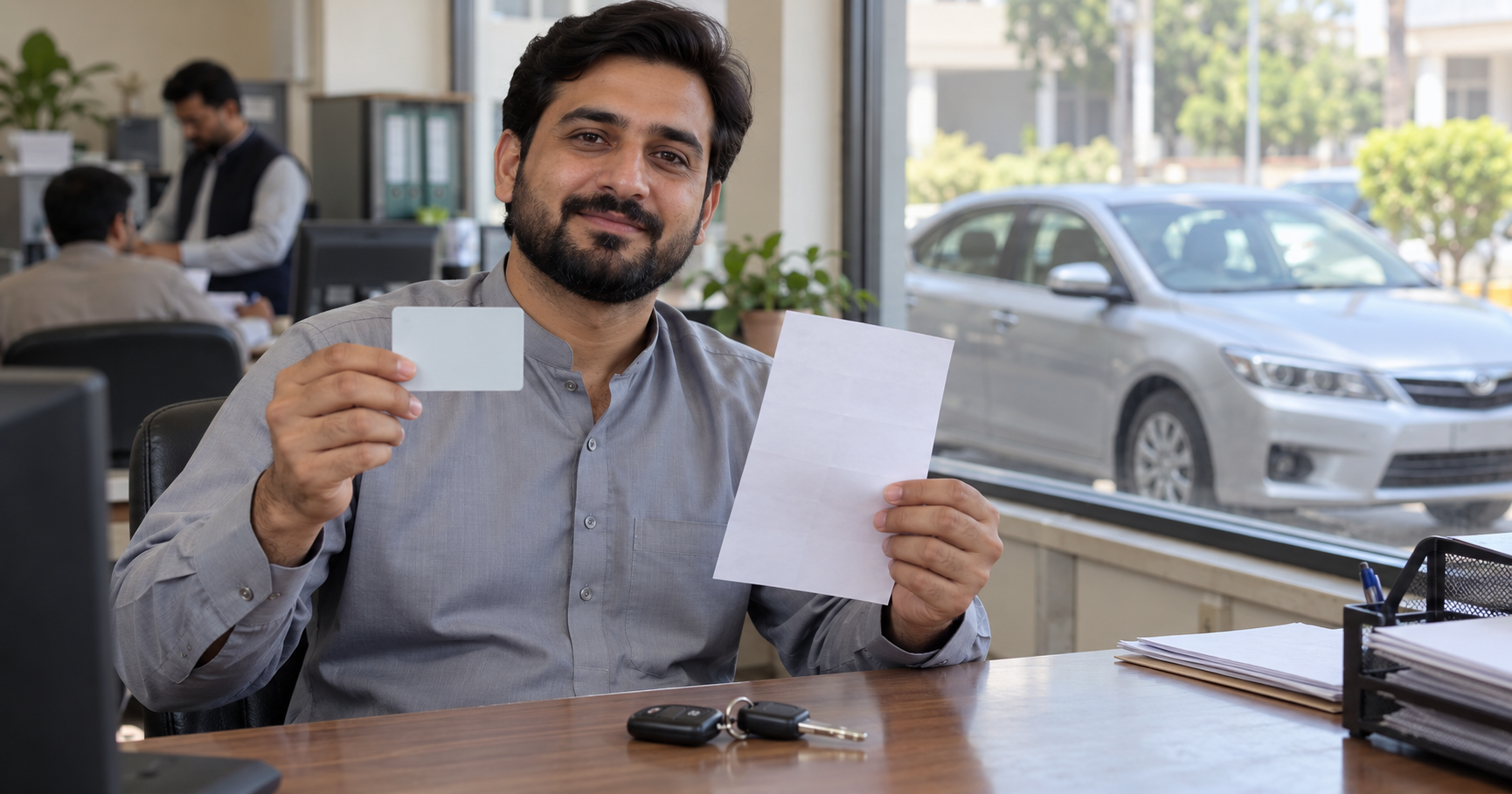
Before anything else, make sure token tax is paid up to date and there are no pending traffic challans linked to the vehicle. Most excise offices won't move forward with a transfer if dues are outstanding.
Step 2: Gather your documents
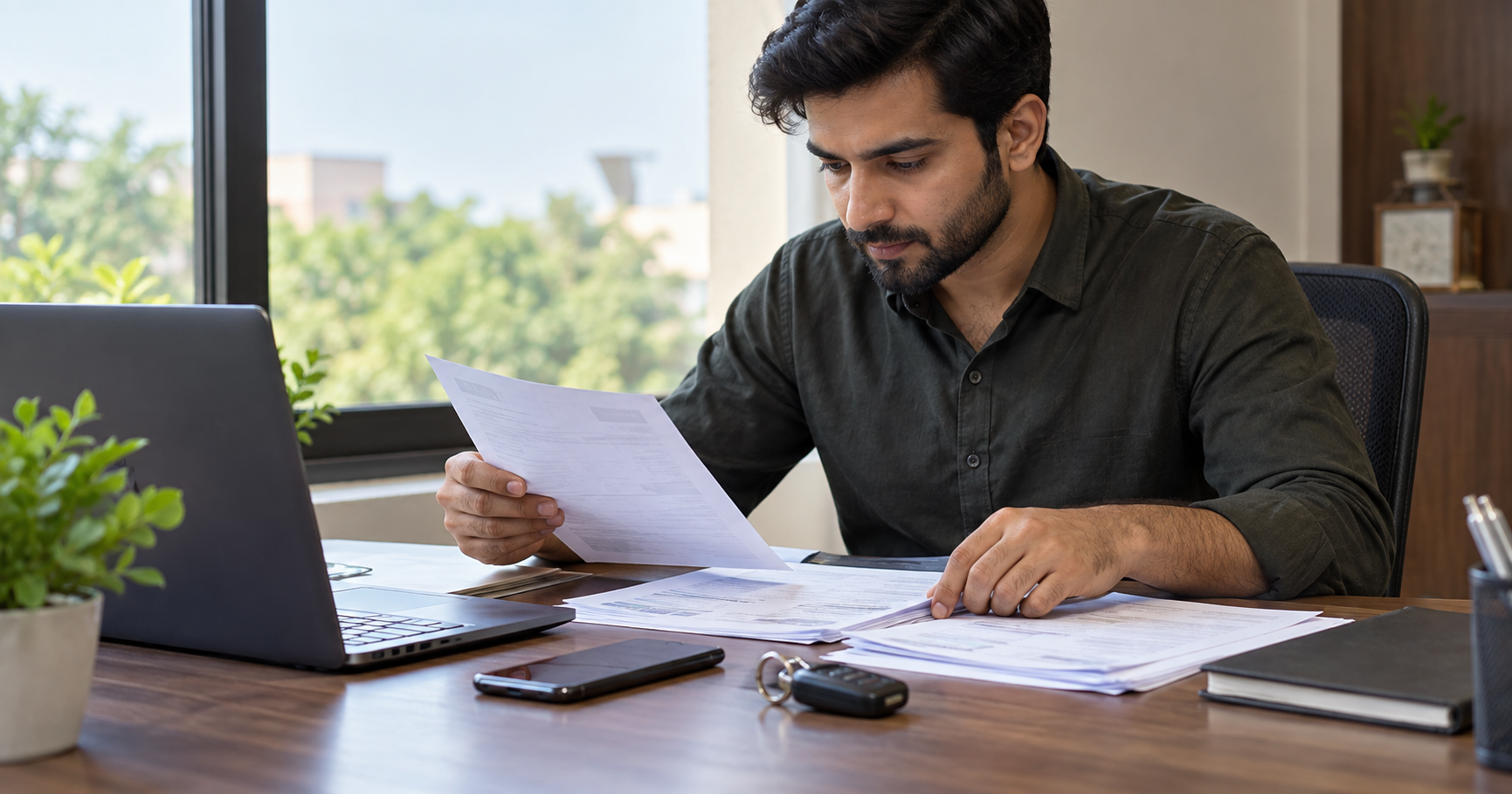
Collect the registration book, CNIC copies of both parties, Form F, and any lease NOC if it applies. Missing paperwork is the most common reason transfers get delayed.
Step 3: Complete biometric verification
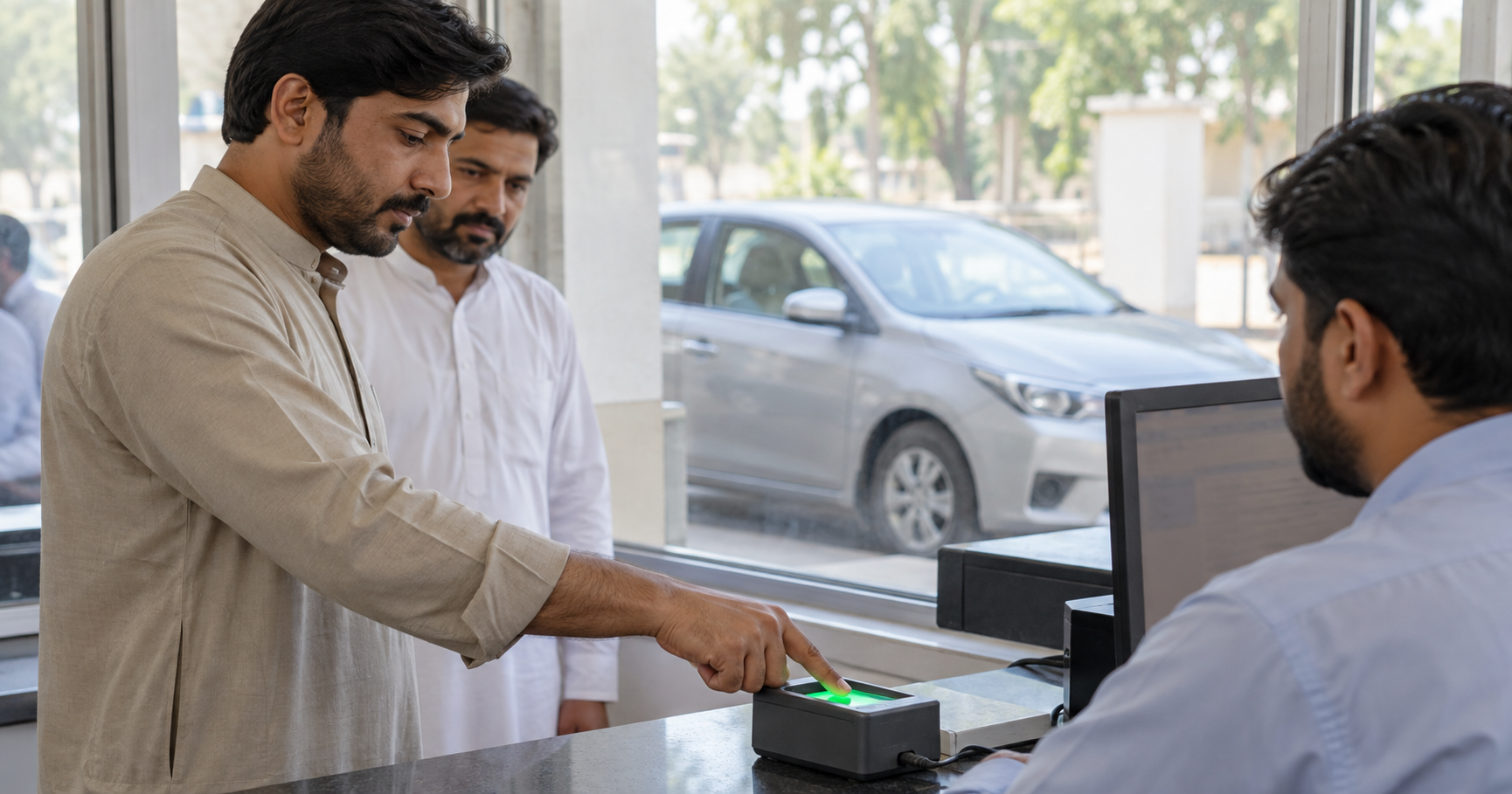
Depending on your province, this happens either in person at the excise office or a NADRA centre, or online through an app like Pak-ID in Punjab. Both buyer and seller typically need to complete this step.
Step 4: Submit the application at the excise office
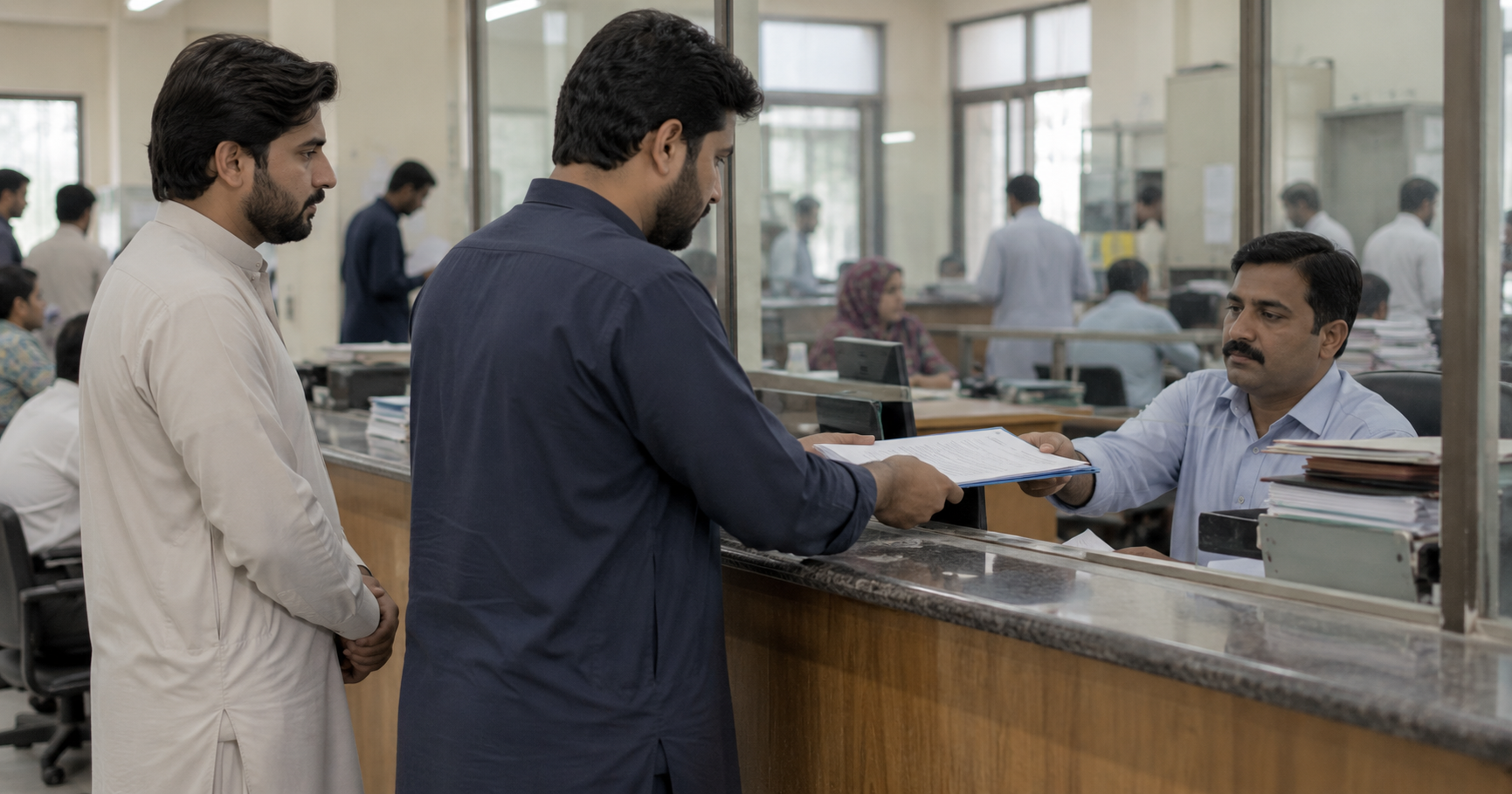
This is where you deposit the transfer fee and hand in your completed forms. Fees vary by vehicle category and province, so it's worth checking the current rate schedule for your city rather than assuming a fixed number.
Step 5: Get your documents verified
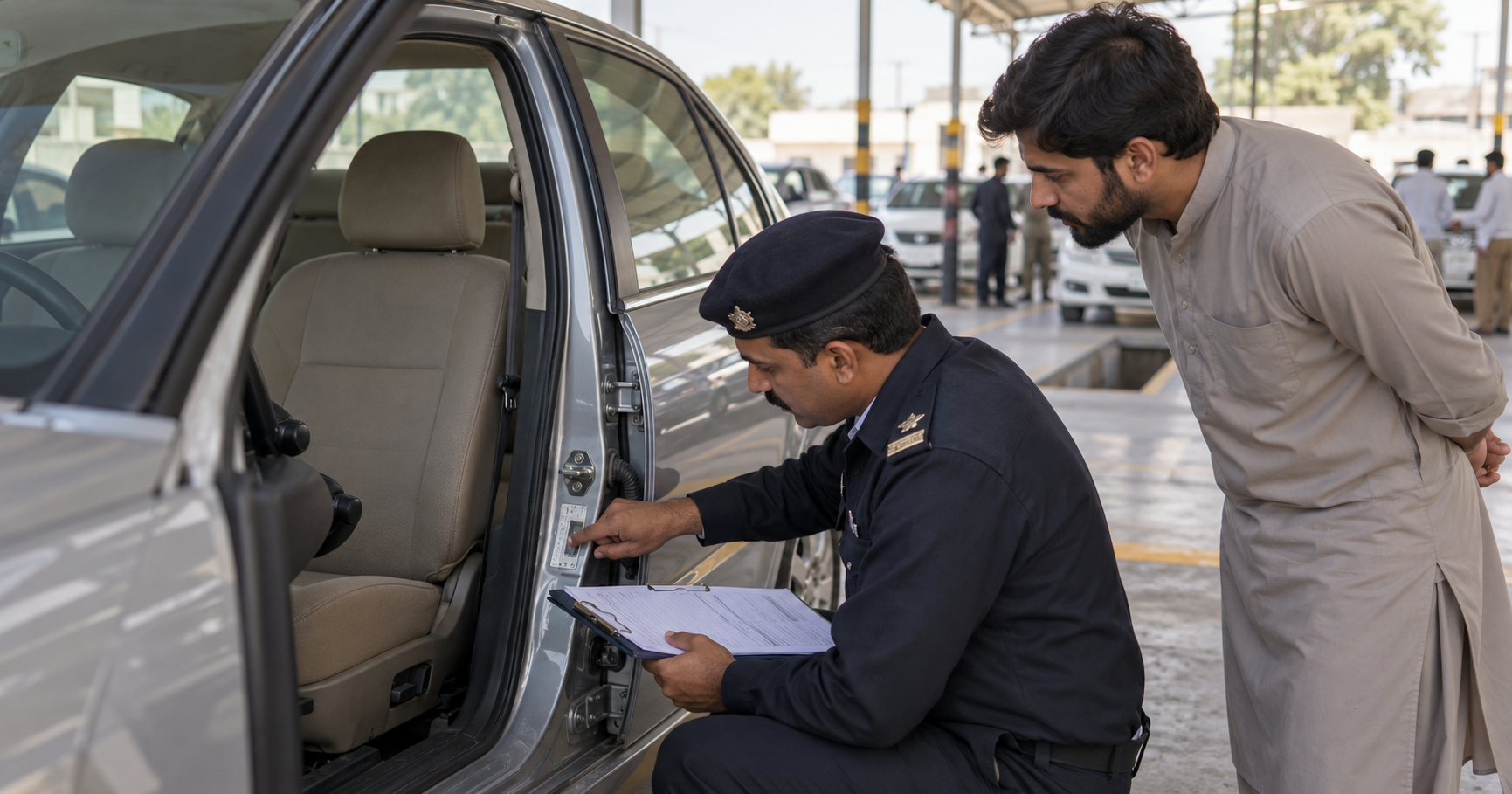
An excise inspector checks that everything matches, the chassis number, the names, the biometric receipt, and the paid tax records.
Step 6: Collect your receipt and updated registration.
Once approved, you'll get a receipt confirming the transfer. The updated registration book or smart card is issued afterward, sometimes mailed to your address within a week or two.
That's the full sequence. It sounds like a lot written out, but most transfers, when the paperwork is in order from the start, wrap up within a few weeks.
The mistakes that cause the most delays
A few things trip people up again and again. Buying a car with an open transfer letter and assuming you can deal with it later is the biggest one, since it leaves you without legal ownership and can complicate insurance claims if something goes wrong. Mismatched names between the CNIC and the registration book is another common snag, along with unpaid token tax that the previous owner never mentioned. And if any document, like the original sales certificate, gets lost, replacing it isn't quick. You'll need to file an FIR, and getting a duplicate can take two to three months.
The safest habit is simple: check every document against the seller's CNIC and the vehicle's chassis number before you pay a single rupee, not after.
Why this matters more than it seems
Skipping proper documentation feels like saving time in the moment. But an unregistered car in your possession isn't really yours in the eyes of the law. If it's ever involved in an accident, a legal dispute, or even a routine traffic stop, the paperwork trail matters more than the sale receipt in your glovebox.
Taking the time to go through the excise office properly, complete biometric verification, and get the registration book updated in your name isn't just a formality. It's the difference between owning a car and just driving one that still legally belongs to someone else.For more updates, visit DrivePK.com
Tags
Share this article
About the Author

Najeeb Khan
Automotive enthusiast and writer
Comments (0)
Login Required
You need to be logged in to comment on this article.
No comments yet. Be the first to share your thoughts!
Related Articles
Car Modification Laws in Pakistan: A complete Guide
Many Pakistani car owners modify vehicles without knowing the law. This guide explains which changes are allowed, which invite challans, and how Section 33 of the Motor Vehicles Ordinance requires reporting major alterations. Learn the practical rules for tints, lights, exhausts and more.