Car Modification Laws in Pakistan: A complete Guide
Many Pakistani car owners modify vehicles without knowing the law. This guide explains which changes are allowed, which invite challans, and how Section 33 of the Motor Vehicles Ordinance requires reporting major alterations. Learn the practical rules for tints, lights, exhausts and more.
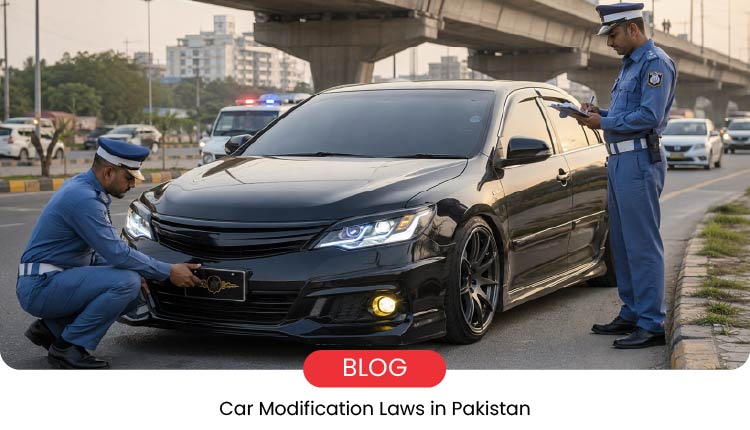
Table of Contents
- What Counts as a Vehicle Modification
- Modifications That Are Generally Allowed (With Care)
- Modifications That Commonly Create Legal Problems
- Tinted Glass
- Lights – LED, HID and Aftermarket
- Exhaust Modifications and Loud Silencers
- Number Plates
- Tyres, Wheels and Suspension
- Engine Swaps, Turbo and Structural Changes
- CNG or LPG Kits
- Province and City Differences
- What Can Happen If a Modification Violates the Rules
- How to Check Whether Your Modification Is Legal
- Practical Checklist Before Modifying Your Car
You see a car with dark tinted windows, loud exhaust, and fancy number plates driving past a traffic check post. Hundreds of similar cars run every day. Still, the warden stops one and issues a challan. Many owners wonder why some modified cars pass while others get fined.
The answer lies in the Provincial Motor Vehicles Ordinance 1965 and the rules made under it. These laws apply across Pakistan with provincial updates. The core rule is simple: any change that makes the details on your registration certificate wrong must be reported. Section 33 of the Ordinance requires the owner to inform the registering authority (usually the Excise and Taxation office) within 14 days if the alteration affects the recorded particulars. A small fee is paid so the change can be entered in the record. If the change is minor and does not alter weight by more than two percent, reporting is not needed. Major changes that affect safety, noise, visibility or identification can bring fines or further action even if reported.
This is the basic legal principle every car owner should understand. The law does not ban every cosmetic change. It does require that the vehicle stay under the driver’s control, does not produce undue noise, does not use unsafe lights or glass, and matches its registration record. Enforcement is handled by traffic police and can differ by province and city.
What Counts as a Vehicle Modification
A modification is any change from the original factory condition that alters appearance, performance, structure or recorded details. Alloy wheels of the same size as original, mild interior seat covers or a simple roof rack usually stay outside major legal concern. Changes that affect colour, engine, chassis, glass transparency, lighting intensity, exhaust noise or number plate design fall under the rules and can need approval or invite challan.
Modifications That Are Generally Allowed (With Care)
Cosmetic changes that do not affect safety or registration details are usually low risk. Alloy wheels matching the original diameter and load rating rarely create problems. Mild body kits, spoilers and bumpers that stay within the vehicle’s original width and do not reduce ground clearance excessively are commonly seen and rarely stopped if they do not cause danger. Vehicle wraps or partial colour films that do not change the registered colour completely are often tolerated. Full colour change must be reported under Section 33 so the registration book can be updated. Interior changes such as seat covers, steering wheel covers or audio systems kept at reasonable volume normally face no issue.
Roof racks fitted properly and not overloaded are accepted. Bull bars or crash guards that do not obstruct lights or increase overall width beyond limits are usually allowed if they do not create a hazard.
Modifications That Commonly Create Legal Problems
Tinted Glass
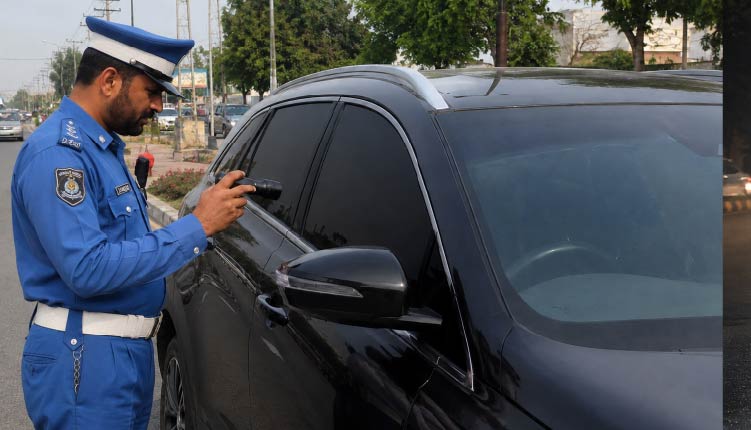
Tinted glass is one of the most frequent reasons for challans. Under the Motor Vehicles Rules and recent provincial amendments, aftermarket dark films that reduce visibility are restricted. In Punjab, the Fourth Amendment Ordinance 2025 introduced stricter penalties for unauthorized tinted glass. Factory-fitted (OEM) tinted glass on side and rear windows has been clarified as legal in Punjab after early 2026 instructions from traffic authorities; action against OEM tints was suspended. Aftermarket dark films on the front windscreen and front side windows remain heavily restricted. Dark films that make the driver or passengers hard to see are treated as a violation. In Sindh and Islamabad, authorities have also run drives against non-standard tints, citing security and visibility concerns. Medical or security NOCs for darker tints are rare and require approval from the Ministry of Interior. Typical action includes fine and forced removal of the film. Seeing many tinted cars does not make aftermarket dark tint legal.
Lights – LED, HID and Aftermarket
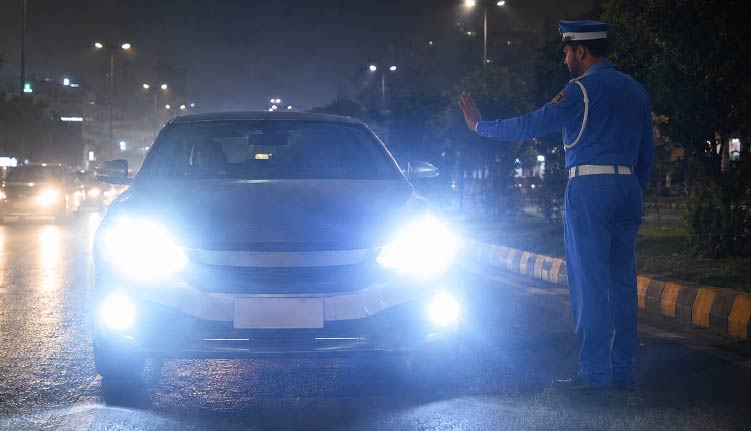
Stock white or yellow headlights are legal. Aftermarket HID or LED conversions that create excessive glare or are installed in the wrong housing are regularly stopped. National Highways and Motorway Police and provincial traffic police have issued repeated warnings against high-intensity, flashing or coloured lights. Blue, red or strobe lights reserved for emergency vehicles are strictly illegal for private cars. Using them can lead to fine and possible FIR. Properly aligned white LED bulbs that match factory beam pattern face less risk, but cheap conversions that blind oncoming traffic invite challan. Underglow or neon lights on public roads are not permitted.
Exhaust Modifications and Loud Silencers
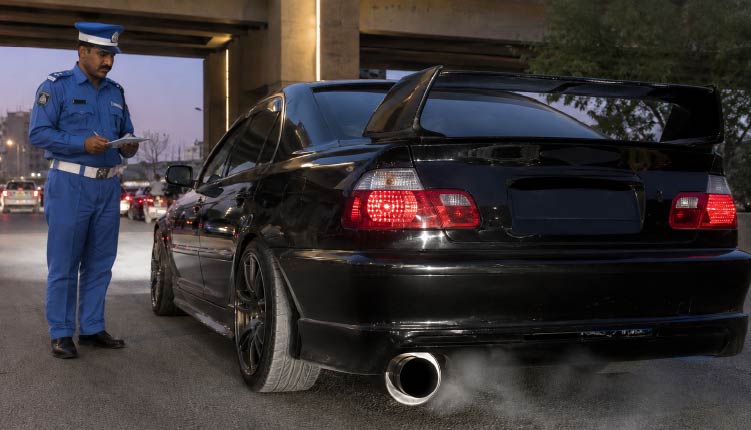
The Motor Vehicles Rules require every vehicle to be fitted with a silencer that reduces noise as far as practicable. Rule 158 states that a motor vehicle must not cause undue noise when in motion. Free-flow, cut-out or racing exhausts that produce loud sound are treated as illegal alterations. In Khyber Pakhtunkhwa the schedule lists a specific fine for noise pollution by illegal modification. Pressure horns and multi-tone musical horns are also banned. Only a standard single-tone horn is allowed. Loud exhausts can bring fine and order to restore the original silencer.
Number Plates
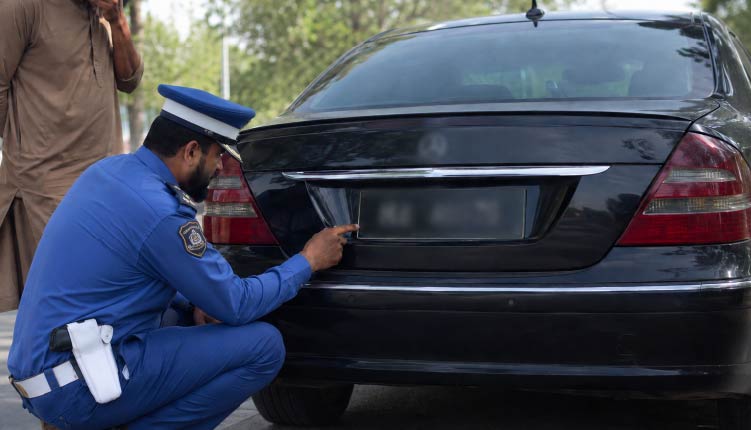
Only official computerized plates issued by the Excise and Taxation department are legal. Fancy fonts, stickers, coloured plates, flip plates or any altered design are prohibited. Traffic police in Punjab and Sindh actively check this. Using non-standard plates can lead to fine and impoundment until proper plates are fitted.
Tyres, Wheels and Suspension
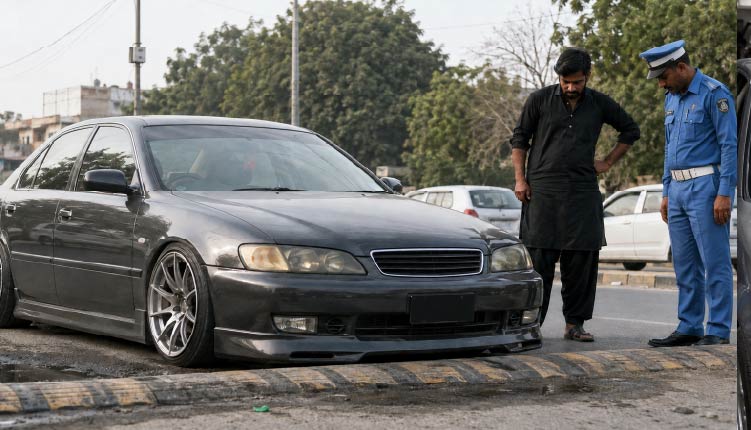
Changing tyre size beyond the manufacturer’s recommendation can affect handling and registration particulars if it changes overall dimensions or load rating. Lowering or lifting suspension that reduces ground clearance excessively or makes the vehicle unstable may be treated as an unsafe alteration. Alloy wheels of correct size and offset are generally fine.
Engine Swaps, Turbo and Structural Changes
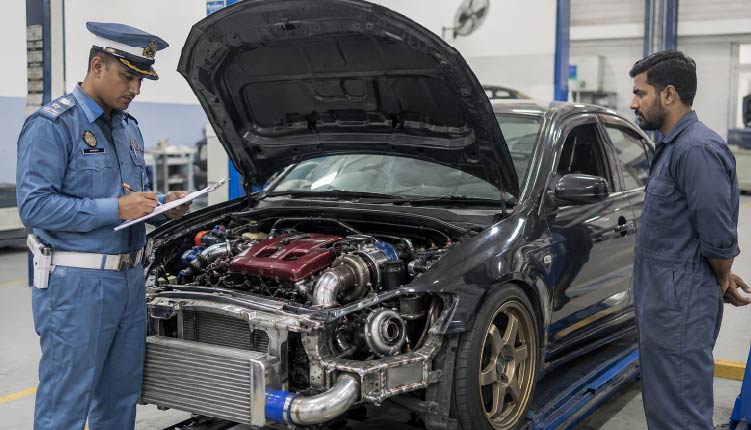
Any engine change must be reported under Section 33. The new engine number has to be entered in the registration record. Failure to do so makes the certificate inaccurate and can cause problems during transfer or fitness checks. Turbo or supercharger additions that alter performance significantly should also be documented. Chassis cutting, welding or major structural changes without approval are high risk and can lead to suspension of registration.
CNG or LPG Kits
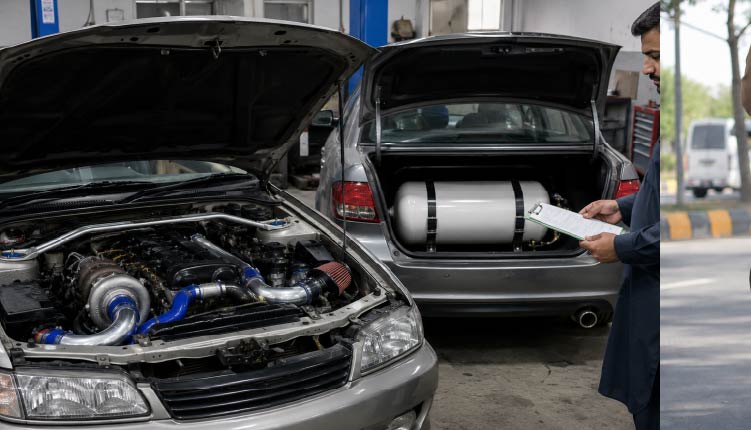
These require proper certification and must be entered in the registration book where the system is installed.
Province and City Differences
The basic Ordinance is the same, but enforcement varies. Punjab has updated penalties through the 2025 Ordinance and runs active drives on tints, lights and noise. Sindh authorities have ordered action against tinted windows and non-standard plates in Karachi. Khyber Pakhtunkhwa lists specific fines for illegal alteration and noise pollution. Islamabad Traffic Police has clarified limits on front tints while allowing limited rear tinting. Always check the local traffic police and Excise office for the latest practice in your city.
What Can Happen If a Modification Violates the Rules
Traffic police can stop the vehicle, issue a challan, order removal of the illegal part, and in serious cases impound the vehicle until the defect is fixed. Repeat or serious offences can lead to higher fines, points on the licence, or FIR. An unreported major alteration can create problems when selling or transferring the car because the registration certificate will not match the vehicle. Fitness certificates for older vehicles may also be refused if the car is in an unsafe or non-compliant condition.
How to Check Whether Your Modification Is Legal
Visit the relevant provincial Excise and Taxation website or office and ask about alteration procedures under Section 33. Contact the local traffic police office or check official notifications. For major changes, obtain written confirmation before spending money. Keep the original parts so you can restore the vehicle if required.
Practical Checklist Before Modifying Your Car
- Confirm whether the change affects registration details.
- Check if it reduces visibility, increases noise, or creates glare.
- Ask the workshop for any compliance certificate.
- Report required alterations to Excise within 14 days.
- Keep factory parts for possible restoration.
- Verify current enforcement practice in your city.
Rules can change through new notifications. What is tolerated in one city may be strictly enforced in another. For any unusual or major modification, confirm the position with the relevant Excise or Traffic authority before proceeding. This article explains the law and common practice as verified from official sources at the time of writing; it is not personal legal advice.
Staying within the rules keeps your car on the road without unnecessary trouble and protects other road users.For more updates, visit DrivePK.com
Tags
Share this article
About the Author

Najeeb Khan
Automotive enthusiast and writer
Comments (0)
Login Required
You need to be logged in to comment on this article.
No comments yet. Be the first to share your thoughts!
Related Articles
Used Car Import Guide Pakistan: Age Limit & Duty 2026
Pakistan's used car import rules are changing fast. The age limit, the extra regulatory duty and the import scheme you choose can change your final bill by lakhs. This guide explains the policy basics, age limits and duty structure in plain words, so you can plan before you ship.
Vehicle Verification Pakistan: Stolen Check & Excise Portals
Buying a used car in Pakistan can go wrong fast. A stolen or tampered vehicle can land you in trouble. This simple guide shows how to check theft status, match engine and chassis numbers, and use each province's excise portal. Do these checks first, before you pay a single rupee.
Token Tax by Province in Pakistan 2026-27: Complete Guide
Token tax in Pakistan is not one rule. Punjab and Islamabad now charge a share of your car's invoice price, while Sindh, KP and Balochistan still use fixed engine slabs. This guide compares every province for 2026-27, explains renewal dates, and shows simple ways to avoid overpaying. Read this first.