Changan Unveils World’s First Sodium-Ion Battery EV: The Nevo A06
Changan has introduced the Nevo A06 as the world’s first mass-produced passenger EV powered by a sodium-ion battery from CATL. The 45 kWh pack delivers over 400 km range and retains strong performance down to -50°C. This marks the start of a dual-chemistry approach in EVs.
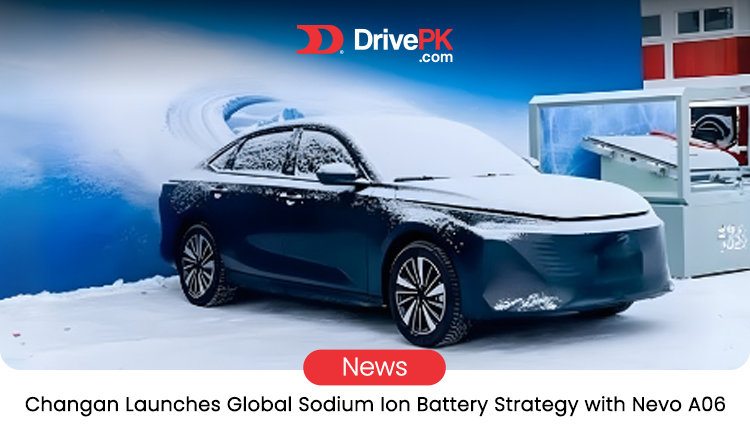
Table of Contents
- Why Sodium-Ion Matters Right Now
- A Closer Look at the Nevo A06
- Sodium Versus Lithium: Not a Replacement, But a Partner
- What This Could Mean for Drivers and the Industry
- The Road Ahead
Changan Automobile just made a real move in the electric vehicle world. Together with battery giant CATL, the company has launched the Nevo A06, the first passenger car to roll out with a sodium-ion battery in mass production.
The car is set to hit the market by mid-2026. It is not some concept or limited test model. This is the real thing, and it points to a shift in how EVs might work in the years ahead.
The battery is CATL’s new Naxtra sodium-ion pack. It has 45 kWh of capacity and promises more than 400 km of range on China’s test cycle. That is not the longest range out there, but the story gets interesting when the temperature drops.
Why Sodium-Ion Matters Right Now
Most people know lithium-ion batteries. They power almost every EV on the road today. But they have a weakness in cold weather. When the temperature falls, range drops fast, charging slows down, and performance can suffer.
Sodium-ion batteries handle the cold much better. CATL says the Naxtra pack keeps over 90 per cent of its capacity at minus 40 degrees Celsius. It can still operate at minus 50 degrees. That is a huge difference for anyone living in places with harsh winters.
The battery also uses CATL’s third-generation Cell to Pack technology. This design packs the cells more tightly, boosts energy density to 175 Wh per kg, and helps the whole system run more efficiently.
A Closer Look at the Nevo A06
The Nevo A06 is a sedan built on Changan’s Super DNA platform. It is the same base used for other models in the Qiyuan/Nevo family. The sodium-ion battery, it is expected to deliver around 400 km of real-world range in normal conditions.
Early tests in Inner Mongolia showed the car charging and running without problems at around minus 30 degrees. That kind of reliability could open EVs to markets that have been slow to adopt them because of winter worries.
Changan is not stopping with one model. The company says sodium-ion batteries will spread across its brands – Avatr, Deepal, Nevo, and Uni. This is part of a clear plan to offer the right battery for the right job.
Sodium Versus Lithium: Not a Replacement, But a Partner
The key message from both companies is “dual chemistry.” Sodium-ion will not push lithium-ion out. Instead, the two will work side by side.
Lithium-ion still wins on energy density. You can fit more range into the same space, which is why long-distance EVs will probably stick with it for now. Sodium-ion comes in with advantages in cost, safety, and cold performance.
Sodium is far more abundant than lithium. That could help bring battery prices down over time and reduce reliance on materials that are hard to source. The chemistry is also considered safer, with lower fire risk in some cases.
The trade-off is lower energy density. A sodium-ion pack needs to be a bit larger or heavier to match the range of a lithium pack. But for many everyday drivers, especially in colder regions, the benefits in reliability could matter more than a few extra kilometres of range.
What This Could Mean for Drivers and the Industry
For people in cold climates, this news is encouraging. Winter range anxiety has held many buyers back from switching to electric. A battery that keeps working when the temperature plunges could change that.
It might also help EVs reach new markets. Northern China, parts of Europe, Canada, and the northern United States all deal with long, freezing winters. Better cold-weather performance removes one of the biggest practical barriers.
On the cost side, cheaper and more available materials could eventually make entry-level EVs more affordable. That matters for wider adoption, especially in developing markets.
For the industry, this is another sign that battery technology is moving fast. CATL is pushing hard on sodium-ion, and other companies are watching closely. We could see more models with mixed battery options in the coming years, lithium for highway cruisers, sodium for city cars and cold regions.
The Road Ahead
The Nevo A06 will not be in showrooms tomorrow. Production is expected to start in the middle of 2026. But the fact that it has reached this stage is significant. It shows that sodium-ion has moved from lab tests and small commercial vehicles into proper passenger cars.
Changan and CATL are betting that the future of EVs will not be one-size-fits-all. Different chemistries will serve different needs. And in the fight against range anxiety in freezing conditions, sodium-ion looks like a strong contender.
It is early days, and real-world results over time will tell the full story. Still, this launch feels like a practical step forward rather than just another headline. For anyone who has ever watched their EV’s range shrink on a cold morning, it is worth keeping an eye on. For more updates, visit DrivePK.com
Tags
Share this article
About the Author

Najeeb Khan
Automotive enthusiast and writer
Comments (0)
Login Required
You need to be logged in to comment on this article.
No comments yet. Be the first to share your thoughts!
Related Articles
Toyota Corolla Discontinued Before Pakistan Facelift
Pakistan’s pre-facelift Toyota Corolla is reportedly discontinued, hinting at a facelift. Prices, bookings, specs and launch timing remain unconfirmed.
DrivePK Car Inspection Reports: Buy with Confidence
Buying a used car in Pakistan? A pre-purchase inspection can reveal hidden damage, engine issues and red flags before you pay—but it’s not enough alone.
2028 Kia Sportage: Major Design Changes Spotted
Kia’s next Sportage may get a bolder, boxier redesign, with an upright profile, sharper lines, wider grille and split headlights hinted by spy shots.