Pakistan Green Mobility Mission (PGMM): How Pakistan Is Structuring Its Transition to Electric Mobility
Pakistan's Green Mobility Mission (PGMM) is a structured national effort to shift the transport sector toward electric vehicles. It connects policy, institutions, infrastructure, and finance under one framework to reduce emissions, cut fuel imports, and grow a domestic EV industry
Table of Contents
- What Is the Pakistan Green Mobility Mission (PGMM)?
- PGMM tries to fix that.
- PGMM's Role in Pakistan's Mobility Sector Transformation
- How PGMM Aligns Policy, Institutions, and Market Systems
- The Core Purpose of PGMM
- From Policy Intent to Coordinated Execution
- Addressing the Market Coordination Challenge
- Everyone is waiting for everyone else. That's the trap.
- Key National Outcomes PGMM Is Designed to Deliver
- Reduced Transport-Related Emissions
- Improved Urban Air Quality
- Optimized Energy Utilization
- Strengthened Domestic Industrial Base
- Enhanced Economic Resilience
- PGMM as a Convergence Mechanism
- Strengthening Stakeholder Coordination
- Accelerating Market Development
- The Broader Picture
- What to Watch Next
Pakistan's roads are getting more crowded every year. Cities are expanding. Fuel bills keep rising. And urban air quality in places like Lahore and Karachi has become a public health issue that's hard to ignore. The country imports billions of dollars' worth of petroleum each year just to keep its transport sector moving.
The Pakistan Green Mobility Mission, better known as PGMM, is the government's structured response to these pressures. It's not a campaign or a slogan. It's a coordination framework designed to shift Pakistan's transport sector toward electric vehicles in a way that actually sticks.
On 9th–10th June 2026, the EV Expo and Green Mobility Conference will take place at the Pak China Friendship Center in Islamabad. PGMM anchors the event. And the timing says a lot about where Pakistan's EV story currently stands.
What Is the Pakistan Green Mobility Mission (PGMM)?
PGMM is a national platform. Its job is to bring together policymakers, industry players, investors, and regulators so they're not all working on electric mobility in separate silos. The core idea is simple: Pakistan already has EV-related policies, institutions, and financial tools. The problem is that they don't connect well enough to drive real change at scale.
PGMM tries to fix that.
The mission is built around four broad functions. First, it showcases electric mobility technologies and solutions. Second, it creates space for policymakers, industry, and investors to engage directly. Third, it supports policy dialogue and knowledge exchange. And fourth, it enables partnerships and investment opportunities to actually form, not just be discussed.
That last point matters. Pakistan has had policy frameworks for sustainable transport for years. What's been missing is the mechanism to turn those frameworks into coordination on the ground.
PGMM's Role in Pakistan's Mobility Sector Transformation
Pakistan's transport sector is under real pressure. Urbanization has pushed vehicle numbers up fast. That growth has meant more pollution, more greenhouse gas emissions, and a heavier dependence on imported fuel.
The country already generates more electricity than it uses in many off-peak periods. Power sector overcapacity is a known problem. Electric vehicles offer a path to actually use that generation capacity productively while cutting the fuel import bill at the same time.
PGMM's role is to organize the ecosystem that makes this shift possible. It's not about building EV factories or laying cables itself. It's about aligning the institutions that do that work so they move in the same direction at the same time.
How PGMM Aligns Policy, Institutions, and Market Systems
The mission covers institutional coordination at multiple levels. Federal ministries, provincial governments, regulatory authorities, financial institutions, and private sector players all have roles to play in an EV transition. PGMM maps those roles and works to make them coherent.
This kind of alignment is harder than it sounds. Different ministries have different mandates. Regulators operate under separate frameworks. Financial institutions have their own risk assessments. PGMM creates a common platform where these actors can coordinate without each one waiting for the other to move first.
The Core Purpose of PGMM
At its simplest, PGMM exists to close the gap between what Pakistan's EV policies say and what actually happens on the ground. That gap is real, and it's been there for a while.
From Policy Intent to Coordinated Execution
Pakistan has meaningful policy foundations for electric mobility. The National Climate Change Policy commits to reducing transport emissions. The Nationally Determined Contributions (NDCs) under the Paris Agreement include clean transport targets. The Alternative and Renewable Energy Policy supports the broader shift away from fossil fuels.
And then there's the New Energy Vehicles Policy (2025–2030), which sets a concrete target: nationwide EV adoption and the deployment of 3,000 charging stations across the country.
That's a real target. But a target in a policy document is not the same as a charging station on a road. The New Energy Vehicles Policy has good ambitions, but implementation has remained fragmented. Different departments handle different parts of it. Coordination has been inconsistent. Progress has been uneven.
PGMM is the mechanism designed to change that. It translates policy intent into coordinated execution by aligning institutions, infrastructure systems, financial mechanisms, and market development activities within a single national framework.
Addressing the Market Coordination Challenge
Here's where things get practical. Electric vehicle adoption in any country faces a coordination problem. Consumers won't buy EVs if there's no charging infrastructure. Investors won't build charging infrastructure if there aren't enough EVs on the road. Manufacturers won't commit to local production if the market is too small. And the market won't grow fast enough without financing options.
Everyone is waiting for everyone else. That's the trap.
PGMM tries to break the trap by creating enough institutional coordination and market visibility that different actors feel confident moving at the same time. It's not magic. It's stakeholder alignment done at a national level.
The three-phase implementation structure reflects this logic. Phase I focuses on institutional alignment and pilot interventions, getting the coordination right before scaling. Phase II moves to infrastructure scale-up and market activation, building out the physical and financial systems. Phase III is system integration and nationwide adoption when the pieces are working well enough to spread.
Key National Outcomes PGMM Is Designed to Deliver
PGMM is not just about EVs. It's tied to a set of national outcomes that connect the mobility transition to Pakistan's broader economic and environmental situation.
Reduced Transport-Related Emissions
Pakistan's transport sector is a major source of greenhouse gas emissions. The country has committed to reducing these emissions as part of its international climate obligations. PGMM's work on EV adoption feeds directly into that commitment.
This matters practically, not just on paper. Pakistan faces real climate risks, such as floods, heat waves, and glacial lake outburst floods. Reducing the emissions that drive climate change is an economic question for Pakistan, not just an environmental one. Every percentage point reduction in transport emissions has downstream effects on agricultural stability, infrastructure damage, and public health costs.
Improved Urban Air Quality
Walk through Lahore on a bad smog day, and the case for electric vehicles makes itself. Air pollution in Pakistan's major cities has reached levels that affect productivity, health, and life expectancy. Two-stroke motorcycles and ageing combustion vehicles are significant contributors.
EV adoption, especially in the two- and three-wheeler segment that dominates Pakistan's vehicle mix, could make a measurable difference to urban air quality within years, not decades. PGMM's focus on market development targets this reality.
Optimized Energy Utilization
Pakistan produces electricity that it can't use. Generation capacity regularly exceeds demand, particularly at night. That idle capacity represents wasted investment.
Electric vehicles, especially if charged during off-peak hours, offer a way to use that capacity productively. This is one of the cleaner economic arguments for EVs in Pakistan; it's not just about the environment, it's about getting value from infrastructure that's already paid for.
PGMM's framework explicitly recognizes this energy dimension, treating EV adoption as part of Pakistan's broader energy strategy rather than a standalone transport initiative.
Strengthened Domestic Industrial Base
Pakistan imports not just petroleum, but most of the finished goods that run on it. An EV transition, done right, could change part of that equation.
PGMM supports localization and domestic manufacturing through institutions like the Ministry of Industries and Production, the Engineering Development Board (EDB), and the Board of Investment (BOI). The goal is to build domestic capacity in EV components and assembly — not just sell imported electric vehicles.
This matters for employment, for technical skill development, and for long-term economic resilience. A domestic EV manufacturing base creates jobs and reduces the import bill on two fronts both the fuel and the vehicles themselves.
Enhanced Economic Resilience
Pakistan's dependence on imported petroleum is a balance-of-payments problem. Fuel imports consume a significant share of foreign exchange every year. When global oil prices rise, Pakistan's import bill spikes and pressure on the rupee increases.
Electric mobility funded by domestic electricity generation, including from renewables, reduces that vulnerability. It's not a complete solution to the foreign exchange challenge, but it's a meaningful structural improvement over time.
PGMM frames electric mobility as an economic priority on exactly these terms. The mission language is clear: EV adoption is not only an environmental priority but an economic necessity for reducing fuel import dependency and strengthening Pakistan's balance of payments.
PGMM as a Convergence Mechanism
The word PGMM uses for itself is "convergence mechanism." That's a precise term. It means PGMM's job is not to build EVs, regulate markets, or provide financing directly. Its job is to bring the actors who do those things into the same room and help them move together.
Reducing Information Gaps
One of the basic problems in any emerging market is that different actors don't have the same information. Investors don't know enough about policy stability. Consumers don't know enough about available vehicles and running costs. Manufacturers don't know enough about demand signals. Policymakers don't have good data on market readiness.
PGMM works to reduce these gaps. The EV Expo and Green Mobility Conference format is part of this function. Bringing technology providers, policymakers, and investors into the same venue creates information flows that don't happen through official documents alone.
The conference on 9th–10th June 2026 at the Pak China Friendship Center is a practical expression of this. It's a space where market signals can move and where stakeholders can see what others are actually working on.
Strengthening Stakeholder Coordination
Pakistan's EV ecosystem involves a long list of actors who don't naturally coordinate. The State Bank of Pakistan needs to develop EV financing mechanisms. NEECA needs to enforce EV charging infrastructure and battery swapping regulations. The Ministry of Industries needs to align with the BOI on localization incentives. Provincial governments need to manage infrastructure deployment on the ground.
None of this happens automatically. PGMM provides a central coordination point under federal oversight to make it happen with some coherence. The mission's institutional scope is deliberately broad: federal ministries, regulatory authorities, provincial governments, financial institutions, industry, private sector, and academia are all included.
That breadth is intentional. EV transition touches every part of the economy. A coordination mechanism that only involves one or two ministries will keep hitting walls.
Accelerating Market Development
Market development in a new sector requires momentum. Early adopters are expensive to find. Demonstration projects are needed to build confidence. Financing products take time to develop. Regulations need to be written, tested, and adjusted.
PGMM's three-phase approach is designed to build this momentum systematically. Pilot interventions in Phase I create proof points. Infrastructure scale-up in Phase II creates the conditions for wider adoption. System integration in Phase III makes the whole thing self-sustaining.
The integration of Pakistan's financial sector is a specific priority within this. The State Bank of Pakistan's role in enabling EV financing mechanisms and credit access is part of how PGMM plans to bring consumer financing into the equation, which is essential in a market where upfront vehicle costs are still a barrier.
The Broader Picture
Pakistan is not the first country to try to structure a national EV transition. China's policy playbook, which included strong institutional coordination, targeted industrial policy, and phased infrastructure deployment, produced the largest EV market in the world. Pakistan's context is different, a smaller market, tighter fiscal space, more complex institutional environment, but the principle of structured coordination applies.
What PGMM tries to do differently from previous Pakistan energy and transport initiatives is to treat implementation as a design problem, not just a policy problem. Writing a policy is relatively easy. Getting multiple institutions with different mandates, incentives, and timelines to execute against it at the same time is hard.
The mission's document puts it directly: a centralized coordination mechanism under federal oversight is essential to ensure coherence and execution efficiency.
That's not a rhetorical statement. It's a practical acknowledgment that fragmented execution has been the pattern, and that changing the pattern requires something structural.
What to Watch Next
The June 2026 conference is a marker. It's not the beginning of Pakistan's EV story that began earlier, with the New Energy Vehicles Policy and the investments that preceded it. But it's a visible checkpoint for whether institutional coordination is actually improving.
A few things are worth tracking as PGMM's work continues:
The 3,000 charging station.pdf) target under the NEV Policy 2025–2030 is a concrete benchmark. Charging infrastructure is the clearest bottleneck for EV adoption. Progress on that number will say something real about whether coordination is working.
Domestic manufacturing investment from EDB and BOI-linked channels will indicate whether the localization ambition is translating into actual plant and capacity commitments.
And State Bank-enabled EV financing products reaching retail consumers will signal whether the financial integration piece is working on the ground.
The EV transition in Pakistan is not a question of whether it happens. Transport economics and climate pressure make some form of electrification inevitable. The real question is whether it happens fast enough to matter, and whether the domestic industrial base captures enough of the value when it does.
PGMM's structured approach is Pakistan's best current answer to that question. Whether the answer holds up through execution is what the next few years will show.
For more information about the EV Expo and Green Mobility Conference 2026, contact the PGMM Contact Center at 0335 777 7466. The event takes place on 9th–10th June 2026 at the Pak-China Friendship Center, Islamabad.
For more updates, visit DrivePK.com
Tags
Share this article
About the Author

Najeeb Khan
Automotive enthusiast and writer
Comments (0)
Login Required
You need to be logged in to comment on this article.
No comments yet. Be the first to share your thoughts!
Related Articles
New Electric Scooters at PAPS 2026: Prices, Range & Specs
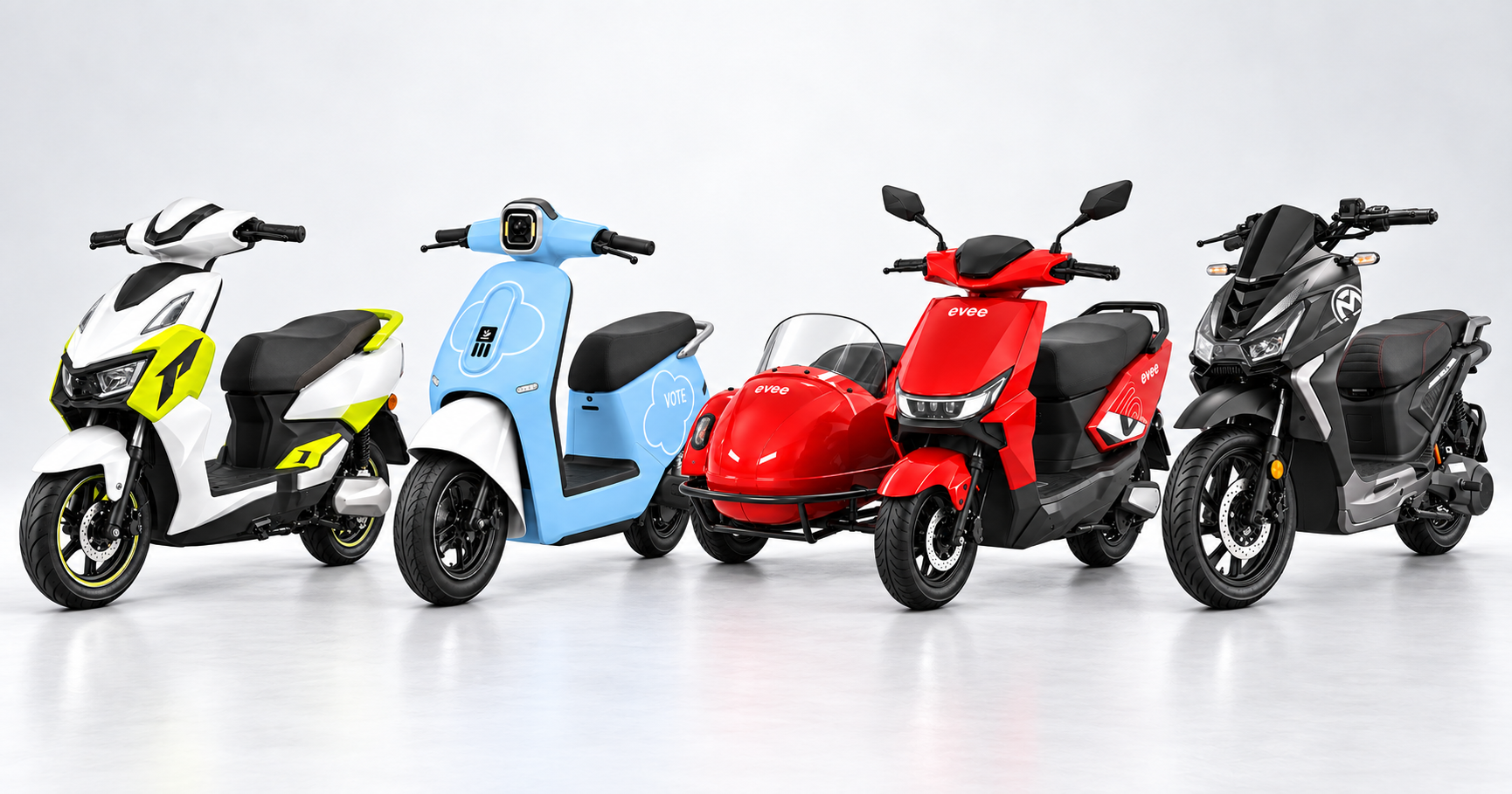
PAPS 2026 brought 14 new electric scooters from OKLA and EcoDost, with prices from Rs 199,000 to Rs 699,000. This guide lists every model with motor, battery, speed and claimed range, then shows what real riders should expect, what running costs look like and what to check before you book.
PAPS 2026: New Vehicle Launches & Reveals at Pakistan Auto Show
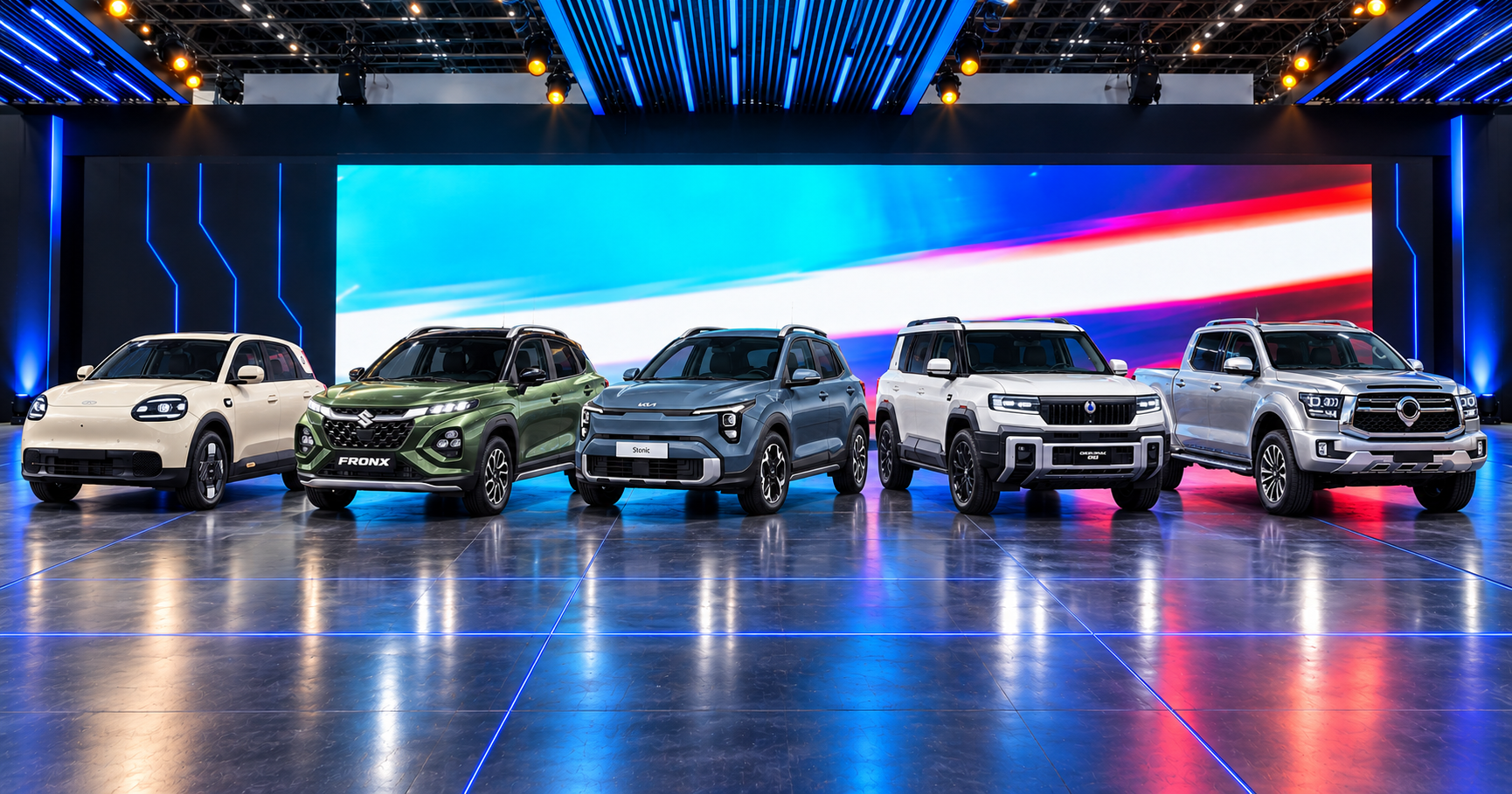
PAPS 2026 in Lahore brought new car reveals from Chery, Suzuki, Haval, Kia, Hyundai, Jaecoo, BYD and GWM. Here's every model shown, with confirmed prices where available and full specs for the rest.
New Mind-Blowing Launches at PAPS 2026 Lahore
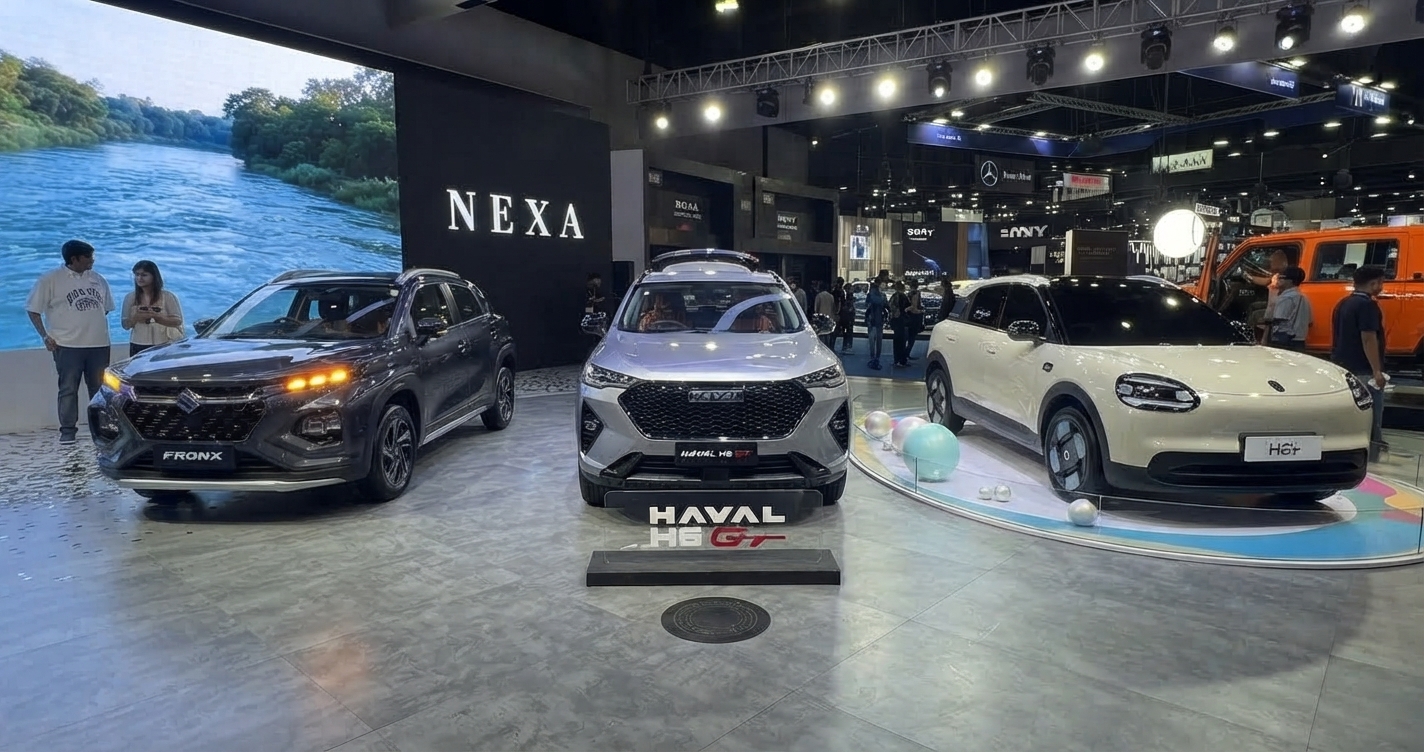
PAPS 2026 in Lahore brought fresh electric and hybrid models that change daily driving options. Chery Q arrives as an affordable EV hatchback. Haval adds a sporty PHEV. Suzuki upgrades the Fronx with ADAS. OKLA expands its bike range. BYD and Jaecoo push local assembly forward. These six launches give buyers real choices right now.