"Switch to EV in 2026 and Save Thousands: End Your Oil & Gas Dependency Now"
Pakistan’s EV revolution is here with Rs 80,000 subsidy, BYD local assembly in 2026, and massive savings. This guide shows exactly how ordinary Pakistanis can switch and cut fuel costs forever.
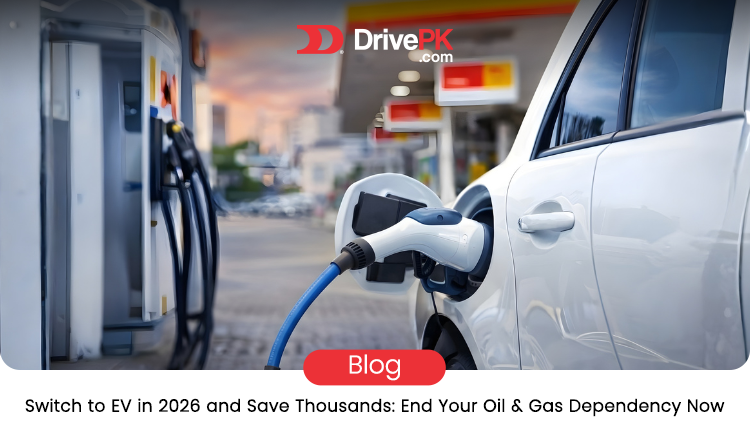
Table of Contents
- Pakistan's Dangerous Oil and Gas Addiction
- The Hidden Costs Nobody Talks About
- The Economic Pain
- The Environmental Crisis
- The Social Cost
- New Energy Vehicle Policy 2025-30: The Government's Most Ambitious Roadmap Yet
- The Headline Targets
- Direct Subsidies That Actually Put Money Back in Your Pocket
- Infrastructure: The 3,000 Charging Stations Commitment
- Local Manufacturing: What BYD Changes About Everything
- Expected Savings: Up to $2 Billion Per Year
- Why 2026 Is Genuinely the Right Time to Make the Switch
- Global Oil Price Volatility Is Getting Worse, Not Better
- EV Prices Are Falling Fast Both Globally and Locally
- E-Bikes Have Already Proven the Demand Is Real
- Solar Energy Plus Cheap Electricity Makes Charging Almost Free
- Real-World Benefits: What the Numbers Mean for Actual People
- The Delivery Rider
- The University Student
- The Middle-Class Family
- No More Queuing for Fuel
- A Quieter, Smoother, More Civilised Ride
- Honest About the Challenges and How to Navigate Them
- The Upfront Cost
- Charging Infrastructure in Smaller Cities
- Load-Shedding and Grid Reliability
- Battery Performance in Pakistani Summers
- How to Start Your Own EV Revolution: A Practical Roadmap
- Step 1: Start with a two-wheeler if you're using a petrol motorcycle or scooter daily
- Step 2: Assess your home charging setup
- Step 3: Monitor the electric car market through 2026 and beyond
- Step 4: Attend the EV Pakistan Expo 2026 for hands-on experience
- Step 5: Share your real experience after switching
- Quick tips for Rawalpindi commuters:
- Conclusion:
- Frequently Asked Questions
- 1. How expensive are electric vehicles in Pakistan right now?
- 2. Where do I charge in smaller cities and towns?
- 3. How much cheaper is an electric vehicle to run compared to petrol one?
- 4. How does battery life hold up in Pakistan's hot climate?
- 5. How do I actually access the government subsidy?
- 6. How do I manage EV charging during load-shedding?
- 7. Which electric vehicle brands are actually available in Pakistan?
- 8. What does EV maintenance actually cost compared to a petrol vehicle?
- 9. What range can I expect on a single charge?
- 10. Are electric vehicles actually safe to drive on Pakistani roads?
Picture this: It is a Tuesday morning in Pindi. Ali, a delivery rider, pulls up to a petrol pump near Saddar. The board reads Rs 312 per litre. He sighs, does the math in his head three litres to fill up, Rs 936 gone before he has delivered a single parcel. His daily earnings? Maybe Rs 1,200 on a good day. More than half of it just disappeared into a fuel tank before his shift even properly started.
Now picture his neighbour, Kamran. Same route. Same city. Same brutal Pindi traffic. But Kamran rides an electric bike. He plugged it in the night before, spent roughly Rs 40 in electricity, and rode out this morning smooth and quiet, wallet untouched, lungs not burning from exhaust fumes.
That gap that Rs 900 saved every single day is not just a number on a spreadsheet. That is a school fee. That is a month of internet. That is the kind of breathing room a working family desperately needs.
Pakistan is standing at a genuine crossroads right now, and the choice before us has never been clearer. We are bleeding billions of dollars every year importing oil we do not produce, breathing air that is genuinely damaging our health, and watching our currency take a beating every time something goes sideways in the Gulf. The technology to break free from all of this already exists. It is already affordable. And the government has finally after years of false starts put serious policy weight behind it.
The time has come for Pakistan to start its own electric vehicle revolution and cut free from its dependency on imported oil and gas once and for all.
This is not science fiction. This is not a luxury reserved for the wealthy. This is the most practical, most financially sensible decision that any Pakistani delivery rider, student, family, business owner can make right now in 2026. This article breaks it all down: the numbers, the policy, the real-world savings, the honest challenges, and exactly how you can get started today.
Let's get into it.
Pakistan's Dangerous Oil and Gas Addiction
Let's be completely straight about this. Pakistan has a dependency problem. Not a small or manageable one a structurally embedded, economy-crushing addiction to imported petroleum that has been quietly strangling us for decades.
Every year, Pakistan spends somewhere between $15 billion and $17 billion on oil imports. Sit with that figure for a moment. In a country where foreign exchange reserves have repeatedly fallen below three weeks of import cover, where negotiations with the IMF have become an almost permanent feature of our economic calendar, we are shipping over fifteen billion dollars out of the country every single year just to keep our vehicles moving.
The transport sector carries the largest share of blame. Depending on the year and the methodology used, transport accounts for 40 to 80 percent of Pakistan's total petroleum consumption. Every bus, every auto-rickshaw, every motorcycle, every truck on every road all of them running on imported fuel, paid for in dollars that we are constantly scrambling to hold onto.
And the most terrifying part of this picture? We have almost no control over the price. When OPEC decides to cut production, our petrol price climbs. When tensions flare anywhere in the Gulf, our import bill balloons overnight without any warning. The Strait of Hormuz that narrow stretch of water between Iran and Oman carries roughly 20 percent of the world's traded oil. Pakistan's entire transport economy is essentially held hostage to whatever happens in that thin corridor. One serious conflict, one sustained blockade, one major escalation, and our fuel supply chain goes into crisis.
We got a preview of exactly this scenario in 2022 and 2023. Global energy price shocks, combined with Pakistan's own foreign reserve collapse, sent petrol prices surging past Rs 300 per litre. CNG stations across the country shut their gates. Transporters went on strike. Inflation spiralled to levels most Pakistanis had not seen in decades. Ordinary families were genuinely forced to choose between filling the tank and buying food.
This was not a one-off disaster. This is the structural reality of a country that imports virtually all of its liquid fuel, has no power to set its own prices, and has been postponing the shift to domestic energy alternatives for far too long.
And the part that is almost unbearably frustrating? Pakistan has enormous indigenous energy alternatives sitting largely untapped. We have solar radiation levels that rank among the highest anywhere in the world. We have significant hydropower potential. We have wind corridors stretching through Sindh and Balochistan that remain underutilised. The sun beats down hard and free over Lahore, Karachi, Multan, and Peshawar energy that belongs to us, energy we do not have to buy from anyone.
Every electric vehicle charged from that solar energy is a direct strike against our oil dependency. Every e-bike, every electric rickshaw, every EV car on a Pakistani road is a small but real act of energy independence.
The Hidden Costs Nobody Talks About
The financial toll of our oil addiction is enormous and well documented. But the hidden costs the ones that do not appear directly in the import bill are arguably even more damaging in the long run.
The Economic Pain
Rising petrol prices are not just a transport problem. They are an inflation multiplier that affects the price of practically everything. When fuel costs climb, the cost of moving goods climbs with it. And when the cost of moving goods goes up, the price of vegetables, medicines, construction materials, school supplies everything on every shelf rises in step. Pakistan's inflation crisis has many contributing factors, but fuel-cost pass-through is one of the most consistent and least discussed.
Then there is the foreign exchange pressure that compounds everything else. Every time the rupee weakens, that $15 to $17 billion oil bill becomes more expensive in local currency terms. It is a vicious, self-reinforcing cycle: reserves fall, the rupee weakens, the import bill grows larger in rupee terms, reserves fall further. Breaking this cycle requires reducing our dependence on imported fuel and there is simply no faster or more scalable way to do that than electrifying our vehicle fleet.
The Environmental Crisis
Drive through Lahore on any winter morning and you feel the problem before you see it. The smog settles thick and grey across the city, cutting visibility, burning eyes, scratching throats. Lahore has repeatedly ranked among the most polluted cities on the planet, sometimes topping global air quality indexes with AQI readings above 300 deep into the "hazardous" category where health authorities advise people to stay indoors entirely.
Transport emissions are one of the biggest contributors to this crisis. Fine particulate matter from poorly maintained petrol and diesel engines, layered with crop burning and industrial pollution, creates the toxic winter smog that residents of Lahore, Multan, and Faisalabad have come to dread every November through January.
The health costs that follow are enormous. Respiratory diseases, cardiovascular conditions, elevated cancer risk these all escalate significantly with chronic poor air quality. Children, elderly people, and anyone with pre-existing health conditions bear the worst of it. And the healthcare costs land on families, on overstretched hospitals, and on a public health system that is already operating well beyond its capacity.
Pakistan's transport sector carbon emissions also contribute meaningfully to the climate crisis which, as a cruel irony, hits Pakistan harder than almost any other country. Accelerated glacial melt in the Himalayas and Karakoram, catastrophic flooding, increasingly extreme heatwaves Pakistan is paying a climate price that is in part a consequence of the fossil fuel economy it remains trapped in.
The Social Cost
Think about what it actually means when a delivery rider has to spend half his daily income on petrol. He cannot save. He cannot invest in a better, more reliable bike. He cannot put his children in a better school or afford the tutoring that might change their trajectory. The oil dependency trap keeps millions of working Pakistanis locked in a relentless cycle of earning just to cover their fuel costs, with nothing left over to build anything better.
New Energy Vehicle Policy 2025-30: The Government's Most Ambitious Roadmap Yet
This is where the story genuinely starts to get exciting and it is a story that the team at DrivePK has been following closely since the policy framework first began to take shape.
Pakistan's New Energy Vehicle (NEV) Policy 2025-30 is the most ambitious automotive policy this country has ever committed to. If it is implemented with even half the effectiveness it is designed for, it will fundamentally change how Pakistan moves and how much that movement costs.
The Headline Targets
The policy establishes hard, quantified targets: 30 percent of all new vehicle sales to be electric by 2030, scaling up to an extraordinary 90 percent by 2040. The long-term national vision is a fully net-zero transport sector by 2060. These are not feel-good aspirations they are framed within Pakistan's formal climate commitments and backed by a comprehensive package of financial incentives and regulatory changes.
Direct Subsidies That Actually Put Money Back in Your Pocket
The most immediately impactful feature of the policy is its direct consumer subsidy structure. The government is currently offering:
- Rs 80,000 subsidy on electric motorcycles and rickshaws, which immediately makes the upfront cost competitive with petrol-powered alternatives for a wide range of buyers
- Price reduction incentives on electric cars to close the gap with conventional vehicles
- Reduced import duties and taxes on EV components and fully assembled vehicles during the transition period
These are not token gestures. For a delivery rider or small business owner evaluating an electric bike, an Rs 80,000 subsidy is frequently the difference between "I cannot afford this" and "this is obviously the right decision."
Infrastructure: The 3,000 Charging Stations Commitment
Perhaps the most consequential infrastructure pledge in the entire policy is the government's commitment to establishing 3,000 public charging stations across Pakistan. This matters enormously because charging availability particularly outside the three major cities has been the single biggest practical barrier holding back EV adoption.
The policy targets motorway service areas, urban commercial centres, and major transport corridors as priority locations. Traditional petrol stations are being retrofitted. Shopping malls, parking structures, and commercial zones are all included in the rollout plan.
Local Manufacturing: What BYD Changes About Everything
This is arguably the single most consequential long-term development in the entire EV story for Pakistan. BYD currently the largest electric vehicle manufacturer in the world is establishing local assembly operations in Pakistan, with production scheduled to begin in 2026. The BYD Atto 3 SUV and Seal sedan have already generated significant excitement at auto industry events across the country. Local assembly removes a substantial portion of import duties from the final price and creates the beginning of a domestic supply chain.
The NEV Policy explicitly supports local manufacturing through lower tariffs on CKD (completely knocked down) assembly kits, tax incentives for domestic EV production facilities, and active facilitation of battery assembly investment. The goal is not merely to become an importer of electric vehicles it is to build them here, create jobs here, and develop genuine domestic manufacturing capability.
Expected Savings: Up to $2 Billion Per Year
Government modeling suggests that hitting the 2030 EV sales targets could save Pakistan up to $2 billion annually in oil import costs. As the national vehicle fleet continues to electrify through the 2030s toward the 2040 target, those annual savings compound substantially. That is foreign exchange that stays in Pakistan. That is reduced pressure on the rupee. That is funding that could realistically be redirected toward education, healthcare, and infrastructure.
The full regulatory and timeline detail was covered in DrivePK's earlier EV Policy deep-dive article well worth reading if you want the complete picture.
Why 2026 Is Genuinely the Right Time to Make the Switch
Timing matters in every major decision, and the timing right now for switching to electric vehicles in Pakistan is genuinely exceptional a convergence of factors that may not align this favourably again for quite some time.
Global Oil Price Volatility Is Getting Worse, Not Better
The geopolitical tensions of 2024 and 2025 demonstrated again just how fragile the global oil supply chain remains. With ongoing regional conflicts, shifting alliances, and OPEC production decisions driven largely by politics rather than market fundamentals, Pakistan simply cannot make reliable budget projections around its petrol import costs. Every year you delay switching to an EV is another year of full exposure to that volatility.
EV Prices Are Falling Fast Both Globally and Locally
The global EV price trajectory is firmly and consistently downward. Battery costs which represent the largest single component of an electric vehicle's purchase price have dropped by more than 90 percent over the past decade and continue declining. Chinese manufacturers, led by BYD, have driven margins down and scaled production volumes up to a point where genuinely affordable EVs priced under Rs 1 million represent a realistic near-term target for the Pakistani market.
With BYD's local assembly operations launching in 2026, import duty components falling out of the price equation, and government subsidies active, the price gap between electric and conventional vehicles is closing faster than most people realise.
E-Bikes Have Already Proven the Demand Is Real
Pakistan's electric two-wheeler market has already demonstrated convincingly that buyers are ready for this shift. Approximately 90,000 electric motorcycles and scooters have been sold in recent market cycles not because their buyers are idealistic environmentalists, but because the financial logic is simply undeniable. When your daily fuel cost drops by 70 to 80 percent, you notice. You act on it.
Solar Energy Plus Cheap Electricity Makes Charging Almost Free
Here is the financial argument that ultimately closes the deal for most serious buyers. The per-kilometre energy cost of running an electric vehicle in Pakistan is dramatically lower than petrol, and if you have rooftop solar panels which hundreds of thousands of Pakistani households now do it approaches zero.
A petrol motorcycle achieving 15 kilometres per litre at Rs 312 per litre costs roughly Rs 20 per kilometre to run. An equivalent electric bike on standard grid electricity costs about Rs 1 to 2 per kilometre. On rooftop solar? Effectively nothing. For someone covering 50 kilometres per day, that translates to a saving of close to Rs 900 daily roughly Rs 27,000 per month.
Real-World Benefits: What the Numbers Mean for Actual People
Let's move away from policy and projections and talk about what this means for real Pakistani families and workers.
The Delivery Rider
Take Ali from the opening of this article. On a petrol bike: Rs 900 or more per day in fuel costs. On an electric bike: Rs 40 to 50. Monthly saving: approximately Rs 25,000 to 26,000. With an e-bike available for under Rs 150,000 after the government subsidy is applied, the payback period on the price difference is under six months. After that point, every rupee saved is pure additional income.
The University Student
A student commuting 20 kilometres each way in Lahore on a petrol bike might spend Rs 1,200 to 1,400 per week on fuel. On an electric bike, that same commute costs Rs 100 to 120 in charging. Monthly saving: approximately Rs 4,500 to 5,000. For a family managing a tight budget, that money covers textbooks, phone credit, or simply removes a source of constant financial stress.
The Middle-Class Family
A family running a petrol car for 1,500 kilometres per month at roughly Rs 20 per kilometre in fuel spends around Rs 30,000 monthly just on petrol. A comparable electric vehicle on grid electricity runs that same distance for approximately Rs 4,000 to 5,000. Monthly saving: Rs 25,000 or more. Over a full year, that is Rs 300,000 enough for a meaningful family investment, home improvement, or simply a real financial cushion for the first time.
No More Queuing for Fuel
Remember the petrol shortage lines? The hour-long waits at pumps when supply got tight or prices were about to jump? Electric vehicle owners simply do not have this problem. You plug in at home each night. You wake up to a full charge. It is one of the quality-of-life improvements that EV users in Pakistan consistently mention first when you ask them about their experience.
A Quieter, Smoother, More Civilised Ride
Try riding an electric bike through Islamabad's morning rush. No engine vibration. No gear changes. Instant, smooth, quiet acceleration. For anyone who has only ever ridden a conventional petrol motorcycle, the difference is remarkable. Now imagine that experience multiplied across Lahore's roads fewer combustion engines, less noise, less exhaust. The city becomes a genuinely more liveable place.
Honest About the Challenges and How to Navigate Them
It would be doing readers a disservice to present electric vehicles as a perfect, frictionless solution. There are real challenges in the Pakistani context, and addressing them directly is more useful than glossing over them.
The Upfront Cost
Even with subsidies, a quality electric car costs noticeably more upfront than a comparable used petrol car. For a family weighing a second-hand Suzuki Cultus at Rs 1.8 million against a new entry-level BYD EV, the initial price difference is real and significant. The most practical answer is financing. Pakistani banks are increasingly developing EV-specific auto loan products at competitive rates. The NEV Policy also promotes leasing and instalment schemes specifically for commercial operators delivery companies, fleet owners, and rickshaw operators. The upfront cost is a real hurdle, but it is not an impassable wall, and the running cost savings mean the financial picture over three to five years is decisively in the EV's favour.
Charging Infrastructure in Smaller Cities
This is the most legitimate and substantive concern about EV adoption in Pakistan right now. If you live in Lahore, Karachi, or Islamabad, public charging availability has improved significantly and continues to grow. If you live in a secondary city or rural district, you are currently relying primarily on home charging. The government's 3,000-station commitment addresses this directly, and progress on the national motorway network is real and measurable. But the complete network will take several years to fully develop. The practical guidance in the meantime: for city and town commuting which represents the vast majority of driving for most Pakistanis current EV range and home charging is already entirely adequate. Long intercity road trips require more planning for now.
Load-Shedding and Grid Reliability
This concern is uniquely Pakistani and entirely understandable. The most practical response is that most EV owners charge overnight during off-peak hours, when load-shedding schedules in urban areas tend to be less frequent or absent entirely. If you have a solar panel installation with battery storage increasingly common across Pakistan, your EV charging becomes completely independent of WAPDA's schedule. Electric bikes, with their smaller battery packs, can often be charged through a standard UPS or inverter. The load-shedding challenge is genuine, but it is manageable with sensible charging habits and, for those with solar setups, essentially irrelevant.
Battery Performance in Pakistani Summers
Pakistan's heat is extreme, and sustained high temperatures do place stress on lithium-ion battery chemistry. Reputable EV manufacturers address this through active thermal management systems designed to operate in hot climates. Quality brands like BYD back their batteries with warranties of typically eight years or 160,000 kilometres, covering significant capacity degradation. The practical guidance: follow manufacturer recommendations on charging habits in extreme heat, park in shade where possible, and buy from established brands with genuine after-sales service networks. Cheap, unbranded electric bikes without thermal management are significantly more vulnerable to heat-related battery degradation. This is a genuine reason to choose quality over the lowest possible price.
How to Start Your Own EV Revolution: A Practical Roadmap
Enough context and analysis. Here is the practical step-by-step path to getting started.
Here's a solid, practical 5-step guide to switching to electric vehicles (EVs) in Pakistan right now (as of April 2026). It's tailored for daily commuters, especially in places like Rawalpindi, where fuel prices keep climbing and traffic favors nimble two-wheelers.
Step 1: Start with a two-wheeler if you're using a petrol motorcycle or scooter daily
This remains the smartest, quickest, and most cost-effective entry point for most people. Pakistani brands like Jolta Electric and Vlektra have established dealerships and service networks across the country, including major cities in Punjab.
- Government support through the Prime Minister’s PAVE Scheme (Pakistan Accelerated Vehicle Electrification) offers an Rs 80,000 subsidy (often applied upfront or as cashback after delivery) on eligible electric two-wheelers. Some models also qualify for additional provincial incentives, like Punjab's green credit scheme.
- Real-world savings are significant: many riders report cutting monthly fuel costs dramatically by charging at home (often Rs 50–100 per full charge vs. hundreds in petrol).
- Popular options include Jolta's JE-100L series and Vlektra's Velocity or Bolt models. Prices have seen adjustments due to global lithium costs, but subsidies and occasional discounts (e.g., Vlektra's recent reductions) make them competitive.
Check detailed model comparisons, user reviews, and savings calculators on sites like DrivePK or PakWheels for the latest breakdowns.
Step 2: Assess your home charging setup
If you have a dedicated parking spot with a standard 220V household electricity connection, you're basically ready for overnight charging on most e-bikes and entry-level EVs no special modifications needed.
- For bigger electric cars later, a basic Level 2 home charger installation usually costs Rs 30,000–50,000 one-time. This removes reliance on public infrastructure for daily use and is a worthwhile investment.
- In Pakistan main cities(Karachi, Lahore, Peshawar, Pindi, Islamabad, etc.) load-shedding can be a factor, so factor in a backup plan (e.g., solar or timed charging during reliable hours).
Most users find home charging straightforward and far cheaper than petrol pumps.
Step 3: Monitor the electric car market through 2026 and beyond
The big development is BYD's local assembly plant near Karachi (in partnership with Mega Motor Company/Hub Power), with the first Pakistan-assembled vehicles expected around July–August 2026. This should help bring down prices on models like the BYD Atto 3 (compact SUV, currently around Rs 8.99 million imported) and BYD Seal sedan.
- Imported BYD models are already available and attracting interest, with features like long range (up to ~410 km claimed on Atto 3), fast charging, and advanced batteries.
- Keep an eye on financing options, potential further incentives, and other players. A government-backed affordable local EV (targeting ~Rs 1 million) is also in discussion for 2026.
Stay updated via reliable EV coverage on DrivePK for pricing, availability, and real-user feedback as local production ramps up.
Step 4: Attend the EV Pakistan Expo 2026 for hands-on experience
If you're seriously considering any EV purchase (bike or car), this is one of the best investments of your time. The EV Pakistan Expo 2026 is scheduled for 15–17 May 2026 at the Pakistan Expo Centre, Lahore.
- You'll get to test ride electric bikes and cars, talk directly to manufacturers and dealers, compare specs side-by-side, and get the latest on subsidies, pricing, and after-sales support.
- It's valuable for both individual buyers and fleet operators. Previous events have been covered extensively — expect a mix of two-wheelers, cars, charging solutions, and more.
Plan a trip if possible; nothing beats seeing and riding the options in person.
Step 5: Share your real experience after switching
Once you make the move, talk about it openly — with family, colleagues, neighbors, and on social media or local groups. Mention actual running costs, charging ease, maintenance savings, and any challenges (like range in hot weather or service).
Pakistan's EV adoption is accelerating through grassroots momentum, not just policy. Every honest share (positive or balanced) helps normalize the switch, encourages infrastructure growth, and drives down costs over time via higher volumes.
Quick tips for Rawalpindi commuters:
- Start small with a subsidized e-bike if your daily commute is under 50–80 km.
- Calculate your personal savings using online tools (petrol vs. electricity).
- Factor in rising petrol prices and potential load-shedding when planning.
The transition is gaining real traction in 2026, with subsidies, local manufacturing on the horizon, and growing options. If you share more details about your daily commute distance, budget, or current vehicle, I can help refine this advice further!
Conclusion:
Pakistan cannot afford to wait another decade for this transition. Our foreign exchange reserves cannot sustain a $15 to $17 billion annual oil import bill indefinitely. Our city residents cannot endure another decade of the health consequences of toxic air. Our delivery workers, students, and middle-class families cannot keep handing over half their income to petrol pumps with nothing to show for it.
The New Energy Vehicle Policy 2025-30 is the government's commitment to this future. BYD's local assembly operations launching in 2026 represent the industry's commitment. The EV Pakistan Expo is the market's commitment.
The missing piece is yours.
Pakistan's electric vehicle revolution will not arrive fully formed from a ministry circular or a policy document. It will be built one purchase at a time, one charging point at a time, one converted rider at a time by people who looked at the numbers, felt the smooth, silent ride, and decided they were done waiting.
Visit the EV Pakistan Expo from 15 to 17 May 2026 at Expo Centre Lahore. Research your first EV purchase seriously. Talk to someone who has already made the switch and ask them what they wish they had known. And when you do make the move yourself, tell people about it.
Because Pakistan's energy independence will not come from a memo. It will come from millions of individual decisions, made one at a time, by ordinary Pakistanis who decided to say goodbye to oil dependency and take control of their own costs, their own air, and their own future.
Start moving. Quietly. Cleanly. On your own terms. For more updates, visit DrivePK.com
Frequently Asked Questions
1. How expensive are electric vehicles in Pakistan right now?
EV prices in Pakistan depend on type. Bikes start around Rs 120,000–200,000 and get cheaper with Rs 80,000 subsidy.
Cars are currently Rs 5–7 million, but local assembly may reduce prices in future.
Bank loans are also making EVs easier to buy.
2. Where do I charge in smaller cities and towns?
Charging stations outside big cities in Pakistan are still limited, but improving fast under the NEV Policy 2025–30.
Most people can already manage daily use with simple home charging on a normal 220V socket.
For long trips, you just plan charging stops but in 2 to 3 years, coverage will be much better.
3. How much cheaper is an electric vehicle to run compared to petrol one?
EV running costs are much lower than petrol. A bike can drop from Rs 900/day to just Rs 40 to 50.
Cars go from about Rs 18 to 22 per km to Rs 3 to 5, and near zero on solar.
That means yearly savings of Rs 200,000+ for cars and big monthly savings for riders.
4. How does battery life hold up in Pakistan's hot climate?
Heat is a real concern, but good EVs are built to handle high temperatures safely.
Brands like BYD offer batteries with strong cooling systems and long warranties.
Avoid cheap bikes, don’t charge to 100% in extreme heat, and park in the shade.
5. How do I actually access the government subsidy?
EV subsidy Pakistan mein direct price pe minus hoti hai, alag se claim nahi karna padta.
Bike ya rickshaw lo to Rs 80,000 tak discount dealer hi apply karta hai.
Make sure that buy from registered dealer with will be responsible of more subsequences after buying.
6. How do I manage EV charging during load-shedding?
Load shedding is a real issue, but EV charging is still manageable in Pakistan.
Most people charge at night, use solar systems, or even UPS for bikes.
With solar growing fast, EV charging is becoming easier and more reliable.
7. Which electric vehicle brands are actually available in Pakistan?
Pakistan’s EV market is growing fast, with local brands like Jolta Electric and Vlektra expanding nationwide.
In cars, BYD leads with models like the Atto 3, with local assembly coming in 2026.
More brands are entering, but always choose ones with real service support in Pakistan
8. What does EV maintenance actually cost compared to a petrol vehicle?
EVs have much lower maintenance because they have fewer parts no oil, engine, or clutch.
You mainly spend on tyres and brakes, which last longer due to smart braking.
Overall, EVs can cut maintenance costs by 50 to 70% compared to petrol vehicles.
9. What range can I expect on a single charge?
EV range depends on type, but most bikes give 80 to 120 km per charge, enough for daily city use.
Cars usually offer 300–500+ km, like BYD Atto 3 giving around 420 to 450 km.
For daily driving in Pakistan, range is not a real problem.
10. Are electric vehicles actually safe to drive on Pakistani roads?
EVs are safe and often safer than petrol cars, with brands like BYD having top safety ratings.
Modern batteries have strong safety systems, so issues are very rare today.
Just avoid cheap, unbranded bikes always buy from trusted brands with a warranty.
Tags
Share this article
About the Author

Najeeb Khan
Automotive enthusiast and writer
Comments (0)
Login Required
You need to be logged in to comment on this article.
No comments yet. Be the first to share your thoughts!
Related Articles
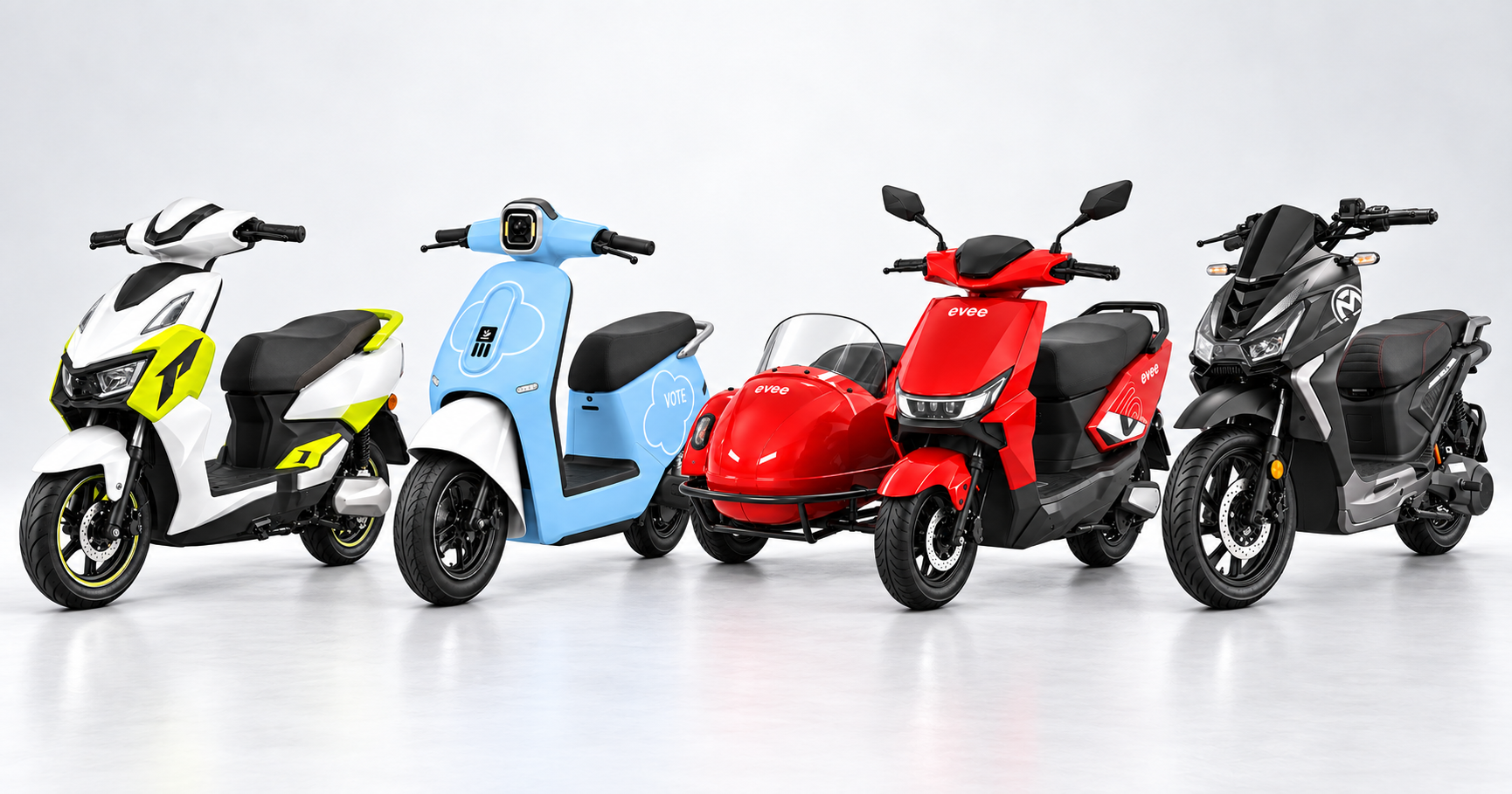
New Electric Scooters at PAPS 2026: Prices, Range & Specs
PAPS 2026 brought 14 new electric scooters from OKLA and EcoDost, with prices from Rs 199,000 to Rs 699,000. This guide lists every model with motor, battery, speed and claimed range, then shows what real riders should expect, what running costs look like and what to check before you book.
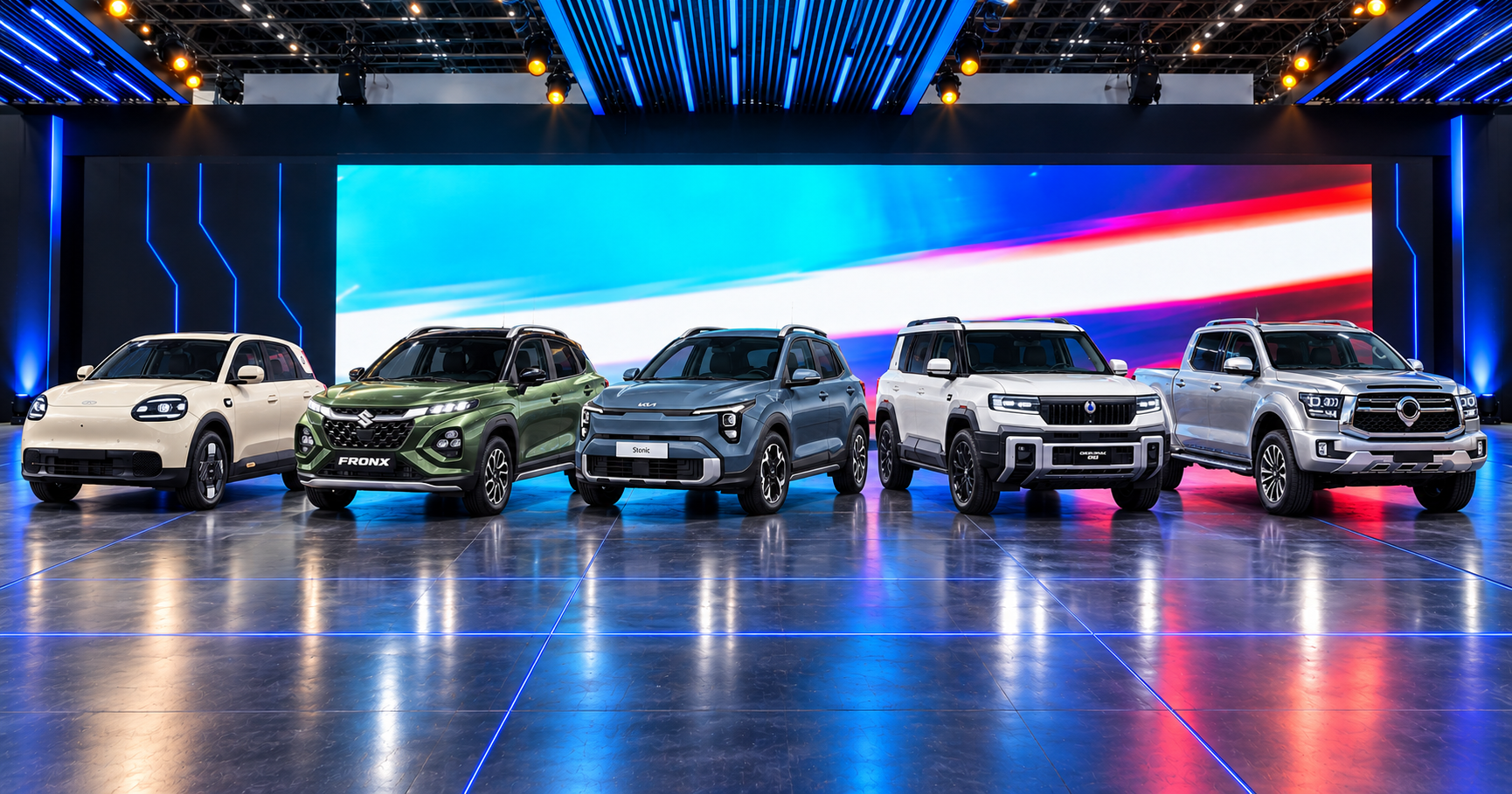
PAPS 2026: New Vehicle Launches & Reveals at Pakistan Auto Show
PAPS 2026 in Lahore brought new car reveals from Chery, Suzuki, Haval, Kia, Hyundai, Jaecoo, BYD and GWM. Here's every model shown, with confirmed prices where available and full specs for the rest.
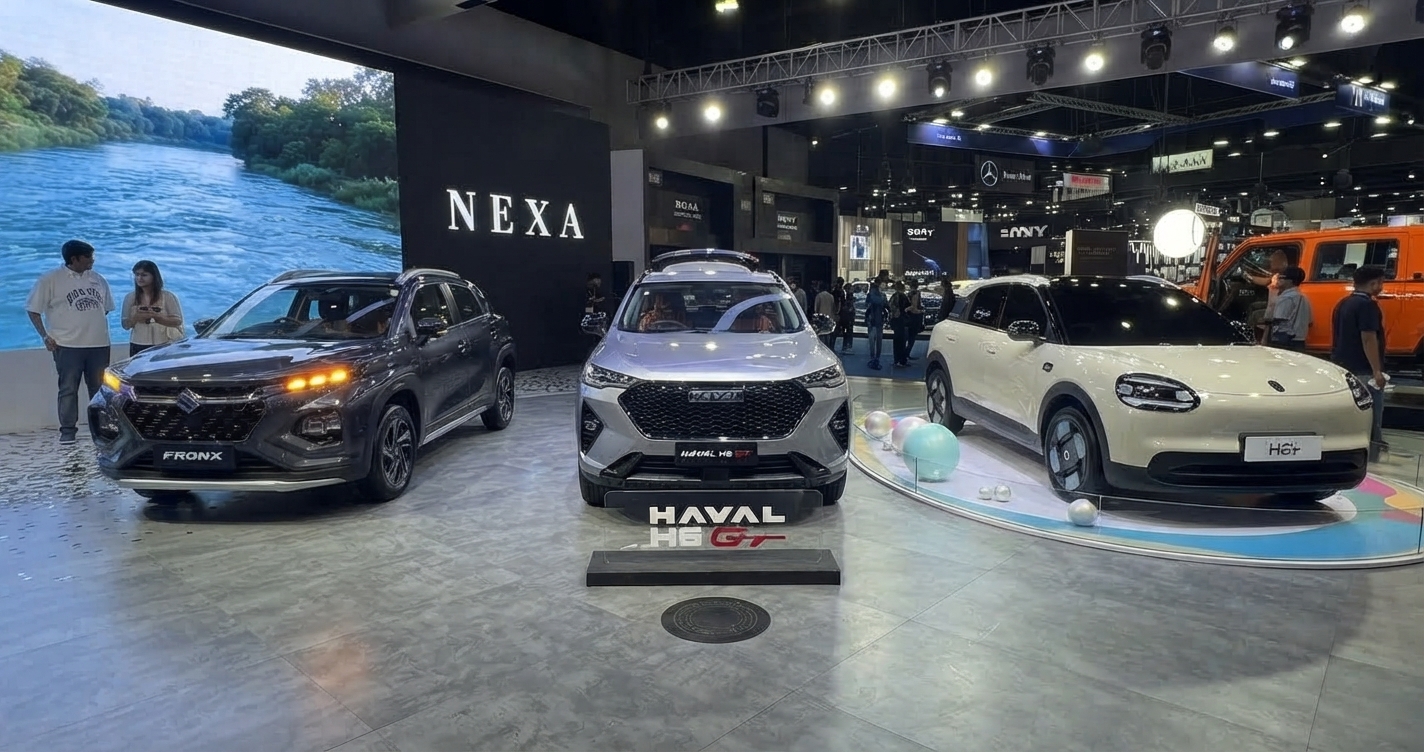
New Mind-Blowing Launches at PAPS 2026 Lahore
PAPS 2026 in Lahore brought fresh electric and hybrid models that change daily driving options. Chery Q arrives as an affordable EV hatchback. Haval adds a sporty PHEV. Suzuki upgrades the Fronx with ADAS. OKLA expands its bike range. BYD and Jaecoo push local assembly forward. These six launches give buyers real choices right now.