Pakistan's EV Policy 2025–2030: From Climate Commitments to the New Energy Vehicles Policy
Pakistan's New Energy Vehicles Policy 2025 to 2030 sets bold targets: 30% electric vehicle sales by 2030, 3,000 charging stations, and a major cut to the country's $15 billion annual petroleum import bill. But the gap between policy ambition and ground reality is still wide.
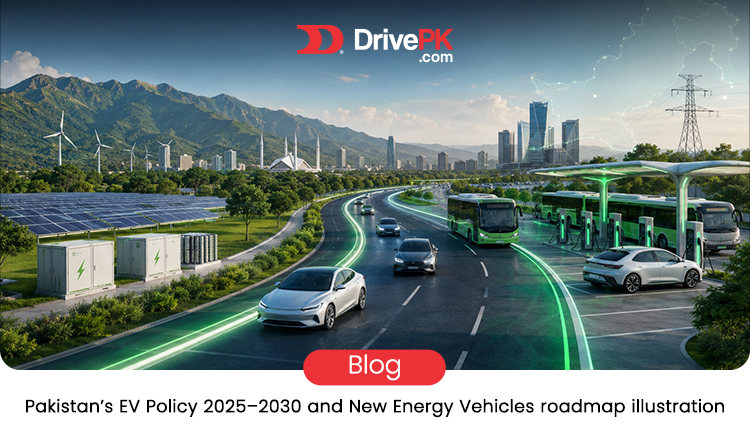
Table of Contents
- Pakistan's Transport Sector: The Sectoral Context
- How Urbanization and Economic Activity Are Driving Transport Growth
- Rising Air Pollution, Greenhouse Gas Emissions, and Petroleum Dependence
- Policy Frameworks Supporting Sustainable Mobility in Pakistan
- National Climate Change Policy
- Nationally Determined Contributions (NDCs)
- Alternative and Renewable Energy Policy
- The New Energy Vehicles Policy (2025 to 2030)
- Nationwide EV Adoption Targets
- Deployment of 3,000 Charging Stations
- Fragmentation in Implementation Across Institutions
- The Gap Between Policy and Implementation
- Limited Charging Infrastructure
- Financing Constraints and Low Adoption Levels
- Electric Mobility as an Economic Necessity
- Reducing Fuel Import Dependency
- Strengthening Pakistan's Balance of Payments
- What to Watch Next: PGMM and the Road to 2030
Understanding Pakistan's EV Policy Foundations: From NDCs to the New Energy Vehicles Policy (2025 to 2030)
Pakistan has been talking about electric vehicles for years. But in mid-2025, the conversation moved off the page and into formal policy with real numbers, a real timeline, and real money attached to it.
The New Energy Vehicles (NEV) Policy 2025–2030 sets a target of 30% electric vehicle sales by 2030. It calls for 3,000 charging stations across the country. It earmarks over 100 billion rupees in subsidies. And it connects, at least on paper, to Pakistan's broader climate commitments under the Paris Agreement.
Whether those targets hold is a separate question. But understanding what the policy says and the problems it's trying to solve is where this conversation has to start.
Pakistan's Transport Sector: The Sectoral Context
Before getting to the policy itself, it's worth understanding what kind of problem Pakistan's transport sector actually is. Because the scale is not small.
How Urbanization and Economic Activity Are Driving Transport Growth
Pakistan has the highest urbanization rate in South Asia. According to UNDP data, roughly 36% of the population already lives in cities, and that share is growing fast. Every year, more people move into Karachi, Lahore, Islamabad, Rawalpindi, and Faisalabad, and they all need to get around.
As the economy grows and the middle class expands, private vehicle ownership rises with it. Public transport in Pakistan's cities has never kept up with demand, which pushes more people onto motorcycles, rickshaws, and private cars. The result is a transport sector that keeps growing in size and fuel consumption, with almost no structural brake on either.
By July 2025, vehicle sales had crossed 170,000 units, and the auto sector was registering renewed momentum after years of economic turbulence. That's the demand side of the problem: a market growing faster than clean alternatives can fill it.
Rising Air Pollution, Greenhouse Gas Emissions, and Petroleum Dependence
The environmental cost of Pakistan's transport growth is not abstract. Air pollution in Pakistani cities is among the worst in the world. Research published through the International Growth Centre puts the figure starkly: poor air quality causes over 200,000 deaths in Pakistan annually and costs the economy up to 6.5% of GDP.
Transport is a primary driver of that pollution. Old vehicles running on low-quality fuels release significant loads of carbon monoxide, nitrogen oxides, and fine particulate matter. Pakistan adopted Euro-V fuel standards in 2020, but implementation has been slow. Cities fill with smog every winter, and Lahore's air quality episodes have now become globally reported events.
On the greenhouse gas side, Pakistan's transport sector alone consumed 23 million tonnes of oil equivalent from fossil fuels in 2019, producing over 52.9 million metric tons of CO2. Transport accounts for more than a quarter of the country's total emissions. And the sector has the highest fossil fuel dependence of any part of the economy. Nearly 78 to 80% of all petroleum consumed in Pakistan goes into transportation.
That last number is where the economics get serious. Pakistan imports more than 80% of its oil. In fiscal year 2023-2024, the petroleum import bill reached $15.1 billion. During July to March of FY2025 alone, petroleum imports reached $8.4 billion. Petroleum now makes up roughly 32% of Pakistan's total merchandise imports, a share comparable to low-income sub-Saharan African economies, not a middle-income country trying to grow.
Every time global oil prices spike, Pakistan's current account bleeds. And with roughly 80% of petroleum going into transport, that sector is where the exposure sits.
Policy Frameworks Supporting Sustainable Mobility in Pakistan
The NEV Policy 2025–2030 did not appear in a vacuum. It sits within a broader stack of climate and energy frameworks that Pakistan has built or signed onto over the past decade. Understanding those frameworks matters because the NEV policy draws its legitimacy and targets from them.
National Climate Change Policy
Pakistan's National Climate Change Policy establishes the overarching framework for how the country approaches environmental sustainability. It acknowledges Pakistan's acute vulnerability to climate change; the country has contributed less than 1% of global emissions historically, but faces some of the world's most severe climate risks, including floods, glacial melt, and extreme heat.
The policy positions transport decarbonization as essential to meeting national climate goals, while also acknowledging that Pakistan's development needs are real and cannot be ignored in any policy calculus.
Nationally Determined Contributions (NDCs)
Pakistan ratified the Paris Agreement in 2016 and has submitted three rounds of Nationally Determined Contributions (NDCs) since then.
The most recent, NDC 3.0, submitted in September 2025, commits Pakistan to reducing its 2035 projected GHG emissions by 50% compared to business-as-usual. Of that total, 17% will come from domestic resources, and the remaining 33% is conditional on international financing, technology transfer, and capacity support.
On the 2030 interim targets, NDC 3.0 strengthens the earlier unconditional commitment from 15% to 17%. The transport sector is explicitly named as a mitigation priority.
It is worth noting that Pakistan has consistently flagged a gap in international climate finance. The country has laid out what it needs to meet its conditional targets, but those resources have not arrived at the scale required. The NDC 3.0 is both a commitment and a continued ask.
Alternative and Renewable Energy Policy
Pakistan's Alternative and Renewable Energy Policy completes the triangle. As the country moves to charge more vehicles from the grid, the question of what powers that grid becomes central. Pakistan has made significant strides on solar in particular; solar penetration went from under 5% to more than a quarter of electricity generation in just four years, making Pakistan one of the world's largest importers of solar panels.
The logic of electric mobility in Pakistan depends on this shift. EVs charged by coal or oil are not necessarily cleaner, but EVs charged by solar are a genuine emissions win. As renewable energy's share in the grid grows, the climate case for electric transport strengthens.
The New Energy Vehicles Policy (2025 to 2030)
The NEV Policy 2025–2030, launched by the Ministry of Industries and Production, is the most specific and operationally detailed EV commitment Pakistan has produced. It addresses targets, infrastructure, fiscal incentives, and institutional responsibilities, though as we'll see, implementation is where the questions begin.
Nationwide EV Adoption Targets
The policy sets a clear numerical target: 30% of all new vehicle sales must be electric by 2030. That's the floor. Beyond the policy period, the ambition rises to 50% by 2040, 100% by 2050, and a fully zero-emission vehicle fleet by 2060.
To put that in context: when the 2019 EV policy was introduced, there were just 567 registered electric vehicles in the country. By June 2025, that figure had crossed 80,000, driven almost entirely by electric two- and three-wheelers. By July 2025, 65 manufacturers had secured certificates for local assembly of electric motorcycles and rickshaws, while two companies had approvals for electric cars and SUVs.
That growth is real. But with new energy vehicles currently accounting for less than 3% of total car sales, reaching 30% by 2030 requires a trajectory shift, not just continuation of current trends.
To accelerate adoption, the policy introduces subsidies through the Pakistan Accelerated Vehicle Electrification (PAVE) program. The government has allocated 9 billion rupees in the next financial year specifically for subsidies, covering an estimated 116,000 electric motorcycles and over 3,000 electric rickshaws. Subsidies are structured as: up to 50% subsidy for electric motorcycles (around Rs 2,900 per month installment) and up to 80% for electric rickshaws (around Rs 8,800 per month).
To fund this and future subsidies, the government plans to impose a levy on the first sale and import of internal combustion engine vehicles, ring-fenced to finance the NEV program. That levy is projected to raise around Rs 122 billion, equivalent to roughly $430 million, over the policy period.
Deployment of 3,000 Charging Stations
The 3,000 charging station target by 2030 is the infrastructure anchor of the policy. Right now, major cities including Karachi, Lahore, and Islamabad together have about 350 public charging points, a number that illustrates both how far the country has come and how far it needs to go.
The policy's deployment plan is phased and covers multiple charging types: Level 3 fast chargers, Level 2 chargers, battery swapping stations for two- and three-wheelers, and Level 1 charging in parking lots.
As an immediate measure, the National Highway Authority (NHA) will establish 40 Level 3 fast-charging stations within six months of policy approval, located along all motorways and selected sections of the N5 highway at roughly 120-kilometre intervals.
The longer-term goal is a charging station every 50 kilometres along major highways by 2030. Oil marketing companies are required to convert at least 10% of their fuel stations into EV charging sites. A new national tariff of Rs 39.7 per kWh has been set for commercial charging.
Battery swapping and vehicle-to-grid (V2G) schemes are also mentioned, as are requirements that new buildings include mandatory charging points.
Since the introduction of EV charging infrastructure regulations in October 2024, NEECA has already issued 72 licenses for new charging stations, a signal that private sector interest exists. The question is whether that interest can scale at the pace the policy requires.
Fragmentation in Implementation Across Institutions
The NEV Policy involves a wide array of institutions: the Ministry of Industries and Production, the National Highway Authority, the National Electric Power Regulatory Authority, NEECA, oil marketing companies, provincial governments, the State Bank of Pakistan, and the Securities and Exchange Commission of Pakistan.
Islamabad is designated as a model "electric mobility city," with provinces encouraged to replicate the model. But coordination across this many actors, each with different mandates, timelines, and resource constraints, is not simple. The policy acknowledges this by calling for amendments to existing laws and the creation of a dedicated NEV Center to support the transition. Whether that center materializes, and how much authority it holds, will matter significantly.
The Gap Between Policy and Implementation
Pakistan's 2019 EV policy is an instructive precedent. It also had targets. It also had good intentions. And it fell short partly because of COVID-19, but mainly because of implementation weaknesses that were structural, not circumstantial.
The NEV Policy 2025-2030 is more detailed and better funded than its predecessor. But the gap between what's written and what gets done is real.
H3: Fragmented Institutional Coordination
The policy lists over a dozen institutions with implementation responsibilities. That breadth is necessary, EV transition touches energy, roads, manufacturing, finance, and consumer behavior simultaneously. But breadth without clear accountability can mean that everyone is responsible and no one is accountable.
A regulatory dispute that emerged just weeks after the policy's launch is illustrative. Stakeholders flagged that customs regulations appeared to favor a single domestic manufacturer of EV chargers, one that critics say only produces Level 2 chargers up to 50 kW, not the Level 3 DC fast chargers needed for a viable public highway network. If regulatory decisions protect incumbents at the expense of infrastructure quality, the 3,000 station target becomes harder to reach on time.
Industry voices have consistently called for policy continuity and clear long-term roadmaps as preconditions for investment confidence. Those are reasonable asks that the policy alone cannot deliver.
Limited Charging Infrastructure
Range anxiety, the worry that you'll run out of charge before reaching a station, is one of the biggest barriers to EV adoption in any market. With fewer than 400 public charging points spread across a country of 250 million people and thousands of kilometres of highway, it remains a real barrier in Pakistan.
The policy's highway charging rollout addresses intercity travel, but urban charging density matters just as much for daily users. And deployment is expected to be uneven: major cities and highway corridors will get infrastructure first, while smaller towns and rural areas may wait considerably longer.
For a country where the majority of EV growth has come from two- and three-wheelers used in dense urban areas, that isn't fatal. But for electric cars to grow beyond a niche segment, visible and reliable urban charging infrastructure has to come first.
Financing Constraints and Low Adoption Levels
The $566 billion investment figure cited by a World Bank-affiliated report for Pakistan's overall climate and decarbonization goals through 2030 frames the financing challenge correctly: the numbers are large, and international climate finance has not arrived at scale.
For the NEV program specifically, consumer financing is a real barrier. EVs even subsidized carry higher upfront costs than comparable petrol vehicles. Pakistan's auto financing market is still shallow, and high interest rates over the past few years have suppressed vehicle purchases across the board. Low-income buyers, who stand to benefit most from reduced fuel and maintenance costs over time, often cannot access the credit needed to absorb the upfront difference.
The subsidy structure helps at the lower end of electric motorcycles, and rickshaw subsidies are meaningful. But the car segment, which makes up the bulk of emissions per vehicle, has less targeted support.
Electric Mobility as an Economic Necessity
A lot of EV policy discussion in Pakistan frames the shift as a climate obligation. That framing is accurate but incomplete. The more urgent argument, especially given the events of early 2026, is economic.
Reducing Fuel Import Dependency
The math is not complicated. Transport uses roughly 75 to 80% of Pakistan's petroleum. Pakistan imports more than 80% of its oil. The petroleum import bill topped $15 billion in FY 2023-2024. Every rupee devaluation, every oil price spike, every regional conflict near a major shipping route hits Pakistan's fuel bill first and hardest.
In March 2026, conflict in the Middle East triggered the largest fuel price increase in Pakistan's history, with petrol hitting Rs 342 per litre. Analysts from Al Jazeera quoted energy expert Amer Zafar Durrani directly: "Transport dominates petroleum consumption. Roughly 80% of petroleum products are used in transport, meaning the country's oil dependence is fundamentally a mobility problem."
You cannot fix Pakistan's energy vulnerability without fixing how people and goods move around the country. That is not an environmental argument. It is a basic macroeconomic one.
The NEV policy estimates that it could reduce oil imports by 2.07 billion litres annually, translating to nearly $1 billion in foreign exchange savings per year. Over the 2025 to 2030 period, cumulative transport sector emissions reductions are pegged at 4.5 million metric tons of CO2 equivalent.
If Pakistan could reduce its oil import bill by even a fraction of what the NEV policy projects, those savings would show up directly in the current account. For a country that has been through repeated balance-of-payments crises, that matters enormously.
Strengthening Pakistan's Balance of Payments
Petroleum now accounts for roughly 32% of Pakistan's total merchandise imports, a proportion that the World Bank compares unfavorably to peer economies in Southeast Asia, where countries like Vietnam sit at 8%, and the East Asia and Pacific average is around 18%.
A country that spends 32 cents of every import dollar on fuel has very little room for the capital goods, technology, and intermediate inputs needed for industrial growth. Every dollar saved on fuel imports is a dollar that could stay in the economy, support the rupee, or finance productive investment.
Electric vehicles powered by domestically produced solar energy represent a structural fix to this problem, not a complete one, but a real one. The shift moves spending from imported crude oil to locally manufactured panels, locally installed wiring, and locally serviced vehicles. Jobs and value-added activity shift, too.
For that reason, the NEV policy's economic framing, not just its climate framing, deserves more attention than it typically gets. Pakistan does not need to believe in climate urgency to have a strong national interest in reducing fuel imports. The economics alone are compelling enough.
The path from here to 30% electric vehicle sales by 2030 is steep. Pakistan is starting from under 3% of car sales being electric, and the infrastructure, financing, and institutional coordination gaps are real. But the direction is correct. And for a country spending over $15 billion a year importing fuel, mostly in transport, the cost of staying on the current path is not zero either.
What to Watch Next: PGMM and the Road to 2030
The June 2026 conference is a marker. It is not the beginning of Pakistan's EV story that started earlier, with the NEV Policy and the investments that came before it. But it is a visible checkpoint for whether institutional coordination is actually improving, or whether the sector is still running on intent.
Three things are worth tracking as PGMM's work moves forward.
First, the 3,000 charging station target. This is the clearest, most measurable deliverable in the NEV Policy 2025–2030. Infrastructure is the real bottleneck for EV adoption, not just for highway travel, but for daily urban use. Progress on that number will say more about whether inter-agency coordination is working than any policy statement will.
Second, domestic manufacturing investment through EDB and BOI-linked channels. The NEV policy sets a localization ambition pushing manufacturers toward 90%+ local content for two- and three-wheelers within three years. Whether that ambition translates into actual plant commitments and capacity additions is a separate question. Investment decisions, not approval letters, are what matter here.
Third, State Bank-enabled EV financing products are reaching retail consumers. Consumer financing is where the rubber meets the road. The subsidy structure is a good start, but Pakistan's shallow auto financing market and high borrowing costs remain real obstacles, particularly for the car segment, which carries higher upfront costs and less targeted government support. If SBP-linked financing products start moving at scale, it means the financial integration piece is working on the ground, not just on paper.
The EV transition in Pakistan is not really a question of whether it happens. Transport economics and climate pressure together make some form of electrification unavoidable. The actual question is whether it happens fast enough to matter — and whether Pakistan's domestic industrial base captures enough of the value when it does, rather than importing finished EVs and batteries the same way it currently imports petrol.
PGMM's structured approach, connecting federal policy targets to provincial coordination and private sector action, is Pakistan's clearest current answer to that question. Whether that answer holds through execution is what the next few years will show. For more updates, visit DrivePK.com
Tags
Share this article
About the Author

Najeeb Khan
Automotive enthusiast and writer
Comments (0)
Login Required
You need to be logged in to comment on this article.
No comments yet. Be the first to share your thoughts!
Related Articles
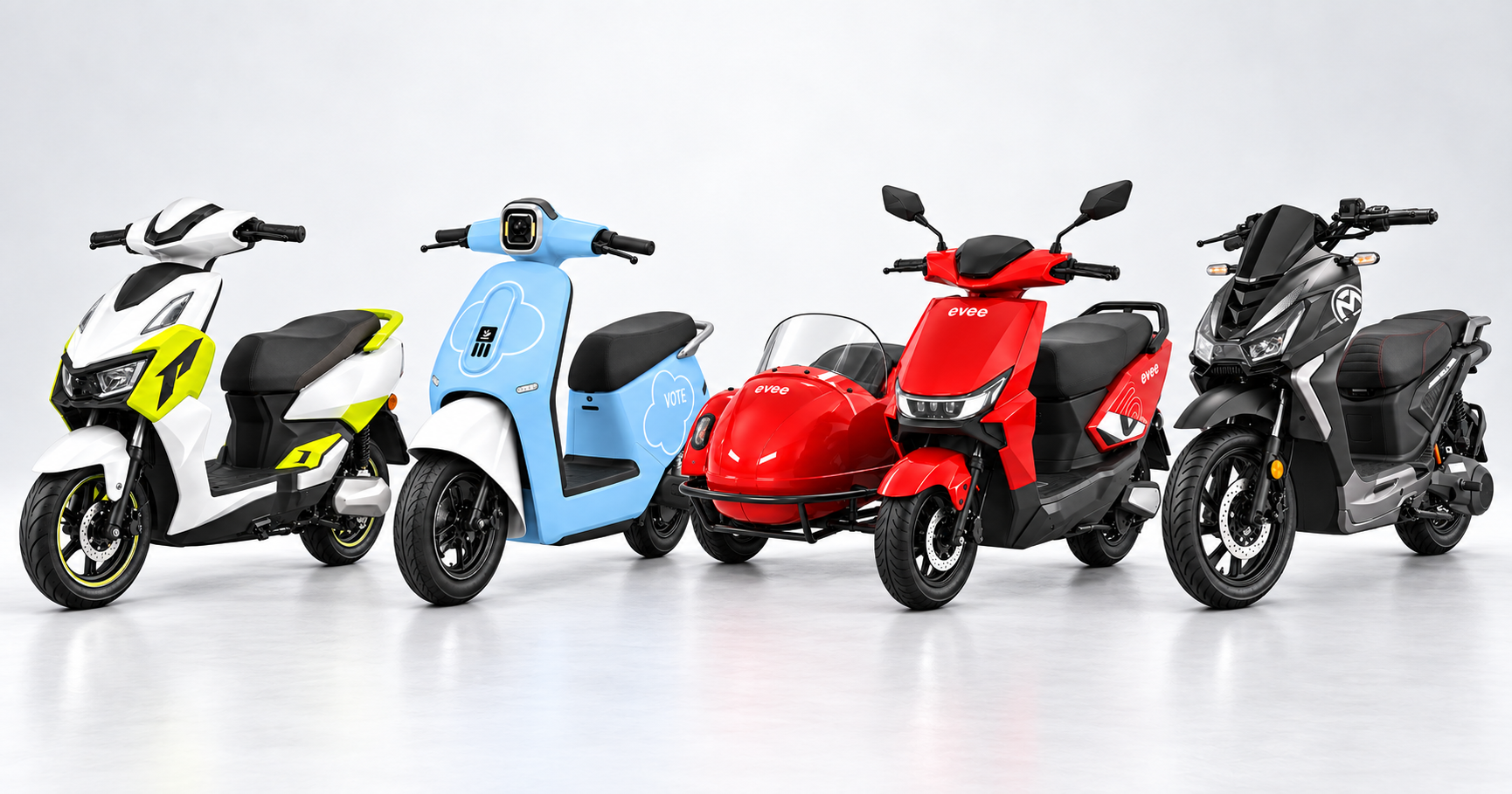
New Electric Scooters at PAPS 2026: Prices, Range & Specs
PAPS 2026 brought 14 new electric scooters from OKLA and EcoDost, with prices from Rs 199,000 to Rs 699,000. This guide lists every model with motor, battery, speed and claimed range, then shows what real riders should expect, what running costs look like and what to check before you book.
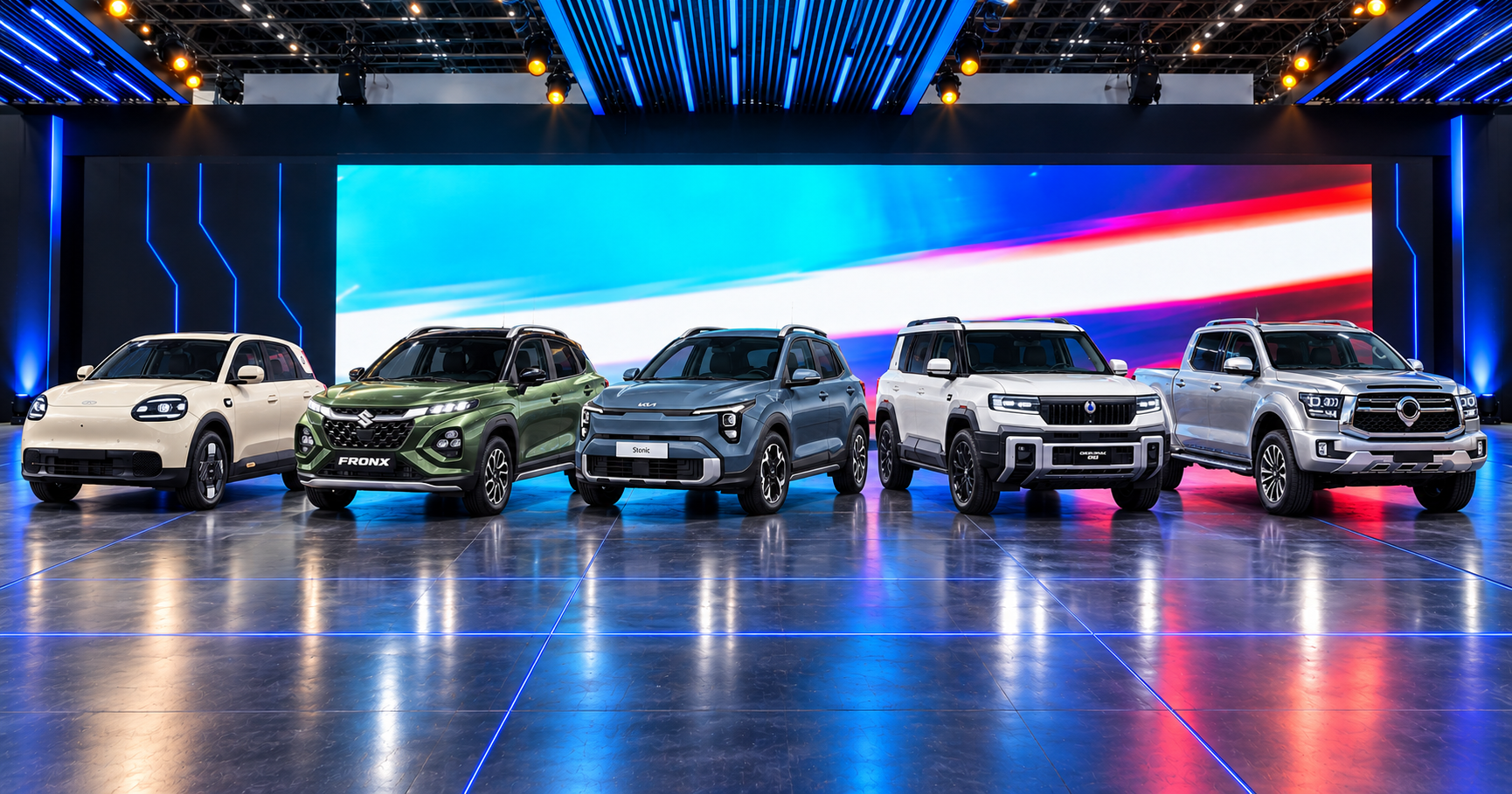
PAPS 2026: New Vehicle Launches & Reveals at Pakistan Auto Show
PAPS 2026 in Lahore brought new car reveals from Chery, Suzuki, Haval, Kia, Hyundai, Jaecoo, BYD and GWM. Here's every model shown, with confirmed prices where available and full specs for the rest.
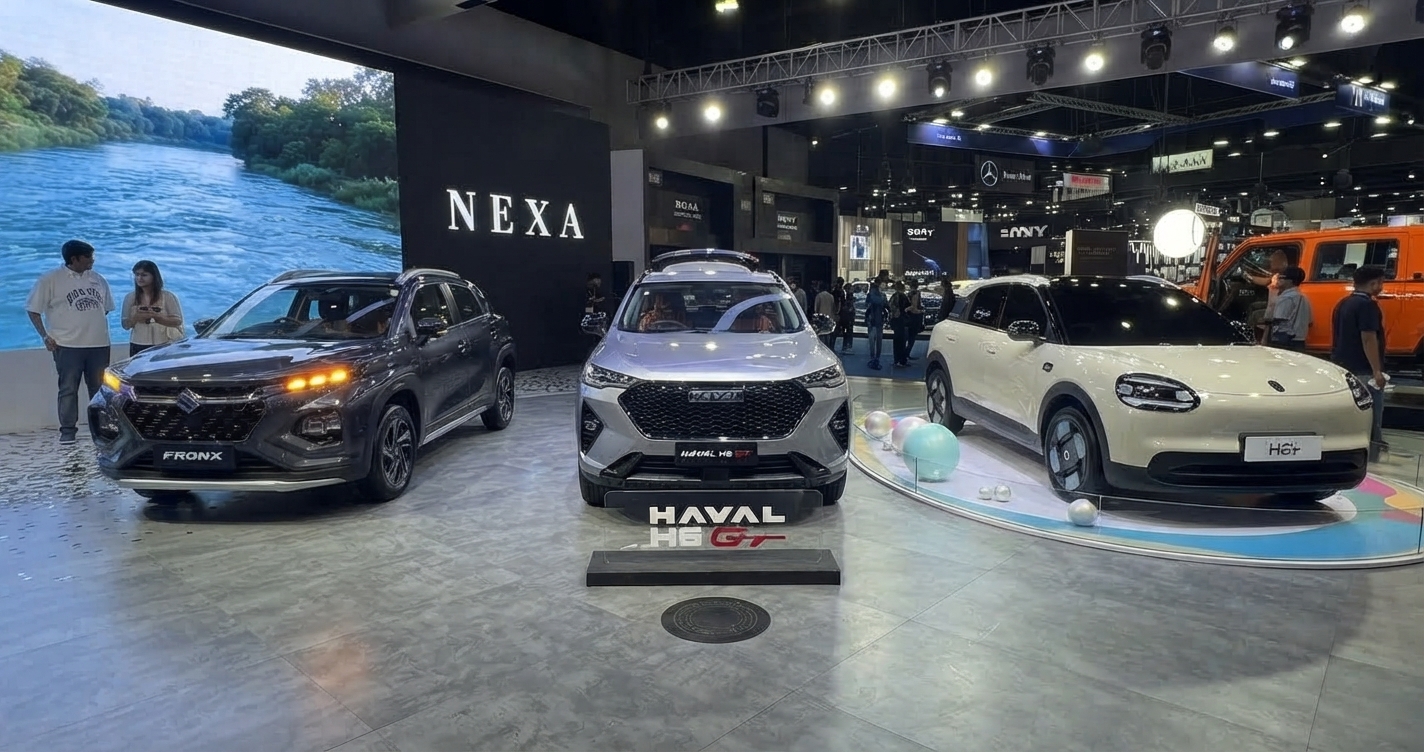
New Mind-Blowing Launches at PAPS 2026 Lahore
PAPS 2026 in Lahore brought fresh electric and hybrid models that change daily driving options. Chery Q arrives as an affordable EV hatchback. Haval adds a sporty PHEV. Suzuki upgrades the Fronx with ADAS. OKLA expands its bike range. BYD and Jaecoo push local assembly forward. These six launches give buyers real choices right now.