The 2026 Shift: How Beijing's New EV Policies are Flooding Pakistan with Affordable Electric Cars
March 2026 marked a turning point as Pakistan’s EV and hybrid registrations jumped 61%. China’s new EV policies and excess capacity are flooding the market with affordable electric cars. From massive fuel savings to improving infrastructure, here’s how Beijing’s decisions are transforming car buying in Pakistan.
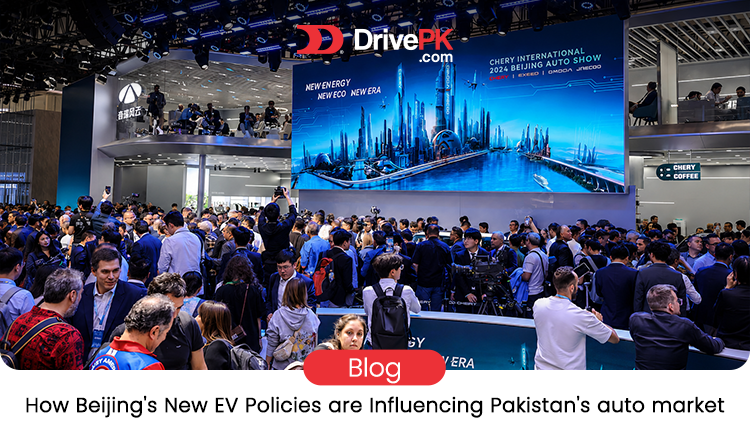
Table of Contents
- The "Beijing Effect": Why 2026 Changed Everything
- The Pakistan Reality: Why Buyers Are Switching
- Top 2026 EV & Hybrid Contenders for Pakistani Buyers
- Price Killers (Under Rs. 50 Lakh)
- Family Crossovers
- Long-Range Options
- Practical Hybrids as a Bridge
- Infrastructure & Busting the "Range Anxiety" Myth
- Future Outlook: Is Pakistan Ready for 2030?
- Frequently Asked Questions
- Are Chinese EVs actually safe?
- Will resale value hold?
- What about battery life in Pakistan's heat?
- Is home charging enough, or do I need public chargers?
The 2026 Shift: How Beijing's New EV Policies are Flooding Pakistan with Affordable Electric Cars
March 2026 broke something. Not literally but the numbers that came out of Pakistan's auto sales data felt like a fault line cracking open. EV and hybrid registrations surged 61% compared to the same month last year, while petrol car sales quietly slipped. People who've covered this market for years were doing double takes. This wasn't a seasonal blip or a one-off incentive bump. Something structural had changed.
The story starts 4,500 kilometres away, in Beijing. Most Pakistani buyers don't track Chinese auto policy the way they track petrol prices at their local pump but right now, they probably should. Because decisions made in China's National Development and Reform Commission are directly shaping what cars show up at dealerships in Lahore, Karachi, and Islamabad, and at what prices.
Here's the short version: China spent years building the world's most aggressive EV manufacturing base. Then, in 2026, they changed the rules at home. The result? A flood of high-quality, competitively priced electric and hybrid vehicles is looking for new markets and Pakistan, with its fuel price crisis and growing EV policy framework, is at the top of that list.
This isn't the future of EVs in Pakistan. It's already happening.
The "Beijing Effect": Why 2026 Changed Everything
For years, China's government ran one of the most generous EV incentive programs the world had ever seen. Buyers paid zero purchase tax on new energy vehicles. Manufacturers got subsidies. The whole ecosystem was turbocharged into existence by policy money.
From January 1, 2026, that zero-tax era ended. EVs in China now carry a 5% purchase tax still lower than petrol cars, but a significant jump from nothing. Simultaneously, Beijing introduced the world's first mandatory energy-consumption standard: a hard cap of 15.1 kWh per 100 kilometres for passenger EVs. Models that don't meet the threshold can't be sold in China after the deadline. Not fined. Not penalised. Blocked.
These two changes together created a very specific problem for Chinese automakers: they had already built the factories, hired the workers, and ramped up production for a market that was about to get smaller and more demanding. BYD, SAIC, Chery, Geely, and Deepal were producing at scale. Idle capacity in Chinese auto manufacturing right now is estimated at around 40% of total installed production.
What do you do with 40% spare capacity when your home market gets tougher? You export. Aggressively. At prices that make sense for emerging markets, where consumers are more price-sensitive and less demanding about the latest tech specs.
Pakistan fits that profile almost perfectly. A large, price-conscious middle class. Crippling fuel costs. A government policy framework. (the National Electric Vehicle Policy) that wants 30% EV adoption by 2030. And a historically underserved auto market that still largely runs on 1,000cc petrol cars from the 1990s.
Chinese manufacturers are not doing Pakistan a favour. They're solving their own problem. But the result for Pakistani consumers is genuinely good news.
The Pakistan Reality: Why Buyers Are Switching
Let's talk about petrol for a moment, because it's the single biggest reason the math on EVs is changing for ordinary families.
A typical Lahori commuter, let's say someone driving 80-100 kilometres a day between DHA and their office in Gulberg, is burning through 8-10 litres of petrol daily in a small car. At current pump prices, that's Rs. 2,600-3,200 per day just in fuel. Multiply that across a month, and you're looking at Rs. 55,000-70,000 in running costs, before servicing, oil changes, or the occasional breakdown.
The same commute in a mid-range EV, charged either at home or at a public fast charger on NEPRA's EV tariff (Rs. 30-35 per kWh for EV-specific rates in several cities), costs Rs. 700-1,200 per day. Monthly running costs drop to Rs. 18,000-25,000. That's a saving of Rs. 30,000-45,000 every month. Annually, that's over Rs. 4 lakh staying in the household budget.
For families in Karachi managing two cars, or professionals in Rawalpindi doing long daily commutes to Islamabad, those numbers aren't marginal. They're life-changing.
The infrastructure for this is also better than people think. Home charging on a 22kW wallbox is already viable for anyone with a private parking space. Many housing societies in Bahria, DHA Karachi, and DHA Lahore are quietly installing charging points. And the BYD-Hubco partnership, where Hub Power Group is rolling out public fast chargers alongside BYD's official dealership network, is adding real ground-level infrastructure.
There's also the CKD vs CBU conversation. Fully imported (CBU) EVs carry heavy duties that push prices up. But several manufacturers are now pursuing locally assembled (CKD) routes to bring prices down significantly. BYD's confirmed assembly arrangements and Changan's Blue Core hybrid lineup assembled at their existing Pakistani plant are early signs that local content will start shaping pricing within the next 12-18 months. When that happens, the cost curve drops further.
Top 2026 EV & Hybrid Contenders for Pakistani Buyers
There's no shortage of options now. The challenge is actually filtering through them. Here's a realistic breakdown by category, not by what sounds impressive on paper, but by what actually makes sense for different buyers.
Price Killers (Under Rs. 50 Lakh)
Honri Ve is the most talked-about entry in this segment. Small, city-friendly, with a range that comfortably covers daily urban commutes. Fit and finish isn't BMW-level, but it's solid enough for Lahore traffic. The real draw is the sticker price; it's the closest thing to a genuine people's EV Pakistan has seen.
Alektra Metro targets the same buyer. Local assembly gives it a pricing edge, and the company has been building a service network in parallel, which matters more than most buyers realise until their car needs attention six months in.
GuGo GiGi is the polarising one. The name generates jokes. The car itself is a reasonable urban runabout with honest range figures. If you're covering 50-60km a day in Islamabad and charging overnight, it does the job.
The honest caveat for all three: resale value is unproven. These are first-generation products from brands without deep roots in the Pakistani market. Buy one because the economics of ownership make sense for you, not because you think it'll hold value like a Corolla.
Family Crossovers
BYD Atto 3 is the one people actually want. The interior quality, the blade battery tech, the range figures, and the brand's growing global reputation make it a serious car, not a compromise. At its current CBU price point, it's stretching into Rs. 85-95 lakh territory, but as BYD's local assembly ramp-up matures, that number should move.
MG Binguo punches above its price class on interior feel and software. MG's existing service network in Pakistan, built over the years of the HS and ZS, gives it a real advantage over newer entrants.
Omoda E5 from Chery has been generating interest. Competitive range, decent build quality, and a brand that's finally getting its Pakistani story straight after a few years of confusion.
Long-Range Options
BYD Seal is the car that genuinely makes you reconsider whether a petrol sedan still makes sense. 550+ km of real-world range, rear-wheel drive dynamics that feel nothing like what you'd expect from a Chinese brand five years ago, and technology that's ahead of what Japanese brands are offering in this market.
Deepal S07 from Changan's premium sub-brand is the dark horse. A range-extended electric vehicle (REEV) architecture, meaning a small petrol engine acts as a generator to charge the battery, rather than driving the wheels directly, solves range anxiety completely. You can run it as a pure EV 90% of the time and never worry about a motorway trip to Multan.
Xpeng G6 is for the buyer who wants the technology story, the LIDAR, the driver assistance, and the over-the-air updates. It's priced accordingly.
Practical Hybrids as a Bridge
Not everyone is ready to go fully electric, and that's fine. BYD Sealion 6 in its PHEV configuration is a genuinely excellent family SUV that can cover 80-100km on pure electric for daily commuting, then seamlessly switch to petrol for longer trips. It's Rs. 90-105 lakh, depending on the variant, not cheap, but it eliminates every concern about charging infrastructure.
Changan Blue Core Hybrid brings conventional mild hybrid tech at a more accessible price. Not as dramatic in fuel savings, but it's a familiar step toward electrification for buyers who aren't ready to leave petrol entirely.
On batteries: LFP (lithium iron phosphate) chemistry, which BYD pioneered, is generally safer, lasts longer in our climate, and degrades less in charging cycles. NMC (nickel manganese cobalt) batteries offer higher energy density, better range per kg, but can be more sensitive to heat. Pakistan's summers are not kind to NMC. If long-term battery health matters to you, LFP wins.
Infrastructure & Busting the "Range Anxiety" Myth
The objection that comes up every single time someone discusses EVs in Pakistan: "But what about charging? What about the motorway?"
Fair question. Incomplete concern.
For urban daily commuting, which describes the majority of Pakistani car usage, range anxiety is already irrelevant. A car with 300km of rated range (call it 220-250km in real-world Pakistani conditions) covers almost any city-based driving pattern. You plug in at home, wake up full, and don't think about it for the rest of the day.
The motorway gap is real but shrinking. The NPCC (National Power Construction Corporation) has installed fast chargers at several motorway service areas. BYD's dealer network is adding 60kW+ DC fast chargers at showrooms in major cities. The map isn't complete, and let's not pretend it is, but a Lahore-Islamabad run in a BYD Seal with a single 25-minute fast-charge stop is already doable today.
Home solar charging is quietly becoming a game-changer in upper-middle-class neighbourhoods. If you've already got a rooftop solar system and plenty of households in Lahore and Karachi, you're effectively charging your car for free during daylight hours. The synergy between solar adoption and EV adoption in Pakistan is underappreciated.
Service and parts availability is the more legitimate concerns. Toyota's dealer network wasn't built in a day, and Chinese brands are still catching up. The brands with a long-standing presence in Pakistan (Changan, MG, United) have a real advantage here. Newer entrants like Deepal and Xpeng need to prove their after-sales commitment before buyers feel fully comfortable. Check what the warranty terms actually cover, in writing, before signing anything.
Future Outlook: Is Pakistan Ready for 2030?
The government's 30% EV adoption target by 2030 looked ambitious when it was announced. Now it looks, if anything, conservative.
The pressure on Japanese and Korean brands is building. Toyota's hybrids sell well here, but Toyota has no affordable pure EV answer for the Pakistani market in 2026. Hyundai's Ioniq 5 is a genuinely good car at a price that prices out most buyers. Kia has nothing compelling in the EV space locally. These brands built their Pakistani franchises on reliability and resale value, two things that still matter to buyers. But if Chinese brands spend the next three years building service track records and price gaps widen further, the loyalty calculus changes.
The wildcard is policy. With SRO changes, import duties, and local content requirements, the Pakistani auto policy can shift quickly and unpredictably. The CKD benefits that make local assembly economically attractive could change. The EV tariff concessions could be revised. Anyone who's followed the auto sector here knows not to take regulatory stability for granted.
But the underlying economics of electric versus petrol in Pakistan are now structural, not policy-dependent. When the per-kilometre running cost of an EV is one-quarter of a petrol equivalent, that gap doesn't close just because a tariff changes. The fuel price crisis didn't create EV demand, it just accelerated what was already inevitable.
2026 feels different because it is different. Chinese manufacturers needed new markets. Pakistan offered a perfect fit. The pricing has finally crossed the threshold where middle-class buyers can run the numbers and make an honest argument for going electric. And once enough of those buyers start talking about their fuel bills or the lack of them, the conversation changes faster than any policy paper could predict.
The Lahori commuter paying Rs. 4,000 a month in charging costs versus Rs. 65,000 in petrol doesn't need a government brochure to make the decision. The maths does it for them.
Frequently Asked Questions
Are Chinese EVs actually safe?
Modern Chinese EVs from the major brands BYD, Chery, and SAIC are built to European and global NCAP standards, not to weaker specifications. BYD's Blade Battery has a particularly strong safety record. The "are Chinese cars safe?" conversation is five years out of date.
Will resale value hold?
Honestly? Too early to say with confidence. The first generation of any new brand in a new market always has resale uncertainty. The brands with the strongest global presence (BYD, especially) are most likely to hold value. Smaller or newer entrants are a bigger risk. Factor this into your buying decision rather than ignoring it.
Which EV has the best real-world range for motorway driving in Pakistan?
The BYD Seal and Deepal S07 REEV are the two strongest answers here. The Seal gives you a genuine 450-500km range in moderate driving conditions. Deepal's REEV architecture means you can extend the range indefinitely with a fuel stop without the range anxiety of a pure EV.
What about battery life in Pakistan's heat?
LFP batteries (BYD's Blade, Changan's LFP variants) handle heat significantly better than NMC chemistry. Park in shade where possible, avoid leaving the car at 100% charge in the sun for extended periods, and don't charge to 100% daily unless you need it. Most manufacturers' thermal management systems handle Pakistani summers reasonably well — but LFP is the safer long-term bet in this climate.
Is home charging enough, or do I need public chargers?
For 95% of daily use, a home wallbox is all you need. Budget Rs. 80,000-150,000 for a quality 22kW home charger with proper installation. Public chargers become relevant for motorway trips or if you live in an apartment without private parking. The latter is a genuine gap in EV usability in dense urban areas, something manufacturers and real estate developers are slowly waking up to.
DrivePK.com covers Pakistan's auto industry without manufacturer advertising influence. If you found this useful, share it with someone still on the fence about EVs. The numbers speak for themselves.
Tags
Share this article
About the Author

Najeeb Khan
Automotive enthusiast and writer
Comments (0)
Login Required
You need to be logged in to comment on this article.
No comments yet. Be the first to share your thoughts!
Related Articles
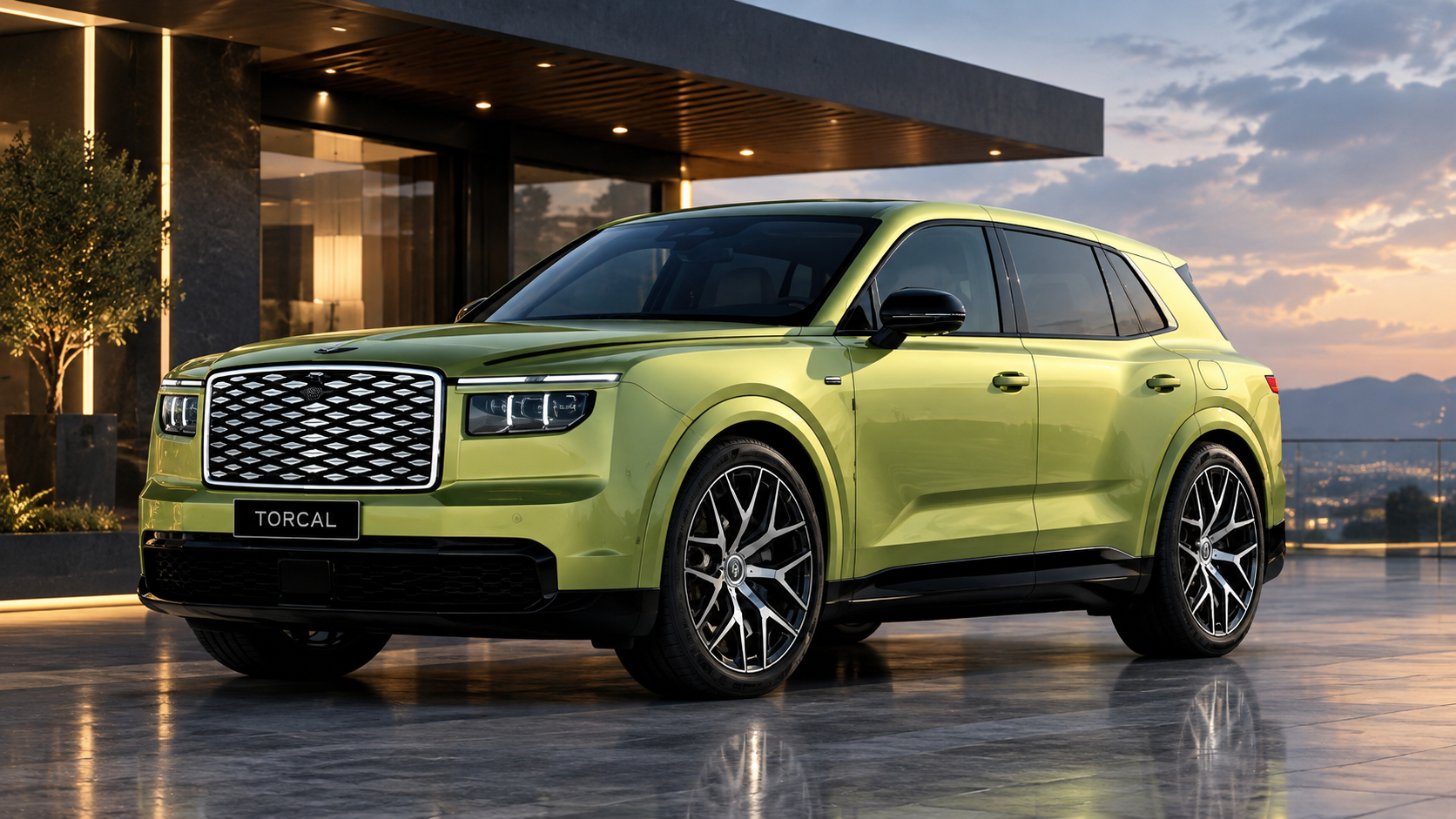
Bentley Torcal EV Revealed With 876 HP, 600 KM Range
Bentley’s first electric SUV, the Torcal, arrives with up to 876 hp, 600 km range and two trims—luxury EV thrills below the Bentayga.
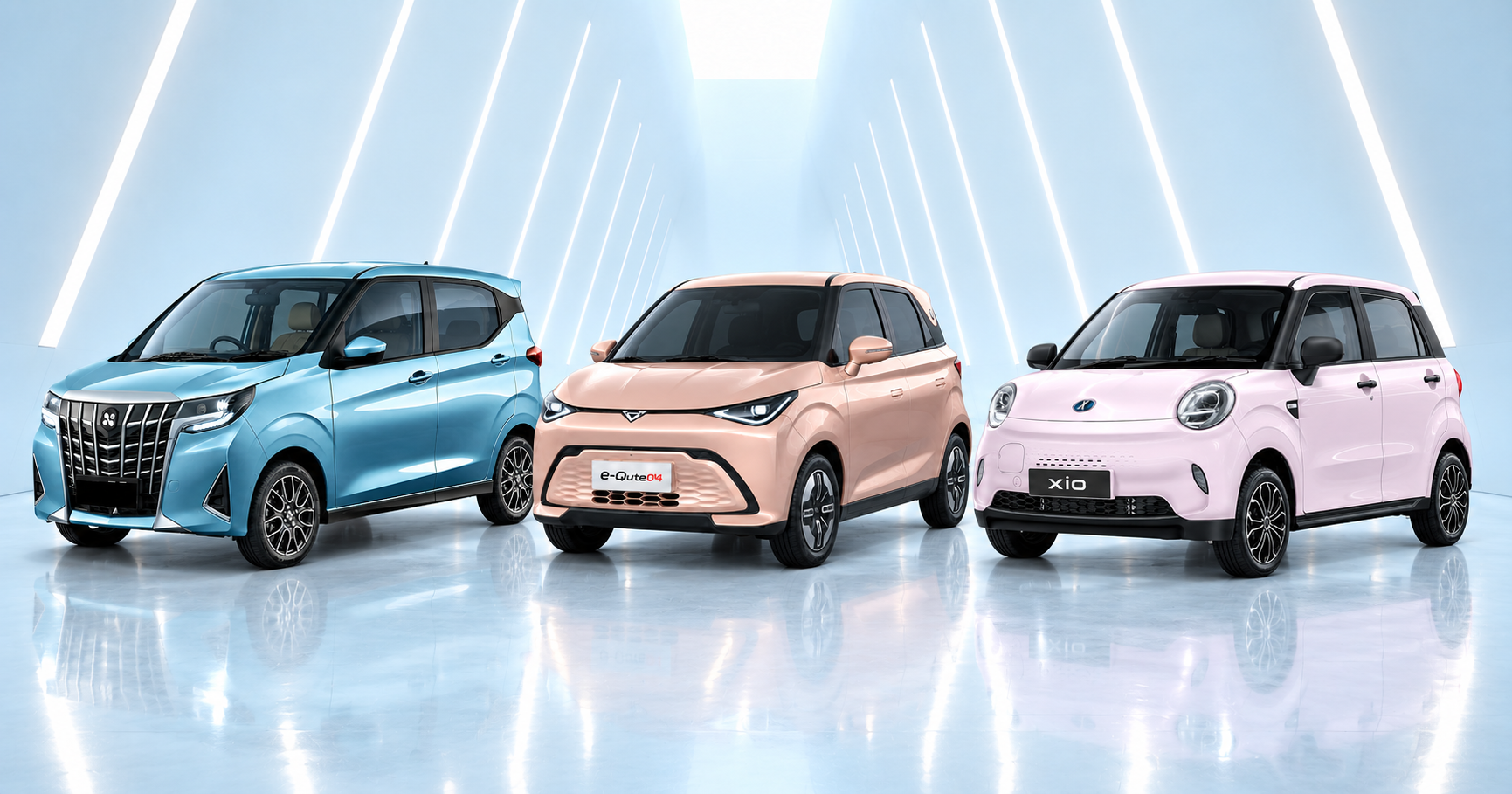
Best Electric Cars Under 50 Lacs in Pakistan
Many Pakistani buyers want an electric car but not a huge bill. This guide compares seven EVs under 50 lacs, including Inverex Xio, Honri Ve, BAW Pony, GUGO GiGi, BAW Brumby, Kaiyi e-Qute 04 and JMEV EV3, with current prices, clear range numbers, features and the limits you should know.
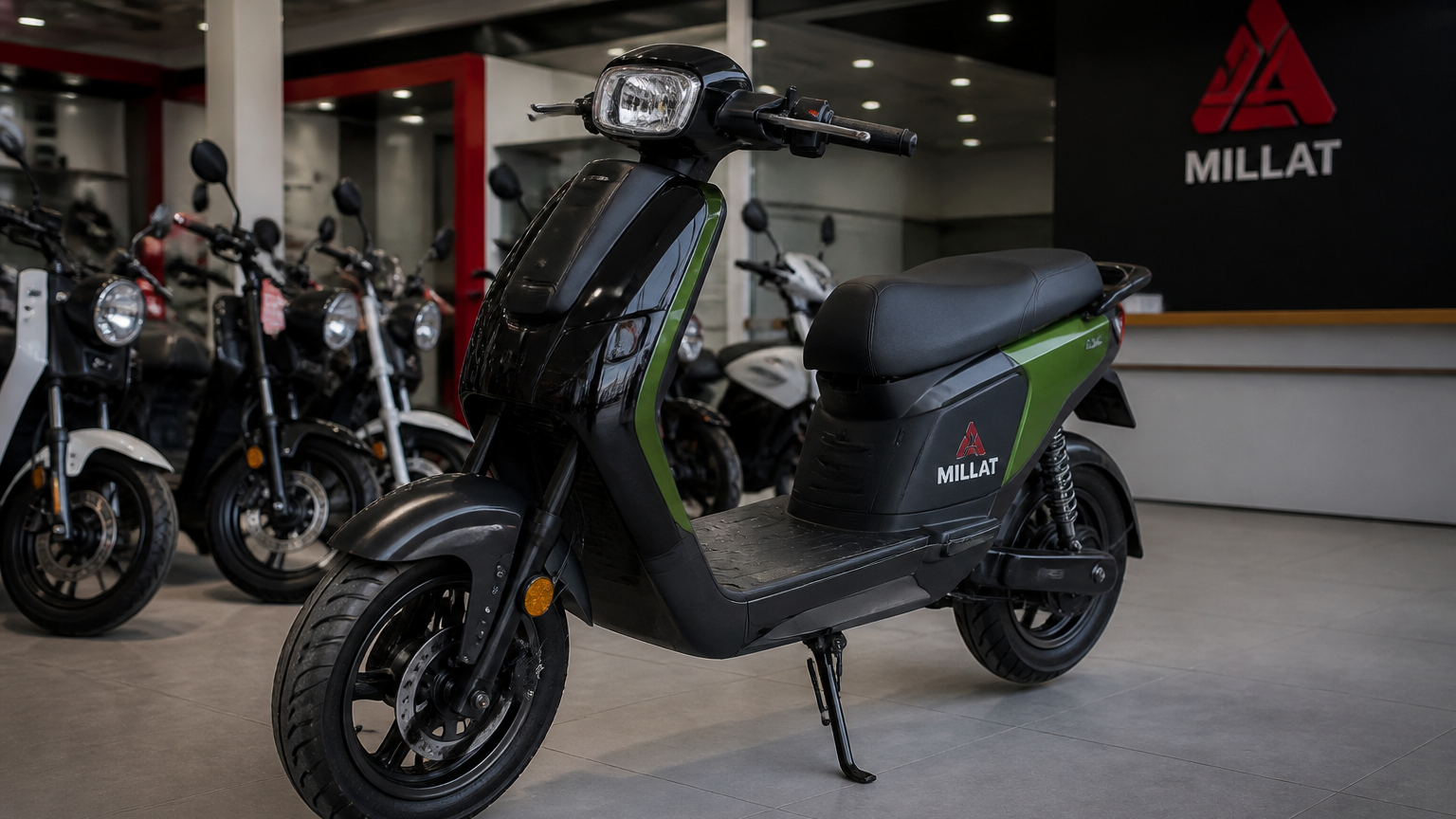
Millat Electric Bikes Launching in Pakistan Next Month
Millat Group may launch electric bikes and scooters in Pakistan next month, featuring swappable batteries; prices and specs remain undisclosed.