Who Killed the Electric Car? The 100-Year Conspiracy Against EVs
GM built it. Drivers loved it. Then it was crushed in the desert. The story of who killed the electric car involves automakers, oil companies, the federal government, and a battery that could have changed everything.
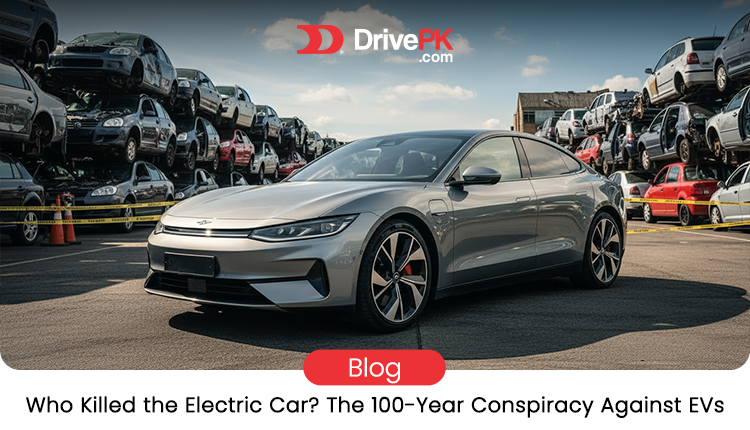
Table of Contents
- The Perfect Car Nobody Was Allowed to Buy
- EV1 Specs Fast, Silent, Zero Emissions
- Why GM Only Leased It Never Sold It
- Celebrities and Environmentalists Who Loved It
- The Waiting Lists Proof of Real Consumer Demand
- The California Mandate: The Law That Forced the Issue
- The 1990 Los Angeles Smog Crisis: 41 Days of Stage-One Alerts
- CARB's Mandate 2% ZEVs by 1998, 10% by 2003
- The Seven Automakers Who Had to Comply
- Suspect 1 General Motors (Verdict: GUILTY)
- Building the Car While Fighting the Mandate GM's Double Game
- "No Consumer Demand" The Lie GM Told CARB
- Refusing to Sell Why GM Never Let Anyone Own an EV1
- The Crushing When GM Sent Cars to the Desert to Die
- $1.9 Million Offered, Checks Returned The Final Insult
- Rick Wagoner's Confession "Killing EV1 Was My Worst Decision"
- Suspect 2 The Oil Industry (Verdict: GUILTY)
- The Western States Petroleum Association's Astroturfing Campaign
- "Californians Against Utility Abuse" The Fake Grassroots Group
- Mobil Advertising Directly Against EVs In National Magazines
- Suppressing Better Batteries The Ovonics Story
- API's War on EV Charging Infrastructure
- Suspect 3 The US Federal Government (Verdict: GUILTY)
- Bush Administration Joins GM's Lawsuit Against California
- Dick Cheney, Condoleezza Rice, Former Oil Executives in the White House
- Chief of Staff Andrew Card From Auto Lobbyist to White House
- $1.92 Billion for Hydrogen The 20-Year Distraction
- Suspect 4 Auto Dealerships (Verdict: GUILTY)
- No Oil Changes, No Tuneups, No Transmission Zero Service Revenue
- How Dealerships Joined the Lawsuit to Kill the ZEV Mandate
- The $5,000 Annual Service Revenue at Stake Per Car
- Suspect 5 The Hydrogen Distraction (Verdict: GUILTY)
- The Perfect Distraction Promise a Future to Kill the Present
- Oil Industry's Hydrogen Play: They Control the Fuel Source
- The Technology That Was Buried
- Alan Cocconi's Revelation EV1 Could Have Had 300-Mile Range
- Ovonics Battery Company Silenced to Protect the Status Quo
- The AC Propulsion T-Zero The Car That Inspired Tesla
- The Documentary That Exposed Everything
- What Would Have Happened If the EV1 Had Succeeded?
- Conclusion
- Frequently Asked Questions
- Why Did GM Crush the EV1?
- Was the Electric Car Actually Killed?
- How Many GM EV1s Still Exist?
- Is the EV1 Story in Any Documentary?
Picture this. You're driving a car that makes almost no sound. No gas stops. No engine vibration. Just smooth, instant acceleration that pins you to your seat. The car is clean, fast, and costs almost nothing to run.
There are massive questions that one invention that aims toward ease, minimal maintenance but it takes so many decades, even centuries, to scale and capture the subconscious of users; there are lobbies and mafia who limit it with grooming.
Now picture that same car being loaded onto a flatbed truck, hauled to a desert lot in Arizona, and crushed into scrap metal while the people who leased it begged the company to let them buy it.
That's not a scene from a dystopian film. That happened. In America. In 2003.
The car was the GM EV1. And its death didn't happen by accident.
This is the story of who killed the electric car and why it took another decade for EVs to come back.
The Perfect Car Nobody Was Allowed to Buy
EV1 Specs Fast, Silent, Zero Emissions
The GM EV1 wasn't a concept car or a glorified golf cart. It was a real vehicle built for real roads.
The first generation launched in 1996 with a lead-acid battery pack and a range of around 70–100 miles per charge. By 1999, GM upgraded it with a nickel-metal hydride battery that pushed range to over 140 miles. The car could hit 0 to 60 mph in under 8 seconds. For reference, that was faster than most gas cars on the market at the time.
It charged overnight at home. Drivers never had to visit a gas station. Maintenance costs were close to zero because the car had far fewer moving parts than any combustion engine vehicle.
By every technical measure, it worked.
Why GM Only Leased It Never Sold It
Here's where things get strange.
GM never sold the EV1. Not to a single person. Every unit was available only through a closed lease program, and GM retained full ownership of every vehicle. Drivers couldn't buy their car even if they wanted to.
That decision would matter enormously later because when GM decided to end the program, they had the legal right to take every car back. And they did.
The stated reason for the lease-only model was that GM wanted to control servicing and liability. But critics and many GM insiders believe it was a deliberate choice to prevent the car from ever becoming the permanent property of the people who drove it.
Celebrities and Environmentalists Who Loved It
The EV1 attracted a specific and vocal crowd. Tom Hanks leased one. Mel Gibson drove one. Alexandra Paul from Baywatch became one of its most passionate advocates and later joined protests when the cars were taken back.
These weren't people looking for a status symbol. They drove the EV1 because it was genuinely good. And when GM came for the cars, they didn't go quietly.
The Waiting Lists Proof of Real Consumer Demand
GM's official position, the one they repeated to regulators, to the press, and to anyone who would listen, was that there was no consumer demand for electric vehicles.
The waiting lists said otherwise.
Thousands of people signed up to lease an EV1. GM's own internal surveys showed strong interest. Drivers on existing leases sent letters, made calls, and organized protests. One group offered GM $1.9 million in cash to purchase 78 vehicles outright and preserve them. GM returned every check.
There was demand. GM just didn't want to see it.
The California Mandate: The Law That Forced the Issue
The 1990 Los Angeles Smog Crisis: 41 Days of Stage-One Alerts
To understand why any of this happened, you have to go back to Los Angeles in 1990.
That year, LA recorded 41 Stage-One smog alerts, days when air quality was so bad that children were told to stay indoors and outdoor exercise was dangerous. Visibility in some areas dropped to a few city blocks. The city was choking.
The California Air Resources Board, known as CARB, had seen enough.
CARB's Mandate 2% ZEVs by 1998, 10% by 2003
In 1990, CARB passed one of the most aggressive clean-air regulations in American history. The Zero Emission Vehicle mandate required that 2% of all new cars sold in California by 1998 had to produce zero emissions. By 2003, that number would rise to 10%.
For the math to work, automakers had to build electric cars. Not promises of electric cars. Not concept vehicles. Real cars, for sale, in showrooms.
The mandate forced the issue. And the auto industry responded not by embracing it, but by fighting it while quietly building the technology anyway.
The Seven Automakers Who Had to Comply
The CARB mandate applied to every major automaker selling cars in California. GM, Ford, Chrysler, Toyota, Honda, Nissan, and Mazda were all on the hook. Each had to produce zero-emission vehicles or face serious penalties.
All of them built something. But it was GM that built the EV1, the car that came closest to proving that mass-market electric vehicles could actually work.
Suspect #1 General Motors (Verdict: GUILTY)
Building the Car While Fighting the Mandate GM's Double Game
GM played both sides from the start.
On one hand, they poured significant resources into building the EV1. Engineers were genuinely proud of what they created. The car was a technical achievement. On the other hand, GM's legal team and lobbyists were simultaneously working to destroy the mandate that made the car necessary.
GM funded lawsuits, lobbied regulators, and quietly spread the message that electric vehicles weren't viable. They built a world-class EV while arguing publicly that EVs couldn't be built.
That's not a contradiction. That's a strategy.
"No Consumer Demand" The Lie GM Told CARB
When CARB held hearings about weakening the ZEV mandate, GM showed up with a clear message: nobody wants these cars.
They presented data suggesting the EV1 program was a financial failure with little public interest. They didn't mention the waiting lists. They didn't mention that they had turned down a $1.9 million cash offer from drivers who wanted to buy the cars outright.
The "no consumer demand" argument was the foundation of GM's case to kill the mandate. And CARB, under intense pressure, listened.
Refusing to Sell Why GM Never Let Anyone Own an EV1
This point is worth sitting with.
If GM truly believed there was no demand for electric cars, why did they refuse to sell the ones they already had? Thousands of people wanted to buy. GM said no. Every time.
The only logical explanation is that GM didn't want a functioning fleet of privately owned electric vehicles driving around California, proving that the technology worked. If real people owned these cars, CARB would have no reason to roll back the mandate.
Keeping the cars in lease limbo gave GM total control. When they decided the program was over, they could take everything back.
The Crushing When GM Sent Cars to the Desert to Die
Starting in 2003, GM began reclaiming every EV1. Drivers were given no option to purchase. In many cases, they were contacted on short notice and told to return their vehicles.
The cars were transported to a facility in Burro Flats, Arizona. There, GM crushed them.
Not recycled. Not sold to museums. Not donated to universities. Crushed.
A small number of EV1s were preserved with their drivetrains disabled and sent to museums and engineering schools. But the working cars were destroyed. Physically, deliberately, and completely.
Former EV1 drivers and environmental activists staged vigils outside the facility. Some held candlelight ceremonies in what they called a "funeral" for the car.
$1.9 Million Offered, Checks Returned The Final Insult
One of the most damning moments in the entire story came near the end.
A group of EV1 drivers and supporters pooled together $1.9 million in certified checks and formally offered to buy 78 of the remaining vehicles from GM. They wanted to preserve them, keep them running, and show the world that demand was real.
GM returned every check.
They preferred to pay for the crushing than accept money to let the cars survive.
Rick Wagoner's Confession "Killing EV1 Was My Worst Decision"
Years later, in a 2006 interview, GM CEO Rick Wagoner was asked to name his worst decision during his time running the company.
His answer: killing the EV1.
By that point, Toyota's Prius was a mainstream hit. Tesla was incorporating. The market was shifting in exactly the direction the EV1 had pointed toward a decade earlier. Wagoner's admission was striking not just because it was honest, but because it confirmed what EV1 supporters had always said.
The car worked. The market existed. And GM killed it anyway.
Suspect #2 The Oil Industry (Verdict: GUILTY)
The Western States Petroleum Association's Astroturfing Campaign
The oil industry didn't sit back while California tried to mandate electric vehicles. They organized.
The Western States Petroleum Association, a trade group representing oil companies operating in the Western US, launched a coordinated campaign to undermine the ZEV mandate. Their approach was sophisticated; rather than openly opposing clean cars, they funded front groups that posed as ordinary citizens.
This is called astroturfing. It looks like grassroots opposition. It isn't.
"Californians Against Utility Abuse" The Fake Grassroots Group
One of the most prominent front groups was called "Californians Against Utility Abuse."
The name was designed to make people think they were a consumer-protection organization concerned about electricity rates. In reality, the group was funded by oil industry money and existed specifically to argue against electric vehicle infrastructure and the CARB mandate.
Their message was that charging EVs would overwhelm the electricity grid and raise utility bills for ordinary Californians. The claims were largely unsupported by evidence, but they got media coverage and appeared in CARB hearings as if they represented real public concern.
Mobil Advertising Directly Against EVs In National Magazines
Oil companies also went direct.
Mobil, which later merged with Exxon, ran a series of full-page advertisements in major national publications arguing against electric vehicles. The ads questioned EV range, cost, and practicality. They were opinion pieces disguised as public information.
This was a company with billions of dollars in annual profit buying newspaper space to tell Americans that the alternative to their product didn't work. And it worked well enough to shape public perception at a critical moment.
Suppressing Better Batteries The Ovonics Story
Ovonic Battery Company, founded by inventor Stanford Ovshinsky, developed a nickel-metal hydride battery in the 1990s that showed genuinely promising results for electric vehicles. The technology was promising enough that some engineers believed it could have given the EV1 a range of 300 miles or more.
In 1994, General Motors acquired a controlling interest in Ovonics. Shortly after, the battery program's development slowed, and the technology was effectively sidelined.
Later, the rights to the large-format version of the battery, the kind that could power a car, were acquired by an entity with ties to Chevron, the oil giant. Chevron aggressively enforced the patents, blocking other companies from using the technology for automotive applications.
The battery that could have made electric vehicles truly viable sat behind a wall of intellectual property owned by an oil company.
API's War on EV Charging Infrastructure
The American Petroleum Institute, the main lobbying arm of the oil industry, also worked to block EV charging infrastructure. They argued that public investment in charging stations was unfair competition with private fuel stations.
The practical effect was to keep charging infrastructure underdeveloped, which in turn kept range anxiety alive as a real concern for consumers.
No chargers. No confidence. No adoption. That was the goal.
Suspect #3 The US Federal Government (Verdict: GUILTY)
Bush Administration Joins GM's Lawsuit Against California
In 2002, GM and DaimlerChrysler filed a federal lawsuit against California, arguing the ZEV mandate was illegal because it effectively set fuel economy standards, which under federal law was the exclusive domain of the federal government.
The Bush administration filed a brief supporting the automakers' position.
The federal government sided with the companies suing to kill the electric car mandate. That's not a neutral act. That's a choice.
Dick Cheney, Condoleezza Rice, Former Oil Executives in the White House
The Bush administration's energy policy was shaped by people with deep roots in the oil industry.
Vice President Dick Cheney had been CEO of Halliburton, one of the world's largest oil services companies. National Security Advisor Condoleezza Rice had served on the board of Chevron. The company even named an oil tanker the "Condoleezza Rice," though the name was quietly changed after she joined the administration.
These were not people who had a personal or professional interest in seeing electric vehicles succeed.
Chief of Staff Andrew Card From Auto Lobbyist to White House
White House Chief of Staff Andrew Card came directly from his position as the chief lobbyist for the American Automobile Manufacturers Association the auto industry's main lobbying group in Washington.
He moved from lobbying for the industry to running the White House's daily operations. The conflict is obvious.
$1.92 Billion for Hydrogen The 20-Year Distraction
In January 2003, President Bush announced a $1.92 billion federal initiative called the Freedom CAR and Fuel Partnership. The goal was to develop hydrogen fuel cell vehicles.
Hydrogen cars sounded promising. They emitted only water vapor. Filling them up would feel like pumping gas. Oil companies could potentially produce and distribute hydrogen fuel.
The problem was that the technology was and largely still is decades from being practical for mass-market consumers. Meanwhile, battery electric vehicles were already on the road, already working, and already improving.
The hydrogen funding pulled government money, research focus, and public attention away from battery EVs at exactly the moment when that support could have accelerated the transition.
It was the perfect distraction. Promise a future technology to kill a present one.
Suspect #4 Auto Dealerships (Verdict: GUILTY)
No Oil Changes, No Tuneups, No Transmission Zero Service Revenue
Car dealerships make most of their profit not from selling cars but from servicing them.
An average combustion engine vehicle generates roughly $5,000 per year in service revenue for its dealership oil changes, transmission fluid, brake jobs, belts, filters, and dozens of other maintenance items that wear out regularly.
An electric vehicle needs almost none of that. No oil. No transmission fluid. Fewer brake replacements because of regenerative braking. Far fewer moving parts overall.
A dealership selling EVs would be selling cars that never came back for service. That's a business model that dealers wanted nothing to do with.
How Dealerships Joined the Lawsuit to Kill the ZEV Mandate
Dealership associations joined the legal fight against California's mandate. They were not the lead plaintiffs, but they participated in the lobbying effort and supported the court challenge.
Their financial interest was clear. The CARB mandate threatened to force them to sell products that would hollow out their most profitable business line.
The $5,000 Annual Service Revenue at Stake Per Car
Over the typical 10-year life of a vehicle, a dealership stands to earn $50,000 or more in service revenue from a single combustion engine car.
An EV? A fraction of that.
Multiply that by thousands of cars per year across a dealership network, and the financial stakes become enormous. Dealers had every reason to fight electrification — and many of them did.
Suspect #5 The Hydrogen Distraction (Verdict: GUILTY)
The Perfect Distraction Promise a Future to Kill the Present
Hydrogen fuel cells are real technology. They work in labs. They've been demonstrated in concept vehicles. They are genuinely interesting from an engineering perspective.
But in 2003, hydrogen wasn't remotely ready for mainstream adoption. Producing it cleanly was expensive and inefficient. Storing it safely in a vehicle was a serious engineering challenge. Infrastructure didn't exist. Costs were impossibly high.
None of that stopped hydrogen from being positioned as the answer to clean-car technology that America should be investing in instead of battery EVs.
If you can convince politicians and the public that the right technology is still 20 years away, you can delay action on the technology that's already here.
Oil Industry's Hydrogen Play: They Control the Fuel Source
Here's the part the hydrogen advocates didn't advertise loudly.
Most hydrogen today is produced from natural gas, a fossil fuel. The companies best positioned to produce, transport, and sell hydrogen at scale are the same ones already doing that with petroleum.
Electric vehicles run on electricity, which can come from solar panels, wind turbines, or any other source. The fuel supply is decentralized and competitive.
Hydrogen vehicles, by contrast, would need infrastructure that looks a lot like today's gas station network. And who builds and operates that? The energy companies already in the business.
Hydrogen wasn't just a distraction. For the oil industry, it was a pathway to staying relevant in a future where combustion engines were obsolete.
The Technology That Was Buried
Alan Cocconi's Revelation EV1 Could Have Had 300-Mile Range
Alan Cocconi was the engineer behind the AC Propulsion system used in the EV1. He later went on to found AC Propulsion, where he built a car called the tzero a small, lightweight electric sports car that could do 0–60 mph in under 4 seconds.
The tzero used lithium-ion batteries, the same technology now standard in modern EVs. And it had a range that EV1 drivers could only dream about.
Cocconi's work was a direct demonstration that the technology to build a long-range electric car existed in the late 1990s. The EV1's limitations weren't a ceiling. They were on a floor.
Ovonics Battery Company Silenced to Protect the Status Quo
We've already discussed how Ovonics' nickel-metal hydride battery technology was acquired and effectively frozen first by GM, then by Chevron.
The patents on large-format NiMH batteries were enforced aggressively against any company trying to use them in automotive applications. Toyota, which used a smaller version of the technology in the Prius, was reportedly blocked from building a full-EV version of the car during this period.
One company's battery invention. Owned by an oil company. Blocked from reaching the cars that needed it most.
The AC Propulsion T-Zero The Car That Inspired Tesla
When Elon Musk and Martin Eberhard were looking at what to build for Tesla's first vehicle, they drove the AC Propulsion tzero.
That car with its lithium-ion battery pack, its sports car performance, and its real-world range convinced them that a compelling, commercially viable electric vehicle was possible.
Tesla's first car, the Roadster, was built on technology and experience that flowed directly from the work AC Propulsion had done in the years after the EV1 was crushed.
The thread from the EV1's death to Tesla's birth is not a long one.
The Documentary That Exposed Everything
In 2006, filmmaker Chris Paine released Who Killed the Electric Car? a documentary that laid out the full story of the EV1's rise and death with remarkable clarity.
The film is named suspects. It presented evidence. It interviewed drivers who were still furious about losing their cars. It documented the crushing with footage that was genuinely hard to watch.
The documentary reached mainstream audiences and helped shift public understanding of why EVs had disappeared from American roads. It won awards, sparked debate, and put GM on the defensive in a new way.
Paine followed it up in 2011 with Revenge of the Electric Car filmed during the period when Tesla, Nissan, and GM itself (with the Volt) were bringing new EVs to market. The title says everything.
What Would Have Happened If the EV1 Had Succeeded?
This is the question that still stings.
If GM had sold the EV1 instead of leasing it if the CARB mandate had been enforced if Ovonics' battery technology had been allowed to develop freely where would we be today?
Conservative estimates suggest the US could have had a significant EV market by the mid-2000s rather than the mid-2020s. That's roughly 20 years of lost progress on vehicle emissions, oil consumption, and urban air quality.
The climate math is bleak. Transportation is one of the largest sources of greenhouse gas emissions in the United States. Two decades of accelerated EV adoption would have meant two decades of reduced emissions from millions of vehicles.
The technology was there. The demand was there. The only thing missing was the willingness to let it happen.
Conclusion
The electric car wasn't killed by the market. It was killed by the people who had the most to lose if it succeeded. GM, the oil industry, the federal government, and car dealerships all played a role. They used lawsuits, fake grassroots campaigns, patent control, and a $1.92 billion hydrogen distraction to buy themselves another decade.
- It worked. For a while.
But you can't crush an idea. The EV1 drivers who held vigils in the desert, the engineers who kept building, the filmmaker who told the story, they kept the truth alive long enough for the industry to change.
The electric car came back. It just cost us 20 years we didn't have to spare.
Drivepk.com is the first AI-powered auto platform dedicated to electric vehicles in Pakistan; it is not only for EVs but also for green mobility, organizing events like PGMM for effectively evoking public preparation and bringing them into the awareness stage.
Frequently Asked Questions
Why Did GM Crush the EV1?
GM's official explanation was that the EV1 was a lease program that had reached its end. When leases expired, they reclaimed the vehicles.
But the real answer is more complicated. GM didn't want a functioning fleet of privately owned EVs driving around proving that the technology worked. Destroying the cars eliminated the evidence and ended the conversation.
Was the Electric Car Actually Killed?
Yes, at least for about a decade. The EV1 program ended in 2003. For the next several years, the US saw almost no new battery electric vehicles from major automakers. Tesla launched the Roadster in 2008, and the modern EV era began slowly from there.
The electric car was killed in the early 2000s. It came back. But it lost a decade.
How Many GM EV1s Still Exist?
GM preserved approximately 40 EV1s and sent them to museums and educational institutions. However, all of these had their drivetrains permanently disabled before they were handed over. None of the preserved EV1s can be driven.
One EV1 at the Smithsonian is believed to have an intact drivetrain, but it is not operational.
Is the EV1 Story in Any Documentary?
Yes.
Who Killed the Electric Car? (2006), directed by Chris Paine, tells the full story. It's available on major streaming platforms and remains one of the most compelling automotive documentaries ever made. Paine also made a follow-up, Revenge of the Electric Car (2011), which covers the industry's return to EVs.
Tags
Share this article
About the Author

Najeeb Khan
Automotive enthusiast and writer
Comments (0)
Login Required
You need to be logged in to comment on this article.
No comments yet. Be the first to share your thoughts!
Related Articles

Cars for Sale in Pakistan 2026: Ultimate Buyer's Guide
Planning to buy a car in Pakistan in 2026? This ultimate guide covers everything from new, used, NCP, and auction cars to fuel types, best platforms, documentation checks, hidden costs, and expert tips to avoid scams and make a smart purchase.
Electric Vehicles in Pakistan: The Complete Guide 2026
Pakistan imports over $8 billion in petroleum annually —and electric vehicles are disrupting that fast. From prices and top brands to charging stations and government policy, this complete 2026 guide covers everything a Pakistani buyer needs to know before going electric.
Pakistan's EV Charging Network Expansion: 3,000 Stations by 2030 and 40 Fast Chargers on Highways
Pakistan is pushing ahead with a major EV infrastructure plan. The government aims for 3,000 charging stations by 2030, starting with 40 fast chargers along key highways. This could make long-distance electric travel easier and support more affordable running costs for EV owners.