A Multi-Layered Engagement Platform: Every Feature of the EV Expo & Green Mobility Conference 2026 Explained
Pakistan's EV Expo & Green Mobility Conference 2026 is more than an event, it's a national platform bringing together policymakers, investors, startups, and consumers to shape the country's electric future. Here's what every zone offers and why it matters.
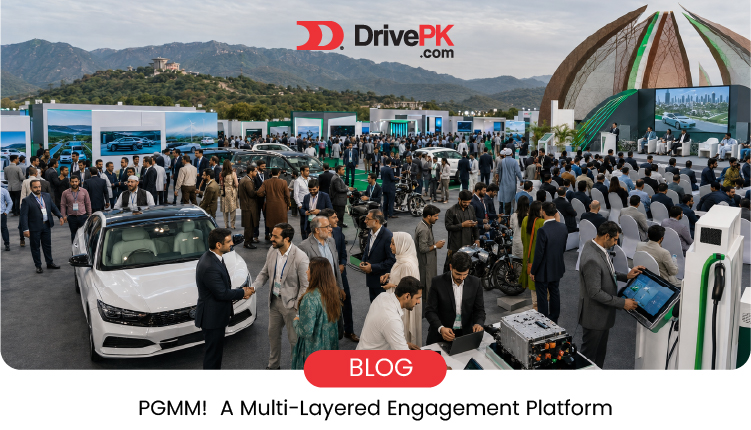
Table of Contents
- EV Expo The Exhibition Arena
- Electric Vehicles on Display 2W, 3W, 4W, and Buses
- Charging Infrastructure, Battery and Energy Solutions, Smart Mobility Technologies
- Thematic Zones, Live Demonstrations, and Product Launches
- Test Drive Arena The Experiential Zone
- Live EV Test Drives and Performance Showcasing
- Range, Acceleration, and Charging Efficiency Demonstrations
- Consumer Engagement and Real-Time Feedback Opportunities
- Safety and Handling Simulations
- B2B and B2G Engagement Zone
- Structured Business Meetings and Partnership Facilitation
- Investor Interactions Focused on Deals and MoUs
- Innovation and Youth Platform
- Startup Showcases and Innovation Challenges
- University Engagement
- Kids Zone Family Engagement and Future Mindset Shaping
- Interactive Learning on Sustainability and Green Mobility
- Mini EV Rides and Safe Driving Simulations
- Creative Workshops and Edutainment Sessions
- Green Mobility Conference
- Ministerial Dialogues, Policy Roundtables, and Industry Panels
- Focus Areas EV Policy, Financing and ESG, Infrastructure, and Global Trends
- Why This Platform Matters Right Now
Pakistan's roads are changing. Slowly at first. Then faster.
Electric two-wheelers are showing up in street traffic. Fleet operators are doing the numbers on EVs. Government policy now has teeth, with the New Energy Vehicle (NEV) Policy 2025–2030 setting a hard target: 30% of all new vehicle sales must be electric by 2030. That's not a distant ambition anymore. It's a five-year plan with deadlines, and the clock started ticking.
But policy alone doesn't move markets. People do. Businesses do. Conversations that lead to deals, decisions, and real investment move markets.
That is exactly the gap the EV Expo & Green Mobility Conference 2026 is built to close.
Organized by the Pakistan Green Mobility Mission (PGMM) and scheduled for 9th–10th June 2026 at the Pak-China Friendship Center, Islamabad, this is not just another expo. It is a structured, two-day convergence of Pakistan's entire electric mobility ecosystem. Manufacturers, ministries, investors, startups, universities, families, everyone gets a seat at the table.
And every seat serves a purpose.
Here is a detailed look at what the platform offers, zone by zone.
EV Expo The Exhibition Arena
Walk into the main exhibition floor, and the scope becomes clear immediately. This is where Pakistan's electric mobility market comes into full view.
Electric Vehicles on Display 2W, 3W, 4W, and Buses
Every segment of the EV market will be present on the floor. Two-wheelers, which currently dominate Pakistan's EV adoption numbers, will feature prominently. Pakistan's EV fleet grew from just 567 vehicles in 2021 to over 80,000 by mid-2025, and the bulk of that growth was powered by electric bikes and rickshaws.
Three-wheelers are a huge part of the urban commute story in Pakistan. Electric rickshaws have already found their audience in cities like Lahore, Karachi, and Rawalpindi. Seeing them side by side with four-wheelers and electric buses gives visitors a real sense of the market's breadth.
The four-wheeler segment has been slower to scale, but it's gaining momentum. Several Chinese brands, BYD, Changan, Xpeng, have entered or are entering Pakistan's EV passenger car market. The expo gives domestic and international manufacturers a direct stage to present their latest models to buyers, fleet managers, and decision-makers.
Electric buses round out the picture. Public transport electrification is one of the highest-impact levers available to Pakistan's urban planning authorities. A single electric bus replaces dozens of emission-heavy vehicles on daily city routes. Seeing those options in one place accelerates procurement conversations.
Charging Infrastructure, Battery and Energy Solutions, Smart Mobility Technologies
The expo is not limited to vehicles. The entire support ecosystem will be on display.
Pakistan's NEV Policy 2025–2030 targets 3,000 charging stations nationwide by 2030, with 240 to be installed in the current fiscal year alone. That's an infrastructure build-out that requires manufacturers, installers, technology providers, and regulators to all be aligned. The expo floor puts them in the same room.
Battery technology is the backbone of EV affordability. Battery swap stations, energy storage systems, and lithium cell manufacturers will all have space to demonstrate solutions. For fleet operators and commercial buyers, this is where total cost of ownership conversations start.
Smart mobility apps, fleet management platforms, and connected vehicle systems are the layer on top of hardware that makes EV networks actually function efficiently. Technology companies working in this space will have their own exhibit presence, showing how software is as important as the vehicle itself.
Thematic Zones, Live Demonstrations, and Product Launches
The exhibition floor is organized into thematic zones, so visitors can navigate by interest rather than wander. A fleet buyer doesn't need to spend an hour in the consumer zone; a policy researcher doesn't need to wade through accessories stalls.
Live demonstrations and product launches give exhibitors a way to create moments inside the event. A first public showing of a new model, a live charging speed demonstration, a battery swap done in under three minutes, these are the highlights that get people talking and sharing.
Test Drive Arena The Experiential Zone
Reading a spec sheet is one thing. Sitting in the vehicle and driving it is something else entirely.
Live EV Test Drives and Performance Showcasing
The Test Drive Arena gives attendees the chance to actually experience electric vehicles firsthand. For many visitors, this will be their first time behind the wheel of an EV. That moment, the silent acceleration, the instant torque, the absence of vibration tends to change minds in a way that brochures simply cannot.
Range, Acceleration, and Charging Efficiency Demonstrations
Consumer hesitation around EVs often comes down to three questions: How far can it go? How fast does it charge? And how does it handle?
The arena gives manufacturers a chance to answer all three with actual demonstrations, not marketing claims. A measured range test, a 0–80% charging demonstration, a controlled acceleration run are the real proofs that convert skeptics into buyers.
Consumer Engagement and Real-Time Feedback Opportunities
For manufacturers, this zone is a research opportunity. Real-time reactions from real people questions they ask, features they notice, concerns they raise provide direct market intelligence. Survey stations and structured feedback systems capture what matters most to Pakistani consumers right now.
Safety and Handling Simulations
Safety perception remains a barrier to EV adoption in Pakistan. Concerns about battery fires, collision behaviour, and handling in local road conditions come up repeatedly. Handling simulations and safety feature demonstrations addresses these concerns directly and transparently. Honest conversations about safety build trust faster than any promotional material.
B2B and B2G Engagement Zone
The exhibition floor is public-facing. The B2B/B2G zone is where the actual deals get structured.
Structured Business Meetings and Partnership Facilitation
This zone operates differently from the open floor. Meetings here are pre-scheduled, structured, and focused on specific business outcomes. An EV manufacturer from China meeting a Pakistani distribution partner. A battery supplier is sitting down with a bus fleet operator. A charging infrastructure company is exploring a joint venture with an energy services firm.
PGMM's role as a coordination platform is most visible here. The Mission's institutional linkages spanning federal ministries, regulatory authorities, provincial governments, the State Bank, the Engineering Development Board, and the Board of Investment mean that the right connections can be facilitated across public and private sectors simultaneously.
Investor Interactions Focused on Deals and MoUs
Pakistan's EV transition needs capital. The World Bank estimates Pakistan requires significant investment to meet its climate and transport goals, and EV infrastructure is central to that. Foreign direct investment, domestic private capital, and development finance all need entry points.
The B2G engagement component is where government stakeholders, representatives from the Ministry of Industries and Production, NEECA, and provincial bodies engage with market participants directly. Policy clarity, land allocation for charging infrastructure, customs duty questions, and investment facilitation all get addressed in this space. Memoranda of Understanding signed here translate directly into real-world commitments.
Innovation and Youth Platform
Pakistan's EV future is not just being built by established companies. A new generation of engineers, technologists, and entrepreneurs is already working on the problems. The Innovation Zone is their space.
Startup Showcases and Innovation Challenges
Pakistani startups working in electric mobility, battery technology, smart charging, and fleet management will have a dedicated showcase space. This is not a side event; it is a core part of the platform's design. PGMM's framework explicitly supports domestic manufacturing and industrial capacity development, and that starts with early-stage companies getting access to capital, customers, and partnerships.
Innovation challenges give startups a competitive format to present solutions to real industry problems and give investors a curated view of the most promising ideas in the space.
University Engagement
Engineering faculties, research institutions, and student teams from across Pakistan's universities will participate as active contributors, not just observers. Universities connected to PGMM's institutional framework bring research, technical talent pipelines, and fresh perspectives on problems the industry is still trying to solve.
Student-led EV projects, research papers on battery technology, urban mobility modelling work. The academic presence gives the platform intellectual depth and signals to industry where the next generation of local talent is focusing.
Kids Zone Family Engagement and Future Mindset Shaping
The EV transition is not just an industry or policy story. It is a generational shift. And that shift needs to take root early.
Interactive Learning on Sustainability and Green Mobility
The Kids Zone is built around education through experience. Simple, clear, age-appropriate content explains why clean transport matters, how electric vehicles work, and what the difference between petrol emissions and clean electricity actually means for the air children breathe.
Interactive learning stations, visual displays, and hands-on activities make these concepts accessible to children of different ages. The goal is not to overwhelm it is to spark curiosity and make sustainability feel natural rather than complicated.
Mini EV Rides and Safe Driving Simulations
Mini electric ride-ons let children actually experience the concept of clean, quiet mobility. There is something powerful about a child's first ride in something that makes no noise and produces no smoke. It normalizes electric transport in a way that no classroom lesson can match.
Safe driving simulations, adapted for younger visitors, add an educational layer around road safety. This combination of entertainment and awareness is what makes the Kids Zone a destination within the destination, something families plan their visit around.
Creative Workshops and Edutainment Sessions
Workshops that connect creativity with sustainability help children express what they are learning. Drawing sessions, model-building, storytelling about clean cities these are the kinds of activities that parents remember alongside their children, and that children carry into the way they think about the world as they grow up.
The Kids Zone is not an afterthought. It reflects PGMM's understanding that public acceptance of the EV transition requires the whole of society, not just industry and government.
Green Mobility Conference
The conference is the policy and knowledge engine of the two-day platform. It is where the conversations that shape the sector's direction actually happen.
Ministerial Dialogues, Policy Roundtables, and Industry Panels
Senior government representatives, ministry officials, and regulatory authorities will participate in structured dialogues. Pakistan's EV policy landscape is active right now — the NEV Policy 2025–2030 is in early implementation, charging infrastructure regulations are newly in place through NEECA, and financial sector integration for EV loans is being developed under the State Bank's oversight.
That means there are live, consequential policy questions on the table: How does implementation coordination improve? Where are the gaps between policy intent and market reality? What incentive structures need refinement? What needs to happen in the next six months?
Roundtables with cross-sectoral participation from ministries, industry, regulators, and finance generate answers that are more actionable than any single institution could produce alone.
Industry panels bring in the private sector perspective. Manufacturers, distributors, fleet operators, and technology companies all have ground-level intelligence about what is working and what is not. That intelligence belongs in the policy conversation.
Focus Areas EV Policy, Financing and ESG, Infrastructure, and Global Trends
The conference is structured around four thematic areas that cover the full spectrum of the EV transition:
EV Policy examines the current state of the NEV Policy 2025–2030, identifies implementation gaps, and brings international experience to bear on Pakistan's specific challenges. The policy targets 3,000 charging stations by 2030 and 30% EV sales across all vehicle segments, ambitious goals that need coordinated execution across institutions.
Financing and ESG address the capital side of the transition. Green bonds, ESG-linked financing, State Bank guidelines for EV loans, development finance instruments, and concessional credit lines for EV buyers and manufacturers all fall under this theme. Pakistan's EV market will not scale without financing systems designed for it.
Infrastructure covers the physical deployment of charging networks, battery swapping stations, grid integration, and the regulatory frameworks that govern them. NEECA's EV Charging Infrastructure and Battery Swapping regulations provide the legal foundation, but translating regulation into on-the-ground infrastructure requires private investment, standards, and coordination.
Global Trends places Pakistan's transition in its international context. What are China, India, and Southeast Asian markets doing with two- and three-wheeler electrification? How are other developing economies financing EV infrastructure? What technologies are coming down the cost curve fast enough to matter in the 2025–2030 window? Pakistan does not need to figure everything out from scratch; the global EV transition offers a decade of learning to draw from.
Why This Platform Matters Right Now
Pakistan is at an inflection point.
The policy foundation is in place. The NEV Policy 2025–2030 gives government, industry, and investors a shared framework. NEECA has issued over 72 charging station licenses since late 2024. Domestic EV assembly is happening, with 65 manufacturers certified for local assembly of electric bikes and rickshaws by mid-2025.
But fragmentation is still the biggest obstacle. Coordination gaps between federal ministries, provincial governments, regulatory authorities, and financial institutions slow everything down. Market awareness remains limited. Financing for end consumers is still developing. Charging infrastructure is concentrated in major cities, with motorway coverage still in early stages.
The EV Expo & Green Mobility Conference 2026 exists precisely to compress those gaps. Not by producing more reports by putting the right people in the same space, at the same time, with a structured framework for action.
PGMM's approach is implementation-oriented, not ceremonial. Every zone in this two-day platform serves a concrete function: demonstrate products, close deals, shape policy, build pipeline, educate consumers, and bring the next generation into the conversation.
Pakistan's electric mobility story is being written right now. And this event is one of the places where that story gets its next chapter.
EV Expo & Green Mobility Conference 2026 | 9th–10th June 2026 | Pak-China Friendship Center, Islamabad
Contact: 0335 777 7466 | PGMM Contact Center. For more updates, visit DrivePK.com
Tags
Share this article
About the Author

Najeeb Khan
Automotive enthusiast and writer
Comments (0)
Login Required
You need to be logged in to comment on this article.
No comments yet. Be the first to share your thoughts!
Related Articles
N-45 اپ گریڈ: چکدرہ–تیمرگرہ منصوبہ، مالیت 17 ارب روپے
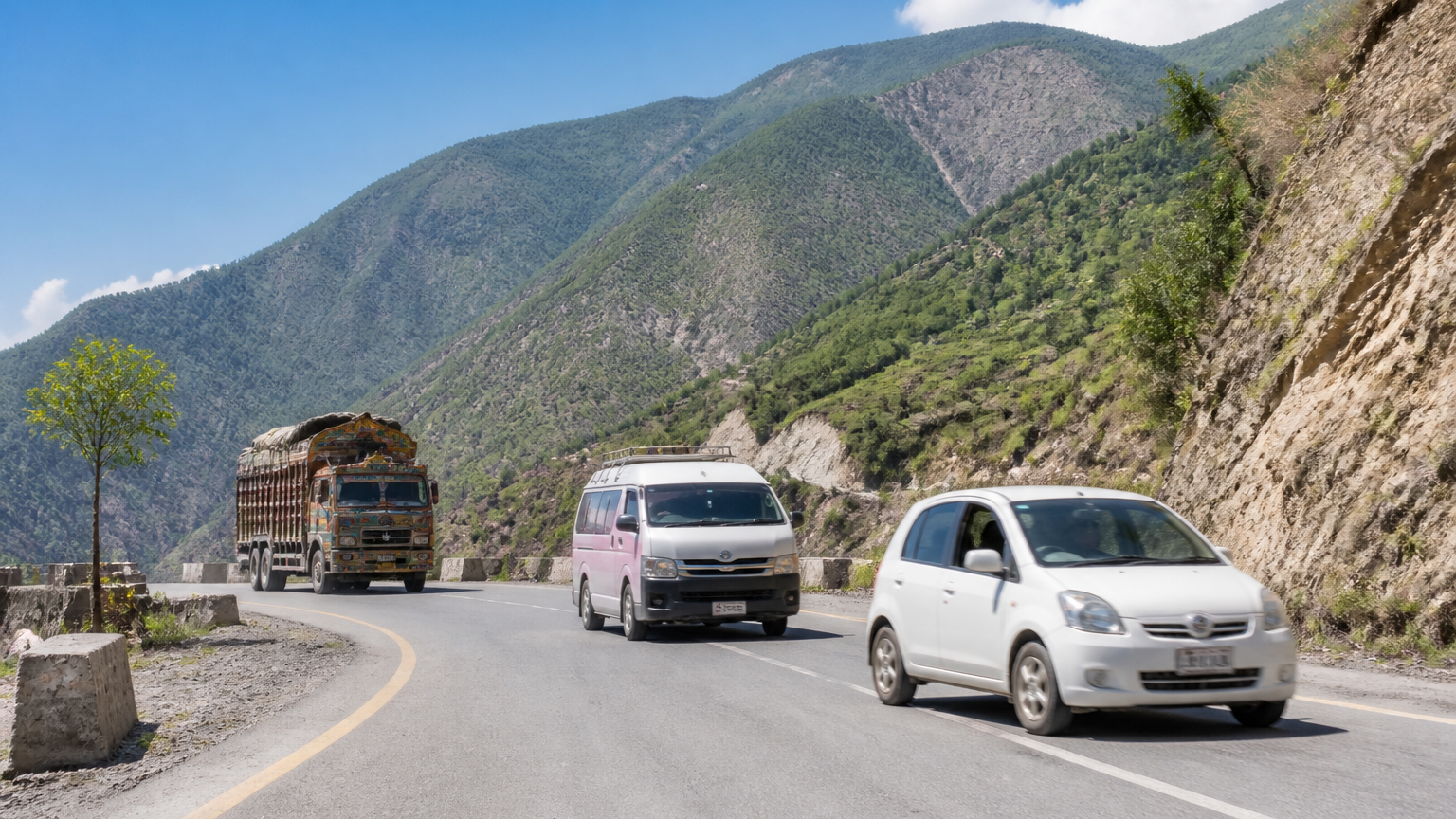
N-45 کے 17 ارب روپے کے چکدرہ–تیمرگرہ توسیعی منصوبے سے دیر اور چترال کا سفر آسان ہو سکتا ہے—لیکن تعمیرات اور آغاز کی تاریخ تاحال غیر مصدقہ ہیں۔
N-45 Upgrade: Rs17bn Chakdara–Timergara Project
N-45’s Rs17bn Chakdara–Timergara widening plan could ease Dir and Chitral travel—but construction and a start date remain unconfirmed.
کشمیر چوک اسلام آباد بند: متبادل راستے
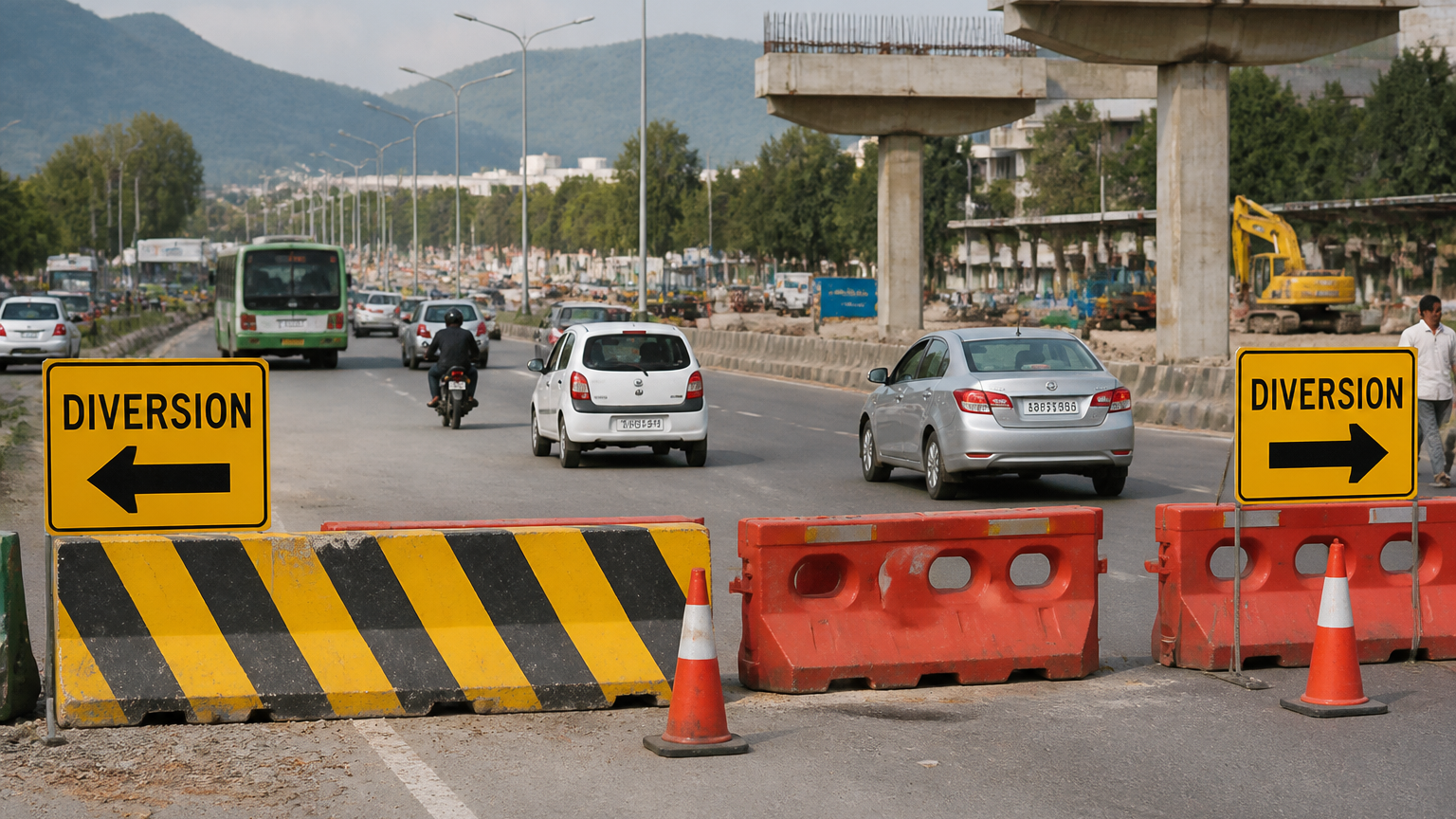
کشمیر چوک زیرِگزر کے کام کی وجہ سے مزید اطلاع تک بند ہے۔ بھارہ کہو، راول ڈیم چوک اور قریبی علاقوں کی جانب جانے والے ڈرائیورز متبادل راستے اختیار کریں۔