Karachi BRT Red Line Work Slows Again: Delays on Mosamiyat-Numaish and Hasan Square-Nipa Sections
Construction on Karachi’s Red Line BRT has slowed again. Major sections show little progress, with idle machinery and few workers visible. The Mosamiyat to Numaish stretch continues to face problems, while work between Hasan Square and Nipa stays halted due to K-IV water pipeline installation. Commuters face more traffic pain as uncertainty grows.
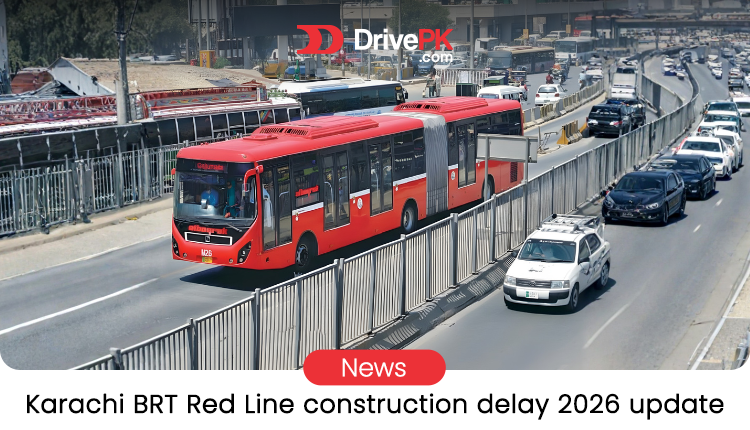
Table of Contents
- Mosamiyat to Numaish: The Biggest Stretch Still Struggling
- Hasan Square to Nipa: Stuck Because of K-IV Pipeline
- Traffic Pain and Daily Inconvenience
- Why These Delays Keep Happening
- What This Means for Karachi Commuters
- The Bigger Picture for Public Transport in Karachi
- What Needs to Happen Next
Karachi residents are once more dealing with slow progress on the long-awaited Red Line Bus Rapid Transit project. Recent ground checks show many parts of the corridor with almost no activity. Idle cranes, parked machinery, and very few workers have become common sights along key stretches.
This slowdown comes just weeks after earlier hopes of faster movement. The project, meant to ease daily commuting across one of the world’s busiest cities, keeps facing setbacks that affect everyone who travels on University Road and nearby areas.
Mosamiyat to Numaish: The Biggest Stretch Still Struggling
The section from Mosamiyat to Numaish forms the larger part of the Red Line corridor. This Lot-2 package has seen repeated troubles. Last year, work stopped for months because of payment disputes between the contractor and the authorities. Even after those issues were sorted, progress has not picked up as expected.
Right now, large parts of this segment look inactive. Only a handful of labourers appear on some days, and heavy equipment sits unused. People living or working nearby say the lack of visible movement is worrying, especially since this corridor runs through densely populated areas.
Hasan Square to Nipa: Stuck Because of K-IV Pipeline
One of the clearest hold-ups is between Hasan Square and Nipa Chowrangi. Construction here has stopped because workers are laying big 96-inch and 72-inch water pipelines for the K-IV project. These pipes run right under the planned BRT track, so both jobs cannot happen at the same time.
The K-IV work needs deep excavation, sometimes six metres down, while dealing with existing utilities like gas lines, sewers, and electric cables. Officials say they are trying to finish this phase quickly, but it has already added weeks of delay to the BRT schedule.
This overlap between two major projects shows a common problem in Karachi: poor coordination between different government departments. When water and transport works clash, ordinary people pay the price through longer travel times.
Traffic Pain and Daily Inconvenience
With construction sites barely moving, traffic on University Road and connecting routes has become heavier. Lanes stay narrowed or blocked for long periods. Commuters report spending extra hours in jams that were supposed to ease once the BRT started running.
The Red Line is designed as a 26.6 km dedicated corridor from Malir Halt to Numaish. When finished, it should carry thousands of passengers daily and reduce pressure on roads. But every month of delay means more congestion, more fuel burned, and more frustration for students, office workers, and families.
Some sections have seen better activity, like parts of the Mosamiyat flyover or certain elevated turns. Yet the overall picture remains patchy, with too many spots showing little to no forward movement.
Why These Delays Keep Happening
Payment issues, utility clashes, and design changes have troubled the project for years. The Red Line has already missed several deadlines. Earlier targets for completion slipped from 2025 to December 2026, partly due to objections from the Civil Aviation Authority and other complications.
In February 2026, the Sindh Chief Minister reviewed progress and pushed for faster work on mixed traffic lanes. Provisional payments were released to clear contractor claims. Still, fresh problems have surfaced, showing that one-time fixes are not enough.
Contractors and the Sindh Mass Transit Authority need to sort out the remaining disputes quickly. Better planning between the BRT team and the K-IV water team could also prevent future stops.
What This Means for Karachi Commuters
For now, there is no clear new completion date that everyone agrees on. Some updates suggest the full system could still need another 12 to 18 months after the current hurdles are cleared. That pushes reliable BRT service well into 2027 in the worst case.
People who use this route every day want straight answers. When will lanes reopen fully? When will buses actually start running? Until then, small relief measures like better traffic management at construction zones would help reduce daily stress.
The Bigger Picture for Public Transport in Karachi
Karachi desperately needs modern mass transit. The Red Line was supposed to be a game-changer for a city of over 20 million. Other cities in Pakistan have moved ahead with their own systems, while Karachi’s biggest BRT project keeps facing these repeated pauses.
The current slowdown raises valid questions about project management and coordination. Fixing these issues is not just about finishing one corridor. It is about showing that large infrastructure projects in Karachi can actually get done on time.
What Needs to Happen Next
Authorities should give regular public updates on exact progress and revised timelines. Clearing the K-IV pipeline work faster and resolving any leftover contractor payments would help restart momentum on stalled sites.
For residents, the best approach is to stay informed. Check official Sindh Mass Transit channels or trusted local news for any new announcements. In the meantime, plan extra time for travel on affected roads.
This latest slowdown is frustrating, but it does not have to define the whole project. If all sides work together, the Red Line can still deliver the relief Karachi needs. Until then, the idle stretches serve as a reminder that good planning and steady execution matter more than announcements alone. For more updates, visit DrivePK.com
Tags
Share this article
About the Author

Najeeb Khan
Automotive enthusiast and writer
Comments (0)
Login Required
You need to be logged in to comment on this article.
No comments yet. Be the first to share your thoughts!
Related Articles
Toyota Corolla Discontinued Before Pakistan Facelift
Pakistan’s pre-facelift Toyota Corolla is reportedly discontinued, hinting at a facelift. Prices, bookings, specs and launch timing remain unconfirmed.
DrivePK Car Inspection Reports: Buy with Confidence
Buying a used car in Pakistan? A pre-purchase inspection can reveal hidden damage, engine issues and red flags before you pay—but it’s not enough alone.
2028 Kia Sportage: Major Design Changes Spotted
Kia’s next Sportage may get a bolder, boxier redesign, with an upright profile, sharper lines, wider grille and split headlights hinted by spy shots.