Pakistan Budget 2026-27: Higher Taxes on Luxury Cars and EVs
The National Assembly approved the Federal Budget 2026-27 with big changes for vehicle owners. Luxury cars and expensive EVs now face higher duties and registration costs. This hits affluent buyers hard while aiming to boost revenue and the local industry. Here’s what it means for you.
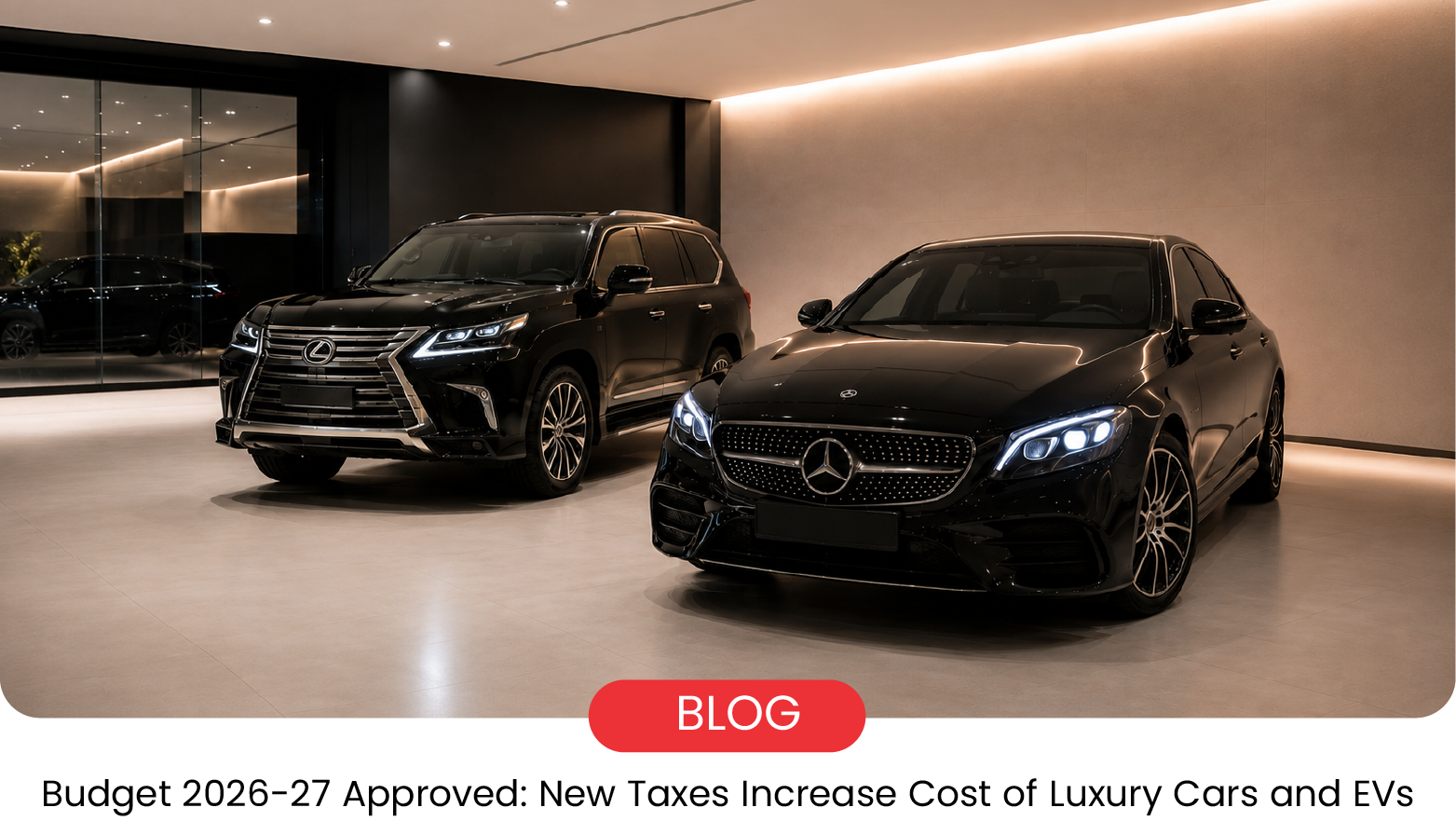
Table of Contents
- New Excise Duties on Imported Luxury ICE Vehicles
- Changes for Electric Vehicles
- Islamabad Token Tax Overhaul
- Why These Changes Matter Now
- How Buyers and Sellers Might Adapt
- Broader Picture for Pakistan’s Auto Sector
- Final Thoughts
The Federal Budget 2026-27 is now law. Among its many measures, the changes to vehicle taxes stand out. They target luxury imports and high-value electric vehicles. If you own or plan to buy a premium car, these updates will raise your costs.
Ordinary drivers with smaller cars may see little direct effect. But for those in the luxury segment, the impact is real. Let's break it down simply.
New Excise Duties on Imported Luxury ICE Vehicles
The government introduced a Special Excise Duty (SED) on imported internal combustion engine (ICE) vehicles.
- Vehicles with engine capacity between 2000cc and 3000cc now carry an additional 86% SED on top of the existing 30% Federal Excise Duty (FED).
- For vehicles above 3000cc, the SED jumps to 92% alongside the current 40% FED.
These rates add up quickly. Import duties already include customs, regulatory duties, and sales tax. The new layers make luxury SUVs and sedans significantly more expensive at the port.
Why this focus? The budget aims to increase revenue from high-end imports. Many such vehicles serve as status symbols. Taxing them helps the government meet its targets without broadly affecting everyday commuters.
Changes for Electric Vehicles
The blanket 0% FED incentive for imported, completely built-up (CBU) electric vehicles is gone. A new tiered system takes its place:
- EVs valued up to Rs. 20 million stay exempt.
- Those between Rs. 20 million and Rs. 30 million face 30% FED.
- EVs above Rs. 30 million attract 40% FED.
This shift protects more affordable EVs while hitting luxury ones. Local EV assembly gets continued support through extended exemptions on CKD kits until June 2027. The message is clear: support local manufacturing and green transport at accessible price points.
Some locally assembled EVs may still see other tax adjustments, like sales tax changes, which could push prices up modestly. Overall, the policy tries to balance revenue needs with environmental goals.
Islamabad Token Tax Overhaul
One often overlooked change affects owners in the capital. Islamabad has moved away from low fixed token tax rates for vehicles above 1000cc. The new model bases the tax on invoice value.
Typical new rates include:
- Up to 1000cc: Around Rs. 20,000 flat.
- Higher categories (especially above 2000cc): 0.25% to 0.35% of invoice value.
This means annual registration costs for luxury and mid-to-large vehicles will rise noticeably. For an expensive SUV, the difference could run into tens of thousands of rupees each year. Other provinces watch these changes closely, as similar adjustments sometimes follow.
Why These Changes Matter Now
Pakistan faces pressure to grow tax revenue. Luxury imports put a strain on foreign exchange reserves. By raising duties here, the government hopes to collect more while encouraging local production and sales of smaller or domestically assembled vehicles.
For buyers, timing matters. If you were considering a high-end import, costs will jump from July 2026 onward. Delaying or choosing a different category might save money. Those already owning such cars should budget for higher annual token taxes, especially in Islamabad.
On the positive side, support for local EV assembly continues. This could lead to more options and potentially better after-sales service over time. Pakistan’s auto market has been evolving, with growing interest in hybrids and electrics despite infrastructure challenges.
How Buyers and Sellers Might Adapt
Dealers and importers will adjust pricing. Expect negotiations on pre-budget stock. Some might highlight remaining exemptions for lower-value EVs.
Prospective owners should:
- Calculate total landed cost including all new duties.
- Compare imported vs. locally assembled options.
- Factor in higher running and registration expenses.
- Explore financing or used market alternatives.
The used car market could see shifts too. Prices for pre-budget luxury vehicles might hold or even rise temporarily as new imports become costlier.
Broader Picture for Pakistan’s Auto Sector
These measures fit into a larger effort to stabilize the economy. Tax collection targets remain ambitious. The auto industry contributes through manufacturing, jobs, and related services. Balancing imports with local growth is tricky but necessary.
Environmental angles also play a role. By protecting affordable EVs, the policy nudges toward cleaner transport. However, high taxes on luxury EVs may slow premium adoption in the short term.
Ordinary citizens care most about fuel prices, road conditions, and the affordability of basic mobility. These luxury-focused taxes probably won’t change daily commutes much. Still, they signal where the government sees revenue potential.
Final Thoughts
The Federal Budget 2026-27 makes luxury car ownership and imports more expensive in Pakistan. Higher SED and FED on big-engine vehicles and premium EVs, plus revised token taxes in Islamabad, change the numbers for many buyers.
If you’re in the market, do your homework now. Run the numbers carefully. For most people, these changes are background noise. For enthusiasts and high-net-worth individuals, they directly affect choices and budgets.
The auto landscape keeps shifting. Stay informed, compare options, and plan accordingly. What are your thoughts on these tax hikes? Do they make sense for the economy, or do they go too far? Share in the comments. For more updates, visit DrivePK.com
Tags
Share this article
About the Author

Najeeb Khan
Automotive enthusiast and writer
Comments (0)
Login Required
You need to be logged in to comment on this article.
No comments yet. Be the first to share your thoughts!
Related Articles
Islamabad Traffic Advisory: Roads Open, Red Zone Restricted
Islamabad and Rawalpindi roads are largely open, but expect delays near the Red Zone. Plan ahead for smoother commutes on September 22.
Karakoram Express Gets Passenger Facility Upgrade
Pakistan Railways is upgrading passenger facilities on the Karakoram Express, promising a better journey for families, students and frequent travellers.
ML-1 Railway Upgrade Cost Rises to $6.8 Billion
Pakistan’s ML-1 rail upgrade is pegged at $6.8bn, but phased plans aren’t approved funding. What’s confirmed—and what’s still uncertain?