Punjab Plans New Road Safety Measures on Highways
Punjab plans speed breakers, warning signs and reflectors near highways and sugarcane trolleys to curb night crashes during harvest season.
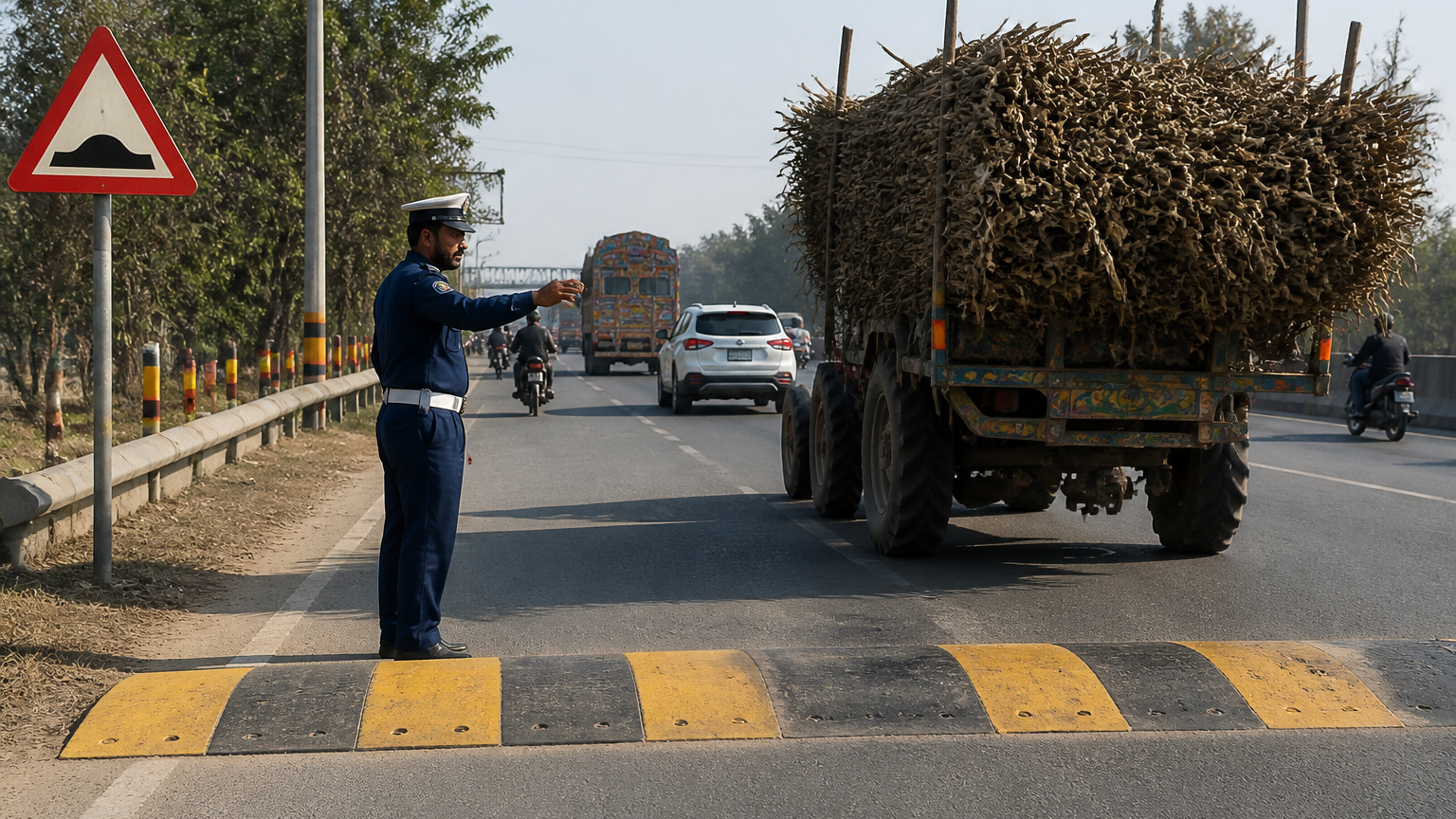
Table of Contents
- What Punjab is reportedly planning
- Why these junctions are getting attention
- How reflectors could help on sugarcane trolleys
- What drivers should do right now
- What still isn’t clear
- Conclusion
- Explore DrivePK services
A report published on November 5, 2026 said Punjab authorities are planning speed breakers on roads that connect smaller routes to major highways, along with warning signs and other safety steps at accident hotspots. The same report said reflectors may also be added to sugarcane tractor trolleys and roadside parking areas, as officials worry about night-time crashes during the harvest season, reportedly (a source report). For drivers, this matters most on dark junctions where a slow-moving trolley can be hard to spot until it’s too late.
What Punjab is reportedly planning
According to the report, Deputy Inspector General Traffic Waqas Nazir directed traffic teams to focus on roads where smaller local routes join faster-moving highways. The reported plan includes:
- speed breakers on selected connecting roads
- signboards at crash-prone points
- other safety steps at identified hotspots
- coordination between district traffic officers and the Punjab Highway Patrol (PHP)
- slow down near junctions and village link roads
The report also named Lahore-area roads and suburbs such as Kahna, Raiwind Road and Band Road as places getting special attention, but it did not provide a final district-wise list or an official rollout schedule. So while the direction is clear, the full implementation picture is still missing.
Why these junctions are getting attention
The risk is easy to understand. A smaller road joining a major highway can create a sudden conflict point, especially when traffic is moving at different speeds. That becomes even more dangerous in low light, when a driver may not notice a vehicle entering the highway until the last second.
The harvest season adds another layer. The same report estimated that around 10,000 tractor trolleys and trucks carry sugarcane to mills across Punjab each day during this period (a source report). That figure is a reported estimate, not an independently verified traffic count, but it does show why roadside safety is back in focus.
If you want a broader look at how Punjab has been dealing with road danger, our earlier report on Punjab Road Crashes Kill 464 in October 2026 shows how serious the wider problem can get.
How reflectors could help on sugarcane trolleys
The report said officials were told to install reflectors on sugarcane trolleys and at roadside parking areas. That makes sense for one simple reason: headlights bounce off reflective material, which helps drivers notice a slow or parked vehicle much earlier at night.
That said, reflectors are a warning aid, not a fix on their own. They won’t replace proper parking, safe road design, or careful driving. And the report does not confirm that all trolleys have already been fitted, only that the step was directed.
If you often drive in poor visibility, our guide on highway safety measures ordered amid landslides is useful background on how quick warning measures can change driver behaviour.
What drivers should do right now
Until there’s a confirmed implementation update, don’t assume every hotspot already has new signs or breakers. The safer move is to drive a little more defensively, especially on connecting roads and near sugarcane traffic.
Keep these habits in mind:
- avoid overtaking close to parked or slow-moving trolleys
- keep extra distance behind loaded agricultural vehicles
- watch the road edges for unlit or poorly marked vehicles
- use headlights wisely in darkness, fog or haze
- expect traffic to join the highway from smaller roads without much warning
- when the work will start
What still isn’t clear
The report does not confirm:
- which locations are officially approved
- whether speed breakers and signs have been funded or installed
- whether all sugarcane trolleys will be fitted with reflectors
- whether Punjab traffic police or PHP have published a formal implementation notice
So for now, this is best seen as a reported safety push, not a finished rollout.
Conclusion
Punjab’s reported plan focuses on two real risks: junctions where smaller roads meet highways, and the poor visibility of sugarcane trolleys during harvest season. That’s a smart place to start, but drivers shouldn’t assume the fixes are already in place until officials publish a proper rollout update. For now, slow down near known junctions, keep your distance from agricultural vehicles, and watch for fresh signage before you trust the road layout.
Explore DrivePK services
Buying or selling a vehicle? Explore DrivePK services, including car inspection, Sell It For Me and Featured Listings, and choose the option that fits your needs.
For more updates, visit DrivePK.com
Tags
Share this article
About the Author

Dr Khan
Automotive Expert & Content Strategist
Comments (0)
Login Required
You need to be logged in to comment on this article.
No comments yet. Be the first to share your thoughts!
Related Articles

پاکستان آٹو پالیسی 2026-31 میں $6bn برآمدی ہدف مقرر
پاکستان کی آٹو پالیسی 2026-31 کا ہدف $6bn برآمدات ہے، تاہم مجوزہ قیمت، بکنگ اور انجن لیویز کو ابھی کابینہ کی منظوری درکار ہے۔
Pakistan Auto Policy 2026-31 Sets $6bn Export Target
Pakistan’s Auto Policy 2026-31 targets $6bn in exports, but proposed price, booking and engine levies await cabinet approval.
پاکستان نے 45 نئی گاڑیوں کی حفاظتی معیارات شامل کر دیے
پاکستان نے اقوامِ متحدہ کے قواعد سے منسلک 45 نئے وہیکل سیفٹی اسٹینڈرڈز کا اعلان کیا ہے، تاہم نفاذ کی تاریخ اور متاثرہ گاڑیوں کی اقسام ابھی واضح نہیں۔