BYD Gharo Plant: Pakistan’s EV Revolution Takes Off
BYD's $150 million Gharo plant is nearing completion near Karachi, set to assemble 25,000 EVs yearly. Here's what it means for prices, jobs, charging infrastructure, and Pakistan's push toward 30% EV sales by 2030.
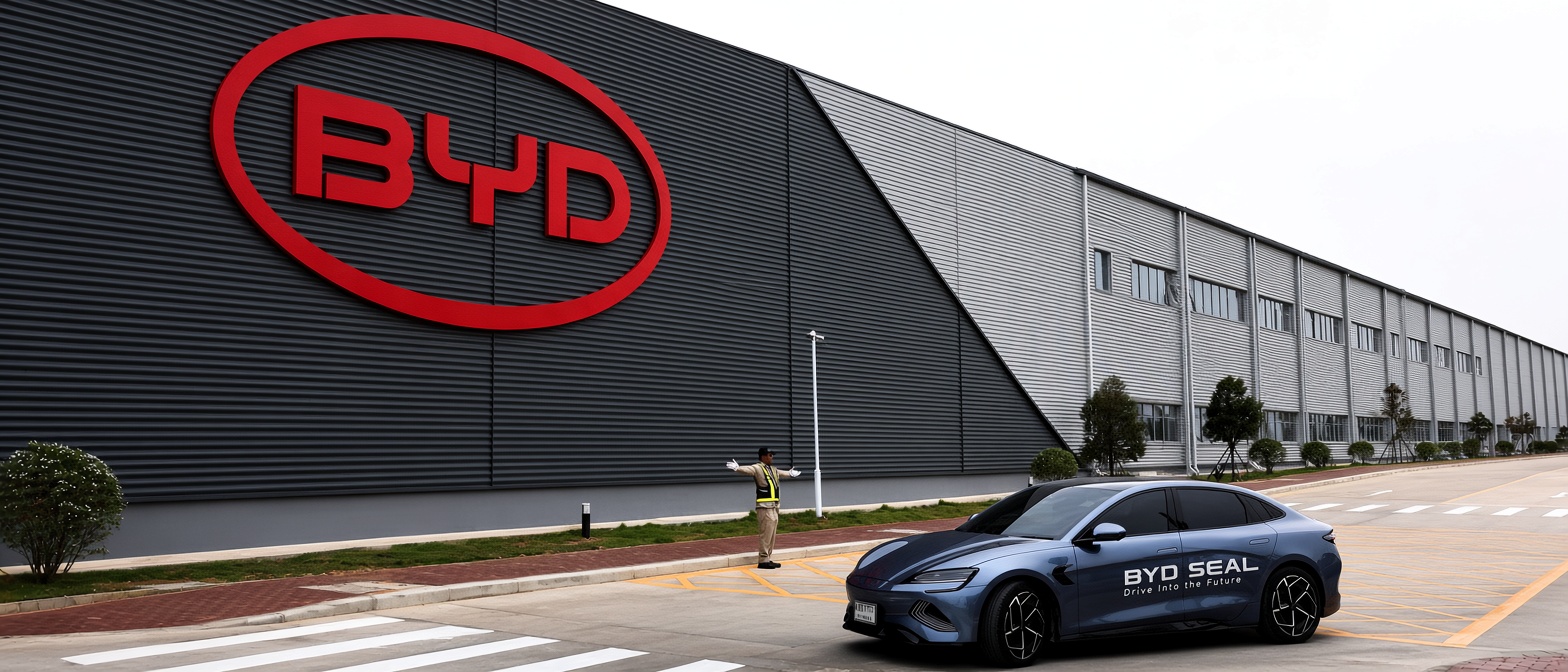
Table of Contents
- Why Gharo, of all places
- Who actually owns the plant
- A timeline that moved faster than most auto projects here
- What 25,000 cars a year actually means
- The charging problem, and what is being done about it
- Jobs, and what locals stand to gain
- The bigger picture: government policy is pushing in the same direction
- Where BYD stands against the competition
- The honest caveats
- What this means if you are actually shopping for a car
- What to watch next
If you have watched fuel prices climb for the last few years, you already know why this story matters. Every time petrol goes up, the same question comes back: is there a better way to drive without draining your wallet every week? For a growing number of Pakistanis, the answer is starting to look electric. And right now, the most talked-about piece of that shift sits on a stretch of land in Gharo, a small town in Thatta district, not far from Karachi.
BYD, the Chinese company that recently became the world's largest EV maker by volume, is building a $150 million assembly plant there. It is not a rumor or a marketing promise anymore. Construction is in its final stages, and the company says it wants to roll out the first Pakistan-assembled BYD vehicle before the year ends. The plant is expected to come online in the fourth quarter of 2026, with an annual production capacity of around 25,000 vehicles, though equipment validation, production trials and quality testing still need to happen before real production starts.
This piece walks through what is actually happening at Gharo, why the location was picked, what it means for your next car purchase, and where the rough edges still are. No hype, just what the facts show.
Why Gharo, of all places
A lot of people ask why BYD did not just build in Karachi's older industrial zones. The answer comes down to plain logistics. Gharo sits close to Port Qasim, in the same industrial belt where Toyota, Suzuki and Kia already run their assembly lines, which means BYD gets access to existing supplier networks, port infrastructure for importing parts, and roads that are already built, instead of starting from zero. The M-9 motorway also connects the site to markets beyond Karachi, and there was simply more open land available for a large facility and future expansion.
This is a purpose-built factory, not an old petrol-car plant converted for EVs. The Special Technology Zones Authority describes it as a hub built for advanced new energy vehicle manufacturing, one that combines assembly, testing, training and smart-factory systems, all placed close to Karachi's ports and industrial base. The site itself covers about 73.4 acres, according to STZA's own listing.
Who actually owns the plant
Here is something many readers get wrong. BYD does not own the Gharo facility outright. It is run by Mega Motor Company, a joint venture split 50-50 between Hub Power Holdings Limited, a subsidiary of HUBCO, Pakistan's largest independent power producer, and Mega Conglomerate, which is also HUBCO's biggest shareholder. BYD supplies the technology, the vehicle platforms, and the brand. MMC builds and runs the plant on the ground.
This structure is not unusual for how BYD expands abroad. It lets a local partner handle land acquisition, labor, and regulatory relationships, while BYD focuses on engineering and quality control. For Pakistan, it also means the investment carries local skin in the game, not just a foreign company testing the water.
A timeline that moved faster than most auto projects here
BYD first entered Pakistan's passenger vehicle market in 2024 through a partnership with local firm MMC. Back then the company was only selling imported, fully built vehicles. Local assembly was always the longer-term plan.
Work on the Gharo facility had been underway since early 2025, and by March 2026 BYD's VP for Sales and Strategy, Danish Khaliq, said the project was progressing on schedule. Khaliq had earlier said BYD planned to roll its first Pakistan-assembled car off the line by July or August 2026. That date slipped a bit, as these projects often do, but not by much. The company said the plant had been developed in under 18 months, calling it one of the fastest automotive manufacturing builds of its scale in the country. Khaliq framed the pace of construction as proof of BYD's long-term commitment to Pakistan's auto sector, not a quick in-and-out play.
By September 2026, the picture had firmed up further. BYD confirmed the plant's Q4 2026 launch window, alongside a report that 2,000 BYD vehicles arrived in Pakistan by ship on July 17, 2026, the company's biggest single shipment to the country so far. That shipment alone tells you demand is not theoretical. People are already buying these cars, even before local assembly begins.
What 25,000 cars a year actually means
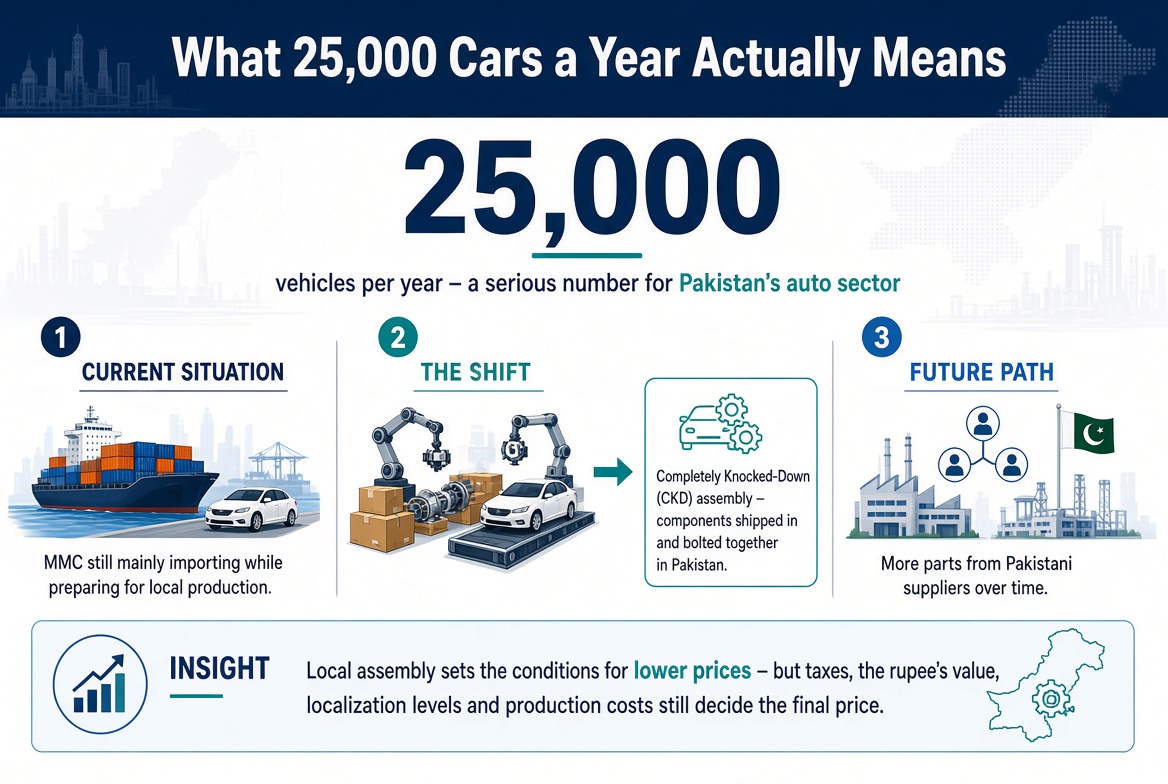
A capacity of 25,000 vehicles a year does not sound huge next to global carmakers, but for Pakistan's auto sector, it is a serious number. A PACRA report described the initial annual assembly capacity at around 25,000 units, forming a central part of MMC's plan to shift from imported vehicles toward fully local assembly, with localization increasing over time.
That last part matters more than the headline number. Right now, MMC still operates mainly on imported vehicles while it prepares for local CKD, or completely-knocked-down, assembly. CKD assembly means components ship in and get bolted together locally, rather than shipping a finished car. Over time, more of those parts are meant to come from local suppliers. PACRA notes this shift could improve the cost picture for BYD vehicles in Pakistan by cutting reliance on fully imported units, but whether that actually shows up in lower prices depends on localization levels, government policy, tax rates, exchange rates and production costs.
In plain terms: local assembly alone will not automatically make BYD cars cheap. It sets up the conditions for prices to come down, but taxes and the rupee's value still call the shots.
The charging problem, and what is being done about it
Owning an EV in Pakistan has always run into one wall fast: where do you charge it outside your own garage? BYD and its partners are trying to fix that before the plant even opens.
HUBCO Green Private Limited, working with BYD Pakistan, has installed 19 public fast-charging stations along a 1,300-kilometre corridor running from Karachi to Peshawar. The plan is to space stations every 200 to 250 kilometers along that route, with a target of 40 to 50 charging stations nationwide by the end of 2026.
That is a real start, but it is still thin coverage for a country this size. Fast, DC charging remains limited outside Karachi, Lahore and Islamabad, and while the government has talked about 3,000 stations by 2030, intercity travel today still needs careful route planning if you are driving an EV. So if you are thinking about buying one now, city driving is where an EV makes the most sense. Long highway trips are still a bit of a gamble unless you plan your stops.
Jobs, and what locals stand to gain
Beyond the vehicles themselves, the plant is meant to bring direct economic benefit to the area. The project is expected to create more than 1,100 jobs and contribute to building up Pakistan's broader automotive manufacturing base. The government's Finance Division noted in June 2026 that BYD and MMC had laid out plans involving technology transfer and skills development tied to the Gharo site.
This is the part that often gets skipped in car news but matters most to the people living near Thatta. A modern assembly line does not just employ line workers. It pulls in technicians, quality inspectors, logistics staff, and eventually a supplier ecosystem around it, the same way Toyota and Suzuki's presence built up smaller parts businesses around their own plants over decades.
The bigger picture: government policy is pushing in the same direction
None of this is happening in isolation. Pakistan's government has been leaning hard on EV adoption as a way to cut its fuel import bill, which has been a persistent drain on foreign reserves.
The country's National Electric Vehicle Policy 2025–30 sets a target of getting 30% of all new vehicle sales to be electric by 2030. Officials estimate this transition could save 2.07 billion liters of fuel a year, worth close to $1 billion in foreign exchange, while cutting carbon emissions by 4.5 million tons and lowering healthcare costs linked to pollution by about $405 million annually. A parallel Auto Policy 2026 push has set a broader goal of 2.2 million EVs on Pakistani roads by 2030, alongside easing import rules and trade facilitation.
The subsidy money so far has mostly gone toward two-wheelers and rickshaws rather than cars. The government allocated Rs. 9 billion for the 2025-26 fiscal year to subsidize 116,053 electric motorbikes and 3,171 electric rickshaws, with a quarter of that reserved for women, and a total of over Rs. 100 billion planned across five years. Passenger EVs like the ones coming out of Gharo are not directly subsidized in the same way, but they benefit from the overall policy direction and the customs and tax structure being shaped around it.
Prime Minister Shehbaz Sharif has personally pushed this agenda, chairing meetings to speed up EV adoption as part of a wider strategy to cut fuel imports and improve energy security. By mid-2026, the government was reviewing its Auto and Auto Parts Policy specifically to align it with the EV roadmap, as officials looked at ways to strengthen domestic manufacturing, create jobs and support exports.
So Gharo is not just one company's bet. It sits right inside a policy push that the government is actively trying to build momentum behind.
Where BYD stands against the competition
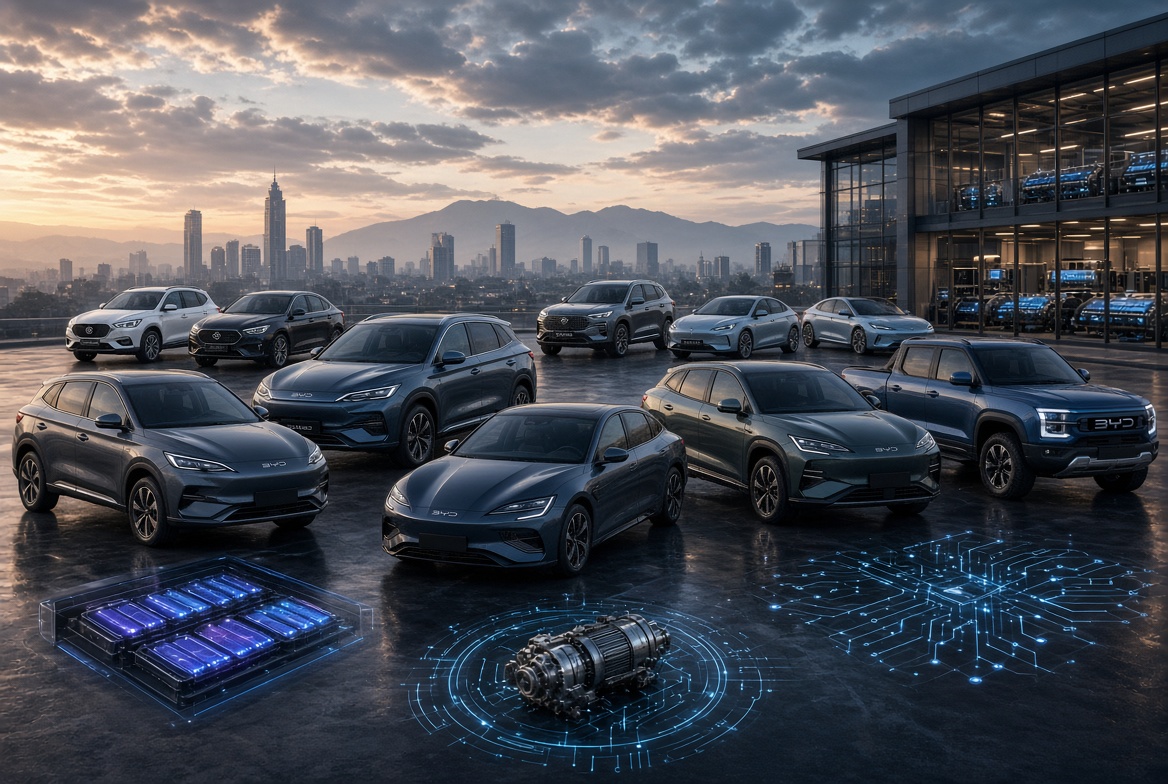
BYD is not walking into an empty market. The brand already sells the Atto 2, Atto 3 SUV, Seal sedan, Sealion 7, and the Shark 6 plug-in hybrid pickup in Pakistan. But other brands are moving too, and some are moving fast.
Industry trackers counted roughly 23 new vehicle launches planned for Pakistan between June and December 2026 alone, including nine full EVs and eleven plug-in hybrids, which shows how quickly the electrified segment is filling up. MG has been especially aggressive, with models like the ZS EV, Binguo, and newer IM5 and IM6 electric cars entering the market. Haval brought its H6 plug-in hybrid to Pakistan through local assembly by Sazgar Engineering, positioning itself in the premium hybrid SUV space with combined range past 1,000 kilometers. Hyundai has pushed models like the Ioniq 5 and Ioniq 6, and Kia's entry into the EV segment has been the subject of ongoing speculation.
What sets BYD apart right now is scale and vertical integration. The company builds its own batteries, its own motors, and increasingly its own chips, which is part of why it can undercut rivals on price globally. BYD's own claim is that its EV powertrain and Blade battery technology can cut fuel and running costs by up to 75% compared to traditional petrol cars, though that figure comes from the company itself and should be read with the usual caution reserved for manufacturer claims. Whether that number holds up in Pakistan's specific driving and charging conditions is something buyers will judge for themselves once local units are on the road in volume.
The honest caveats
It would be misleading to present this as a done deal with no rough patches left. A few things are worth keeping in mind before getting too excited.
First, pricing is still an open question. Local assembly reduces some costs, but Pakistan's import duties, taxes, and a currency that has been under pressure for years all play a role in what a car actually costs a buyer. Nobody, including BYD, has locked in final local pricing yet.
Second, the plant still depends on imported components at the start. The facility is initially dependent on imported batteries, motors and control units, meaning true local content will build up gradually rather than overnight.
Third, charging infrastructure, while improving, is still concentrated along one major corridor. If you live off that Karachi-Peshawar route, your daily charging options remain limited for now.
And finally, timelines in Pakistan's manufacturing sector have a habit of slipping. The plant has already moved from an initial mid-2026 target to Q4 2026. A few more months of delay would not be shocking, given how these projects usually go anywhere in the world.
What this means if you are actually shopping for a car
If you are on the fence about an EV, here is the practical read. Local assembly at Gharo should, over time, bring BYD's prices down from where imported units currently sit, though how much and how fast is still uncertain. Charging is workable if you live in or near Karachi, Hyderabad, or along the main highway corridor, and it stays inconvenient elsewhere for now. Running costs for EVs are genuinely lower than petrol cars, even accounting for Pakistan's patchy grid, because electricity per kilometer still costs less than fuel per kilometer in most cases.
If your driving is mostly city-based and you can charge at home or work, an EV from this new wave of local assembly is worth serious consideration. If you drive long distances between cities regularly, it makes sense to wait until the charging network fills in a bit more, or to look at plug-in hybrid options like the Shark 6 or H6, which do not depend on charging infrastructure at all.
What to watch next
The next few months will tell us a lot. Watch for the actual rollout of the first Gharo-assembled vehicle, the pricing announcement that comes with it, and whether the charging network expansion keeps pace with the 40 to 50 station target for the end of 2026. Also worth tracking is how the government's Auto Policy 2026 review lands, since tax and duty changes there will shape pricing across every EV brand in the country, not just BYD.
Pakistan's EV story is still early. But a $150 million factory going up in Gharo, backed by one of the country's largest power companies and one of the world's biggest EV makers, is not a small signal. It is one of the clearest markers yet that electric cars here are moving from a niche import to something built, sold, and serviced closer to home. For more updates, visit DrivePK.com
Tags
Share this article
About the Author

Najeeb Khan
Automotive enthusiast and writer
Comments (0)
Login Required
You need to be logged in to comment on this article.
No comments yet. Be the first to share your thoughts!
Related Articles
Arcfox T1 and T5 EVs Coming to Pakistan via SAZEW
SAZEW may bring Arcfox’s T1 EV and T5 REEV to Pakistan, but reports point only to samples arriving soon—not a confirmed retail launch yet.
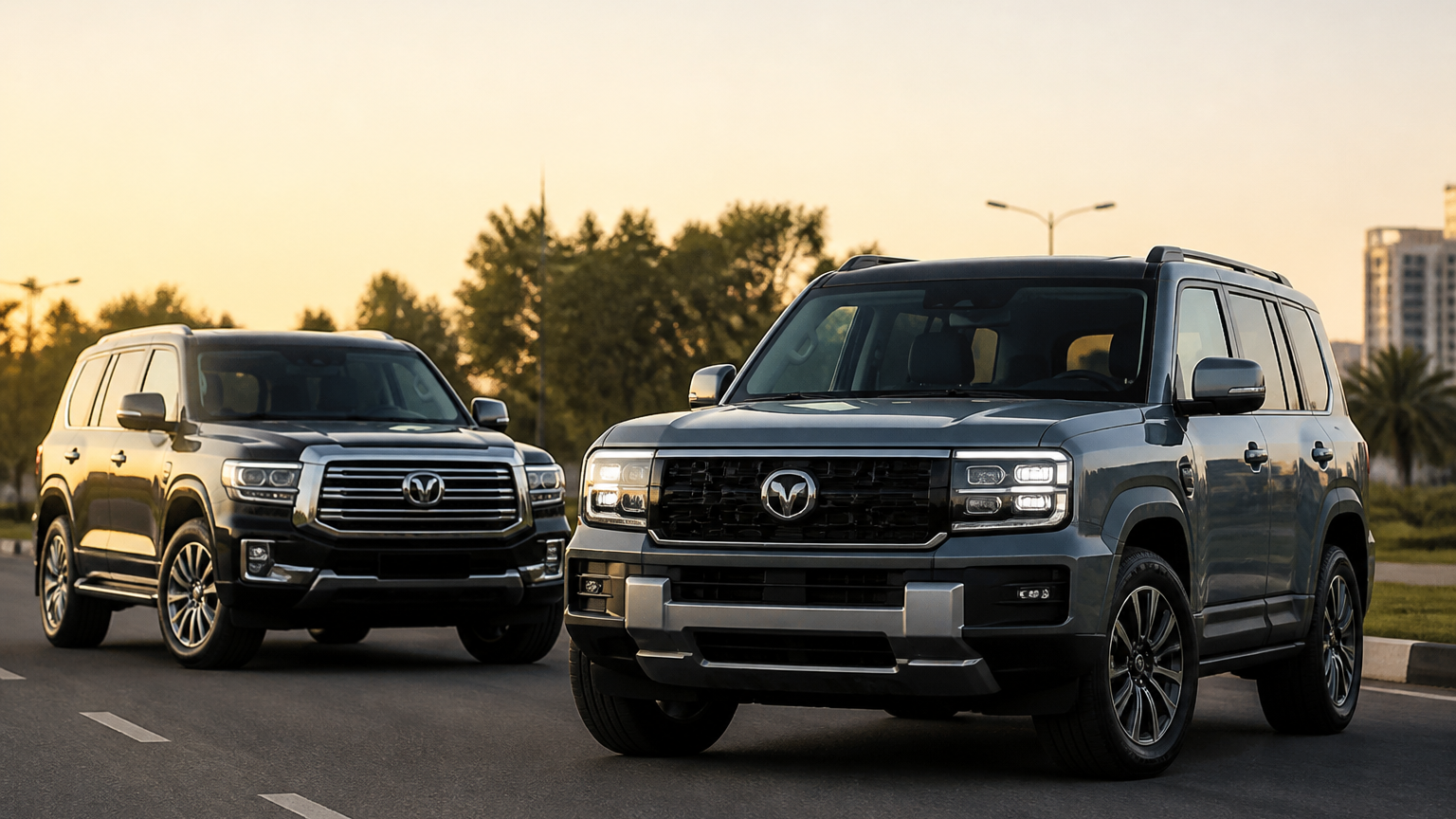
Denza B8 vs Tank 500 PHEV: Which SUV Wins?
Denza B8 debuts in Pakistan, promising more power, luxury and space—but with no price or launch date, can it beat the available Tank 500 PHEV?
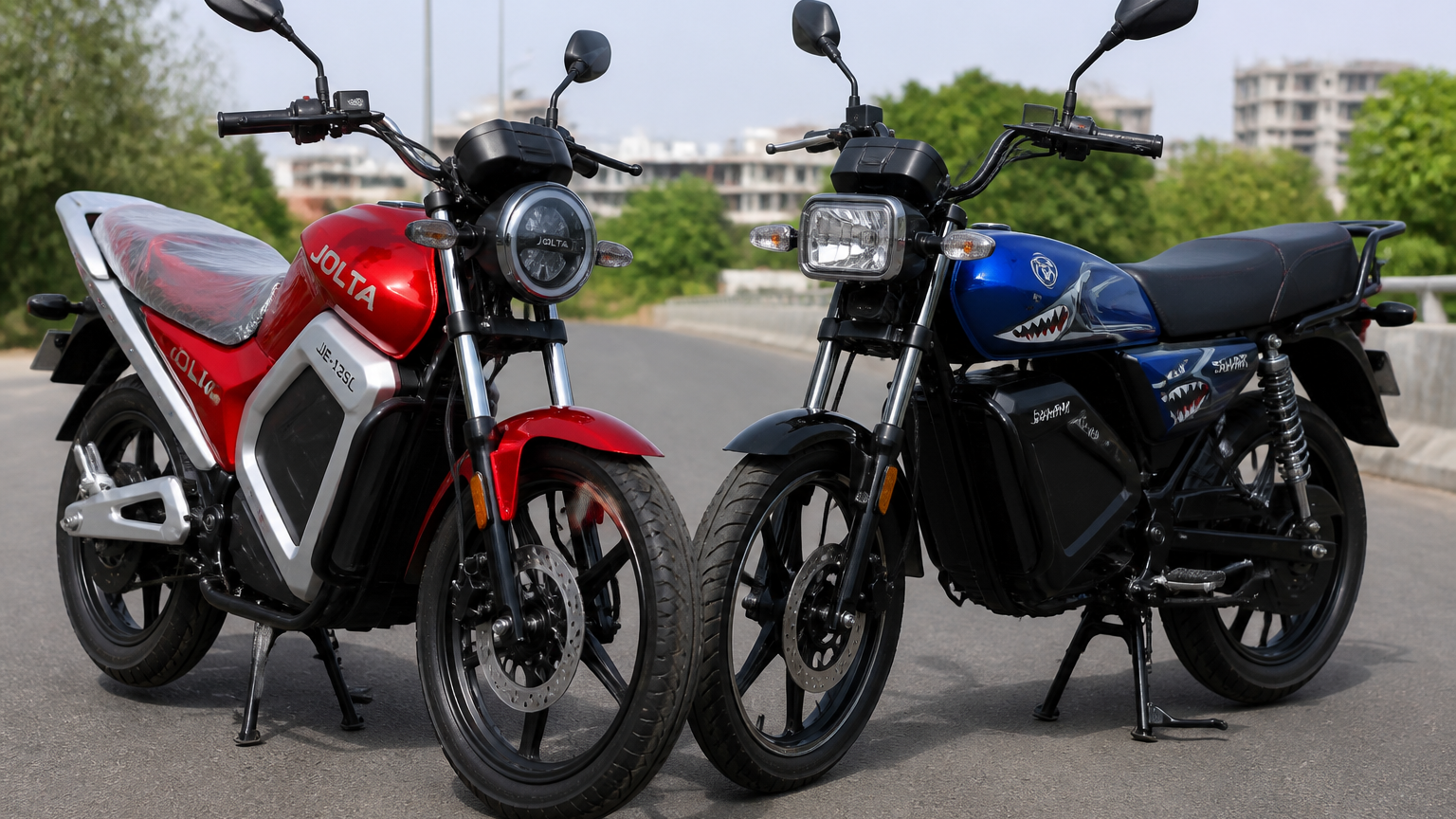
Jolta JE-125L vs Super Star Shark: Which Wins?
Jolta JE-125L and Super Star Shark cost nearly the same, but warranty, battery costs, service and daily usability could decide Pakistan’s EV winner.