How Budget 2026-27 Sabotaged Pakistan's Hybrid & EV Future Before It Launched
Pakistan's Budget 2026-27 lets EV and hybrid tax exemptions expire on June 30, 2026, just as the auto market surged 51.8% YTD. Hybrid prices could jump Rs 4–17 lakh. The same government promising 30% EVs by 2030 just priced them out for the middle class.
Table of Contents
- The Promise Pakistan Made And What the Budget Did to It
- What Expires on June 30 In Plain Language
- Model-by-Model: What Buyers Could Be Paying From July
- The Payback Period Problem Nobody's Talking About
- The IMF Contradiction That Nobody in Islamabad Will Say Out Loud
- Pakistan Also Receives Climate Finance While Taxing Climate-Friendly Cars
- What's Actually in the Budget: The Fine Print
- The ICE Industry Benefit That Nobody's Saying Out Loud
- The 50km Rule Loophole and What It Reveals
- What Should Have Happened: Revenue-Neutral Alternatives
- What Happens Next: Predictions
- Frequently Asked Questions
- Will hybrid car prices definitely go up from July 1, 2026?
- Which cars are most affected?
- What about EVs under Rs 10 million?
- Are electric bikes affected?
- Can the government reverse this after July 1?
- The Straight Truth About What This Budget Signals
- Pakistan Green Mobility Mission (PGMM) and the Road Ahead
Imagine this. You book a Toyota Corolla Cross HEV in May. The price is manageable partly because the government charges only 8.5% GST on hybrids. You make the down payment. You wait for delivery.
Then July 1 arrives.
Your invoice comes in Rs 9 to 17 lakh higher than what was quoted. The exemption that made the price possible expired on June 30. And nobody in the showroom told you that it was even on the table.
This isn't hypothetical. It's where Pakistan's hybrid and EV buyers are standing right now, caught between a government that announced a 30% EV target by 2030 and a budget that quietly let the foundation for that target crumble.
The Promise Pakistan Made And What the Budget Did to It
In June 2025, Pakistan launched the New Energy Vehicle (NEV) Policy 2025–2030. The stated goal: 30% of all new vehicle sales in Pakistan should be electric by 2030, rising to 90% by 2040.
That's an enormous ambition for a country where, as recently as 2021, only 567 electric vehicles were on the road. The government backed it with real numbers, plans for 3,000 charging stations, fiscal incentives for local assembly, and concessional tax rates that actually brought buyers in.
And buyers responded. Pakistan's auto market grew 51.8% year-on-year through the first months of 2026. The Haval H6 alone grew 74%. Hybrid SUVs like the Corolla Cross and Hyundai Tucson Hybrid became mainstream choices, not niche products.
But there was always a clock ticking underneath the policy.
Every major tax concession that made EVs and hybrids affordable was tied to the Automotive Industry Development and Export Policy (AIDEP) 2021–26, a policy that expires on June 30, 2026.
Budget 2026-27 didn't extend its core. And that's the problem.
What Expires on June 30 In Plain Language
Three major concessions disappear simultaneously when the calendar flips to July.
The 1% sales tax on locally assembled EVs covering small cars, SUVs, and light commercial vehicles with battery capacity up to 50 kWh ends. The replacement rate is the standard 18% GST. That's a 17-percentage-point jump, overnight.
The sales tax exemption on CKD (completely knocked down) kits imported by local EV manufacturers also ends on the same date. This hits companies like the assemblers of the Deepal S05 directly, since their cost economics were built around that exemption.
The 1% sales tax on four-wheeler EVs from local manufacturers, which allowed companies to price competitively, lapses, too.
For hybrids, the situation is officially described as "unchanged." But that description hides a major uncertainty: Budget 2026-27 was presented without clearly stating whether the concessional 8.5% GST on hybrids would continue beyond June 30 when AIDEP expires. Automakers, dealers, and buyers are all waiting for clarification.
The worst-case scenario, which the IMF has been pushing for, is a jump from 8.5% to 18% on hybrid vehicles. If that happens, price increases range from Rs 400,000 on entry-level hybrids to Rs 1.7 million on larger models.
Model-by-Model: What Buyers Could Be Paying From July
Let's put numbers on this.
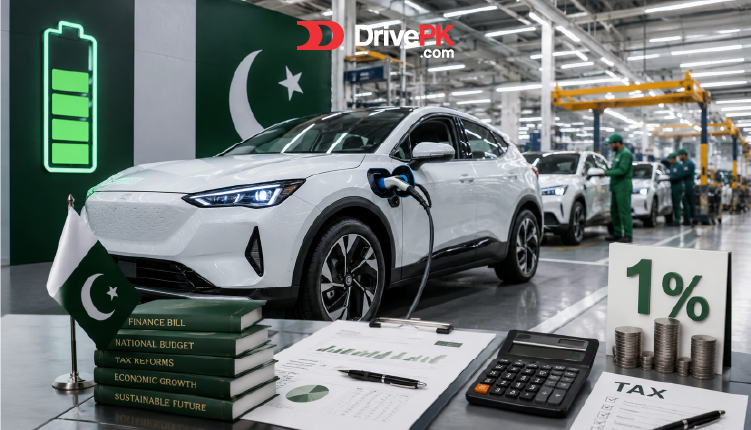
Toyota Corolla Cross HEV is currently one of Pakistan's fastest-growing hybrid cars. At today's 8.5% GST, it carries a price its buyers can work around. If GST rises to 18%, expect Rs 9–12 lakh added to the invoice without any change in the car itself.
Haval H6 HEV and PHEV the H6 HEV is currently priced from around Rs 91 lakh. A GST jump to 18% could push the effective on-road price up by Rs 12–17 lakh, depending on the variant. For the PHEV variant, which also carries a higher engine-size-based rate of 12.75%, the increase stacks further.
Deepal S05 Pakistan's only locally assembled REEV (range-extended electric vehicle). Currently benefits from the 1% sales tax concession. If that expires without renewal, its sales tax goes from 1% to 18% a 17% hike that would be passed directly to the buyer.
Imported EVs with battery capacity below 50 kWh, their current 12.5% rate rises to 18%, a 5.5% increase. Models like the BYD Atto 3, MG ZS EV, and Dongfeng Vigo E fall into this territory.
Imported EVs with batteries above 50 kWh are already at 18% GST, so no new hit from this specific change.
The Payback Period Problem Nobody's Talking About
One reason buyers stretched their budgets for a Corolla Cross HEV or Haval H6 HEV was simple math: higher upfront cost, lower running cost, break-even in a few years.
That math is changing.
At current fuel prices and with hybrid premiums priced around the 8.5% GST regime, the payback period on a hybrid SUV over an equivalent ICE vehicle is already 7+ years for many buyers. At 18% GST, the price premium widens enough that the payback period extends well beyond a decade for mid-range hybrids.
A 10–11 year payback period on a car that might be worth half its value in 8 years is not a compelling financial case. And Pakistani buyers know it.
The IMF Contradiction That Nobody in Islamabad Will Say Out Loud
Here is where things get genuinely strange.
Pakistan is currently in a $7 billion IMF Extended Fund Facility program. The IMF's revenue demands are the primary reason the government cannot simply extend EV and hybrid exemptions; the FBR needs to collect Rs 15.3 trillion in FY2026-27, a 14% jump over the current year.
The IMF pushed hard for raising GST on hybrid vehicles to 18% and bringing EVs under the standard 18% regime. Finance officials, under pressure to show revenue mobilization, leaned in that direction.
But here's the contradiction: in its own third review report for Pakistan published in May, the IMF explicitly recommended that Pakistan adopt a "revenue-neutral scheme including a subsidy for EVs and a supplementary tax on internal combustion engine vehicles." The same institution that told Pakistan to protect EVs with subsidies is also the one demanding they be taxed at 18%.
The Ministry of Industries recognized this contradiction and pushed back. Officials argued that if hybrids already get 8.5% GST, applying 18% on fully electric vehicles creates a perverse incentive; it's cheaper to buy a hybrid that still burns fuel than a car that doesn't burn any.
But the Ministry of Industries doesn't control the budget. The FBR does. And the FBR has Rs 15.3 trillion to find.
Pakistan Also Receives Climate Finance While Taxing Climate-Friendly Cars
There's a second layer to this contradiction that deserves attention.
Pakistan has been engaging in climate-finance negotiations with the IMF as part of its $1.4 billion Resilience and Sustainability Facility (RSF), which is specifically tied to green policy commitments. Officials have briefed the IMF on plans to build 3,000 EV charging stations and reduce transport emissions.
At the same time, the budget is removing the primary incentive that drove EV and hybrid adoption in the first place.
Countries like India and Vietnam have taken a different approach. India has maintained concessional GST on EVs at 5% and raised production-linked incentives even as its own fiscal position has been under pressure. Vietnam structured its EV incentives around local manufacturing milestones rather than flat expiry dates, giving the industry time to localize before concessions unwound.
Pakistan's approach set a 5-year policy, let it expire on a fixed date regardless of market readiness, then negotiate with the IMF about what to do next, which creates exactly the kind of policy uncertainty that stops investors from committing.
BYD's $200 million Karachi plant, built with local partner Mega Motor Company, was a signal that major Chinese manufacturers believed in the policy environment. If that environment changes abruptly post-June 30, future investment decisions will be made with this episode in mind.
What's Actually in the Budget: The Fine Print
The budget isn't uniformly hostile to green vehicles. Some things did make it through.
Concessional customs duties on CKD kits for EV assembly have been extended to June 30, 2027, by one more year. Rates stay at 1% on specific EV-unique parts, 10% on non-localized components, and 25% on parts that have already been localized.
Sales tax relief for locally manufactured EVs also remains in place for the CKD route specifically. And electric two-wheeler bikes and scooters escaped the tax shock entirely. The 1% customs duty relief for e-bikes was preserved, which matters given that Pakistan has over 30 million motorcycles on the road.
But these are component-level concessions. They help assemblers manage costs. They don't directly address the consumer-facing price increase that a GST jump to 18% on the finished vehicle creates.
The luxury end also took a hit. EVs and hybrids with large displacement imports face higher Federal Excise Duty under the budget's "luxury vehicle" framing. This is politically defensible; the government can say it's taxing the elite, not the middle class. But in practice, several popular hybrid SUVs that middle-income buyers stretch for land in that category.
The ICE Industry Benefit That Nobody's Saying Out Loud
There's a stakeholder in this story that benefits from every stumble in Pakistan's EV transition: the existing internal combustion engine (ICE) auto industry.
Local assemblers of conventional petrol cars, many operating under decades-old protection, have lobbied consistently against policy changes that would upend their cost structures. A liberalized EV import regime, or aggressive EV incentives, threatens the market share they've built without serious competition.
When EV exemptions expire, and hybrid prices jump, some of those buyers go back to ICE alternatives. They pick a Honda City or Suzuki Cultus over a Corolla Cross HEV when the price gap widens. And the conventional assembly lines keep running at volume.
This isn't a conspiracy; it's how legacy industries work everywhere. But it's worth understanding whose interests align with an EV policy that sounds ambitious in press conferences and underwhelms in execution.
The 50km Rule Loophole and What It Reveals
Pakistan's NEV policy includes a provision requiring that PHEVs demonstrate a minimum 50km electric-only range to qualify for concessional NEV treatment. This sounds technical, but it has real consequences.
Most PHEVs available in Pakistan today can manage 50–80km on a full charge in real-world conditions. But the 50km rule, combined with Pakistan's inconsistent grid reliability and underdeveloped charging infrastructure, means many PHEV owners use their cars primarily as conventional hybrids in practice.
The rule is good policy in theory; it ensures PHEVs actually function as electric vehicles rather than just marketing labels. But when the charging infrastructure isn't there to support it, the rule creates a compliance gap without a practical solution for the owner.
It's also a potential policy lever. If the government decides to apply the 50km rule strictly at the GST classification level, some currently-concessional PHEVs could find themselves reclassified into higher tax brackets with no change to the car itself, only the measurement framework.
What Should Have Happened: Revenue-Neutral Alternatives
The government didn't have to choose between fiscal consolidation and green transition. Some paths could have served both.
Revenue-neutral ICE taxation: exactly what the IMF's own review report recommended. Add a supplementary levy on conventional petrol cars (say 1–2%) and use the proceeds to cross-subsidize EV concessions. You collect the same revenue, but shift the incidence onto the sector you want to discourage rather than the one you want to grow.
Charging infrastructure levy: a small fee on fuel at the pump, ring-fenced specifically for EV charging station buildout. This keeps fuel revenue up while funding the infrastructure gap that's a bigger barrier to EV adoption than vehicle pricing alone.
Phased transition on concessions: instead of hard expiry on June 30, a stepped reduction. Drop hybrid GST from 8.5% to 10% in FY27, then 12% in FY28, rather than a cliff edge to 18%. The market adjusts; the revenue still increases; buyers don't feel robbed mid-booking.
Parts duty cuts for local assembly: if the goal is to develop a domestic EV industry, cutting duties on battery management systems, power electronics, and motors would have lowered assembly costs and indirectly lowered consumer prices without touching the GST structure that the IMF is watching closely.
None of these was politically easy. But they were technically available.
What Happens Next: Predictions
July 2026: Hybrid car prices at dealerships rise across the board as AIDEP exemptions expire and the GST ambiguity resolves, likely unfavorably for buyers. Booking rushes in June slow the visible impact temporarily, but the invoice prices tell the real story.
By the end of 2026, EV sales numbers, which were showing early momentum, plateaued. The Deepal S05 faces a pricing reset that pushes it above the range where its value proposition made sense for the buyer it was targeting.
Mid-2027: At least one major Chinese EV assembler publicly cites "policy instability" as a factor in investment planning decisions. This becomes the kind of statement that gets picked up in regional automotive media and signals to others watching from the sidelines.
Auto Policy 2026–31: If the draft auto policy that's been circulating is finalized with the PHEV-at-1%-GST provision intact, it could partially reverse the damage but only for plug-in hybrid buyers, not conventional HEV buyers or those who got caught in the June 30 cliff.
The 30% NEV target by 2030: It doesn't get abandoned officially. But the trajectory needed to hit it roughly 250,000+ NEV sales per year by 2029-30, up from current negligible EV numbers, becomes much harder to justify as realistic.
Frequently Asked Questions
Will hybrid car prices definitely go up from July 1, 2026?
The uncertainty itself is the problem. The budget was presented without explicitly stating whether the 8.5% GST on hybrids continues post-June 30. Dealers are unable to give firm pricing for vehicles delivered after July 1. If the exemption isn't extended or codified, the default is the standard 18% rate.
Which cars are most affected?
Hybrids with petrol engines below 1,500cc currently attract 8.5% GST. Those above 1,500cc already pay 12.75%. If the standard rate applies, both categories move to 18%. The biggest price jumps in absolute terms hit the Corolla Cross HEV, Haval H6 HEV and PHEV, Hyundai Santa Fe Hybrid, and GWM Tank 500 PHEV.
What about EVs under Rs 10 million?
Models like the JMEV EV3 and entry-level BYD products with battery capacity below 50 kWh face a GST increase from 12.5% to 18%. For a vehicle priced around Rs 8 million, that's over Rs 1 million added.
Are electric bikes affected?
No. Electric two-wheelers were explicitly protected in this budget. The 1% customs duty relief stays intact for bikes and scooters.
Can the government reverse this after July 1?
Technically yes, through a supplementary finance bill or SRO. Politically, once revenue has been budgeted at the higher rate, reversing it without finding a replacement source is difficult in a tight IMF program.
The Straight Truth About What This Budget Signals
The government argues that exemptions were always meant to be temporary training wheels for an industry that should eventually stand on its own. That's a legitimate position.
But the EV industry in Pakistan hasn't stood on its own yet. It's still in the training wheels phase. The charging infrastructure is thin. Local battery production is near zero. Consumer confidence in resale values is uncertain. The policy environment that major manufacturers committed to when they announced Pakistan plants was a low-tax, high-incentive environment.
Removing those incentives before the industry has the depth to absorb the change doesn't force maturity. It forces retreat.
And here's the part that should bother everyone outside the auto industry:
The buyer who can't absorb a Rs 12 lakh price increase on a Corolla Cross HEV doesn't buy an EV or a hybrid next. They buy a used Japanese import from the grey market, or they stretch for a Suzuki Alto or a second-hand Civic. They keep driving on petrol. They keep contributing to the fuel import bill that the NEV policy was designed to reduce.
This budget didn't tax the elite. The elite will absorb higher prices on their luxury EVs and move on. What this budget did was push the aspirational middle-class buyer back toward the inefficient used car market.
That's not an anti-EV policy. It's not a pro-environment policy either. It's a fiscal squeeze that redirects the burden downward, dressed in the language of policy rationalization and green transition commitments that nobody in the room is actually held accountable for keeping.
The 30% NEV target by 2030 is still on the government's website. The exemptions that could have gotten it there expired June 30, 2026.
And that is the most honest summary of Budget 2026-27's relationship with Pakistan's green future.
Pakistan Green Mobility Mission (PGMM) and the Road Ahead
While Budget 2026-27 has let critical EV and hybrid tax exemptions expire, undermining the NEV Policy’s 30% target by 2030, the Pakistan Green Mobility Mission (PGMM) stands as a vital platform for recovery. The EV Expo & Green Mobility Conference, scheduled for 29– 30 June 2026 at Pak China Friendship Center, Islamabad, will bring together policymakers, industry, and investors to strengthen coordination, accelerate infrastructure, and push for policy alignment on localization, finance, and market development. PGMM’s structured pillars offer the implementation framework needed to counter the budget’s fiscal squeeze and revive green mobility momentum.
Mark your schedule: Stakeholders must attend the conference to demand urgent policy continuity and stronger incentives. Register now via 0335 777 7466 and help turn Pakistan’s green ambition into coordinated action.
Tags
Share this article
About the Author

Najeeb Khan
Automotive enthusiast and writer
Comments (0)
Login Required
You need to be logged in to comment on this article.
No comments yet. Be the first to share your thoughts!
Related Articles
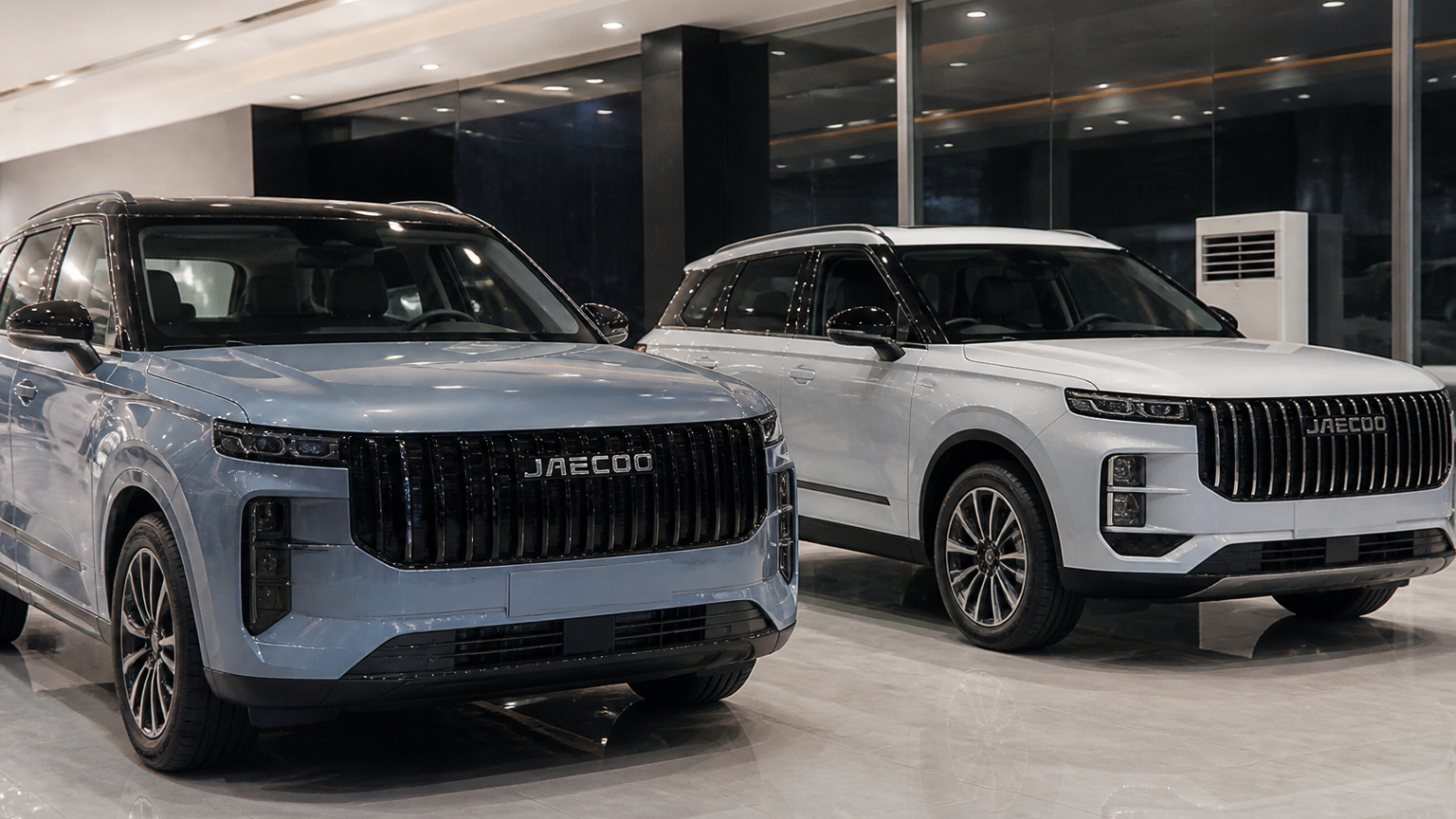
Jaecoo J5 Up Rs 300,000, J7 Down Rs 500,000
Jaecoo hikes both J5 HEV prices by Rs. 300,000, but cuts the J7 Premium by Rs. 500,000 in Pakistan.
Hyundai Nishat Hybrid Price Cuts After 18% Tax
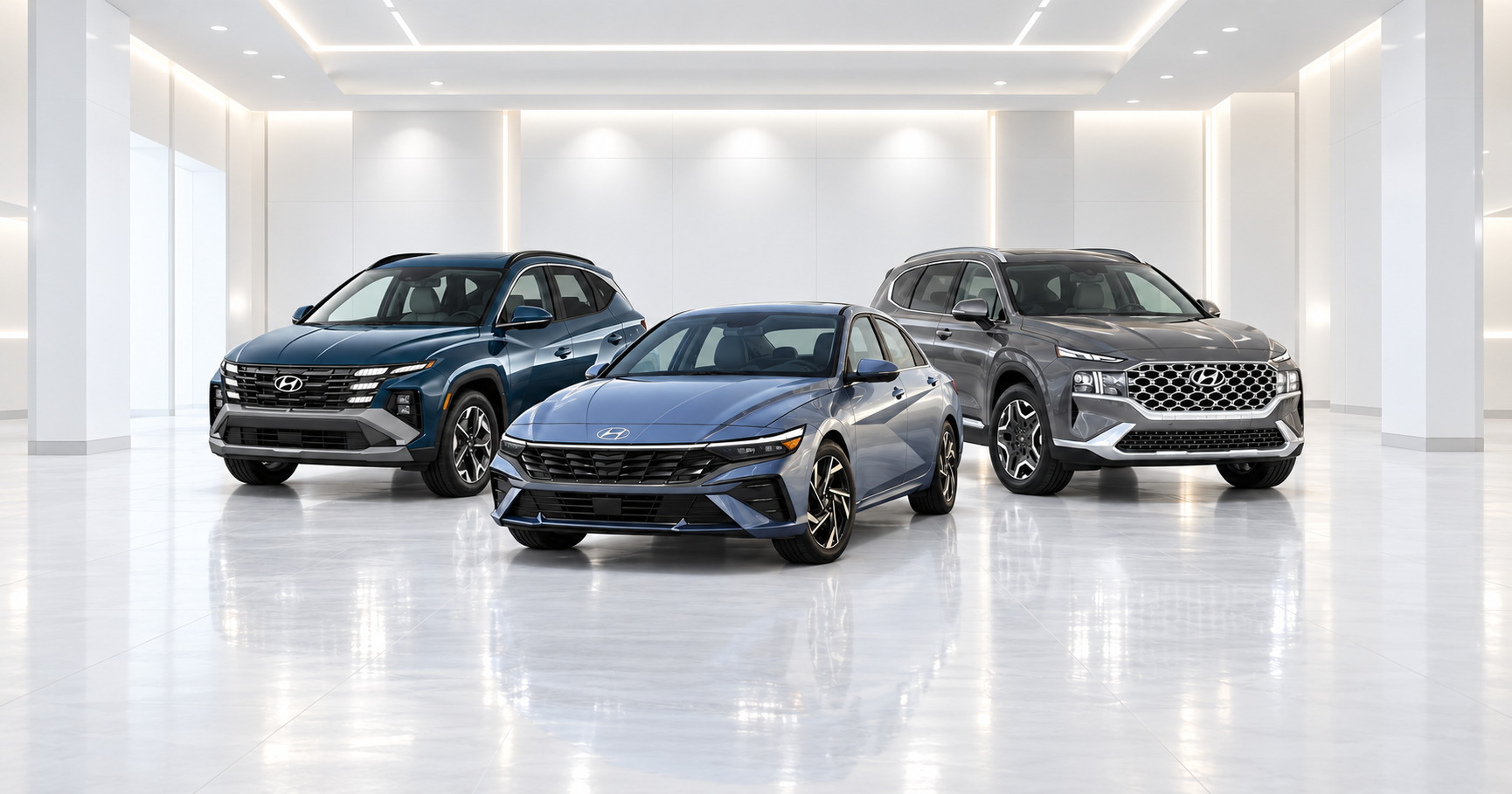
Hyundai Nishat Motor has cut prices on its locally made hybrid cars after the sales tax on hybrids up to 2000cc fell to 18 percent. The Elantra Hybrid Tucson Hybrid and Santa Fe Hybrid now cost less with savings from Rs639000 to Rs1403000. The biggest drop is on the Santa Fe Hybrid Signature AWD. Models over 2000cc still pay 25 percent tax.
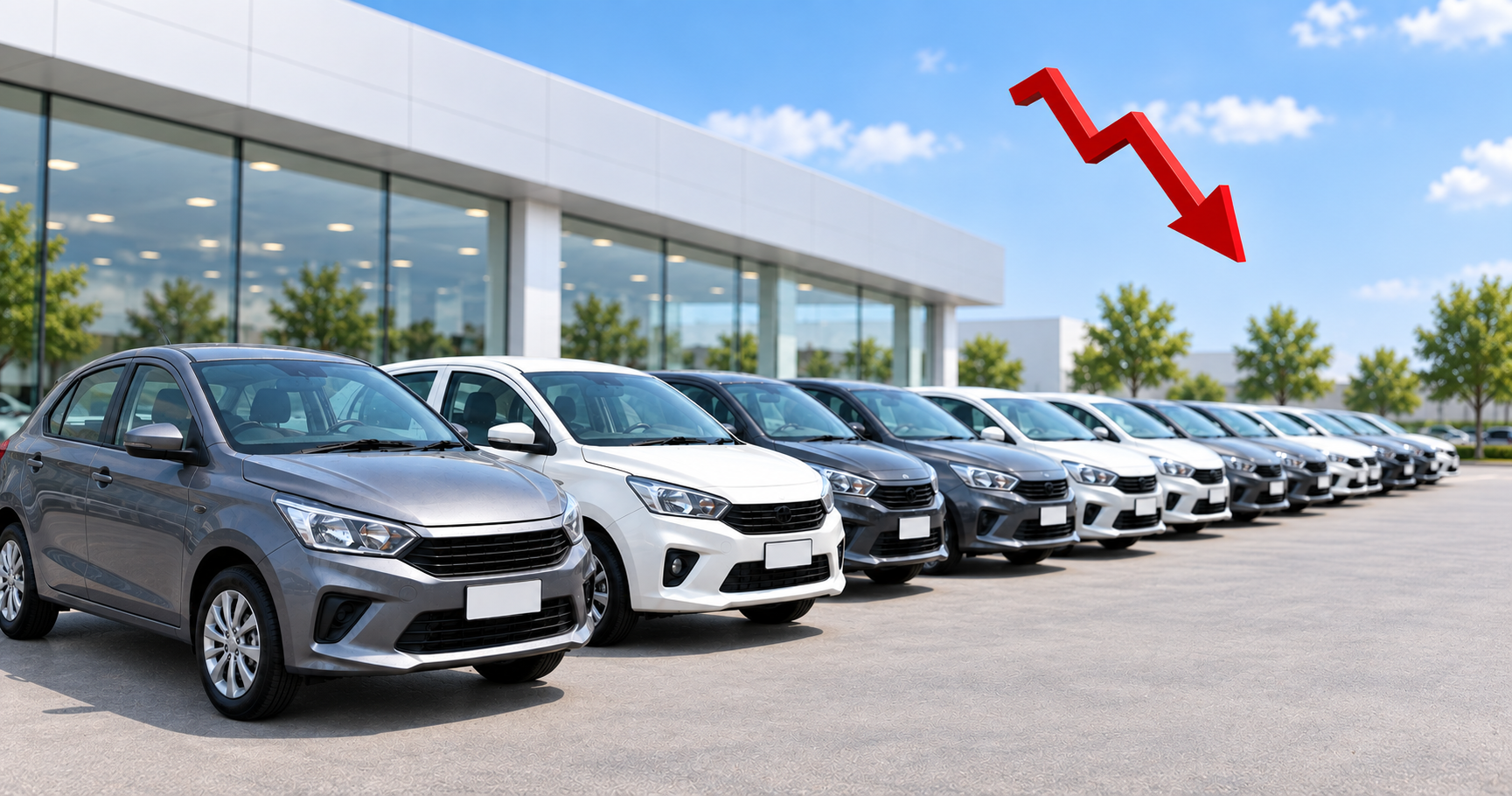
Pakistan Car Sales Drop 21.6% in August 2026
Pakistan passenger car sales fell to 15031 units in August 2026 down 21.6 percent from July. Suzuki Alto stayed the top model even with a 26 percent drop. Toyota Corolla Yaris and Corolla Cross sold less. Hyundai Elantra sales more than doubled after its relaunch. July and August sales were still nearly 80 percent higher than last year.